

I’ll never forget the Tuesday morning it all clicked. I was staring at a grid of twelve muted boxes on my monitor, trying to deliver some hard-hitting feedback on our latest sprint. Instead of a lively debate, I got twelve blank stares and a three-second lag that made every pause feel like an eternity. I was performing, they were watching, and absolutely nobody was growing. It felt like trying to conduct a symphony through a tin can and a string. That was the moment I realized we had traded real connection for a digital convenience that was actually costing us our soul. Early on, I made the mistake of thinking my home office was the peak of productivity, but I quickly learned that startups often fail when they isolate too much. Today, I’m going to share why we walked away from the “Join Meeting” button and how reclaiming our physical space saved our culture.
The Silence That Killed Our Best Ideas
In theory, Zoom is great. In practice, for high-stakes feedback, it is where honesty goes to die. Have you ever noticed how people are less likely to speak up when they have to manually unmute themselves? It is a psychological barrier that turns a fluid conversation into a series of rigid mini-speeches. When we were remote-only, our feedback became a one-way street. I’ve found that the real reason your team is suffering from zoom fatigue isn’t just the blue light—it is the constant strain of trying to read non-verbal cues that simply aren’t there. Research supports this; a notable study in the journal Nature found that video communication actually hampers creative idea generation because it narrows our cognitive focus to a tiny screen. By moving back into the room, we opened up the peripheral vision of our collaboration. We started picking up on the sighs, the leans, and the quick scribbles on a notepad that signal a breakthrough. Have you ever felt that same digital wall when trying to lead your team?
But Does My Team Really Need to Meet In Person for This?
I get the skepticism. You have got a “remote-first” badge on your LinkedIn and your team loves their sweatpants. I was there too. I used to think a 12-hour coding sprint was best done in the exact chair you need at home, but I was wrong about the feedback part. Feedback is not just about raw data; it is about trust. It is incredibly hard to build “war room” levels of trust through a 720p webcam. When we started utilizing innovative meeting rooms for our weekly reviews, the quality of our output skyrocketed. We were no longer just fixing bugs; we were fixing the way we worked together. Sometimes you just need to find a quiet meeting room on short notice and hash it out face-to-face. It is not about being old school—it is about being effective.
Reclaiming the Feedback Loop with Intention
To get the most out of your team, you have to treat your meeting environment like a specialized tool, not just a place to sit. When we looked at the move from remote-only back to the office, we realized that the architecture of the room dictates the quality of the output. If you are sitting in a sterile, corporate boardroom with a 20-foot table, don’t expect a collaborative workshop. You have to match the physical vibe to the mental goal.
Match Your Environment to the Stakes
For deep-dive critiques, you need a setup that allows for movement. I call this ‘Active Collaboration.’ If people are anchored to chairs, their brains go into standby mode. In a high-energy feedback session, we prefer spaces that have standing-height tables or even tiered seating. This is the difference between a standard meeting room and a real war room. In a war room, every wall is a potential canvas. 
The Two-Pizza Rule for Strategic Space
Size matters, and bigger is rarely better. If you book a room meant for twenty people for a four-person brainstorming session, the energy dissipates into the corners like heat in an uninsulated attic. We follow the two-pizza rule for booking the right size meeting room to keep the proximity tight and the communication high-bandwidth. I remember one specific Tuesday where we tried to hold a sprint review in a cavernous hall. The silence was deafening. We moved the team to a smaller, glass-walled nook halfway through, and suddenly, the ideas started flowing. Proximity creates a psychological safety net that allows for harsher—but necessary—critique.
Kill the Screens to Save the Honesty
The fastest way to ruin an in-person session is to let everyone bring their laptops. It creates a digital barrier that is just as bad as a Zoom call. To maximize productivity in your startups conference rooms, implement a ‘Lids Down’ policy. We use one central screen for data and physical whiteboards for everything else. This works because it forces eye contact. It is hard to be dismissive of a colleague’s concern when you are looking them in the eye rather than at a Slack notification. You also want to ensure why your conference room needs better technology and fewer cables so that you aren’t wasting the first ten minutes of your physical connection time fighting with a dongle. When the tech is invisible, the human connection becomes the focal point.People often think that a ‘modern’ startup space needs to look like a tech-giant’s playground. I’ve seen founders spend thousands on neon signs and designer beanbags, only to wonder why their board meetings feel like a high school club gathering. The hard truth is that innovative meeting rooms that boost startup creativity aren’t about the toys; they are about removing cognitive friction. A common mistake is prioritizing ‘vibe’ over ‘velocity.’ I once booked a gorgeous, industrial-style room with exposed brick and 20-foot ceilings. It looked like a million bucks on Instagram, but the moment we started talking, the echo was so bad we couldn’t hear our own CFO. That is the ‘Oops’ factor: falling for the aesthetic while failing the acoustics test every conference room should pass. Let’s dig deeper into why the ‘cool’ factor is often a distraction from actual performance.
The Myth of the Transparent Glass Box
Everyone says they want ‘transparency,’ so they book the trendy glass-walled aquarium in the center of the coworking floor. In my experience, this is where high-stakes deals go to die. Transparency is a cultural value, not a literal architectural requirement for every minute of the day. When you are hashing out a pivot or a sensitive cap table discussion, the last thing you need is the entire floor watching your facial expressions. I’ve learned that how to vet a meeting room for acoustic privacy before booking is a more valuable skill than picking the best view. A study published by the University of Sydney found that lack of sound privacy is the single most significant factor in workplace dissatisfaction, far outweighing ‘cool’ perks. If your team feels like they are being watched or overheard, they will self-censor. Self-censorship is the silent killer of the startup success secrets choosing the perfect conference room. 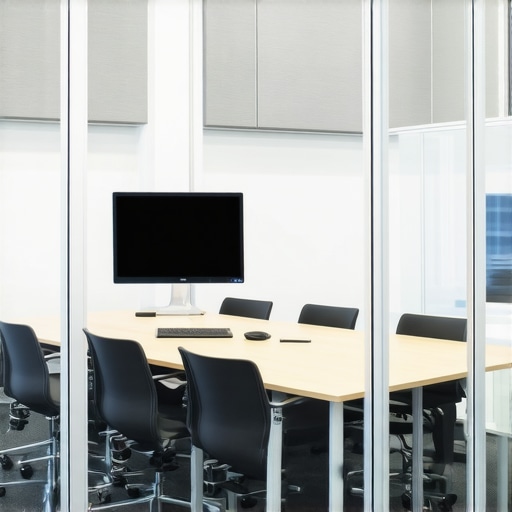
Do You Really Know How Your Room Sounds to a Remote Investor?
This is the advanced mistake most founders miss. You’re in the room, it feels great, and you’re pitching your heart out. But because you didn’t check the acoustics hack for crystal clear client pitches, the person on the other end of the Zoom call is hearing a hollow, metallic mess. We’ve all been on those calls where the speaker sounds like they are underwater. It’s not their mic; it’s the room. When you how to choose the perfect conference room for business success, you have to look for soft surfaces—carpets, acoustic panels, or even heavy curtains—that soak up the sound. If the room is all glass and polished concrete, your professional authority is going to leak out through the poor audio quality. Have you ever fallen into this ‘aesthetic over function’ trap? Let me know in the comments.
Why Your Meeting Room Needs to Be More Than Just a Table
The final nuance I’ve discovered is that the best rooms are ‘programmable.’ If a room only has one configuration, it’s a bottleneck. You want a space that can shift from a formal presentation to a chaotic brainstorming session in five minutes. This is why why your meeting room needs to be more than just a table; it needs to be an adaptable environment. We now prioritize spaces that offer modular furniture and ample vertical writing surfaces. It’s about creating a ‘war room’ mentality where the environment supports the intensity of the work, rather than just providing a place to sit. When we stopped looking for ‘pretty’ and started looking for ‘functional,’ our decision-making speed doubled. Don’t let a bad room choice be the reason your next big idea stalls out.I used to think the room itself was the finish line, but I quickly realized that a great space without the right tools is just an expensive museum. To keep our culture from sliding back into the digital abyss, I had to get fanatical about the hardware that bridges the gap. We invested in 360-degree cameras because they prevent the ‘remote-member-as-a-fly-on-the-wall’ syndrome. When the camera pans to the speaker automatically, it restores the human rhythm of conversation. This level of intentionality is one of the many startup success secrets choosing the perfect conference room that I wish I knew years ago. We even go as far as ensuring our private office suites stock extra Surface Pro chargers for members because nothing kills a breakthrough faster than a ‘low battery’ notification flashing on the main screen.
The Gear That Stops Remote Isolation
For our hybrid sessions, the ‘audio-first’ rule is king. If the person at home can’t hear the person in the corner mumbling, they are effectively excluded. We use high-fidelity, daisy-chained microphones that capture every whisper. This is crucial when you are figuring out the logistics of scaling a hybrid team without a corporate hq. You need consistency across every booking. I’ve learned to use scheduling apps that sync directly with our shared calendars to avoid the ‘room poaching’ drama that plagues most shared offices. Knowing how to book a meeting room on a Friday afternoon without the stress is a logistical superpower for a busy founder. 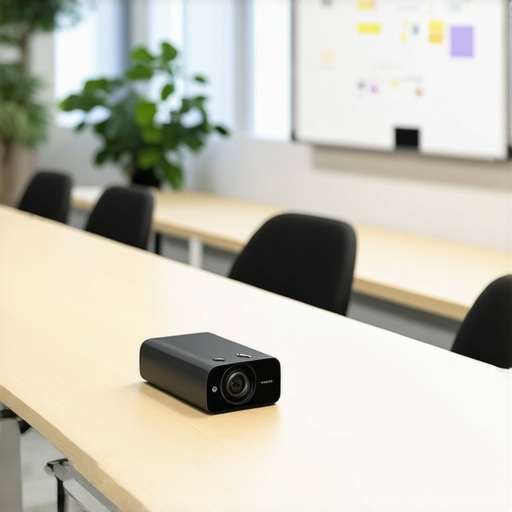
How Do I Keep These High-Energy Meetings Productive Long-Term?
Sustainability is about leadership, not just layout. Dr. Steven Rogelberg, a leading organizational scientist and author of The Surprising Science of Meetings, argues that meeting quality is a direct reflection of the leader’s respect for their team’s time. He suggests that we should regularly ‘survey’ our meetings—not the content, but the process. We now spend the last two minutes of every session asking: ‘Did this need to be a meeting?’ and ‘Did the environment help or hinder?’ This constant feedback loop ensures our space remains a tool and not a crutch. We also look toward the future of conference rooms in startup ecosystems, which I believe will involve real-time AI transcription and spatial audio as standard features. I predict that within two years, ‘smart rooms’ will automatically summarize our whiteboard sketches and assign action items before we even walk out the door. The friction between having an idea and documenting it is about to disappear. My challenge to you: next Tuesday, implement a ‘No Laptops’ rule for your in-person brainstorms and see how much the energy shifts. Focus on the people, and let the room do the work.I’ll never forget the Tuesday morning it all clicked. I was staring at a grid of twelve muted boxes on my monitor, trying to deliver some hard-hitting feedback on our latest sprint. Instead of a lively debate, I got twelve blank stares and a three-second lag that made every pause feel like an eternity. I was performing, they were watching, and absolutely nobody was growing. It felt like trying to conduct a symphony through a tin can and a string. That was the moment I realized we had traded real connection for a digital convenience that was actually costing us our soul. Early on, I made the mistake of thinking my home office was the peak of productivity, but I quickly learned that startups often fail when they isolate too much. Today, I’m going to share why we walked away from the “Join Meeting” button and how reclaiming our physical space saved our culture.
The Silence That Killed Our Best Ideas
In theory, Zoom is great. In practice, for high-stakes feedback, it is where honesty goes to die. Have you ever noticed how people are less likely to speak up when they have to manually unmute themselves? It is a psychological barrier that turns a fluid conversation into a series of rigid mini-speeches. When we were remote-only, our feedback became a one-way street. I’ve found that the real reason your team is suffering from zoom fatigue isn’t just the blue light—it is the constant strain of trying to read non-verbal cues that simply aren’t there. Research supports this; a notable study in the journal Nature found that video communication actually hampers creative idea generation because it narrows our cognitive focus to a tiny screen. By moving back into the room, we opened up the peripheral vision of our collaboration. We started picking up on the sighs, the leans, and the quick scribbles on a notepad that signal a breakthrough. Have you ever felt that same digital wall when trying to lead your team?
But Does My Team Really Need to Meet In Person for This?
I get the skepticism. You have got a “remote-first” badge on your LinkedIn and your team loves their sweatpants. I was there too. I used to think a 12-hour coding sprint was best done in the exact chair you need at home, but I was wrong about the feedback part. Feedback is not just about raw data; it is about trust. It is incredibly hard to build “war room” levels of trust through a 720p webcam. When we started utilizing innovative meeting rooms for our weekly reviews, the quality of our output skyrocketed. We were no longer just fixing bugs; we were fixing the way we worked together. Sometimes you just need to find a quiet meeting room on short notice and hash it out face-to-face. It is not about being old school—it is about being effective.
Reclaiming the Feedback Loop with Intention
To get the most out of your team, you have to treat your meeting environment like a specialized tool, not just a place to sit. When we looked at the move from remote-only back to the office, we realized that the architecture of the room dictates the quality of the output. If you are sitting in a sterile, corporate boardroom with a 20-foot table, don’t expect a collaborative workshop. You have to match the physical vibe to the mental goal.
Match Your Environment to the Stakes
For deep-dive critiques, you need a setup that allows for movement. I call this ‘Active Collaboration.’ If people are anchored to chairs, their brains go into standby mode. In a high-energy feedback session, we prefer spaces that have standing-height tables or even tiered seating. This is the difference between a standard meeting room and a real war room. In a war room, every wall is a potential canvas.
The Two-Pizza Rule for Strategic Space
Size matters, and bigger is rarely better. If you book a room meant for twenty people for a four-person brainstorming session, the energy dissipates into the corners like heat in an uninsulated attic. We follow the two-pizza rule for booking the right size meeting room to keep the proximity tight and the communication high-bandwidth. I remember one specific Tuesday where we tried to hold a sprint review in a cavernous hall. The silence was deafening. We moved the team to a smaller, glass-walled nook halfway through, and suddenly, the ideas started flowing. Proximity creates a psychological safety net that allows for harsher—but necessary—critique.
Kill the Screens to Save the Honesty
The fastest way to ruin an in-person session is to let everyone bring their laptops. It creates a digital barrier that is just as bad as a Zoom call. To maximize productivity in your startups conference rooms, implement a ‘Lids Down’ policy. We use one central screen for data and physical whiteboards for everything else. This works because it forces eye contact. It is hard to be dismissive of a colleague’s concern when you are looking them in the eye rather than at a Slack notification. You also want to ensure why your conference room needs better technology and fewer cables so that you aren’t wasting the first ten minutes of your physical connection time fighting with a dongle. When the tech is invisible, the human connection becomes the focal point.People often think that a ‘modern’ startup space needs to look like a tech-giant’s playground. I’ve seen founders spend thousands on neon signs and designer beanbags, only to wonder why their board meetings feel like a high school club gathering. The hard truth is that innovative meeting rooms that boost startup creativity aren’t about the toys; they are about removing cognitive friction. A common mistake is prioritizing ‘vibe’ over ‘velocity.’ I once booked a gorgeous, industrial-style room with exposed brick and 20-foot ceilings. It looked like a million bucks on Instagram, but the moment we started talking, the echo was so bad we couldn’t hear our own CFO. That is the ‘Oops’ factor: falling for the aesthetic while failing the acoustics test every conference room should pass. Let’s dig deeper into why the ‘cool’ factor is often a distraction from actual performance.
The Myth of the Transparent Glass Box
Everyone says they want ‘transparency,’ so they book the trendy glass-walled aquarium in the center of the coworking floor. In my experience, this is where high-stakes deals go to die. Transparency is a cultural value, not a literal architectural requirement for every minute of the day. When you are hashing out a pivot or a sensitive cap table discussion, the last thing you need is the entire floor watching your facial expressions. I’ve learned that how to vet a meeting room for acoustic privacy before booking is a more valuable skill than picking the best view. A study published by the University of Sydney found that lack of sound privacy is the single most significant factor in workplace dissatisfaction, far outweighing ‘cool’ perks. If your team feels like they are being watched or overheard, they will self-censor. Self-censorship is the silent killer of the startup success secrets choosing the perfect conference room.
Do You Really Know How Your Room Sounds to a Remote Investor?
This is the advanced mistake most founders miss. You’re in the room, it feels great, and you’re pitching your heart out. But because you didn’t check the acoustics hack for crystal clear client pitches, the person on the other end of the Zoom call is hearing a hollow, metallic mess. We’ve all been on those calls where the speaker sounds like they are underwater. It’s not their mic; it’s the room. When you how to choose the perfect conference room for business success, you have to look for soft surfaces—carpets, acoustic panels, or even heavy curtains—that soak up the sound. If the room is all glass and polished concrete, your professional authority is going to leak out through the poor audio quality. Have you ever fallen into this ‘aesthetic over function’ trap? Let me know in the comments.
Why Your Meeting Room Needs to Be More Than Just a Table
The final nuance I’ve discovered is that the best rooms are ‘programmable.’ If a room only has one configuration, it’s a bottleneck. You want a space that can shift from a formal presentation to a chaotic brainstorming session in five minutes. This is why why your meeting room needs to be more than just a table; it needs to be an adaptable environment. We now prioritize spaces that offer modular furniture and ample vertical writing surfaces. It’s about creating a ‘war room’ mentality where the environment supports the intensity of the work, rather than just providing a place to sit. When we stopped looking for ‘pretty’ and started looking for ‘functional,’ our decision-making speed doubled. Don’t let a bad room choice be the reason your next big idea stalls out.I used to think the room itself was the finish line, but I quickly realized that a great space without the right tools is just an expensive museum. To keep our culture from sliding back into the digital abyss, I had to get fanatical about the hardware that bridges the gap. We invested in 360-degree cameras because they prevent the ‘remote-member-as-a-fly-on-the-wall’ syndrome. When the camera pans to the speaker automatically, it restores the human rhythm of conversation. This level of intentionality is one of the many startup success secrets choosing the perfect conference room that I wish I knew years ago. We even go as far as ensuring our private office suites stock extra Surface Pro chargers for members because nothing kills a breakthrough faster than a ‘low battery’ notification flashing on the main screen.
The Gear That Stops Remote Isolation
For our hybrid sessions, the ‘audio-first’ rule is king. If the person at home can’t hear the person in the corner mumbling, they are effectively excluded. We use high-fidelity, daisy-chained microphones that capture every whisper. This is crucial when you are figuring out the logistics of scaling a hybrid team without a corporate hq. You need consistency across every booking. I’ve learned to use scheduling apps that sync directly with our shared calendars to avoid the ‘room poaching’ drama that plagues most shared offices. Knowing how to book a meeting room on a Friday afternoon without the stress is a logistical superpower for a busy founder.
How Do I Keep These High-Energy Meetings Productive Long-Term?
Sustainability is about leadership, not just layout. Dr. Steven Rogelberg, a leading organizational scientist and author of The Surprising Science of Meetings, argues that meeting quality is a direct reflection of the leader’s respect for their team’s time. He suggests that we should regularly ‘survey’ our meetings—not the content, but the process. We now spend the last two minutes of every session asking: ‘Did this need to be a meeting?’ and ‘Did the environment help or hinder?’ This constant feedback loop ensures our space remains a tool and not a crutch. We also look toward the future of conference rooms in startup ecosystems, which I believe will involve real-time AI transcription and spatial audio as standard features. I predict that within two years, ‘smart rooms’ will automatically summarize our whiteboard sketches and assign action items before we even walk out the door. The friction between having an idea and documenting it is about to disappear. My challenge to you: next Tuesday, implement a ‘No Laptops’ rule for your in-person brainstorms and see how much the energy shifts. Focus on the people, and let the room do the work.
What I Finally Figured Out About Real-World Collaboration
After years of bouncing between home offices and shared spaces, I’ve realized that physical proximity is a multiplier for emotional intelligence. When you are in the same room, you aren’t just hearing words; you are feeling the room’s temperature—both literally and figuratively. I’ve learned that the exact checklist for vetting a high-stakes board room often starts with the things you can’t see, like the air quality and the height of the ceiling. If you are trying to transition your team from a garage to a real office, start small but start intentional. The biggest mistake is thinking any four walls will do.
#IMAGE_PLACEHOLDER_E#
Tools That Helped Me Reclaim My Team’s Focus
If you want to dive deeper into the mechanics of why some groups thrive while others stall, I highly recommend The Surprising Science of Meetings by Dr. Steven Rogelberg. It changed how I view every minute I spend in a chair. For those of us navigating the hybrid world, looking into creative coworking transforming meeting rooms into collaboration hubs is essential to stay ahead of the curve. I also suggest checking out unlock networking opportunities in top coworking environments to see how other founders are structuring their face-to-face time.
Your Breakthrough is Waiting Outside the Zoom Window
Don’t let the convenience of a “Join” button rob your startup of its soul. The energy that comes from a live, unbuffered debate is something no software update can ever replicate. When you invest in the right meeting rooms, you aren’t just buying a space; you are buying the clarity your team needs to win. Go out there, book a room, and see what happens when the laptops stay closed and the ideas start flying.
Have you ever had a brilliant idea killed by a bad Zoom connection or a laggy video call? Let me know in the comments below.