

I’ll never forget the day we lost a potential $50k contract because our meeting room felt like a broom closet with a slab of wood in the middle. We sat there, knees knocking against the cheap legs of a standard office table, trying to look like a high-growth startup while a flickering fluorescent light hummed overhead. The investor kept glancing at a coffee stain on the carpet. It was a disaster. I realized then that a meeting room isn’t just a place to sit; it’s a silent partner in every deal you make. If your environment feels temporary, your business feels temporary too. We often focus so much on the pitch deck that we forget the physical space is actually part of the presentation. I used to think as long as we had chairs and a flat surface, we were professional. I was wrong. I was ignoring the fact that the way you set up your room directly dictates how much people actually want to talk. Today, I want to show you why moving beyond the basic table-and-chair setup is the single best thing you can do for your team’s culture. Have you ever felt that awkward energy in a room where the physical setup just didn’t match the importance of the conversation?
Stop Treating Your Meeting Space Like a Storage Closet
Many founders make the mistake of thinking a conference room is just utility. I spent three years in a space where the meeting room doubled as the place we kept extra monitors and half-empty boxes of printer paper. It killed our momentum. When you transform these rooms into collaboration hubs, you aren’t just buying better furniture; you’re signaling to your team that their ideas deserve a proper stage. A study published by the Journal of Corporate Real Estate found that office design, specifically meeting areas, significantly impacts employee engagement and their willingness to share innovative ideas. If you are still running your business from a dining table or a cluttered corner, you’re fighting an uphill battle for respect.
Does the furniture really change the outcome of a pitch?
Some of you might be skeptical. You might think that a great product should speak for itself regardless of the room. But psychology tells us otherwise. When you meet investors in a professional setting, you’re leveraging environmental cues that scream stability and focus. My biggest early mistake was thinking that being ‘scrappy’ meant being uncomfortable. It took me a long time to learn that maximizing productivity in your conference room starts with the atmosphere, not the agenda. A room that’s more than just a table offers tools for visualization, comfort for long-haul brainstorming, and the privacy required for high-stakes decisions.
Forget the 5-Year Lease and Prioritize Flexibility
The first step in professionalizing your presence isn’t signing a predatory contract; it’s understanding the logic of choosing a flex office over a 5-year lease. When we were first starting out, I thought we needed our name on a building to be ‘real.’ I was wrong. We ended up locked into a lease for a space that we outgrew in six months, then spent another year paying for square footage we didn’t use. Now, I tell every founder I mentor: the logic of choosing a flex office over a 5-year lease is about maintaining the agility you need to survive. It allows you to access premium conference rooms on-demand without the overhead of a massive headquarters. This shift allows you to reinvest that saved capital into your product rather than into empty desks.
Vet Your Tech Before the Investor Shows Up
Nothing kills a pitch faster than a spinning loading icon. I once had a high-stakes call with a partner in London while sitting in a beautiful ‘executive suite’ that turned out to have Wi-Fi slower than a 2004 dial-up connection. It was embarrassing. You must how to test the wi-fi speed before you book that venue to ensure your demo doesn’t lag. If you are doing remote pitches, you also need to master the exact lighting setup for professional video pitches. Natural light is your best friend, but if you’re in a windowless room, bring a portable ring light. Testing the upload speed is just as important as the download; if your stream stutters, your credibility does too. 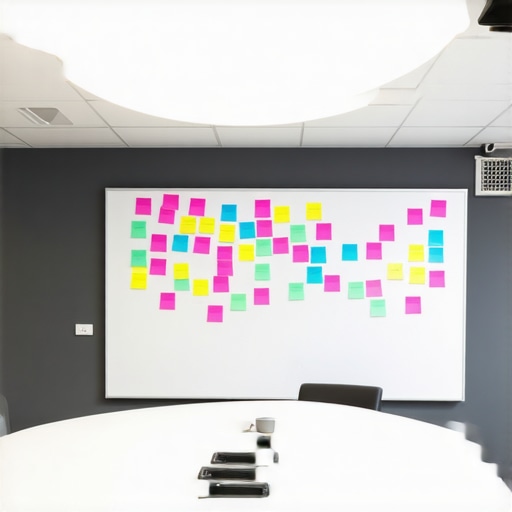
Kill the Echo to Save the Conversation
Have you ever been in a meeting where every word sounds like it’s being shouted inside a giant metal trash can? Acoustic echo is a subtle productivity killer. In our second office, we had these stunning glass walls that looked amazing but made voices bounce like crazy. We couldn’t hear the feedback from our lead developer properly during a sprint review. Learning the acoustic fix for echoey conference rooms—like adding sound-absorbing panels or even just ensuring there is a rug on the floor—is non-negotiable for serious work. If the room is too noisy, you’ll find that the truth about noise-canceling headphones in shared spaces is that they are only a temporary fix; the room itself must support clear communication for the benefit of everyone involved.
Set the Table for Active Participation
The ‘boardroom’ style with one long table and a head-of-the-table seat is for 1980s corporate dramas, not fast-moving startups. If you want people to talk, you have to change the geometry of the room. I noticed a massive shift in our brainstorming sessions when we swapped the rectangular table for a circular one or moved to a setup where everyone faced a central whiteboard. You’d be surprised how much the way you set up your room impacts the flow of information. In a startup, the best idea should win, not just the person sitting at the end of the table. By removing physical barriers, you create a psychological safety net that encourages the ‘quiet’ genius in the corner to finally speak up.Most founders think that transparency means literal glass walls. We’ve been conditioned by Silicon Valley aesthetics to believe that if you aren’t visible, you’re hiding something. But in my experience, the ‘fishbowl effect’ is real and it’s destructive. When your team is in a high-stakes sprint review and they can see people grabbing coffee three feet away, their focus isn’t on the code; it’s on who is watching them. This is exactly why your startup needs a real door, not just a glass wall. It’s not about secrecy; it’s about reducing cognitive load. 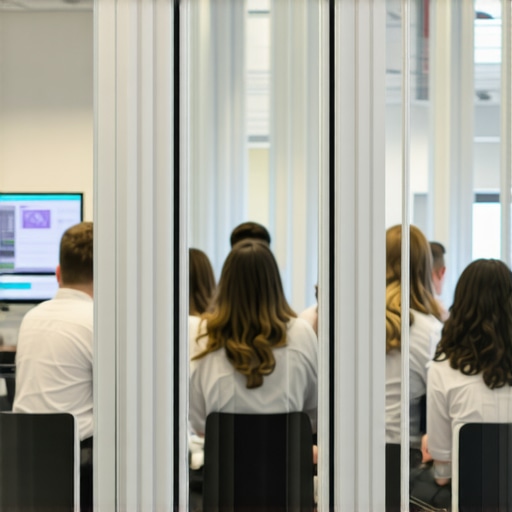
Does Constant Transparency Kill Your Team’s Creativity?
A fascinating study by Ethan Bernstein at Harvard Business School highlights the ‘Transparency Paradox.’ He found that when employees are monitored or visible at all times, they actually perform worse because they feel the need to ‘act’ productive rather than actually being productive. In a conference room setting, this means people hold back their wildest ideas—the very ones that lead to breakthroughs—because they don’t want to look foolish to anyone walking by. This is precisely why a neutral meeting space leads to more honest feedback. If the walls are literally and figuratively closing in, the innovation stops. The biggest ‘oops’ I see advanced founders make is over-indexing on the aesthetic of the room rather than the friction-less nature of the tech. You might have the best Eames chairs in the city, but if your booking system takes ten minutes of clicking, your team will stop using the space. You need to how to vet a conference room for client-facing speed and ease of use. I’ve seen teams resort to whispering in the hallway because the ‘fancy’ room was too hard to reserve.
Don’t Buy Square Footage You Haven’t Earned
Stop falling for the trap of the ‘growth-stage office’ early on. I see startups signing 3,000-square-foot leases because they plan to hire twenty people next year. Six months later, they have five employees and a massive bill for empty air. You must stop overpaying for square footage you never use. In the modern era, why membership flexibility is more important than square footage is a lesson usually learned the hard way—through a drained bank account. As we look at the future of conference rooms in startup ecosystems, the trend isn’t toward bigger or flashier; it’s toward smarter and more modular environments. Have you ever fallen into this trap of prioritizing aesthetics over actual utility? Let me know in the comments.It’s one thing to design a room; it’s another to keep it from degrading into a tech graveyard. I’ve seen so many founders blow $10k on gear that sits idle because it’s too complex for a quick sync. Personally, I swear by the Meeting Owl 3 for our hybrid sessions. It isn’t about the raw specs; it’s about the fact that it automatically shifts the 360-degree camera focus to whoever is speaking, which is exactly how to stop your team from hating hybrid meetings. When our remote engineers can see the subtle facial expressions of the product team in the room, the communication friction simply disappears. According to the Steelcase Global Report on Engagement and the Global Workplace, employees who have control over their physical environment and access to specialized collaboration tools are 88% more likely to be highly engaged. This isn’t just ‘office stuff’; it’s your core infrastructure for innovation.
How do I keep my meeting room from turning back into a junk drawer?
Maintenance is the part everyone ignores until the room is unusable. Without a system, your beautiful collaboration hub will be full of empty cans and discarded adapters within a week. We implemented a ‘hard reset’ every Friday afternoon where the room is cleared of all non-essential items. This ensures that how to maximize productivity in your startups conference rooms isn’t just a one-time effort, but a recurring cultural standard. If you are using a shared space, make sure your team knows how to book a meeting room in under sixty seconds so they don’t get frustrated by admin hurdles and end up crowding around a single desk. 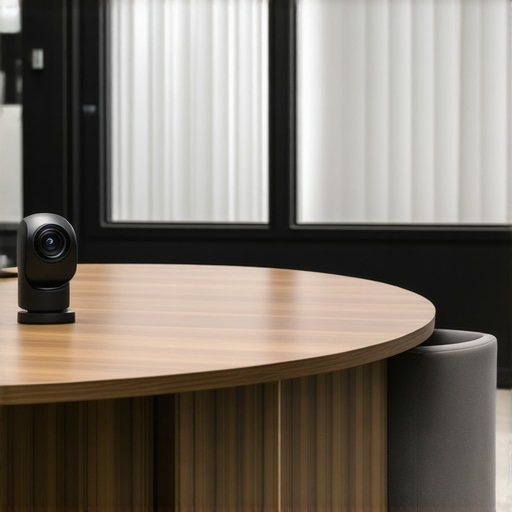 As we look ahead, the future of conference rooms in startup ecosystems is moving toward on-demand modularity. I predict that within three years, we won’t even think about ‘offices’ as fixed locations, but as a series of specialized nodes. We successfully scaled our team using day passes only during our most aggressive growth phase, and it taught us that how to choose an office that supports your scaling speed is about access and tech-readiness, not square footage. The rigid, 10-person boardroom is dying; the flexible, tech-enabled huddle space is the new standard. My advanced tip for you this week: Go into your main meeting room right now and try to start a video call without using your own laptop. If it takes more than 30 seconds to get the audio and video live, your tech is a barrier. Fix that friction today by simplifying your connection points.
The Hard Truth About Those Shiny Boardroom Pictures
After a decade of building teams, I’ve realized that the most expensive room is the one that’s too ‘fancy’ for anyone to actually use. We once rented a space with velvet chairs and a hand-carved mahogany table, but the team ended up working in the kitchen because they were afraid of scratching the furniture. A conference room should be a tool, not a museum piece. Real productivity happens when people feel comfortable enough to lean in and get their hands dirty with the data. If you’re wondering how innovative meeting rooms boost startup creativity, it’s usually because they prioritize function over ego.
Another lesson: The vibe of the building matters as much as the room itself. When we moved into a space where we were surrounded by other founders, our growth accelerated. This is why proximity to other start-ups accelerates your growth—the energy in the hallways leaks into the meeting rooms. Don’t just vet the four walls; vet the community that exists outside the door.
Finally, never underestimate the power of a ‘quick’ setup. If it takes more than a minute to get your presentation on the screen, the energy in the room evaporates. I’ve seen million-dollar pitches go cold because of a missing dongle. Always follow a checklist for a glitch-free event before the guests arrive.
Gear That Actually Earned a Permanent Spot in My Bag
I don’t recommend products unless they’ve survived a 14-hour workday. For remote hybrid setups, I’m a huge advocate for the Meeting Owl—it’s the only way to ensure your remote team doesn’t feel like second-class citizens. For testing locations, I never go anywhere without running a speed test on my phone first. You have to vet a space for high-speed fiber before you even think about signing a contract. I also highly recommend ‘The Lean Startup’ by Eric Ries; it helped me realize that our ‘office’ needs to be as agile as our software. If you’re still on the fence about your current setup, check out how to tell if a coworking membership is worth the price to see if you’re getting a real return on your investment.
#IMAGE_PLACEHOLDER_E#
Take Back Your Team’s Creative Momentum
Setting up the right environment isn’t about being ‘fancy’—it’s about removing the friction between a great idea and its execution. Whether you are choosing between different meeting rooms or looking for a new startup headquarters, remember that your space should serve your vision, not the other way around. Don’t let a bad layout or a loud neighbor kill your next big breakthrough. You’ve worked too hard to let a poorly chosen room stand in your way. Go find a space that actually helps you scale. What’s the one thing that drives you crazy about your current conference room? Drop a comment below.