
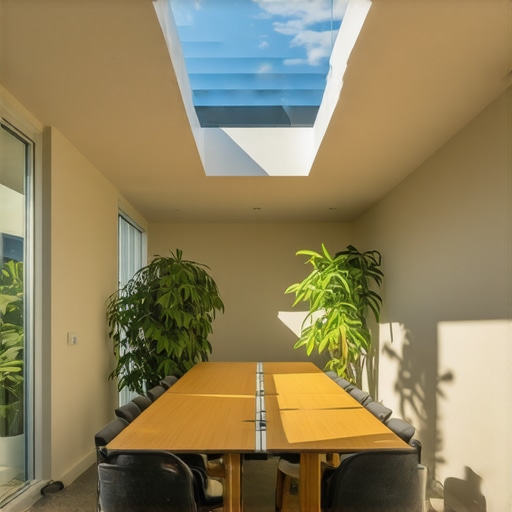
I walked into my first major investor pitch feeling like a million bucks, only to have my confidence evaporate the second the heavy steel door clicked shut behind me. The room was deep in the bowels of a converted warehouse—no windows, no fresh air, and just a single flickering fluorescent tube overhead. I felt like I was in a police lineup, not a boardroom. I made the rookie mistake of thinking a low price was better than a high-quality environment, and honestly, it cost me the deal. My [IMAGE_PLACEHOLDER] pitch deck looked terrible in that dark hotel basement, and I couldn’t stop sweating. We’ve all been there, haven’t we? Stuck in a space that feels more like a storage locker than a place for innovation. Today, I’m going to show you exactly how to flip the script and turn that dungeon into a space people actually want to spend time in.
Your team deserves better than a concrete box
Spending eight hours a day in a room with four white walls and zero natural light isn’t just boring; it’s a productivity killer. I learned the hard way that ditching the basement and understanding the psychology of a professional workspace is the difference between a team that’s thriving and one that’s just watching the clock. It turns out, this isn’t just about my personal claustrophobia. According to a study by the National Center for Biotechnology Information (NCBI), workers in windowless environments report significantly lower scores in vitality and sleep quality compared to those with daylight. If you aren’t careful, you’ll end up with a boardroom that feels like a hospital, which is the last thing you want when you’re trying to close a seed round or brainstorm the next big feature. Have you ever felt your energy levels just bottom out the second you stepped into a windowless conference room? I want to hear about your worst “dungeon” experiences.
Is a windowless room really a dealbreaker for your next big pitch?
Some of you might be thinking that a room is just a room. “As long as the Wi-Fi works, we’re fine,” right? Wrong. I used to think the same until I realized that our physical surroundings dictate our emotional state. If you pick a meeting room that smells like old carpet, your clients are going to remember the smell, not your brilliant strategy. You don’t need a penthouse suite with floor-to-ceiling glass to succeed, but you do need to stop treating your meeting spaces as an afterthought. We are going to look at how to trick the human brain into feeling “outside” even when you’re three floors underground.I remember a follow-up pitch for a fintech app where the room was essentially a glorified supply closet with a single humming bulb. I didn’t let it slide that time. I brought in two portable LED panels—the kind YouTubers use—and pointed them at the walls to bounce soft light around the room. The investors didn’t mention the lights, but they did mention how energetic the vibe felt compared to the previous meeting. That small adjustment changed the entire dynamic of the room. It taught me that you don’t need to accept the hand you’re dealt when it comes to office architecture.
Bring your own sun to the meeting
First, you have to tackle the visual gloom. You can’t just wish for a window, so you have to manufacture the sun. If you’re stuck in a dungeon, stop letting bad lighting ruin your video calls or your in-person pitches by focusing on color temperature. Look for daylight bulbs (around 5000K) or portable light bars. It’s like putting a filter on reality; it keeps the team from looking like they haven’t slept in a week. When you provide high-quality artificial light, the brain stops producing as much melatonin, keeping everyone in the room alert and engaged rather than slipping into a mid-afternoon slump.
Screen size dictates your authority
Next, realize that why your pitch deck looks better on a forty-inch screen than a laptop is all about the power dynamic. When people huddle around a 13-inch MacBook, you’re a student showing a project. When your data is projected on a massive wall, you’re a CEO presenting a vision. If the room doesn’t have a screen, you’re better off finding innovative meeting rooms that boost startup creativity through proper hardware integration. 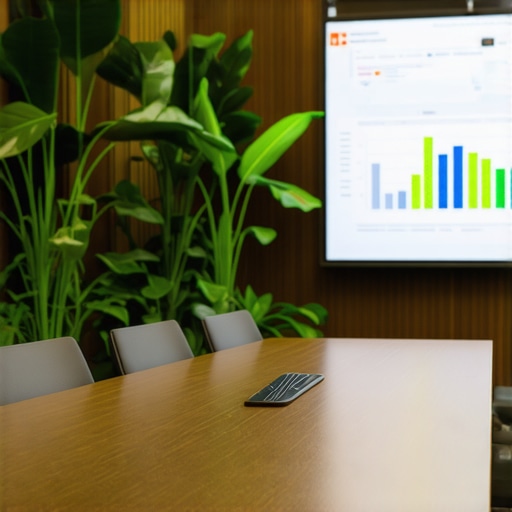 Always double-check the connectivity before you start. I’ve lost ten minutes of a thirty-minute slot because I couldn’t find a dongle, which is why you should always how to find a conference room that actually has working adapters before you invite an investor.
Fix the echo before it kills the conversation
Don’t ignore the echo chamber effect either. Windowless rooms often have hard, flat surfaces that turn your voice into a muddy mess. Use the acoustics hack for crystal clear client pitches by adding soft elements—even a few plants or a thick rug can dampen the bounce. If you’re scouting a new space, always do the clap test. If the sound rings for more than a second, your clients will be straining to hear you, and that friction leads to lost deals. High ceilings can help, but they aren’t a cure-all if the walls are bare concrete.
Stop overbooking the space
Lastly, get the scale right. I’ve seen three-person teams book twenty-seat boardrooms, and they look like they’re playing at being business people. Apply the two-pizza rule for booking the right size meeting room. If the room is too big, the energy dissipates; if it’s too small, people feel trapped. You want a space that feels full but not cramped. It creates a war room atmosphere rather than an empty theater vibe. Making sure the physical footprint matches your team size is one of the easiest ways to how to maximize productivity in your startups conference rooms without spending a dime on renovations.
A common myth I see founders buy into is that a truly private meeting room must be as silent as a library. In my experience, that’s actually a mistake. Total silence makes every whisper audible to anyone passing by outside the door. You don’t need a vault; you need effective sound masking. Before you sign a lease, you should vet a meeting room for acoustic privacy by checking if there’s a subtle hum of HVAC or white noise. Without it, your ‘private’ talk about burn rates becomes public property for anyone in the lobby.
Why your fancy ‘smart’ room is actually slowing you down
The biggest ‘oops’ factor I see with high-end spaces is the Tech Complexity Trap. We’ve all been there: a room with four iPads on the wall, three different remote controls, and a projector that requires a specific, rare adapter. You end up spending the first twenty minutes of an hour-long slot just trying to share a screen. This is a classic case of why your conference room needs better technology and fewer cables. If you can’t get your deck on the screen in under 30 seconds, the room is working against you, not for you. This technical friction kills the momentum of a pitch before you even get to the executive summary.
Can the height of the ceiling change how your board thinks?
It sounds like pseudo-science, but it’s a well-documented phenomenon known as the ‘Cathedral Effect.’ A study published in the Journal of Consumer Research by Joan Meyers-Levy found that high ceilings actually promote abstract, creative thinking, while lower ceilings are better for detail-oriented, concrete tasks. If you are trying to solve a complex coding bug, a cozy, low-ceiling space might actually help you focus. But if you’re brainstorming your five-year roadmap, you should look into why your team is more creative in a room with high ceilings. Most founders ignore this nuance and wonder why their ‘big vision’ meetings feel stagnant in a cramped basement.
Another hidden drag is isolation. Startups often think they need to hide away to protect their ‘secret sauce,’ but why startups fail when they isolate in home offices or private bunkers is that they lose the pulse of the market. Even if you have a private suite, you should still leverage the common areas. I’ve found that why small talk at the printer is the most valuable part of your day is because it provides ‘accidental’ networking that you just can’t schedule. Have you ever fallen into this trap of over-engineering your workspace or choosing ‘pretty’ over functional? Let me know in the comments.
I’ve realized that once you find that perfect vibe, the real challenge isn’t just using it—it’s keeping it from falling apart under the weight of back-to-back sprints. It is one thing to book a fancy space for a day; it is quite another to maintain that edge when you’re scaling fast. If you’re serious about long-term results, you need to stop thinking about a conference room as a place and start treating it as a piece of high-performance equipment.
Get the hardware that actually works when you’re sweating
For years, I struggled with audio issues until I finally invested in a dedicated Jabra puck. I don’t use the laptop mic anymore because it picks up every keystroke and fan whir. Using a dedicated peripheral is why your conference room needs better technology and fewer cables—it creates a single, reliable point of failure that is easy to troubleshoot. If you are aiming for startup success secrets, start with the ‘one-plug rule.’ If your team has to plug in more than one USB-C cable to get the camera, mic, and screen working, you are losing five minutes of every meeting. This technical friction is the hidden drag of slow office wi-fi on your burn rate because it wastes the most expensive resource you have: your team’s time.
How do I maintain a high-performance meeting environment over time?
The secret isn’t a cleaning crew; it’s a ‘Zero-State’ policy. Every time I finish a session in what I consider the difference between a standard meeting room and a real war room, the last two minutes are dedicated to resetting the table. According to the AVIXA DISCAS standards, the visual clarity of your content depends heavily on the ‘viewing distance to image height’ ratio. If the previous team moved the chairs or tilted the screen, your next pitch is already compromised. I keep a physical checklist taped to the back of the door: Is the dongle there? Is the whiteboard wiped? Is the 4K screen set to the correct input? If you want to how to maximize productivity in your startups conference rooms, you have to treat the room like a cockpit.
The future is rooms that think for you
We are rapidly moving toward ‘context-aware’ spaces. In the next three to five years, I predict we won’t even search for adapters. We’ll see AI-driven acoustic beamforming where the room’s sensors automatically identify who is speaking and suppress the noise of a latte machine in the hallway. We’re already seeing the beginnings of this in the future of conference rooms in startup ecosystems. If you aren’t already looking for spaces that offer smart integration, you’re going to be left behind in a world of tangled wires.
Stop settling for ‘good enough’ connectivity
Don’t let a dead battery kill a hundred-thousand-dollar deal. This is why our private office suites stock extra surface pro chargers for members—we know that hardware fails at the worst possible time. My advanced tip for you this week: Buy a 10-foot, braided HDMI-to-USB-C cable and keep it in your laptop bag. Never rely on the one provided by the venue. This small investment ensures you can stand up and move around while presenting, rather than being tethered to the table like a hostage. Go ahead and contact us if you want to see how we’ve optimized our local hubs for this level of reliability. Seriously, try the ‘one-plug’ audit today and see how much stress it removes from your morning syncs.
The Hard Truth About My Biggest Pitching Failures
Looking back at the deals I lost early on, it wasn’t always the product that failed; it was the friction created by my environment. I realized too late that the cost of a bad first impression why your home office is a liability isn’t just a catchy phrase—it’s a real financial hit when investors doubt your stability. My first lightbulb moment was that a room isn’t just a container; it’s an extension of your brand’s authority. If you look like you’re struggling to find a working outlet, how can an investor trust you with a seven-figure check? Another hard lesson was realizing that how to choose the perfect conference room for business success involves vetting the airflow as much as the Wi-Fi. If people are groggy from CO2 buildup in a tiny, windowless box, they aren’t going to have the mental capacity to follow your complex revenue model. I’ve learned to treat the room like my professional armor—if it has holes, the pitch is going to take a hit. #IMAGE_PLACEHOLDER_E#
My Non-Negotiable Kit for Any Space
I never walk into a booked room without my own ‘success kit’ anymore. Over the years, I’ve found that coworking spaces unlock innovation top meeting rooms of 2025 at 1123 am are often great, but you still need your own gear to be bulletproof. My toolkit starts with a physical notebook and a high-quality pen; it signals focus in a way that a glowing laptop screen never does. Second, I always carry a dedicated USB-C hub with every port imaginable—never assume the room’s adapter hasn’t been stepped on or stolen. Third, I highly recommend the book The Architecture of Happiness by Alain de Botton, which completely changed how I perceive the psychological impact of the buildings we inhabit. Lastly, I always bring a high-quality portable microphone for hybrid calls to ensure the people on the other end aren’t straining to hear. If you want to see how we’ve curated these high-performance environments for our members, contact us today to take a tour.
Your Team Deserves More Than a Closet
At the end of the day, your startup is a collection of people, and those people need to feel valued. When you stop settling for dungeons and start creative coworking transforming meeting rooms into collaboration hubs at 0455 pm, you are signaling to your team that their work matters. Space is a physical manifestation of your culture. Don’t let a poorly lit, cramped room be the reason your next big idea dies on the vine. You have the power to manufacture the environment your vision requires, whether it’s through better lighting, high ceilings, or simply choosing a venue that respects the human need for comfort. Go out there and find a space that inspires you to be as big as your ideas. What’s the absolute worst thing that’s happened during a pitch because of the room’s environment? Let me know in the comments below.