
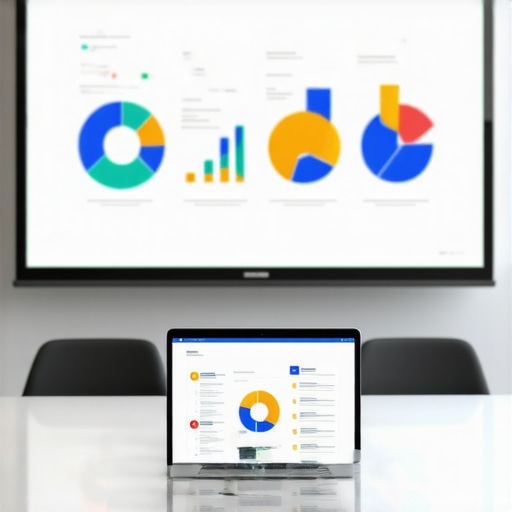
I remember hunched over a tiny 13-inch screen in a local cafe, sweating through my blazer while an investor squinted at my ‘Tableau of Growth’ slide. He couldn’t see the decimals. I couldn’t see his face because the lid was blocking my view. It was a disaster. I realized then that why your pitch failed in that noisy coffee shop wasn’t just about the espresso machine—it was about the scale. I felt small, so my business looked small. There is a psychological weight to a large screen that a laptop simply cannot replicate.
Give your big ideas the space they actually deserve
Scale matters more than we like to admit in the startup world. When you project a deck onto a forty-inch monitor in a professional meeting room, the energy in the room shifts instantly. You aren’t just ‘showing a file’ anymore; you’re ‘hosting a premiere.’ I made the massive mistake early on of thinking my hardware didn’t matter as long as the product was good. I spent months working from my dining table, assuming a Zoom screen share was ‘good enough.’ It wasn’t. A large screen allows for actual eye contact. You can see the slight knit of an investor’s brow or the nod of approval that you’d miss if you were buried in your laptop keys. It turns a one-sided lecture into a collaborative session. Plus, let’s be honest: those high-res charts just look sexier when they’re three feet wide. If you’re still trying to close deals over a latte and a 1080p laptop screen, you’re fighting an unnecessary uphill battle.
Is a bigger monitor just a vanity metric?
You might be thinking that a screen is just a screen, but the data says otherwise. According to research from the 3M Corporation, visual information is processed 60,000 times faster than text, and when that visual is large and immersive, it can significantly increase audience persuasion. It’s not just about being ‘fancy’—it’s about cognitive load. When people don’t have to strain to see your data, they have more brainpower left to actually listen to your vision. Have you ever had a moment where you realized your ‘scrappy’ setup was actually holding back your professional image? I’ve found that why your meeting room needs to be more than just a table becomes obvious the second you plug in that HDMI cable and see your vision at scale. It changes how you stand, how you speak, and how they listen.
Stop treating your slide deck like a static document
When you move from a laptop to a wall-sized display, every flaw is magnified. A low-res JPEG that looks ‘fine’ on your MacBook will look like a pixelated mess on a 4K commercial monitor. To avoid this, always export your visuals in the highest possible resolution and stick to a 16:9 aspect ratio. If you’ve ever wondered how to maximize productivity in your startups conference rooms by 0245 pm, it starts with technical preparation. I learned this the hard way in 2019 when I showed up to a high-stakes board meeting with 4:3 slides. The massive black bars on the sides of the screen made the room feel dated and my ideas feel small. It was an instant credibility killer.
Connect your hardware without the awkward tech fumble
There is nothing that kills the ‘innovative founder’ vibe faster than crawling under a mahogany table to find an HDMI port. I once spent seven minutes—which felt like seven years—trying to get a MacBook to talk to a projector while three partners checked their watches. Now, I never book a space without knowing the exact ports available. You need to learn how to choose the perfect conference room for business success by looking for ‘plug and play’ setups that don’t require a degree in AV engineering. 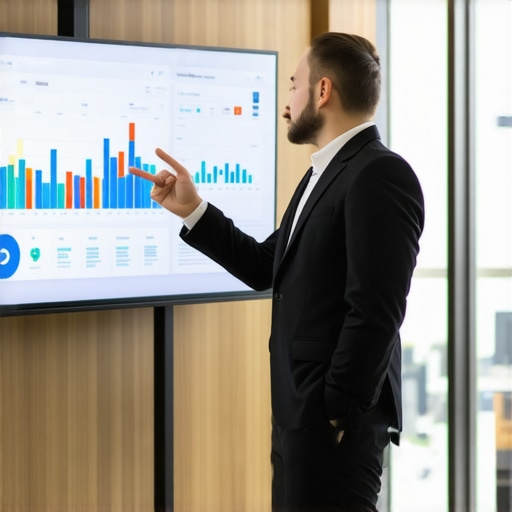
Own the room by ditching the podium
Most founders hide behind their laptops as if they are shields. When you have a professional-scale screen, the screen is the focus, which frees you to move. I’ve found that standing near the display and using a remote clicker allows you to point at data points physically, which keeps the audience’s eyes moving and their attention locked. However, pay attention to the environment; why your meeting room layout is killing participation is often down to where you stand in relation to the light. If you stand directly in the projector beam, you’re just a silhouette.
The 15-minute tech audit before the meeting
Don’t just walk in and expect the Wi-Fi to hold up your live demo. I always arrive early to how to test the wi-fi speed before you book that venue. If you’re running a cloud-based prototype, a laggy connection on a huge screen looks like a product failure, not a network issue. Check the audio too. If you’re playing a video, you don’t want it sounding tinny or hollow. Knowing the acoustic fix for echoey conference rooms 2 can help you decide if you need to adjust your positioning or if the room’s built-in system is up to the task. If things do go south, have a backup plan ready, much like you would learn how to handle a server crash from a temporary desk. Having a local copy of your deck on a thumb drive is a low-tech lifesaver that has saved me more than once when the cloud decided to vanish right as the partners sat down.Everyone tells you that a glass-walled conference room is the pinnacle of modern startup culture, but I am here to tell you it is often a productivity trap. Research published in the Journal of Environmental Psychology suggests that architectural privacy—essentially, having real walls—is directly linked to higher levels of focus and job satisfaction. When you are sitting in a glass fishbowl, you are subconsciously performing for the rest of the office instead of focusing on the person across from you. I have seen founders lose their flow simply because they caught a glimpse of a competitor walking past the glass. That is exactly why your startup needs a real door not just a glass wall.
Stop chasing the glass box aesthetic
In my experience, the ‘open’ look is great for Instagram but terrible for high-stakes negotiation. You need a space where you can be vulnerable with your data and aggressive with your asks without feeling like you are on a stage. This is where innovative meeting rooms that boost startup creativity actually come into play—they prioritize the internal energy of the room over the external optics.
Can a room really be too professional for a startup pitch?
It sounds counterintuitive, but sometimes a sterile, corporate-heavy environment can actually work against a scrappy startup. If you look like you have already ‘made it’ in a mahogany-clad boardroom, an investor might wonder if you still have that hungry, problem-solving edge. The key is finding a balance. You want a space that screams ‘efficiency’ rather than ‘excess.’ I always look for coworking spaces unlock innovation top meeting rooms of 2025 at 1123 am because they tend to blend high-end tech with a collaborative, modern vibe that feels authentic to the tech world. 
The acoustic trap that kills your closing rate
The biggest ‘oops’ factor I see with founders is ignoring the soundscape. You can have the best deck in the world, but if the room has a three-second echo, you sound like you are pitching from the bottom of a well. This ruins the intimacy of a pitch. If the room feels hollow, you can quickly implement the acoustic fix for echoey conference rooms 2 by adjusting the seating or even bringing in soft materials to dampen the bounce. Furthermore, many founders forget the ‘post-game’ logistics. They book the boardroom but forget why your sales calls need a private phone booth for the immediate follow-up. You walk out of the meeting energized, but then you have to discuss the sensitive deal terms in the common area where everyone can hear you. Always ensure your venue has a secondary private spot for those quick, confidential debriefs. Have you ever fallen into the trap of booking a room that looked amazing in photos but was a total disaster for actual work? Let me know in the comments.
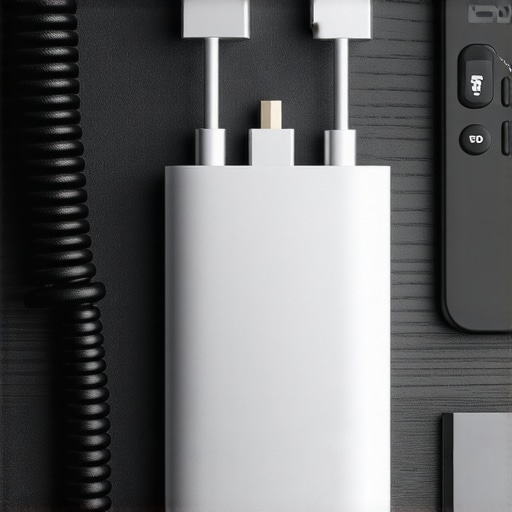
I’ve realized that the magic of a great presentation is actually just the absence of friction. I never walk into a room without my own survival kit because I’ve learned the hard way that you cannot trust a communal cable to work when fifty thousand dollars are on the line. This includes an Anker 555 hub because it supports 4K at 60Hz—most cheap dongles cap at 30Hz, making your cursor look laggy and your motion transitions stutter. When you are showing off a high-fidelity prototype, that lag matters. It is the difference between looking like a tech leader and looking like someone struggling with how to deal with technical glitches during a remote board call.
Pack a fail-safe kit for every pitch
My kit also contains a dedicated presentation remote with a digital magnify feature. If you have followed the checklist for a glitch-free product launch event, you know that being tethered to your laptop is a death sentence for engagement. I also carry a 10-foot HDMI 2.1 cable. Why 10 feet? Because you never know where the floor box is hidden in a large suite. This level of preparedness isn’t just about the tech; it is about the internal confidence that comes from knowing you control the environment. When you don’t have to worry about the connection, you can focus entirely on the person across from you.
How can I maintain a professional edge as my team grows?
Consistency is the hardest part of scaling. As you move from being a solo founder to managing a crew, you have to codify these standards so your brand doesn’t dilute. I tell my leads that they need to learn how to transition your team from a garage to a real office 2 by treating every internal meeting with the same technical respect as an external pitch. We use a shared document that lists the specific port configurations for our favorite venues. This is why we prioritize why membership flexibility is more important than square footage 2—it allows us to swap spaces based on the technical requirements of the week’s goals. According to the AVIXA DISCAS standard, which is the industry benchmark for display size, if your team is analyzing complex data, the screen height must be at least one-sixth the distance to the farthest viewer. If the room doesn’t meet that, we find a new one.
Why the next era of meetings belongs to spatial computing
Looking ahead, I believe the physical screens we obsess over today will eventually be replaced by shared augmented reality layers. We are already seeing the future of conference rooms in startup ecosystems shifting toward huddle spaces designed for hybrid interaction and digital overlays. But until everyone is wearing glasses, your job is to master the hardware of today. As you figure out how to pick a membership that scales with your teams size, look for venues that are already upgrading to Wi-Fi 6E. High-bandwidth, low-latency environments are no longer a luxury; they are a baseline requirement for any startup that plans to survive the next five years. My advanced tip for you? Buy a travel router like the GL.iNet Beryl AX. It lets you create a private, secure network for all your presentation devices in seconds, bypassing spotty guest Wi-Fi entirely and ensuring your tech stack remains impenetrable.
What No One Tells You About Presentation Power Dynamics
When you rely on a laptop screen, you are effectively asking your audience to enter your personal workspace. When you use a massive 4K display, you are inviting them into a shared professional reality. I once believed that having the best code meant the presentation didn’t matter, but I was wrong. The medium is the message, and a pixelated slide in a startup-ready conference room suggests you might overlook details elsewhere. Another hard truth is that silence is always better than a tech fumble. If the screen doesn’t work in the first thirty seconds, abandon it and go to a whiteboard. This shows adaptability, but if you want to win consistently, you have to choose a flex office that prioritizes modern AV infrastructure over just aesthetic appeal.
Gear I Never Walk Into a Room Without
My toolkit starts with the Logitech Spotlight remote. It allows you to digitally highlight or magnify specific areas of the screen, which is a lifesaver when showing complex financial models in coworking spaces that match your company values. I also swear by the ‘WiFi SweetSpots’ app to find the exact corner of the room with the strongest signal before the guests arrive. Lastly, I keep a digital copy of the AVIXA DISCAS standards handy. It ensures that the room layout I’ve chosen actually makes sense for the human eye, guaranteeing everyone has a front-row experience regardless of where they sit.
#IMAGE_PLACEHOLDER_E#
Build the Stage Your Big Idea Demands
Don’t wait until you have a Series A to start acting like a market leader. Every time you pick an office that supports your scaling speed, you are making a deliberate statement about where you intend to be in twelve months. Your ideas deserve to be seen in high definition, not squashed into a 13-inch frame. Go out there and claim the biggest screen in the building—the clarity it brings to your vision will translate directly into the confidence of your investors. What is the one piece of tech you never leave behind when heading into a high-stakes pitch? Let me know in the comments below.