

I sat there in my pajamas, staring at a half-empty box of cereal and my laptop screen, realizing my ‘disruptive’ startup had become little more than a glorified email-answering service. I was three months into building my dream, and the only person I’d spoken to in person all week was the guy delivering my pizza. I thought I was being smart by saving money on rent, but in reality, my creativity was dying in the silence of my own house. It’s a trap many of us fall into; we think staying in the basement makes us scrappy and lean, but usually, it just makes us invisible and uninspired. Today, I want to show you why that isolation is the silent killer of early-stage companies and how you can break out of the bubble to actually start scaling.
Escape the Comfort Zone That Is Killing Your Company
When I first started out, I made the classic mistake of thinking that as long as I had a laptop and a stable connection, I was good to go. I quickly learned about the hidden costs of running a startup from your garage, and I’m not just talking about the electric bill. I’m talking about the psychological tax of never leaving your house. I stayed in my home office for eighteen months because I was terrified of the overhead, and during that time, my productivity plummeted. I was dealing with why your home Wi-Fi is failing your Zoom presentations at the worst possible moments—like during a seed round pitch. Worse, I lost my first potential lead developer to a competitor because they actually had a physical culture you could feel, while I just had a set of emojis in a Slack channel. [IMAGE_PLACEHOLDER]
Does Stepping Out of the House Really Justify the Cost?
You might be thinking that a home office is the ultimate hedge against burn rate, but the data suggests otherwise. According to a 2024 study on workplace psychology, founders who work in complete isolation are nearly 50% more likely to experience early-stage burnout compared to those who maintain regular physical proximity to other entrepreneurs. It isn’t just about having a desk; it’s about the ‘collision frequency’—those random conversations in a kitchen that lead to your next big partnership. Many of us are moving back to physical brainstorming sessions because digital whiteboards simply can’t capture the energy of a room. I finally realized that ditching the basement for a professional workspace wasn’t an expense; it was an investment in my own sanity and my team’s future. Have you ever felt that ‘basement burnout’ where your walls start closing in and every Zoom call feels like a chore? Let’s talk about how to fix that without breaking the bank.
Stop Guessing and Start Auditing Your Environment
The first step isn’t just signing a lease; it’s auditing where your current setup is failing your workflow. I remember trying to close a critical seed-stage deal from a corner booth at a local diner because my home internet was out. I was literally shouting over a milk frother while trying to explain our revenue projections, and the investor looked more confused than impressed. That disaster taught me that why your pitch failed in that noisy coffee shop isn’t just about the decibel level—it’s about the lack of perceived authority. You need a space that acts as a force multiplier for your professionalism. Start by identifying your ‘friction points.’ Is it the unstable Wi-Fi, the lack of a quiet place for calls, or the fact that your team feels disconnected? Once you know the problem, you can look for a solution that actually fits.
Move Past the Hot Desk When You Need Real Focus
While hot-desking is great for freelancers, a growing startup often needs more stability. I stuck with a basic membership for too long because I was cheap, but the constant hunting for a free outlet was costing me an hour of deep work every day. I eventually found that the move to a dedicated desk is the extra cost worth it because it gave my brain a ‘work trigger’—the moment I sat in that specific chair, the distractions of the communal kitchen faded away. It also meant I could finally leave a second monitor and a few notebooks behind, making the how to transition your team from a garage to a real office-2 process feel like a permanent upgrade rather than a temporary fix. 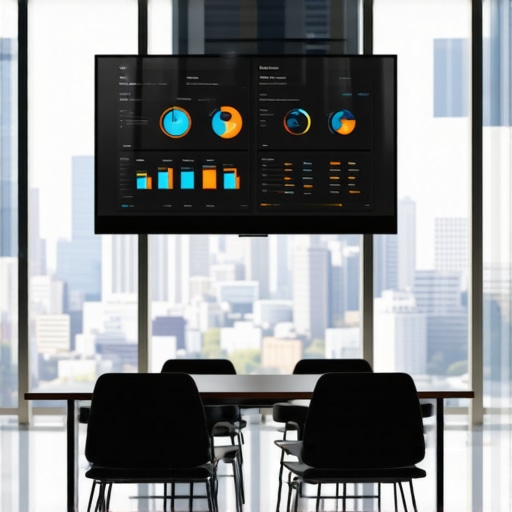
Test the Tech Before Your Big Demo
There is nothing more embarrassing than inviting a potential partner to a meeting only to spend the first fifteen minutes wrestling with a Dongle or a glitchy TV screen. When you are scouting spaces, don’t just look at the furniture; look at the ports. I now make it a rule to check how to vet a meeting room for acoustic privacy before booking any high-stakes session. You should be able to walk in, plug in one cable, and have your slides appear instantly. You will find that why your pitch deck looks better on a forty inch screen than a laptop-2 is a real psychological phenomenon; it makes your ideas feel larger and more established.
Turn Every Meeting Into a Professional Win
Success in a startup is often about the ‘vibe’ you project to outsiders. If you are hosting a VIP, you can’t have people playing ping-pong in the background while you discuss acquisition terms. This is where choosing the right tier matters. You need to learn how to pick a membership tier that scales with your team so you have access to those high-end boardrooms when they actually count. In the early days, I would use a day pass to test the waters, but as we grew, having a consistent, reliable base of operations became our greatest competitive advantage. Stop thinking of an office as a place where you sit, and start thinking of it as a tool you use to win.Most founders treat choosing an office like picking a pair of shoes; they look for what looks good on the outside without checking if it will actually support them during a marathon. We are often told that a ‘prestige’ address is the ultimate signal of success, but in my experience, a flashy zip code won’t save you if the internal culture is stagnant. I’ve seen companies burn through their seed rounds because they prioritized a corner office in a high-rent district over actual operational agility. The reality is that why membership flexibility is more important than square footage becomes painfully obvious the moment your team size fluctuates.
Don’t Fall for the Free Beer and Ping Pong Trap
It is the biggest cliché in the startup world, but ‘cool’ perks are often a smokescreen for poor infrastructure. I once signed a membership specifically because they had a nitro cold brew tap, only to find out their conference rooms had the acoustic profile of a tiled bathroom. I learned the hard way that the true cost of free coffee in popular coworking hubs is usually paid in lost productivity and echoey Zoom calls. If you can’t hear your lead investor over the sound of a milk steamer, that ‘free’ latte just cost you a million-dollar valuation. You need to look past the surface and focus on the technical backbone. This is where the acoustic fix for echoey conference rooms becomes more valuable than a designer sofa.
How Do You Distinguish a Real Innovation Hub From a Trendy Lobby?
True innovation isn’t a byproduct of neon signs; it’s a result of what MIT’s Professor Alex ‘Sandy’ Pentland calls ‘Idea Flow.’ His research into social physics shows that high-performing teams thrive on high-frequency, face-to-face interactions. If your space is designed only for aesthetics and not for ‘collisions,’ you’re losing out on the serendipitous networking that drives growth. This is why unlocking networking opportunities in top coworking environments requires more than just sitting in a chair; it requires a layout that encourages movement. However, even in the best hubs, you have to be careful about the ‘oops’ factor of shared spaces. I’ve seen teams accidentally leak sensitive IP because they didn’t realize how to vet a meeting room for acoustic privacy before booking it for a board meeting. 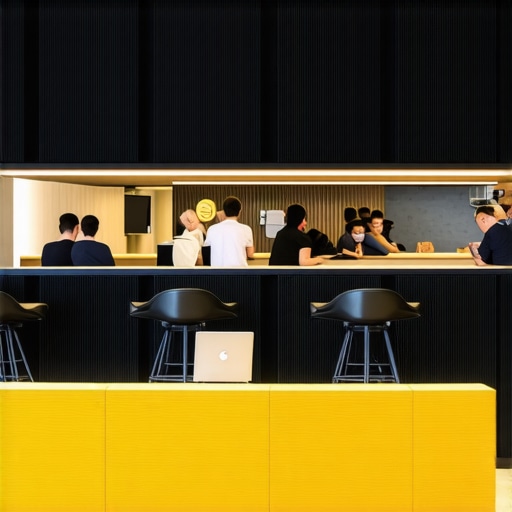
Avoid the Logistics Disaster That Kills Professionalism
Another common mistake is neglecting the boring stuff—like mail and bureaucracy. I’ve seen founders lose important legal documents because they made the errors to avoid when choosing a business mailing address. You might think a PO box is fine, but it sends a ‘basement’ signal to banks and partners. Furthermore, as you scale, you’ll need to learn how to manage office politics in a space you dont own. It’s a nuanced skill to lead a team when you’re sharing a kitchen with five other companies, but mastering that environment is the ultimate training ground for scaling a real corporate culture. Have you ever fallen into the trap of choosing ‘cool’ over ‘functional’ in your workspace? Let me know in the comments below.
I used to think my startup could survive on grit and a 13-inch laptop screen, but as we grew, I realized that the friction of my tools was actually capping our potential. If you’re serious about scaling, you have to move beyond just ‘having a space’ and start optimizing that space into a performance engine. For me, that meant building a portable ‘war room’ kit. I don’t go into any meeting without my Jabra Speak 710; relying on a laptop’s built-in microphone for a three-person huddle is a recipe for miscommunication and professional embarrassment. I’ve learned that how to maximize productivity in your startups conference rooms by 0245-pm often comes down to the literal hardware you bring into the room. If you’re still fighting with HDMI adapters that only work 40% of the time, you aren’t being lean; you’re being an amateur.
The Gear That Actually Saved My Sanity
When you’re in a shared environment, you have to be your own IT department. I personally swear by a dedicated USB-C hub that stays permanently in my bag, specifically to avoid the ‘cable scramble’ during a pitch. I’ve noticed that why your conference room needs better technology and fewer cables-2 isn’t just about speed; it’s about the psychological confidence of knowing your tech will work. According to the technical specifications for IEEE 802.11ax (Wi-Fi 6), high-density environments like coworking hubs require specific hardware to handle multiple devices without dropping packets. This is why I always check if a space has upgraded their infrastructure before I commit to a dedicated office. I even appreciate it when our private office suites stock extra surface pro chargers for members, because it’s those small logistical saves that prevent a bad day from becoming a disaster. 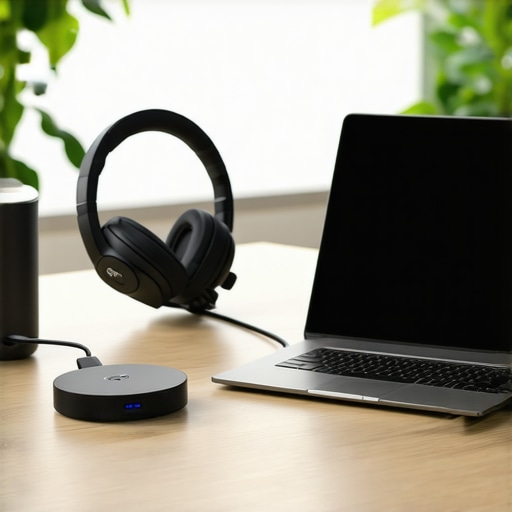
Make Your Tech Disappear So You Can Actually Work
The goal isn’t to have the most gadgets; it’s to have a setup so seamless it becomes invisible. I’ve started using digital whiteboards that sync directly to my team’s project management software, ensuring that innovative meeting rooms that boost startup creativity actually result in actionable tasks rather than just pretty drawings on a glass wall. Looking ahead, I predict we are going to see a massive shift toward AI-integrated spatial audio in these rooms—tech that can automatically identify who is speaking and generate meeting minutes with 99% accuracy. We are already seeing the beginnings of this in high-end coworking spaces unlock innovation top meeting rooms of 2025 at 1123-am. It’s about removing the ‘administrative tax’ from your brain so you can focus on the big ideas.
How do I keep my startup’s momentum high while sharing a floor?
Maintenance of culture in a shared space is about intentionality. You can’t just hope for a team bond; you have to curate it. I make it a point to use the checklist for a boardroom that doesnt feel like a hospital whenever I host internal strategy days. We bring in our own brand assets—even if it’s just a few custom notebooks or a specific brand of coffee we all like—to ensure our identity isn’t swallowed by the coworking brand. Remember that the acoustics test every conference room should pass is non-negotiable for us now. If we can’t have a candid, high-stakes conversation without worrying about the startup next door eavesdropping, we move. My advanced tip for you this week: Go audit your most-used meeting space. If you spend more than 60 seconds ‘setting up’ the tech, throw out your old cables and buy a high-quality, all-in-one docking station today.
The Reality Checks That Changed My Growth Strategy
Reflecting on my journey from the cereal box basement to a thriving hub, I’ve realized that the most expensive desk is often the one you never leave at home. I learned that my startup success secrets usually came down to choosing the perfect conference room for high-stakes investor talks rather than just ‘making do’ with a couch. Here are a few lightbulb moments: First, proximity is a silent recruiter; your next CTO is likely sitting three desks away, not in a LinkedIn inbox. Second, the environment acts as a cognitive trigger—my brain now knows that a professional door handle means ‘focus mode’ has started. Finally, how to pick an office that fits your startups growth pace-2 is a skill you must master early, or you’ll find yourself locked into a five-year lease for a team of three. [IMAGE_PLACEHOLDER]
A Few Essentials That Make Every Space Feel Like Ours
I don’t believe in traveling light if it means sacrificing professional standards. My ‘office in a bag’ includes a high-end Jabra speaker and a matte-finish privacy screen, but the real secret is the mindset. I always look for how to find a coworking space that matches your company values-2 because if the building’s vibe contradicts your brand, you’ll spend more energy fighting the atmosphere than building your product. I also rely on digital whiteboard tools that bridge the gap between our physical brainstorms and our remote devs, effectively turning shared meeting rooms into collaboration hubs that actually produce code, not just messy sketches.
Stop Playing Small in Your Own Basement
It’s time to stop treating your business like a hobby and start giving it the stage it deserves. Transitioning to a professional environment isn’t about vanity; it’s about signaling to yourself, your team, and the world that you are here to stay. Your startup deserves a home where the Wi-Fi doesn’t drop and the acoustics don’t echo. Don’t be afraid to take that leap into a professional coworking space—your creativity, and your cap table, will thank you for it. Have you ever felt that your physical workspace was the one thing actually holding your business back? Let me know in the comments below.