

I’ll never forget the day I stood in a beige-walled conference room, sweat beads forming on my upper lip, while three skeptical investors stared at my prototype. On my screen, the UI looked vibrant. In their eyes, reflecting the harsh, flickering overhead fluorescents, it looked like a high school science project. That was the moment I realized that the cost of a bad first impression isn’t just about your slides; it’s about the atmosphere you create. I had the code, but I didn’t have the “expensive” vibe. I looked like I was still working out of my mom’s basement, even though we were already hitting our growth milestones.
I Almost Blew My Seed Round Because of a Fluorescent Bulb
It sounds dramatic, but your environment is a silent partner in every pitch you give. I used to think that as long as the product worked, nothing else mattered. I was wrong. I spent months wondering why my pitch deck failed in a dark hotel basement or a sterile meeting space before I understood the power of visual perception. The truth is, people associate poor, flat lighting with a lack of polish and low-budget operations. Today, I’m going to show you the one specific lighting trick—using a simple “key light” and intentional shadow play—that turns a flat demo into a cinematic experience without spending a fortune. Learning how to host a product demo that looks professional on a budget was the single biggest shift in my closing rate. I remember one morning walking into a space I’d booked, only to realize the sun was directly behind me, washing out the screen and making me look like a silhouette in a witness protection program. I looked desperate, not professional. I spent ten minutes frantically moving tables around while my prospect waited, checking his watch. That was a hard lesson in choosing the perfect conference room for business success. It’s not just about the chairs or the Wi-Fi; it’s about how the light hits your face and your product.
Is good lighting just another way to waste a founder’s time?
You might be thinking, “My product is a SaaS platform, not a TikTok video.” I get it. I made the mistake of thinking aesthetics were for the marketing team later down the road. But human psychology doesn’t turn off just because you’re in a business meeting. According to the Lighting Research Center at Rensselaer Polytechnic Institute, visual hierarchy created by contrast—not just brightness—is what actually directs attention and builds a sense of “premium” quality. If your lighting is flat, your product feels flat. We are going to fix that. Have you ever walked into a demo and felt like the room was actively working against you? It’s time to stop letting bad lighting ruin your video calls and in-person pitches alike. This isn’t about being fancy; it’s about making sure your hard work actually gets the attention it deserves when you maximize productivity in your startup’s conference rooms.The biggest mistake founders make is thinking more light equals better light. It doesn’t. It usually just means more glare on your forehead and a washed-out screen. To get that ‘expensive’ vibe, you need to manage where the light isn’t going. I learned this the hard way during a series of innovative meeting rooms that boost startup creativity where the windows were massive but the glare made my laptop screen unreadable. The solution is the ‘Key-Fill-Back’ strategy. Think of yourself as the star of a play. Your Key light is your main source, positioned 45 degrees to your side. Your Fill light is softer, on the other side, to prevent you from looking like a character in a noir film. The Back light—the secret sauce—separates you from the wall behind you and creates depth.
Transform any corner into a broadcast studio
If you’re stuck in a space with harsh overheads, don’t fight them—deflect them. I once had a high-stakes demo in a tiny pod and realized 7 ways to make a windowless meeting room feel less like a prison starts with avoiding the ceiling light. I took a piece of white foam board from a craft store, propped it up on a chair, and bounced a desk lamp off it. It turned a sharp, ugly beam into a soft glow that filled the room. This tiny adjustment made the $200 hardware prototype I was showing off look like a $2,000 finished product. When you maximize productivity in your startup’s conference rooms, you’re also managing the visual ‘noise’ that distracts investors.
Use the wall as your biggest lamp
Lighting is worthless if your tech fails. I’ve seen million-dollar ideas die because a founder spent fifteen minutes fumbling with a dongle or a dead remote. You need to how to find a conference room that actually has working adapters and test your signal strength. On one occasion, I arrived thirty minutes early to a premium space only to find my laptop wouldn’t sync with their screen. Because I had time, I swapped to a backup HDMI and adjusted the room’s dimmer switches to ensure why your pitch deck looks better on a forty-inch screen than a laptop became a reality rather than a pixelated mess.
Keep the background intentional but quiet
Your backdrop should tell a story of growth, not clutter. When we moved into a creative coworking transforming meeting rooms into collaboration hubs at 0455 pm, I spent an hour just moving a potted plant and two books. Why? Because a completely empty white wall looks like a doctor’s office. A messy desk looks like a crisis. You want ‘active professional’—a hint of a whiteboard with some diagrams, a clean surface, and perhaps a view of the office hubbub through a glass door. This depth creates a subconscious feeling that the investor is stepping into a moving train they’d be lucky to join. If you’re struggling with the environment, remember that how to vet a meeting room for acoustic privacy before booking is just as important as the visual aesthetic.
Most founders think that as long as they have a massive TV and a fast internet connection, they’ve mastered the art of the professional environment. I’m here to tell you that’s a dangerous assumption. In my experience, the shiny hardware is often a distraction from the fundamental elements that actually close deals. I’ve seen teams drop five figures on a custom LED wall while ignoring the fact that their room sounds like a tiled bathroom. If the person you’re pitching to has to strain their brain just to filter out the echo, you’re losing. A study published in the Journal of the Acoustical Society of America suggests that poor room acoustics can increase cognitive load significantly, meaning your audience is spending more energy processing your voice than your actual business model.
Ditch the tech specs for a moment
Everyone says you need the latest gadgets, but I’ve found that why your conference room needs better technology and fewer cables-2 is actually about simplification, not accumulation. The contrarian truth? A low-tech room with perfect sound and intentional seating beats a high-tech room with a tangled mess of HDMI cords every single time. When you the acoustics test every conference room should pass, you realize that the most expensive equipment in the world won’t save a pitch if the room’s physical layout creates a barrier between you and your investors. It’s about creating a frictionless environment where the technology disappears, and the vision takes center stage.
Why does your high-stakes pitch feel like a shouting match?
It’s usually the ‘reverb’ you aren’t noticing. We get used to the sound of our own spaces, but a visitor feels it immediately. This is the ‘Oops’ factor I see constantly: founders booking ‘cool’ industrial spaces with high ceilings and exposed concrete. While it looks great on Instagram, those surfaces are an acoustic nightmare. I once nearly lost a partnership because the room was so echoey the client thought I was hiding my nervousness behind a loud voice. Before you sign a lease or book a space, you need to how to vet a meeting room for acoustic privacy before booking to ensure your voice carries authority, not just volume. If you can’t hear a pin drop, they can’t hear your nuances.
The hidden nuance of the the future of conference rooms in startup ecosystems isn’t just about the physical walls; it’s about the psychological safety of the space. I used to think a glass-walled ‘fishbowl’ in a busy lobby looked high-energy. In reality, it just makes your guests feel exposed. If they are constantly looking at people walking by, they aren’t looking at your deck. I’ve learned that why your pitch deck won’t save you from a noisy meeting space applies to visual noise too. You want a space that feels like a ‘war room’—focused, private, and intense. Have you ever fallen into this trap of choosing style over substance? Let me know in the comments. Managing these small details is how you how to manage office politics in a space you don’t own by commanding respect through your environment before you even speak a word.
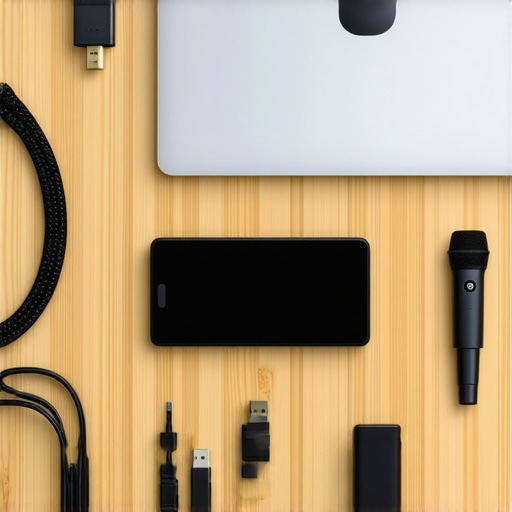
I’ve realized that the ‘premium’ feel we strive for is fragile. It breaks the moment you spend four minutes hunting for a USB-C to HDMI dongle while an investor checks their watch. This is why I carry a ‘Meeting Survival Kit’—it’s not just paranoia, it’s about startup success secrets choosing the perfect conference room at 0817 am when the sun is rising and your coffee hasn’t kicked in. My kit includes a 10ft braided HDMI cable, a portable LED panel, and an external directional mic. Why the mic? Because built-in laptop microphones pick up every air conditioner hum and chair squeak in the building. If you want to sound like a leader, you need to isolate your voice. I personally swear by the Shure MV7 for high-stakes calls; it has a ‘Voice Isolation Technology’ that acts like a sound engineer in your pocket. According to the technical documentation for the Dante audio networking protocol by Audinate, achieving ultra-low latency is the golden standard for natural conversation—anything more and you’re talking over each other like a glitchy news broadcast.
How do I keep my setup professional over the long term?
It comes down to what I call the ‘Ten-Minute Reset.’ Every time I finish a session in a shared space, I check the lighting angles and the cable health for the next user or my own return. In my experience, why your conference room needs better technology and fewer cables-2 boils down to eliminating failure points before they manifest. I’ve started using velcro cable ties instead of zip ties—it sounds petty until you need to swap a faulty adapter in thirty seconds. This level of maintenance is what separates the ‘one-hit-wonder’ demos from the founders who can unlock networking opportunities in top coworking environments consistently. You want your presence to be predictable, not a gamble. When you how to find a conference room that actually has working adapters, you aren’t just looking for hardware; you’re looking for a partner in your reliability.
Looking forward, the future of conference rooms in startup ecosystems is moving toward ‘spatial audio’ and AI-driven framing. We are seeing rooms that automatically zoom in on the speaker and suppress background noise from the communal kitchen next door. As we master the logistics of scaling a hybrid team without a corporate hq-2, your ability to project a high-end image from a flex office will become your greatest competitive advantage. Don’t wait for your company to be ‘big enough’ to care about these details. My advice? Start by swapping one cheap, flickering cable for a professional-grade shielded one today. It’s the smallest investment that pays the largest dividends in perceived authority.
I’ll never forget the day I stood in a beige-walled conference room, sweat beads forming on my upper lip, while three skeptical investors stared at my prototype. On my screen, the UI looked vibrant. In their eyes, reflecting the harsh, flickering overhead fluorescents, it looked like a high school science project. That was the moment I realized that the cost of a bad first impression isn’t just about your slides; it’s about the atmosphere you create. I had the code, but I didn’t have the “expensive” vibe. I looked like I was still working out of my mom’s basement, even though we were already hitting our growth milestones.
I Almost Blew My Seed Round Because of a Fluorescent Bulb
It sounds dramatic, but your environment is a silent partner in every pitch you give. I used to think that as long as the product worked, nothing else mattered. I was wrong. I spent months wondering why my pitch deck failed in a dark hotel basement or a sterile meeting space before I understood the power of visual perception. The truth is, people associate poor, flat lighting with a lack of polish and low-budget operations. Today, I’m going to show you the one specific lighting trick—using a simple “key light” and intentional shadow play—that turns a flat demo into a cinematic experience without spending a fortune. Learning how to host a product demo that looks professional on a budget was the single biggest shift in my closing rate. I remember one morning walking into a space I’d booked, only to realize the sun was directly behind me, washing out the screen and making me look like a silhouette in a witness protection program. I looked desperate, not professional. I spent ten minutes frantically moving tables around while my prospect waited, checking his watch. That was a hard lesson in choosing the perfect conference room for business success. It’s not just about the chairs or the Wi-Fi; it’s about how the light hits your face and your product.
Is good lighting just another way to waste a founder’s time?
You might be thinking, “My product is a SaaS platform, not a TikTok video.” I get it. I made the mistake of thinking aesthetics were for the marketing team later down the road. But human psychology doesn’t turn off just because you’re in a business meeting. According to the Lighting Research Center at Rensselaer Polytechnic Institute, visual hierarchy created by contrast—not just brightness—is what actually directs attention and builds a sense of “premium” quality. If your lighting is flat, your product feels flat. We are going to fix that. Have you ever walked into a demo and felt like the room was actively working against you? It’s time to stop letting bad lighting ruin your video calls and in-person pitches alike. This isn’t about being fancy; it’s about making sure your hard work actually gets the attention it deserves when you maximize productivity in your startup’s conference rooms.The biggest mistake founders make is thinking more light equals better light. It doesn’t. It usually just means more glare on your forehead and a washed-out screen. To get that ‘expensive’ vibe, you need to manage where the light isn’t going. I learned this the hard way during a series of innovative meeting rooms that boost startup creativity where the windows were massive but the glare made my laptop screen unreadable. The solution is the ‘Key-Fill-Back’ strategy. Think of yourself as the star of a play. Your Key light is your main source, positioned 45 degrees to your side. Your Fill light is softer, on the other side, to prevent you from looking like a character in a noir film. The Back light—the secret sauce—separates you from the wall behind you and creates depth.
Transform any corner into a broadcast studio
If you’re stuck in a space with harsh overheads, don’t fight them—deflect them. I once had a high-stakes demo in a tiny pod and realized 7 ways to make a windowless meeting room feel less like a prison starts with avoiding the ceiling light. I took a piece of white foam board from a craft store, propped it up on a chair, and bounced a desk lamp off it. It turned a sharp, ugly beam into a soft glow that filled the room. This tiny adjustment made the $200 hardware prototype I was showing off look like a $2,000 finished product. When you maximize productivity in your startup’s conference rooms, you’re also managing the visual ‘noise’ that distracts investors.
Use the wall as your biggest lamp
Lighting is worthless if your tech fails. I’ve seen million-dollar ideas die because a founder spent fifteen minutes fumbling with a dongle or a dead remote. You need to how to find a conference room that actually has working adapters and test your signal strength. On one occasion, I arrived thirty minutes early to a premium space only to find my laptop wouldn’t sync with their screen. Because I had time, I swapped to a backup HDMI and adjusted the room’s dimmer switches to ensure why your pitch deck looks better on a forty-inch screen than a laptop became a reality rather than a pixelated mess.
Keep the background intentional but quiet
Your backdrop should tell a story of growth, not clutter. When we moved into a creative coworking transforming meeting rooms into collaboration hubs at 0455 pm, I spent an hour just moving a potted plant and two books. Why? Because a completely empty white wall looks like a doctor’s office. A messy desk looks like a crisis. You want ‘active professional’—a hint of a whiteboard with some diagrams, a clean surface, and perhaps a view of the office hubbub through a glass door. This depth creates a subconscious feeling that the investor is stepping into a moving train they’d be lucky to join. If you’re struggling with the environment, remember that how to vet a meeting room for acoustic privacy before booking is just as important as the visual aesthetic.
Most founders think that as long as they have a massive TV and a fast internet connection, they’ve mastered the art of the professional environment. I’m here to tell you that’s a dangerous assumption. In my experience, the shiny hardware is often a distraction from the fundamental elements that actually close deals. I’ve seen teams drop five figures on a custom LED wall while ignoring the fact that their room sounds like a tiled bathroom. If the person you’re pitching to has to strain their brain just to filter out the echo, you’re losing. A study published in the Journal of the Acoustical Society of America suggests that poor room acoustics can increase cognitive load significantly, meaning your audience is spending more energy processing your voice than your actual business model.
Ditch the tech specs for a moment
Everyone says you need the latest gadgets, but I’ve found that why your conference room needs better technology and fewer cables-2 is actually about simplification, not accumulation. The contrarian truth? A low-tech room with perfect sound and intentional seating beats a high-tech room with a tangled mess of HDMI cords every single time. When you the acoustics test every conference room should pass, you realize that the most expensive equipment in the world won’t save a pitch if the room’s physical layout creates a barrier between you and your investors. It’s about creating a frictionless environment where the technology disappears, and the vision takes center stage.
Why does your high-stakes pitch feel like a shouting match?
It’s usually the ‘reverb’ you aren’t noticing. We get used to the sound of our own spaces, but a visitor feels it immediately. This is the ‘Oops’ factor I see constantly: founders booking ‘cool’ industrial spaces with high ceilings and exposed concrete. While it looks great on Instagram, those surfaces are an acoustic nightmare. I once nearly lost a partnership because the room was so echoey the client thought I was hiding my nervousness behind a loud voice. Before you sign a lease or book a space, you need to how to vet a meeting room for acoustic privacy before booking to ensure your voice carries authority, not just volume. If you can’t hear a pin drop, they can’t hear your nuances.
The hidden nuance of the the future of conference rooms in startup ecosystems isn’t just about the physical walls; it’s about the psychological safety of the space. I used to think a glass-walled ‘fishbowl’ in a busy lobby looked high-energy. In reality, it just makes your guests feel exposed. If they are constantly looking at people walking by, they aren’t looking at your deck. I’ve learned that why your pitch deck won’t save you from a noisy meeting space applies to visual noise too. You want a space that feels like a ‘war room’—focused, private, and intense. Have you ever fallen into this trap of choosing style over substance? Let me know in the comments. Managing these small details is how you how to manage office politics in a space you don’t own by commanding respect through your environment before you even speak a word.
I’ve realized that the ‘premium’ feel we strive for is fragile. It breaks the moment you spend four minutes hunting for a USB-C to HDMI dongle while an investor checks their watch. This is why I carry a ‘Meeting Survival Kit’—it’s not just paranoia, it’s about startup success secrets choosing the perfect conference room at 0817 am when the sun is rising and your coffee hasn’t kicked in. My kit includes a 10ft braided HDMI cable, a portable LED panel, and an external directional mic. Why the mic? Because built-in laptop microphones pick up every air conditioner hum and chair squeak in the building. If you want to sound like a leader, you need to isolate your voice. I personally swear by the Shure MV7 for high-stakes calls; it has a ‘Voice Isolation Technology’ that acts like a sound engineer in your pocket. According to the technical documentation for the Dante audio networking protocol by Audinate, achieving ultra-low latency is the golden standard for natural conversation—anything more and you’re talking over each other like a glitchy news broadcast.
How do I keep my setup professional over the long term?
It comes down to what I call the ‘Ten-Minute Reset.’ Every time I finish a session in a shared space, I check the lighting angles and the cable health for the next user or my own return. In my experience, why your conference room needs better technology and fewer cables-2 boils down to eliminating failure points before they manifest. I’ve started using velcro cable ties instead of zip ties—it sounds petty until you need to swap a faulty adapter in thirty seconds. This level of maintenance is what separates the ‘one-hit-wonder’ demos from the founders who can unlock networking opportunities in top coworking environments consistently. You want your presence to be predictable, not a gamble. When you how to find a conference room that actually has working adapters, you aren’t just looking for hardware; you’re looking for a partner in your reliability.
Looking forward, the future of conference rooms in startup ecosystems is moving toward ‘spatial audio’ and AI-driven framing. We are seeing rooms that automatically zoom in on the speaker and suppress background noise from the communal kitchen next door. As we master the logistics of scaling a hybrid team without a corporate hq-2, your ability to project a high-end image from a flex office will become your greatest competitive advantage. Don’t wait for your company to be ‘big enough’ to care about these details. My advice? Start by swapping one cheap, flickering cable for a professional-grade shielded one today. It’s the smallest investment that pays the largest dividends in perceived authority.
The Hard Truth About My First Ten Failed Pitches
It took me years to realize that investors aren’t just buying your equity; they are buying into your competence. When you move your startup to a professional space, the environment does half the selling for you. I learned that a slightly warm room keeps people alert but comfortable, whereas a freezing ‘tech dungeon’ makes them want to leave the second the slides end. Another lightbulb moment? Always sit with your back to a solid wall, never a busy hallway. It projects stability and keeps the focus entirely on your words while you manage office politics in a space you don’t own.
The Gear That Saved My Professional Reputation
If you’re looking to upgrade your presence, I recommend a high-quality LED key light that fits in your bag. For sound, the Shure MV7 is my go-to, especially if you’re in a room that fails the acoustics test. I also never leave home without a high-quality 4K HDMI cable; relying on what the venue provides is a gamble I stopped taking. These aren’t just gadgets; they are the foundation for meeting rooms that boost startup creativity and ensure you never fumble during the most important hour of your year.
Build Your Own Stage for Success
Mastering your environment is about more than just looking ‘fancy’—it’s about removing the friction between your big idea and the people who can help you realize it. Whether you’re utilizing top meeting rooms of 2025 or a quiet corner of a shared hub, the intentionality you bring to the space reflects the intentionality you bring to your product. By following startup success secrets choosing the perfect conference room at 0817 am, you can ensure every first impression is a winning one. Have you ever had a pitch ruined by a tech glitch or a noisy neighbor? Let me know your worst ‘room horror story’ in the comments below!