

I remember the exact second my biggest potential client’s face went blank. I was sitting in my ‘home office’—which was really just a repurposed kitchen chair with a Ring light clipped to a stack of books. Midway through my pitch, my neighbor started up a leaf blower right outside the window. I tried to power through, but the damage was done. They didn’t see a CEO ready to handle their seven-figure account; they saw a guy in a spare bedroom struggling to keep his background noise down. That failure stung, and it was a massive wake-up call about the hidden costs of running a startup from your garage or basement. We like to think that ‘the work speaks for itself,’ but in reality, your environment speaks first. Today, I want to walk you through why that laundry pile in the corner of your Zoom frame is a silent liability and how you can fix it without breaking the bank.
Your background is shouting secrets about your business
When you take a high-stakes call from your dining room table, you aren’t just saving on rent. You’re broadcasting a message about your company’s stability and scale. I made the mistake early on of thinking I was being ‘scrappy’ by avoiding a professional space. In reality, I was just making it harder for people to trust me. The psychological shift that happens when you move to a professional environment is real. It’s why so many of us are ditching the basement in favor of something that actually looks like a business. It isn’t just about vanity; it’s about signaling that you take your own venture seriously enough to invest in a real workspace. Have you ever felt that sinking feeling when a client asks for a face-to-face meeting and you realize your only option is a loud Starbucks? I’ve been there, and I can tell you from experience, why your pitch failed in that noisy coffee shop often has more to do with the clacking espresso machine than your slide deck.
Is a professional room actually worth the monthly fee?
I get the skepticism. When you’re watching every penny of your seed round, a membership seems like a luxury. But consider this: according to researchers at Princeton University, it takes just a tenth of a second for a stranger to form an impression of your trustworthiness based on your appearance and surroundings. If your ‘office’ looks like a temporary setup, your business feels temporary. Transitioning to a space with a membership that is actually worth the price can be the difference between a ‘we’ll think about it’ and a signed contract. Have you ever lost a deal because you couldn’t find a quiet place to talk? I’d love to hear your horror stories—drop them in the comments or send me a message. We’re going to look at the practical steps to upgrade your image, starting with where you actually put your laptop every morning.
If you want to move out of the garage, you can’t just sign the first lease you see. Think of it like testing a car; you wouldn’t buy a sedan without checking the engine, yet many founders sign office contracts based on the lobby’s aesthetic. You need to use a day pass to test your next potential office before putting a penny down. During that trial, look specifically at the bandwidth. I once tried to run a live software demo on a shared connection that choked when the floor got crowded at lunch. It was humiliating, and it proved that the hidden drag of slow office wi-fi on your burn rate isn’t just about lost time—it’s about lost credibility in front of investors.
Start by treating your office search like a first date
Testing the waters before you commit
Don’t be afraid to be high-maintenance during your tour. Ask about the peaks and valleys of noise levels. I’ve seen teams move into beautiful open-plan spaces only to realize they can’t hear themselves think because a sales team nearby is constantly ringing a celebration bell. If you can’t focus, you aren’t working. This is where you learn that why your pitch deck wont save you from a noisy meeting space is a lesson best learned before you sign a twelve-month commitment. Check the signal strength in the corners and the accessibility of the power outlets.
Mastering the high-stakes conference room layout
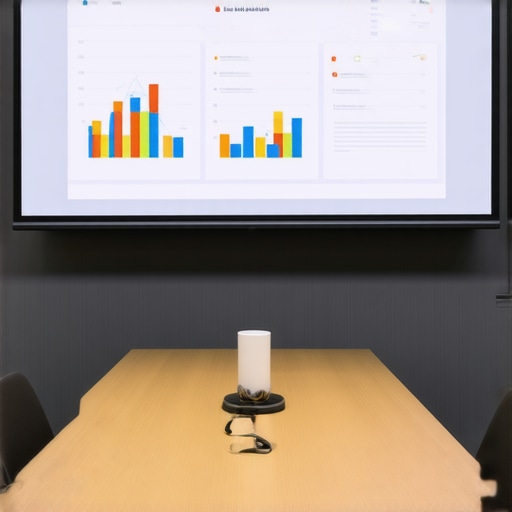
Once you’re in a space, the conference room becomes your battlefield. You need to stop looking at it as just a table and some chairs. I remember a particular meeting where I realized why your pitch deck looks better on a forty-inch screen than a laptop—the physical scale of your ideas changes how people perceive them. But scale doesn’t matter if the room lacks privacy. I learned this the hard way during a board meeting where we were discussing sensitive financial pivots, only to realize the glass walls were essentially acoustic megaphones. Now, I never book without knowing how to vet a meeting room for acoustic privacy before booking.
The tiny tech details that kill or close deals
Avoid the ‘dongle dance’ at all costs. Nothing kills the momentum of a great presentation faster than fumbling with a HDMI adapter for five minutes while an investor checks their watch. When I vet a room now, I check the ports first and ensure there is a backup. I even look for small perks, like why our private office suites stock extra surface pro chargers for members, because those details tell me the space is run by people who actually understand the friction of a startup workday. If you’re coordinating with a remote team, make sure the room has a dedicated wide-angle camera to maximize productivity in your startups conference rooms before the afternoon slump hits.
The logistics of a stress-free booking
Finally, get your timing right. Everyone wants the boardroom on Tuesday at 10 AM. If you wait until the last minute, you’ll end up back in that noisy lobby you were trying to escape. I’ve developed a system for how to book a meeting room on a friday afternoon without the stress, which involves using the space’s automated booking apps and building a relationship with the community managers. They are your best allies; treat them well, and they’ll find you a quiet corner when a high-priority client calls out of the blue. The goal is to remove every possible hurdle between your pitch and the person you’re selling it to.
Everyone thinks the 20-person executive suite makes them look like a unicorn-in-waiting. In my experience, it’s the fastest way to feel like a kid wearing their dad’s suit. There is a common myth in the startup world that ‘bigger is better’ when it comes to booking space. But if you’re a three-person founding team pitching a single angel investor in a room designed for thirty, you’ve already lost the psychological battle. The void in the room emphasizes what you lack—scale—rather than what you have—agility. I’ve learned that the difference between a standard meeting room and a real war room is all about the ‘compression of energy.’ You want a space that feels packed with ideas, not one where your voice echoes off cold, distant walls.
Why that massive boardroom is actually killing your pitch energy
When you sit too far from your audience, you lose the ability to read subtle micro-expressions. This is where most founders stumble; they optimize for prestige instead of intimacy. You need to realize why your meeting room needs to be more than just a table and chairs—it needs to be a tool that facilitates a connection. A smaller, well-appointed room creates a sense of shared mission. Have you ever fallen into the trap of booking the biggest room available just to ‘impress’ someone? Let me know in the comments, because I’ve definitely been there, and the silence in those big rooms is deafening.
Can the ceiling height change how an investor thinks?
This sounds like ‘feng shui’ nonsense, but it’s backed by hard science. A study by Joan Meyers-Levy at the University of Minnesota found that ceiling height directly impacts cognitive processing. Higher ceilings (typically 10 feet or more) encourage relational, creative thinking and freedom. Lower ceilings, conversely, prime the brain for detail-oriented, analytical tasks. If you’re trying to get an investor to see the ‘big picture’ of your 2030 roadmap, a cramped basement office is literally working against their brain chemistry. However, if you’re in the final stages of due diligence where every decimal point matters, a cozy, focused environment is your best friend. This is the level of nuance you need when you’re deciding how to choose the perfect conference room for business success.

Beyond the ceiling, you have to worry about the ‘fishbowl effect.’ Modern coworking spaces love glass walls, but they are a double-edged sword. While they look sleek, they can be a massive distraction if you’re sitting in a high-traffic hallway. I once saw a founder lose their train of thought completely because a delivery driver was having a loud argument just three feet away on the other side of a ‘soundproof’ glass pane. You must understand the truth about shared office noise levels before you commit your most important hour to a room just because it looks good on Instagram.
Avoid the transparency trap of the modern glass office
The ‘Oops’ factor often comes down to what people can see, not just what they can hear. If you are discussing sensitive IP or showing a prototype, those glass walls are a liability. I’ve become obsessive about the acoustics test every conference room should pass, but I also check the sightlines. Can someone walking by see your valuation on the screen? If so, you aren’t in a secure meeting; you’re in a public theater. Learning how to keep your startups trade secrets safe in a public lounge or shared space is an advanced skill that separates the amateurs from the pros. Don’t let a beautiful aesthetic blind you to the basic needs of privacy and cognitive focus.
I’ve spent the last three years living out of a laptop bag, and I’ve learned that the ‘physical touchpoint’ isn’t just about a desk—it’s about the tools that bridge the gap between you and your remote collaborators. Even when I’m using a top-tier space, I carry a ‘Meeting Survival Kit.’ My secret weapon is the Jabra Speak 710. I use it because it offers 360-degree sound pick-up, which is vital when you’re huddling around a table with three people but the investor is on the screen. It eliminates that awkward ‘can you hear me now?’ dance that kills the mood. This is why I always tell founders that why your conference room needs better technology and fewer cables is a hill worth dying on. If you are relying on the built-in mic of a MacBook Pro from 2019, you are doing your brand a disservice. You need clean, crisp audio to signal authority. 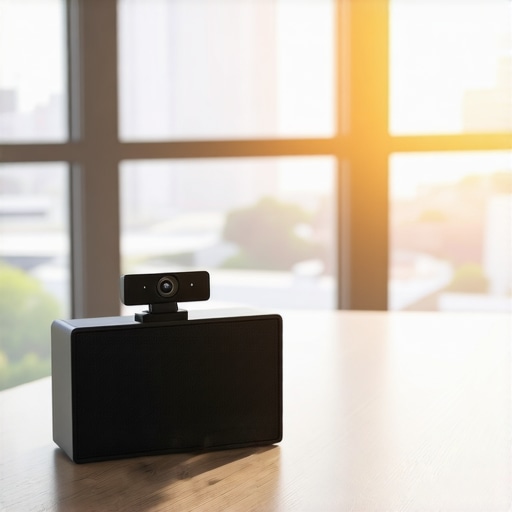 Beyond hardware, you need a software layer that doesn’t fail. I personally swear by Calendly integrated with Zoom and the coworking space’s native app. This automation ensures I never double-book and always have a ‘war room’ ready when a lead gets hot. It’s part of a broader role of flex space in a modern business scaling strategy—using technology to act bigger than you are. As you grow, you’ll face the dilemma of scaling from 2 to 20 and knowing when to stop hot desking. My advice? Don’t rush into a long-term lease. I’ve seen companies tank because they traded why membership flexibility is more important than square footage for the vanity of a private lobby. You want to maintain the ability to pivot if your team size changes overnight.
How do I maintain professional standards as my team grows?
The hardest part isn’t getting the space; it’s keeping the culture from rotting as you add more heads. You have to learn how to manage office politics in a space you dont own. This means setting hard rules for your team about noise and shared kitchen etiquette. According to a 2023 report by Leesman, a global authority on workplace effectiveness, high-performance workplaces score significantly higher on ‘social connection’ metrics. This isn’t just fluff; it’s about ensuring your team feels like they belong to a culture, not just a floor plan. This is why your brand needs a physical touchpoint even in a digital world. Even if you are 90% remote, that 10% in-person time needs to be high-impact. I’ve found that the move to a dedicated desk is the extra cost worth it when you need a consistent landing spot for your most senior hires. It provides a sense of permanence that helps with retention. Looking ahead, the future of conference rooms in startup ecosystems is moving toward ‘ambient intelligence.’ We’re talking about rooms that automatically adjust lighting and camera angles based on the speaker’s position and sentiment. It sounds like sci-fi, but these tools are already being beta-tested in Silicon Valley hubs. If you want to stay ahead, stop thinking of your office as a place you sit, and start thinking of it as an interactive tool for your business. My challenge to you: This week, audit your current setup—replace one piece of failing tech or swap your next home-office call for a professional room and watch how the energy of the conversation changes.
The Day I Realized My Environment Was My Best Salesperson
The hardest lesson I learned wasn’t about the rent—it was about the mental weight of constant apology. When you are in a professional environment, you stop apologizing for the barking dog in the background or the unreliable Wi-Fi. That lack of friction translates directly into a more confident pitch. I have found that choosing the perfect conference room is actually an act of self-care for a stressed founder; it allows you to focus 100% on your vision rather than your logistics. Another ‘aha’ moment came when I realized that innovative meeting rooms that boost startup creativity aren’t just about fancy whiteboards; they provide a psychological permission to think bigger than your current bank balance.
The Gear That Keeps My Professionalism from Cracking
I do not just rely on a building’s amenities; I have curated a small toolkit that ensures I am never caught off guard. Beyond the high-end speakerphone, I always check the refreshment situation before an investor arrives. It sounds trivial, but saving money on office amenities should never come at the cost of a terrible first impression. I also maintain a digital checklist for how to handle high-stakes board meetings in a shared building, which includes a ‘silent walkthrough’ of the room fifteen minutes before the start time. This habit has saved me from broken HDMI cables and flickering lights more times than I can count.
#IMAGE_PLACEHOLDER_E#
Stop Hiding Your Potential in the Spare Bedroom
Your business deserves to be seen in its best light. Moving into a professional environment is not just a milestone; it is a catalyst for your next level of growth. When you surround yourself with other builders in a coworking environment, you stop feeling like an outlier and start feeling like a peer. The next time you have a high-stakes call, remember that your choice of conference room is a signal to the world that you are here to stay. Don’t be afraid to invest in the space that matches your ultimate ambition. What is the one piece of your current workspace that makes you cringe before a big call? Let me know in the comments—I would love to hear how you handled it!