

I was hunched over a laptop in a basement that smelled faintly of damp laundry when I sent my tenth follow-up email to a VC who hadn’t replied in weeks. I was exhausted, isolated, and honestly, starting to believe our product just wasn’t good enough. I thought the secret to a seed round was all in the deck, the metrics, and the grind. I was wrong. The real breakthrough didn’t happen in my inbox; it happened the day I finally admitted that my environment was killing my company’s credibility.
Stop Pitching from Your Kitchen Table
The biggest mistake I made early on was believing that ‘lean’ meant ‘invisible.’ I tried to save every penny by staying in my home office, but I ended up missing the accidental conversations that only happen in shared spaces. When we finally moved into a professional environment, I realized why startups fail when they isolate in home offices. You lose the pulse of the industry. The move that landed us our seed round was deceptively simple: we started hosting our meetings in a space that actually looked like a real business. We stopped inviting investors to noisy coffee shops and started learning how to choose the perfect conference room for business success. Today, I’m going to show you how to leverage your physical location to build the kind of trust that makes VCs actually open their checkbooks.
Does the Venue Really Change the Check Size?
You might be skeptical. After all, isn’t the product what matters? While your tech needs to be solid, human psychology plays a massive role in high-stakes decisions. A study published by the Harvard Business Review found that face-to-face requests are 34 times more successful than those sent via email. If you are asking for millions, the setting matters. I learned the hard way that why your pitch deck fails in a dark hotel basement often has more to do with the vibe than the slides. We eventually secured our lead investor because we ran into them in a communal kitchen at a tech hub—a ‘random’ encounter that never would have happened in my basement. Have you ever felt like your current workspace is actually a liability when you’re trying to close a deal? It might be time to rethink where you’re planting your flag.
Kill the Squint with a Real Screen
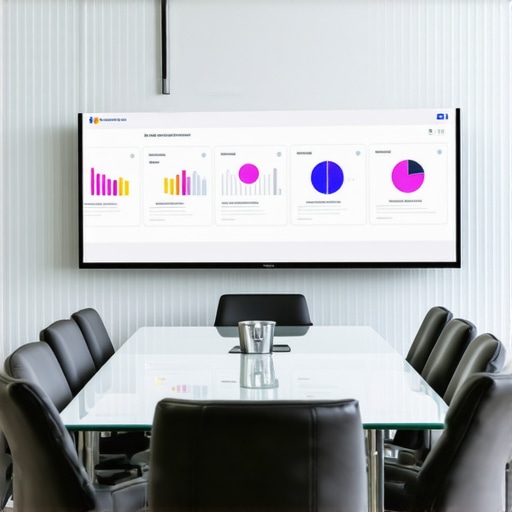
The first time I pitched a Tier-1 VC, I huddled over my laptop, trying to show them a complex data visualization on a 13-inch screen. They spent more time leaning forward to see the pixels than listening to my vision. It was a mess. If you want to look like a growth-stage company, you have to act like one. I learned that why your pitch deck looks better on a forty-inch screen than a laptop isn’t just about size; it’s about authority. When your product is projected on a high-definition wall, it ceases to be a ‘project’ and becomes a ‘platform.’ I eventually started booking rooms specifically for the tech setup, realizing that the lighting trick that makes your product demo look expensive is simply having enough natural light to look professional but enough control to make your software pop.
Vetting Your Room Before the VC Arrives
I once had a lead investor ask a very sensitive question about our burn rate while we were in a ‘private’ corner of a noisy hotel lobby. A competitor’s sales rep was literally three feet away. I froze, unable to answer honestly without risking our trade secrets. That experience taught me that why your pitch deck won’t save you from a noisy meeting space is a lesson in risk management. Now, I never book a space without doing a walkthrough. You need to know how to vet a meeting room for acoustic privacy before booking. If you can hear the person next door talking about their lunch, your investor knows the rest of the world can hear your financial projections. I personally check for glass thickness and door seals now; it’s the difference between a secure deal and a leaked strategy.
Leverage the Kitchen for Accidental Wins
Fundraising isn’t always about the formal presentation; it’s about the ecosystem you inhabit. I used to think the ‘communal kitchen’ was a distraction for people who didn’t want to work. Then, I met our current CTO over a shared carafe of cold brew. We were both frustrated with our respective builds and started sketching on a napkin. I quickly realized why communal kitchens are the best place to find your next CTO. These spaces act like high-density networking hubs where the barrier to entry is just a polite ‘hello.’ You aren’t just paying for a desk; you are paying for the density of talent. When you unlock networking opportunities in top coworking environments, you realize that the person standing in line for the toaster might be the one who introduces you to your lead investor. Don’t just hide in your private office; use the social gravity of the space to your advantage.
Everyone tells you to find the ‘smartest’ room available, but here is the contrarian truth: over-relying on high-end gadgets is often a tell-tale sign of a founder who does not trust their own narrative. I have seen teams spend twenty minutes troubleshooting a proprietary wireless display system while the investor checked their watch. If you cannot pitch with a simple HDMI cord and a clear voice, the tech will not save you. In fact, I have found that innovative meeting rooms that boost startup creativity are often the simplest ones—minimalist, reliable, and distraction-free. The move from a garage to a flex office is where these hidden traps hide, and many founders assume the most expensive suite is the best. I disagree; why we chose a local hub over a generic corporate park came down to the quality of the interactions and the reliability of the infrastructure, not the thickness of the mahogany table.
Why High Ceilings Change the Way You Think
Most founders pick a room based on the price or the proximity to the coffee machine, but the environmental psychology goes much deeper. A landmark study from the University of Minnesota’s Carlson School of Management found that ceiling height directly influences cognitive processing: higher ceilings promote ‘abstract’ and creative thinking, while lower ceilings are better for ‘item-specific’ detail work. This is not just trivia; it is a strategic lever. If you are in a brainstorming phase, you need to understand why your team is more creative in a room with high ceilings. Conversely, if you are doing a final line-by-line contract review, get into a smaller, more enclosed space to sharpen your focus. I once made the mistake of trying to vision-cast in a cramped, windowless pod, and the energy felt suffocated before the first slide. You also cannot ignore the hidden drag of slow office wi-fi on your burn rate; a room that inspires creativity is useless if your cloud-based tools are crawling at a snail’s pace.
Can the wrong room size actually kill your momentum?
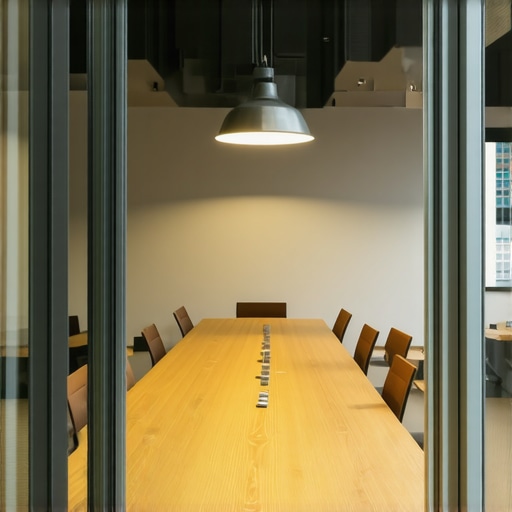
One of the biggest ‘oops’ factors I see in the startup world is the ‘Cavernous Boardroom Trap.’ Founders think booking a 20-person board table for a three-person meeting makes them look established. It actually does the opposite; it makes you look like you are playing dress-up in someone else’s office. You lose the intimacy and the ‘conspiracy’ feel required for a high-stakes seed round. Instead, you should apply the two-pizza rule for booking the right size meeting room. You want the room to feel full and energized, not empty and sterile. Furthermore, empty spaces lead to echoes that ruin the professional vibe; you must master the acoustics hack for crystal-clear client pitches to ensure every word of your valuation defense is heard. Have you ever fallen into this trap of over-booking your space? Let me know in the comments. It is a nuance that separates the pros from the amateurs when you finally how to transition your team from a garage to a real office and start playing in the big leagues.
The Hardware I Never Leave the House Without
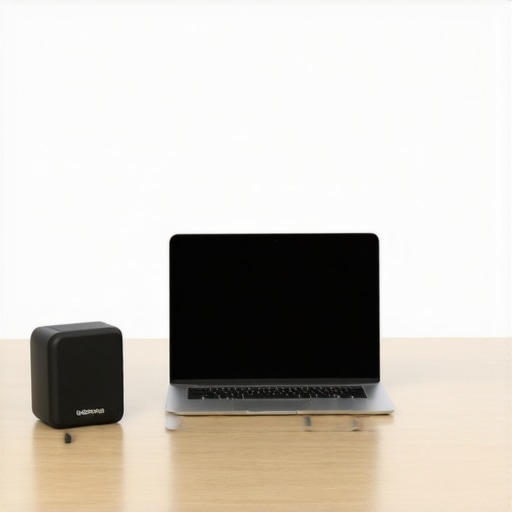
I eventually realized that the honeymoon phase of moving into a professional space ends the second the WiFi drops during a demo. I’m not a gear-head by choice, but I’ve learned that a $200 speakerphone is a lot cheaper than a lost $2M seed round. I never rely on the built-in microphone of any laptop anymore; they pick up too much ambient noise in open-plan hubs. I personally swear by the Jabra Speak 710. It’s portable, pairs instantly, and ensures that even if I’m in a glass box, my voice doesn’t sound like I’m underwater. I’ve spent way too much time learning how to find a conference room that actually has working adapters, only to find the HDMI pins are bent or the VGA cable is straight out of 2005. Now, I carry a ‘survival kit’—a dedicated 7-in-1 USB-C hub and a 10-foot HDMI 2.1 cable. This is why I’m such a stickler for why your conference room needs better technology and fewer cables; the more points of failure you have, the more likely you are to look unprepared in front of a lead investor.
The 5-Minute Network Stress Test
Before I even open my laptop for a high-stakes call, I perform a quick check that most founders overlook. I use a tool called iPerf3 to check the actual local throughput between my machine and the gateway, looking specifically for jitter and packet loss. According to technical documentation from Cisco regarding real-time traffic, anything over 150ms of latency or 1% packet loss will noticeably degrade a video call’s quality. If the coworking space’s network is lagging because everyone else is streaming 4K video, I switch to my dedicated 5G hotspot immediately. Trust me, why a basic warranty won’t save your startup from a hardware disaster is a lesson you don’t want to learn while an investor is waiting for your screen to share. I also keep a spare Surface Pro charger in my bag, inspired by how why our private office suites stock extra surface pro chargers for members—it is all about removing every possible friction point before it becomes a crisis.
How do I keep my startup’s momentum as we scale into multiple spaces?
Long-term results aren’t about the furniture; they are about the systems you build to stay connected as you grow. Managing the logistics of scaling a hybrid team without a corporate hq requires a hyper-specific approach to asynchronous documentation. We moved all our internal ‘knowledge’ into a searchable database so that a new hire in a different city’s hub can find our pitch history without asking me directly. Looking at the future of conference rooms in startup ecosystems, I predict we will see more AI-integrated spatial audio that automatically tracks who is speaking and transcribes action items in real-time. This shift will make the physical location even less of a barrier, provided you have the right tech foundation. My advice? Don’t wait for the ‘big office’ to act like a big company. Start by running a packet loss test before your next call and see if your environment is actually supporting your speed.
Hard Lessons from the Founder Who Almost Lost a Lead Investor
Looking back, my biggest hurdle wasn’t our churn rate; it was the psychological weight of playing small. I realized too late that you can’t build a unicorn from a space that makes you feel like a hobbyist. One of my biggest lightbulb moments was discovering that startup success secrets often involve choosing the perfect conference room to anchor your narrative and give your team the authority they deserve. I also learned that environment is a zero-sum game: if your space isn’t actively helping you, it’s draining your energy. For instance, I spent months ignoring distractions until I finally researched how to handle a loud phone talker when you have no private office, which instantly reclaimed four hours of my deep-work time every single day.
Tools and Guides That Saved My Team from Burnout
If you are serious about professionalizing your setup, you need more than just a desk. I rely on three specific pillars to keep our momentum high. First, the Jabra Speak 710 for every high-stakes call—audio clarity is a non-negotiable trust signal. Second, I constantly look for ways to transform meeting rooms into collaboration hubs rather than just sterile boxes for status updates. Finally, I use Notion to document every physical meeting so that the energy of the room isn’t lost once the door closes. These tools aren’t just ‘nice-to-haves’; they are the infrastructure that prevents the typical scaling friction that kills most early-stage companies.
#IMAGE_PLACEHOLDER_E#
Your Future Headquarters is Closer Than You Think
The transition from a garage to a professional ecosystem is the moment your startup becomes a real business in the eyes of the world. It is an intimidating leap, but the social gravity of a high-performance environment is the fastest way to accelerate your growth. When you finally maximize productivity in your startups conference rooms, you aren’t just checking a box; you are building a temple for your company’s mission. Stop waiting for the ‘perfect’ time to move out of the basement. The networking, the technology, and the creative energy are waiting for you in the right hub. Have you ever had a technical disaster or a noisy neighbor ruin a high-stakes meeting? Let me know your story in the comments below.