

I still remember the exact moment my chest tightened during our third pitch meeting of the week. We were huddled in a cramped, windowless private office that smelled faintly of old cardboard boxes and cold coffee. I had just signed a premium lease for this tiny, isolated box, believing it was the ultimate status symbol of a ‘real’ startup. Instead, it felt like an expensive prison. I looked at my co-founder, who was visibly sweating under the harsh fluorescent lights, and realized we had made a massive mistake. We were paying a premium to hide away from the very ecosystem we needed to survive.
The Trapped feeling of the Four Walls
Our early days in that private suite were incredibly lonely. We thought we needed absolute walls to protect our ideas, but we quickly realized we had just isolated ourselves from the pulse of the community. It turns out, isolating your early-stage team is one of the fastest ways to kill momentum. You can read about why startups fail when they isolate in home offices, and honestly, the same rule applies to private offices that function like closed-off islands. We were spending a fortune on rent but missing out on the spontaneous conversations that happen when you are actually in the room.
Is a private office actually worth the extra cash?
For most early-stage teams, the short answer is no. We fell hook, line, and sinker for the myth that a startup needs a door with a lock to be taken seriously. That mistake cost us thousands of dollars that should have gone toward product development. The truth is, we did not need a private office; we just needed a home base. That is when we decided to pivot and look at the move to a dedicated desk to see if the extra cost was worth it compared to hot-desking, while still avoiding the high-lease trap of a private office. This single shift kept us in the middle of the action while keeping our overhead incredibly low.
Why We Chose the Energy of the Floor
Switching to dedicated desks in an open, high-energy environment changed everything for our team. According to a landmark study on workspace dynamics published by the Harvard Business Review, physical proximity to other innovators increases the likelihood of collaboration by up to 57%. We experienced this firsthand. By being out in the open, we found our lead developer just by chatting at the coffee station, a breakthrough we never would have achieved sitting behind our closed office door. Have you ever felt like your private workspace is actually suffocating your team’s creativity?
We still needed privacy for high-stakes client calls and deep-dive strategy sessions, of course. But instead of paying for an underutilized private room 24/7, we learned to utilize innovative meeting rooms that boost startup creativity only when we actually needed them. It gave us the best of both worlds: a dedicated personal setup to leave our monitors, combined with access to premium collaborative spaces on demand.
How to Execute the Move Without Disrupting Your Team
When we decided to abandon our private office lease, we couldn’t just pack up and drop our team of five onto a loud, open floor overnight. If you do that without a plan, your team’s output will plummet. We treated the transition like a software migration: step-by-step, with clear guidelines to protect our workflow. You must audit your current daily habits, set clear communication boundaries, and learn how to treat your shared footprint as a strategic resource.
Take the 10-Minute Spatial Audit
Before you pack a single box, you need to understand exactly how much space your team actually uses. When we did the 10-minute audit to see if your office space is wasting money, we discovered that our expensive private desks sat empty 40% of the day. Our developers were pacing in the hallway, and our sales lead was hiding in a phone booth. Map out your team’s physical footprint over a typical week. If your team is constantly leaving their desks to find quiet areas, you are paying a premium for empty chairs.
Adopt the ‘On-Demand’ Meeting Room Strategy
One of our biggest fears when giving up a private suite was losing our meeting space. We used to keep our private boardroom empty for six hours a day just so we could use it for one critical hour. The fix was simple but required a shift in mindset: rent your collaborative spaces on-demand. Learn the two-pizza rule for booking the right size meeting room to avoid renting a ten-person boardroom for a two-person sync. This keeps your overhead low while ensuring you only pay for the square footage you are actively using.

Establish the ‘Public Zone’ Rules for Client Calls
The moment you step onto a shared floor, your voice becomes public property. During our first week in the open area, our co-founder took an urgent investor call right at his desk, speaking loudly over the hum of the room. It was distracting for neighbors and a massive security risk for us. We immediately drafted a team policy: all client calls, deep-dive feedback loops, and sensitive data reviews happen in designated phone booths or booked meeting rooms. It’s why the etiquette of taking private calls in a public coworking zone is the very first thing we teach new hires on onboarding day.
Protect Your Trade Secrets Out in the Open
You do not need four concrete walls to keep your intellectual property safe, but you do need strict digital hygiene. When we worked on the open floor, we watched a competitor at a nearby desk write their entire launch strategy on a shared glass whiteboard and leave it there overnight. We made it a strict rule to never leave mockups on tables, always lock laptops when stepping away, and use polarized privacy screens. Knowing how to keep your startups trade secrets safe in a public lounge is what allows you to enjoy the high-energy networking of a shared space without exposing your proprietary code to curious eyes.
Optimize Your Tech Stack for Shared Hardware
Nothing kills the momentum of a fast-moving team like arriving at a premium conference room only to realize your laptop won’t connect to the display. During our first major pitch in a shared space, we wasted fifteen minutes of an angel investor’s time trying to find a USB-C to HDMI adapter. After that nightmare, we built a ‘pitch kit’ that stays in our lead designer’s bag. Learn the problem with bring your own device in shared meeting rooms and how to bypass adapter bottlenecks by keeping a dedicated, tested hardware dongle with your team at all times.
When we transitioned away from our expensive private office, we thought we had the playbook entirely figured out. We assumed that substituting a fixed boardroom for dynamic, booking-on-demand setups was purely a game of cost-cutting and math. But we quickly realized that what works on paper often fails spectacularly in real life because of one massive, contrarian truth: most founders view shared spaces as passive containers rather than active tools for leverage. We fell into the common trap of believing that a desk is just a desk, and a conference room is just a place with a table. In reality, how you interface with these spaces dictates how external partners, investors, and even your own team perceive your company’s operational maturity.
The Illusion of the Free Coffee and Boardroom Status
Everyone in the startup ecosystem tells you to optimize for the flashiest amenities. They highlight sleek glass walls, craft draft beer on tap, and high-end espresso machines. In my experience, focusing on these superficial perks is a classic rookie mistake. We spent our first three months in a shared environment admiring the architectural design, while completely ignoring the underlying infrastructure. That is when we hit the ‘Oops’ factor. We booked a beautiful room for a high-stakes partner pitch, only to realize that the acoustic bleed was so severe that our competitors could hear our exact financial projections right through the glass. A gorgeous aesthetic means absolutely nothing if the room lacks basic physical security and functional tech.
Are you treating your shared room like a luxury or a strategic asset?
A fascinating study on environmental psychology from the Association for Psychological Science reveals that physical environment and sound control directly impact cognitive load and decision-making by up to 35%. When you are negotiating a seed round or running a tight strategy session, you cannot afford auditory distractions or hardware failures. Instead of booking space based on how impressive the photos look on an app, you need to audit the actual utility. This is why we stopped relying on luck and learned how to choose the perfect conference room for business success based on privacy, layout, and reliable infrastructure rather than raw square footage.
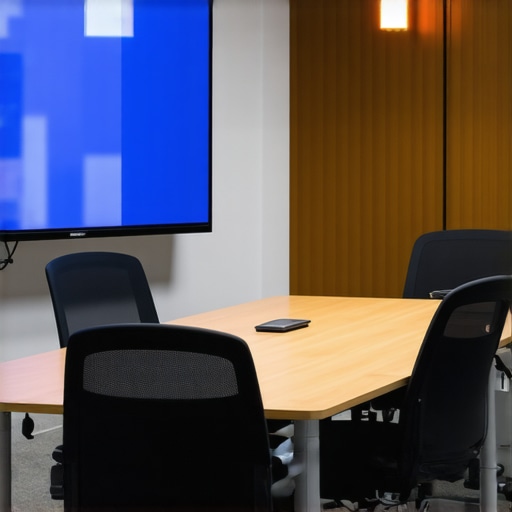
Another major trap is overestimating your team’s flexibility. Founders love to believe their team can work productively from absolutely anywhere, including a bustling open lounge. We tried this, and our development cycles slowed to a crawl. The secret isn’t forcing your team into a single working style; it is knowing when to use open collaborative areas to unlock networking opportunities in top coworking environments and when to aggressively pull back into quiet, dedicated zones. Have you ever fallen into this trap of prioritizing aesthetic over actual functional utility? Let me know in the comments below.
How to Read the Unspoken Signals of a Shared Space
When you invite an investor or a key client to a shared conference room, they are not just evaluating your slide deck; they are reading the unspoken signals of how you run your business. If you are scrambling to connect to the Wi-Fi, using adapters that don’t fit, or booking a room that smells like stale lunch, you are silently projecting chaos. We learned the hard way that mastering the environment is just as important as mastering the pitch. We started researching how forward-thinking spaces design their shared footprints, keeping an eye on the future of conference rooms in startup ecosystems to ensure our workflow matches the modern standard of hybrid work. By treating the shared office as an extension of our software stack—optimizing every touchpoint, adapter, and sound boundary—we turned a potential operational liability into our greatest unfair advantage.
When we transitioned away from our expensive private office, we thought we had the playbook entirely figured out. We assumed that substituting a fixed boardroom for dynamic, booking-on-demand setups was purely a game of cost-cutting and math. But we quickly realized that what works on paper often fails spectacularly in real life because of one massive, contrarian truth: most founders view shared spaces as passive containers rather than active tools for leverage. We fell into the common trap of believing that a desk is just a desk, and a conference room is just a place with a table. In reality, how you interface with these spaces dictates how external partners, investors, and even your own team perceive your company’s operational maturity.
The Illusion of the Free Coffee and Boardroom Status
Everyone in the startup ecosystem tells you to optimize for the flashiest amenities. They highlight sleek glass walls, craft draft beer on tap, and high-end espresso machines. In my experience, focusing on these superficial perks is a classic rookie mistake. We spent our first three months in a shared environment admiring the architectural design, while completely ignoring the underlying infrastructure. That is when we hit the ‘Oops’ factor. We booked a beautiful room for a high-stakes partner pitch, only to realize that the acoustic bleed was so severe that our competitors could hear our exact financial projections right through the glass. A gorgeous aesthetic means absolutely nothing if the room lacks basic physical security and functional tech.
Are you treating your shared room like a luxury or a strategic asset?
A fascinating study on environmental psychology from the Association for Psychological Science reveals that physical environment and sound control directly impact cognitive load and decision-making by up to 35%. When you are negotiating a seed round or running a tight strategy session, you cannot afford auditory distractions or hardware failures. Instead of booking space based on how impressive the photos look on an app, you need to audit the actual utility. This is why we stopped relying on luck and learned how to choose the perfect conference room for business success based on privacy, layout, and reliable infrastructure rather than raw square footage.
Another major trap is overestimating your team’s flexibility. Founders love to believe their team can work productively from absolutely anywhere, including a bustling open lounge. We tried this, and our development cycles slowed to a crawl. The secret isn’t forcing your team into a single working style; it is knowing when to use open collaborative areas to unlock networking opportunities in top coworking environments and when to aggressively pull back into quiet, dedicated zones. Have you ever fallen into this trap of prioritizing aesthetic over actual functional utility? Let me know in the comments below.
How to Read the Unspoken Signals of a Shared Space
When you invite an investor or a key client to a shared conference room, they are not just evaluating your slide deck; they are reading the unspoken signals of how you run your business. If you are scrambling to connect to the Wi-Fi, using adapters that don’t fit, or booking a room that smells like stale lunch, you are silently projecting chaos. We learned the hard way that mastering the environment is just as important as mastering the pitch. We started researching how forward-thinking spaces design their shared footprints, keeping an eye on the future of conference rooms in startup ecosystems to ensure our workflow matches the modern standard of hybrid work. By treating the shared office as an extension of our software stack—optimizing every touchpoint, adapter, and sound boundary—we turned a potential operational liability into our greatest unfair advantage.
Equipping the Team for Seamless Daily Operations
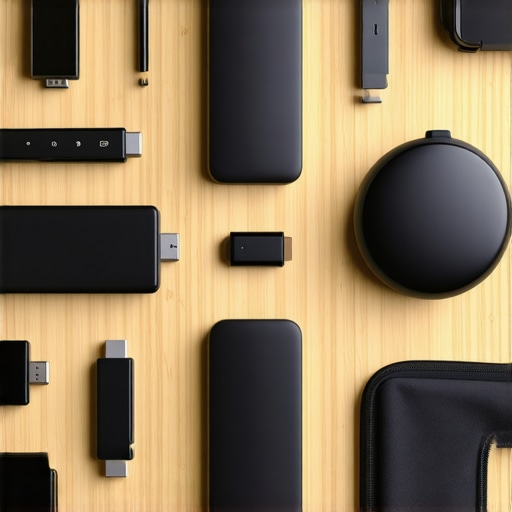
To prevent these environmental frictions from killing your daily momentum, you need to arm your team with the physical gear designed for high-turnover spaces. I learned this the hard way after wasting twenty minutes of an external developer’s time trying to bridge the gap between their legacy machine and the room’s modern smart screen. Our team now relies on a standardized, portable hardware kit that goes everywhere we go. We stopped relying on the general workspace supply drawer. Our developers carry custom zippered tech pouches containing dual HDMI dongles, active USB-C hubs with power delivery, and high-gain external Wi-Fi receivers. If you rely on complex hardware configurations, consider how solutions like how Parallels Desktop saved our dev team from the two laptop shuffle can eliminate cross-platform presentation friction entirely when switching systems in a hurry.
How do I maintain physical security and high output over time?
Long-term operational success in a flexible office relies on strict, continuous systems audits rather than passive trust. According to security guidelines published by the National Institute of Standards and Technology (NIST), physical proximity remains one of the highest threat vectors for corporate espionage. Every Monday morning, our team conducts a five-minute hardware audit. We ensure all personal laptops have their polarized privacy screens properly aligned, and we double-check that our local cloud storage is set to automatically sync and lock when idle. We also maintain a shared digital calendar specifically for booking on-demand rooms, so we never run into scheduling conflicts. For the ultimate peace of mind, we established a strict protocol: sensitive client data never gets opened when sitting in the open lounge. If we are analyzing proprietary algorithms, we move to a private room. I highly encourage you to try our weekly five-minute hardware audit with your own team starting this coming Monday to immediately close your physical security gaps.
When we transitioned away from our expensive private office, we thought we had the playbook entirely figured out. We assumed that substituting a fixed boardroom for dynamic, booking-on-demand setups was purely a game of cost-cutting and math. But we quickly realized that what works on paper often fails spectacularly in real life because of one massive, contrarian truth: most founders view shared spaces as passive containers rather than active tools for leverage. We fell into the common trap of believing that a desk is just a desk, and a conference room is just a place with a table. In reality, how you interface with these spaces dictates how external partners, investors, and even your own team perceive your company’s operational maturity.
The Illusion of the Free Coffee and Boardroom Status
Everyone in the startup ecosystem tells you to optimize for the flashiest amenities. They highlight sleek glass walls, craft draft beer on tap, and high-end espresso machines. In my experience, focusing on these superficial perks is a classic rookie mistake. We spent our first three months in a shared environment admiring the architectural design, while completely ignoring the underlying infrastructure. That is when we hit the ‘Oops’ factor. We booked a beautiful room for a high-stakes partner pitch, only to realize that the acoustic bleed was so severe that our competitors could hear our exact financial projections right through the glass. A gorgeous aesthetic means absolutely nothing if the room lacks basic physical security and functional tech.
Are you treating your shared room like a luxury or a strategic asset?
A fascinating study on environmental psychology from the Association for Psychological Science reveals that physical environment and sound control directly impact cognitive load and decision-making by up to 35%. When you are negotiating a seed round or running a tight strategy session, you cannot afford auditory distractions or hardware failures. Instead of booking space based on how impressive the photos look on an app, you need to audit the actual utility. This is why we stopped relying on luck and learned how to choose the perfect conference room for business success based on privacy, layout, and reliable infrastructure rather than raw square footage.
Another major trap is overestimating your team’s flexibility. Founders love to believe their team can work productively from absolutely anywhere, including a bustling open lounge. We tried this, and our development cycles slowed to a crawl. The secret isn’t forcing your team into a single working style; it is knowing when to use open collaborative areas to unlock networking opportunities in top coworking environments and when to aggressively pull back into quiet, dedicated zones. Have you ever fallen into this trap of prioritizing aesthetic over actual functional utility? Let me know in the comments below.
How to Read the Unspoken Signals of a Shared Space
When you invite an investor or a key client to a shared conference room, they are not just evaluating your slide deck; they are reading the unspoken signals of how you run your business. If you are scrambling to connect to the Wi-Fi, using adapters that don’t fit, or booking a room that smells like stale lunch, you are silently projecting chaos. We learned the hard way that mastering the environment is just as important as mastering the pitch. We started researching how forward-thinking spaces design their shared footprints, keeping an eye on the future of conference rooms in startup ecosystems to ensure our workflow matches the modern standard of hybrid work. By treating the shared office as an extension of our software stack—optimizing every touchpoint, adapter, and sound boundary—we turned a potential operational liability into our greatest unfair advantage.
Equipping the Team for Seamless Daily Operations
To prevent these environmental frictions from killing your daily momentum, you need to arm your team with the physical gear designed for high-turnover spaces. I learned this the hard way after wasting twenty minutes of an external developer’s time trying to bridge the gap between their legacy machine and the room’s modern smart screen. Our team now relies on a standardized, portable hardware kit that goes everywhere we go. We stopped relying on the general workspace supply drawer. Our developers carry custom zippered tech pouches containing dual HDMI dongles, active USB-C hubs with power delivery, and high-gain external Wi-Fi receivers. If you rely on complex hardware configurations, consider how solutions like how Parallels Desktop saved our dev team from the two laptop shuffle can eliminate cross-platform presentation friction entirely when switching systems in a hurry.
How do I maintain physical security and high output over time?
Long-term operational success in a flexible office relies on strict, continuous systems audits rather than passive trust. According to security guidelines published by the National Institute of Standards and Technology (NIST), physical proximity remains one of the highest threat vectors for corporate espionage. Every Monday morning, our team conducts a five-minute hardware audit. We ensure all personal laptops have their polarized privacy screens properly aligned, and we double-check that our local cloud storage is set to automatically sync and lock when idle. We also maintain a shared digital calendar specifically for booking on-demand rooms, so we never run into scheduling conflicts. For the ultimate peace of mind, we established a strict protocol: sensitive client data never gets opened when sitting in the open lounge. If we are analyzing proprietary algorithms, we move to a private room. I highly encourage you to try our weekly five-minute hardware audit with your own team starting this coming Monday to immediately close your physical security gaps.
The Hardest Lessons Learned on the Open Coworking Floor
Stepping away from traditional real estate taught me more about operational efficiency than any business textbook ever could. Here are the hard-won realizations that changed how we scale our business:
- Your physical perimeter is digital: Walls are an illusion of safety. The moment we realized that encrypting our local network connections and using visual privacy filters was more secure than a locked glass door, our team dynamic became incredibly agile.
- Never mistake movement for progress: It is easy to feel highly productive when you are constantly chatting in the communal kitchen. We had to set firm guidelines to ensure those serendipitous moments didn’t eat into our deep-work blocks.
- The venue dictates the deal: An investor pitch in a room with bad acoustics, weak Wi-Fi, or poor lighting immediately lowers your valuation in their minds. Command your environment, or it will command you.
The Scalable Workspace Toolkit That Kept Us Agile
We do not rely on luck to make our flexible setup work. These are the exact physical and digital tools we rely on to run a tight operation across shared hubs:
- The Hardware Savior: A rugged, multi-port USB-C adapter kit with built-in HDMI and legacy VGA support. We keep one in every team member’s bag to completely sidestep the problem with bring your own device in shared meeting rooms.
- Acoustic Shielding: Premium active noise-canceling headphones with a dedicated beamforming microphone that isolates your voice during calls on the open floor.
- Visual Security Filters: Polarized, magnetically attaching screen protectors for all laptops to ensure zero side-angle visibility from curious neighbors.
Take Back Control of Your Team’s Focus
Transitioning from a traditional lease to a shared setup is not about lowering your standards; it is about raising your adaptability. By treating your workspace as an active, strategic lever, you free up vital capital while staying plugged into the high-energy environments where innovation naturally occurs. It is time to stop paying for underutilized real estate and start designing a workspace strategy that fuels your growth.
Have you ever struggled to keep your team focused on an open coworking floor, or experienced a major hardware failure in a shared meeting room? Let me know in the comments below.