
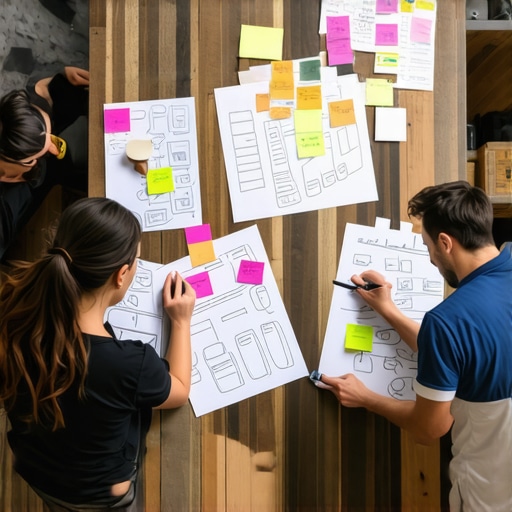
I remember sitting in my home office last year, staring at a grid of twelve exhausted faces on Zoom, trying to brainstorm a new product launch. We had the best digital whiteboards money could buy, but the energy was completely flat. No one was interrupting each other with excitement; instead, we just took polite turns speaking into a void. That was the day I realized why your teams culture is suffering in a digital-only world. We were trying to generate lightning in a bottle without any friction, and creative friction requires physical space. Today, I want to show you why your team desperately needs a physical anchor—a dedicated space to meet, scribble, and argue in real life—and how to set it up without blowing your entire budget.
Early in my startup journey, I made the costly mistake of thinking remote work solved everything. I assumed cutting out office rent meant we could invest more in raw talent. But we quickly fell apart into isolated silos. It turns out that startups fail when they isolate in home offices because they lose those spontaneous, accidental breakthroughs. Have you ever tried to coordinate a major pivot purely over Slack messages? It is an absolute nightmare that drains human momentum. We needed a physical anchor to ground our ideas.
The Real Cost of Digital-Only Brainstorms
When you rely entirely on digital tools, your creative sessions lose their soul. A study published in the journal Nature actually found that videoconferencing hampers collaborative idea generation because participants focus on a narrow screen rather than let their minds wander together in a physical room. In-person collaboration allows us to read body language, sketch on actual whiteboards, and build on each other’s energy. Bringing my team back together in professional meeting rooms that boost startup creativity completely transformed our output. We stopped overthinking and started shipping. We learned the hard way that you cannot cultivate a shared vision through a webcam lens.
Are digital tools really killing our creative spark?
Many founders worry that returning to physical spaces means returning to rigid, expensive corporate leases. But it does not have to be an all-or-nothing choice. Using a flexible hybrid model, or booking high-energy conference rooms for your critical deep-dive sessions, gives you the best of both worlds. The physical anchor acts as the magnetic north for your team’s focus. Tell me: has your team’s creative energy started to feel dry and transactional lately? Let’s talk about how to establish that physical anchor, starting with finding a space where ideas actually flow naturally.
How to Establish a High-Energy Physical Anchor Without Breaking the Bank
Building a physical anchor for your startup is not about signing a terrifying five-year commercial lease that keeps you awake at 3:00 AM. It is about creating a deliberate, high-energy environment where your team can gather to solve complex problems that stall on digital threads. When we first attempted this transition, we tried renting a sterile, windowless corporate suite on a tight budget. It felt like a clinical trial. No one spoke, and the energy died. We quickly learned that you have to choose a location that breeds spontaneous interaction and focus.
First, shift your perspective from permanent square footage to flexible, high-impact intervals. You do not need an office 365 days a year; you need a high-octane collaborative environment for critical milestones. This is why many lean teams opt for a hybrid rhythm—working from home for execution, but gathering in person for strategy. If your team is growing, you need to know when to stop hot desking and transition into a more structured arrangement. By booking targeted workspace, you protect your runway while giving your team a genuine, inspiring hub.
Ditch the Coffee Shops and Book Dedicated Meeting Rooms
Many founders think they can bootstrap their way through team syncs by crowding around a single tiny table at a local cafe. I tried this during our first major platform rebuild. Between the screaming espresso machines, spotty public Wi-Fi, and the constant guilt of occupying tables, we spent more time managing distractions than discussing code. That disastrous afternoon taught us that saving a few dollars on space actually costs thousands in lost momentum. You need a professional environment where your proprietary ideas remain secure, and where you do not have to worry about how to keep your startups trade secrets safe in a public lounge.
Set Up the Room to Trigger Creative Friction
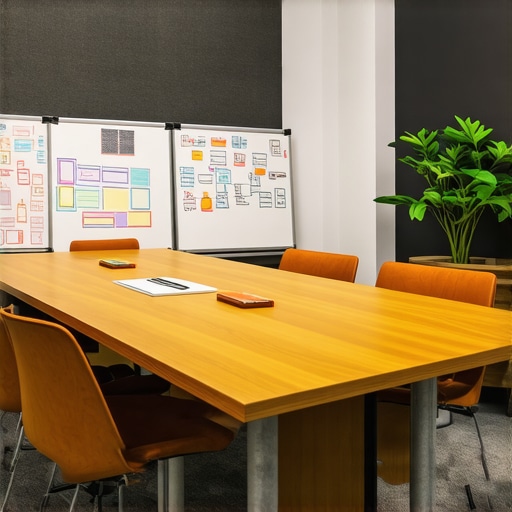
Once you are in the space, the physical layout dictates how your team behaves. If you sit in a rigid boardroom circle, people default to polite, sequential reporting. To break this corporate stiffness, you must physically configure the room for action. I always drag the chairs back and force everyone to stand near a whiteboard. If you want real, unpolished breakthroughs, you need to understand why your team needs a dedicated brainstorming wall this week. A vertical surface encourages movement, rapid sketching, and honest debate. The goal is to make the space feel active, highly collaborative, and completely different from the passive comfort of their home offices.
Establish Clear Rituals for Your In-Person Days
Do not drag your team into a physical space just to have them sit silently with headphones on, answering emails. That is a recipe for instant resentment. When you gather, protect that time for deep collaborative work, difficult feedback loops, and strategic alignment. We made the mistake of filling our precious in-person hours with status updates that could have easily been an email. Now, we use a simple rule: if a task can be done individually, it is banned from our shared office days. Focus entirely on co-writing code, whiteboarding user journeys, and building the trust that remote screens slowly erode over time.
When founders first step away from home offices, they usually swing too far in the opposite direction. They assume that booking any modern board deck or choosing an ultra-sleek workspace will magically solve their collaboration drag. But this superficial approach is exactly where they stumble. In my experience, throwing money at aesthetic desks without understanding the human dynamics inside those walls is a fast track to wasted capital.
The Beautiful Room Fallacy
Everyone tells you to hunt for the most stunning, Instagram-worthy setups to impress clients and inspire your developers. But in my experience, the prettiest rooms are often the most dysfunctional. I once booked a highly-rated space with massive glass walls and minimalist concrete styling for a high-stakes product mapping session. Within twenty minutes, we realized the acoustics were a nightmare; every whisper bounced off the concrete, turning our intense debate into a painful headache. We spent more energy trying to hear each other than refining our product roadmap.
This is why you must prioritize functional design over sheer visual appeal. A study from the Association for Psychological Science confirms that environmental noise and poor acoustics directly degrade cognitive performance and elevate stress levels during complex tasks. Instead of getting distracted by trendy aesthetics, you should actively seek out meeting rooms that boost startup creativity through deliberate spatial design, acoustic dampening, and practical layouts rather than superficial polish.
Why are your team meetings still failing in premium spaces?
The biggest trap is treating a high-end collaborative workspace like a passive commodity. Founders often book a premium room but bring their old, broken digital habits right inside with them. They plug in their laptops and instantly fall into what I call the “two-laptop shuffle,” where everyone stares at their own screen instead of interacting. This is often caused by simple technical friction. If you don’t choose a space with seamless integration, you will fall victim to the problem with bring your own device in shared meeting rooms, wasting the first twenty minutes of your booking trying to get a basic HDMI adapter to work. That technical friction instantly kills the collaborative momentum you paid to create.
Another common mistake is choosing a location based solely on a cheap monthly price rather than looking at the broader networking ecosystem. If you isolate your team in a low-cost, remote business park, you miss out on the accidental hallway conversations that spark partnerships or investor intros. There is immense strategic value in picking a premium, energetic hub, and understanding why a central location is worth the extra membership cost can radically change your startup’s growth trajectory. Have you ever fallen into this trap of prioritizing a cheap desk over real collaborative flow? Let me know in the comments below.
We have all experienced the initial rush of moving out of the home office and into a high-energy collaborative environment. The air feels charged, the team is finally laughing at jokes in real time, and the brainstorming wall is covered in colorful sticky notes. But maintaining that creative momentum is where the real work begins. If you do not actively curate your tools and protect your team’s energy, the physical anchor quickly turns into just another expensive chore. To prevent our shared sessions from decaying back into dry, transactional status meetings, I had to implement a strict, tool-supported maintenance routine.
The Concrete Toolkit That Keeps Our In-Person Days Frictionless
I do not believe in generic software recommendations; I only use tools that solve specific operational headaches. First, to eliminate the brutal “two-laptop shuffle” and get everyone collaborating on a single canvas, we stopped relying on individual screen sharing. Instead, we use a dedicated physical touch-display running specialized collaborative whiteboard software like Miro or Mural. This acts as our digital-to-physical bridge. To make our physical workflow completely seamless, we also discovered how Parallels Desktop saved our dev team from the two-laptop shuffle, letting our developers run cross-platform environments instantly on a single shared screen without rebooting or swapping cables.
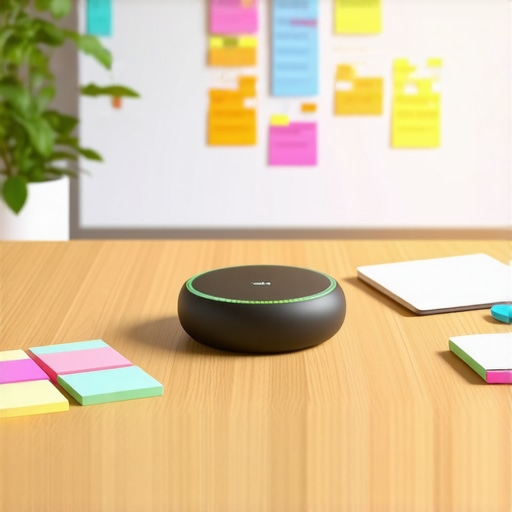
Second, we standardized our audio hardware. Even in the most quiet collaborative spaces, you will need to pull in a remote contractor or client. We travel with a portable, pocket-sized Jabra Speak speakerphone. It connects via USB or Bluetooth in three seconds flat, uses omnidirectional microphones, and completely eliminates the echo that makes remote participants feel like second-class citizens. For our scheduling, we completely bypassed messy back-and-forth emails by using a shared team calendar integrated directly with our coworking hub’s booking system. We now have a clear rule: if a meeting isn’t locked in on the calendar by Tuesday night, we default to working from home.
How do I maintain physical collaborative energy over the long haul?
The secret to keeping your team excited about in-person days is rhythm and surprise. You cannot expect people to maintain high-intensity creative output for eight hours straight. We break our on-site days into two-hour sprints, punctuated by mandatory physical breaks. I highly recommend shifting your informal discussions away from the desks entirely. For example, some of our most critical breakthroughs didn’t happen in front of a whiteboard; they happened while waiting for coffee. We quickly realized that why shared kitchens are the new secret boardroom for founders is because the casual environment lowers everyone’s defensive walls, allowing raw, unfiltered ideas to surface naturally.
The Next Era of Startup Collaboration
Looking ahead, the landscape of shared working environments is shifting rapidly. Niche workplace design experts, such as those at the popular architecture firm Gensler, emphasize that the future office is no longer a place for routine tasks, but a highly specialized destination designed purely for human connection and brand immersion. We are moving toward modular, on-demand environments where you can book micro-spaces tailored to specific tasks—from ultra-quiet deep-work pods to fully equipped production studios. Startups that master this hybrid flexibility will scale faster because they won’t be weighed down by real estate liabilities.
My challenge to you this week is simple: pick just one of your upcoming creative sessions and ban laptops entirely. Grab a physical pack of sticky notes, stand up at a whiteboard, and run a completely analog brainstorm. You will be amazed at how quickly the room’s energy shifts when everyone is looking at each other instead of their screens.
Making the transition from digital isolation to high-impact physical teamwork isn’t about replicating old-school office bureaucracy. It is about deliberately crafting moments of connection where your best ideas can take root and grow.
The Critical Hard-Won Lessons of Startup Spatial Dynamics
When we first began exploring hybrid schedules, we fell into some deeply frustrating traps. Here are the raw, unpolished truths I had to learn the hard way through trial and error:
- The premium room trap is real. You can book the absolute most expensive, glass-paneled corner suite, but if your culture is built on fear, that gorgeous room will remain dead silent. The space only amplifies the existing dynamics of your team.
- Acoustics matter infinitely more than aesthetic furniture. I would trade fifty designer chairs for a single room that has excellent soundproofing and a massive wall of whiteboards. If people cannot hear each other easily, they will naturally withdraw.
- Do not let the quietest voices get drowned out. In physical meeting spaces, the loudest person in the room often dominates the dry-erase marker. Create a rotation rule where everyone has a designated turn to stand up and sketch.
My Personal Toolkit for Frictionless Hybrid Work
Maintaining high creative energy across a split team requires reliable, specialized gear that just works when you need it. I have personally relied on these resources to keep our momentum high:
- The Ultimate Audio Bridge: We never leave for a coworking session without our portable Jabra Speak speakerphone. It ensures our remote partners aren’t left out of spontaneous side conversations.
- Strategic Space Discovery: When choosing where to collaborate, we actively seek out meeting rooms that boost startup creativity to elevate our design thinking and break free of screen-induced fatigue.
- The Analog Champion: Standard Post-it Super Sticky Notes in vibrant neon colors. It sounds basic, but cheap sticky notes constantly fall off walls, taking your best ideas with them onto the floor.
Step Out of the Digital Void and Back Into the Room
Establishing a physical anchor for your team is one of the most powerful moves you can make to protect your company’s early momentum and long-term survival. By utilizing flexible spaces, you get to skip the terrifying commitment of a long-term commercial lease while still giving your team a genuine, inspiring hub. Step away from the endless digital video streams, gather around a real whiteboard, and watch your team’s creative sparks turn into real, tangible products.
Have you ever struggled to keep your team engaged during long, exhausting virtual brainstorms? Let me know your experiences in the comments below.