

I was sitting on a literal beanbag chair, balancing a laptop on my knees, while my third hire—a brilliant engineer who really deserved better—tried to take a client call in a hallway because all the ‘quiet pods’ were taken. We were a team of six, and we were playing a daily game of musical chairs that nobody was winning. I thought I was being ‘lean’ and ‘agile’ by avoiding a lease, but in reality, I was just making it impossible for my team to actually work. That was the morning I realized that our scrappy, hot-desking phase was officially dead. We needed more than just a surface to put our laptops on; we needed a home base.
The Growing Pains of a Scaling Team
When you’re just two founders and a dream, hot-desking is a godsend. It is cheap, it is flexible, and you get that sweet, sweet hit of networking. But as you scale toward twenty people, that flexibility starts to feel like a liability. I have lived through the transition from a cramped corner to a full-blown office, and I can tell you exactly how to spot the ‘breaking point’ before your team’s morale takes a nosedive. Today, I am going to show you how to pick an office that fits your startups growth pace so you do not waste thousands on a lease you are not ready for, or worse, lose your best talent because they cannot find a place to sit.
Is a dedicated office actually worth the extra overhead?
You might be worried that locking yourself into a permanent space is going to kill your ‘startup vibe’ or drain your seed round. I get it. My biggest mistake early on was staying in a flexible hot-desking arrangement for six months too long because I was terrified of the ‘corporate’ feel of a dedicated suite. I thought we were saving money, but between the lost productivity and the constant cost of booking extra meeting rooms just to have a private conversation, we were actually bleeding cash.
Why Your Team is Quietly Hating the Flex Life
The truth is, humans are territorial creatures. Around the time we hit eight employees, I noticed the vibe changed. People started arriving at 7:30 AM just to snag ‘the good desk’ by the window. According to a study by the Journal of Environmental Psychology, ‘hot-desking can lead to increased distrust and decreased social support among employees’ because they lack a sense of belonging or a ‘home base.’ We are going to look at the psychology of a professional workspace and why having a dedicated spot matters more than you think. Have you ever walked into your coworking space and felt that instant spike of anxiety because your favorite spot was taken? It is a real productivity killer. The move to a dedicated desk is not just about furniture; it is about signaling to your team—and your investors—that you are here to stay. Let’s dive into the signs that your lean setup is holding you back.
Audit Your Actual Usage Before Signing Anything
To move from a chaotic flex-desk environment to a functional hub, you need to treat your office hunt like a product sprint. First, audit your actual headcount against your projected growth. I once signed a lease for fifteen people when we were only eight, thinking I was being ‘visionary.’ In reality, I was just burning cash on empty air. Instead, you should learn how to pick a membership that scales with your teams size so you only pay for the chairs that actually have warm bodies in them. We eventually shifted to a model where we stopped paying for square footage we never used and focused on flexible zones that grew as we hired. Audit your team’s peak hours; if your devs only come in three days a week, you do not need fifteen permanent desks.
Test the Infrastructure Before Moving Your Monitors
Do not skip the ‘test drive’ phase. I learned this the hard way after moving our entire dev team into a beautiful glass-walled suite that had the WiFi signal of a damp sponge. Now, I tell every founder to use a day pass to test your next potential office before signing a contract. While you are there, vet the space for high-speed fiber yourself. Run a speed test during peak hours—usually 2:00 PM—when everyone else is on a Zoom call. If the ping spikes or the connection drops, walk away. No amount of free espresso can make up for a failed deployment because of flaky internet.
Prioritize Acoustic Privacy Over Aesthetic Coolness
You need to prioritize quiet zones over aesthetic ‘coolness.’ I once tried to host a high-stakes board meeting in a room that was basically a glass fishbowl. A person in the hallway was literally eating a bag of chips, and we could hear every crunch while I was trying to explain our burn rate. It was mortifying. Before you commit to a long-term booking, you have to vet a meeting room for acoustic privacy. If you can hear a conversation through the wall, so can everyone else, and your pitch deck looks better on a forty-inch screen than a laptop, but it means nothing if the investors are distracted by lobby noise.
Streamline the Logistics of the Big Move
When it comes to the physical move, keep it lean. You do not need a massive moving truck for a six-person startup; you need a strategy for moving your startup to a professional space without losing a full day of productivity. We did our move on a Sunday, and I made sure our lead engineer had transitioned the team from the garage to the new hub with zero downtime by pre-mapping every ethernet port and testing the monitors. Finally, handle the ‘human’ side of the shared space. Whether it is a stolen yogurt or a loud neighbor, knowing how to manage noise complaints in a shared workspace is a survival skill for founders. It is about setting boundaries early so your team can focus on the code, not the surrounding chaos.
People often tell you that a ‘cool’ office is the key to hiring Gen Z talent. I am going to be the bearer of bad news: it is a lie. In fact, many of those high-energy perks are just expensive distractions. The truth about free perks you never actually use is that they often mask a lack of functional infrastructure. If a space prioritizes a keg over soundproof phone booths, they are not building a workspace; they are building a clubhouse. I have seen founders choose a space because it had a great rooftop, only to realize two weeks later that their team was hiding in the stairwell to get any real work done because the main floor was a constant party. Have you ever fallen into this trap—picking ‘cool’ over ‘functional’? Let me know in the comments.
How do you balance “collision frequency” without killing deep work?
There is a sophisticated concept in workspace design called ‘collision frequency’—the idea that random encounters lead to innovation. Steve Jobs famously designed the Pixar office around this. However, most startups get the implementation wrong. They think collision means ‘everyone in one big room.’ It does not. A study by the Harvard Business Review found that when companies moved to open-plan offices to increase collaboration, face-to-face interaction actually decreased by 70%. People just put on noise-canceling headphones and retreated into their digital bubbles. To actually unlock networking opportunities in top coworking environments, you need a space that respects ‘zoning.’ This means having a clear divide between high-traffic social areas and ‘war rooms.’ Your startup success secrets often lie in choosing the perfect conference room that acts as a sanctuary for intense focus. If your current setup does not allow for physical brainstorming sessions without being interrupted by the scent of someone else’s lunch, your ‘collision’ is actually just ‘friction.’
The silent productivity killer you probably missed on your tour
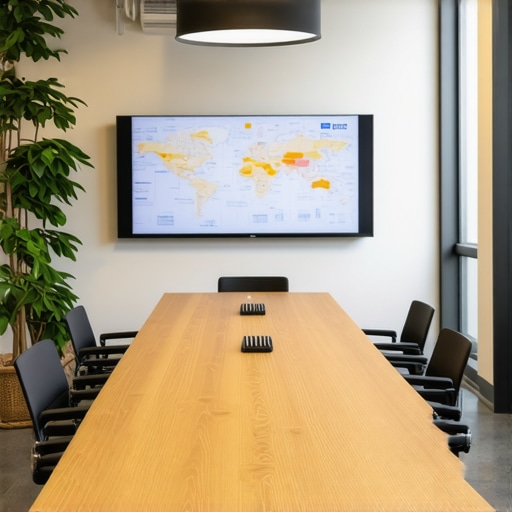
The biggest mistake I see series-A founders make is valuing square footage over adaptability. They sign a three-year lease for a 5,000-square-foot floor because they plan to hire 40 people. Then, a pivot happens, or a market dip occurs, and they are stuck paying for empty air. This is why membership flexibility is more important than square footage. In the current market, flex space is the ultimate hedge against market volatility. Before you sign anything, you have to spot a toxic coworking vibe in under five minutes. Look at the conference rooms. Are they empty? Are they filled with tangled wires and broken adapters? Why your conference room needs better technology and fewer cables is not just about aesthetics; it is a litmus test for how much the management actually cares about your operational efficiency. If they cannot manage an HDMI dongle, they will not manage a noise complaint effectively.
Once you move past the ‘where do we sit’ crisis, the real battle begins: keeping the machinery running so your team doesn’t revert to working from their bedrooms. I have a ‘Go-Bag’ strategy that saved my skin during a series of high-stakes investor pitches. Instead of relying on the house tech, I carry a specific dongle-heavy kit that includes an active HDMI 2.0 cable and a dedicated USB-C hub with power delivery. I’ve found that why your meeting room needs to be more than just a table is because the table is usually where the tech goes to die. Even though we specifically look for environments why our private office suites stock extra surface pro chargers for members, I never leave my team’s connectivity to chance.
Stop Losing Ten Minutes to the ‘Dongle Dance’
I personally use the Logitech Rally system for our bigger rooms because the modularity means if a mic dies, I don’t have to replace the whole camera. It is this kind of granular control that allows you to maximize productivity in your startups conference rooms. If you are constantly fighting with the ‘No Signal’ screen, you are burning your seed round in ten-minute increments. According to the International Well Building Institute (IWBI), the ‘acoustic comfort’ of a workspace is directly tied to speech intelligibility; if your room fails this, your team’s cognitive load increases by up to 20% just trying to hear each other. This is why I always put every new space through the acoustics test every conference room should pass before I let my devs move in.
How do I maintain a high-performance environment as we grow?
The secret is ‘Automated Friction Reduction.’ We use a combination of digital signage and occupancy sensors. If a room is empty for ten minutes, the reservation is automatically released. This prevents the ‘ghost booking’ phenomenon where every room looks taken on the calendar but is actually empty. To keep things running smoothly, you also need a plan for the physical logistics that most founders forget. For instance, learning how to handle package deliveries without a permanent front-desk staff is vital when you are shipping hardware or prototypes. We set up a dedicated ‘unboxing station’ in our suite to keep the main workspace from becoming a cardboard graveyard.
Your Office is About to Get a Lot Smarter
I predict that by 2026, the ‘dumb’ conference room will be obsolete. We are already seeing the shift toward AI-integrated spaces that automatically transcribe notes and generate action items based on who is in the room. These innovative meeting rooms that boost startup creativity won’t just be about the lighting; they will be about the data layer. To stay ahead, stop thinking of your office as a place where people sit and start thinking of it as a tool that should have a 99.9% uptime. My challenge to you: audit your team’s top three ‘tech frustrations’ this Friday and swap out one broken manual process for a dedicated hardware or software solution that automates the headache away.
Lessons from the Office Frontlines
Reflecting on our journey from six people on beanbags to a functional office, a few hard truths stand out. First, a desk is never just a desk; it is a psychological signal of security. When your team stops hunting for a seat, they start finding solutions. Second, the cost of ‘saving money’ on cheap infrastructure is always paid back in lost developer hours. I realized that why a basic warranty wont save your startup from a hardware disaster is because downtime is the ultimate enemy of growth. Finally, the best office culture isn’t built in a breakroom; it’s built in a room where people feel equipped to do their best work.
Gear That Makes My Team Work Better
If you want to maintain a high-performance culture, you need tools that disappear into the background. I personally swear by the Logitech Rally system for its modularity, and I always keep a copy of Cal Newport’s Deep Work in our common area to remind the team why we value quiet zones. To ensure we are always optimized, we used startup success secrets to select a layout that balances privacy with collaboration. I also recommend using Notion to document your office ‘operating system’ so new hires know exactly how to use the tech without a manual or a ten-minute troubleshooting session.
Build a Space Where People Actually Belong
Choosing a professional home for your company is about more than just aesthetics. It is about creating an environment where your mission can breathe and your team can thrive. When you maximize productivity in your startups conference rooms, you aren’t just saving time; you are respecting the talent you worked so hard to hire. As we look toward the future of conference rooms in startup ecosystems, the focus is shifting from ‘cool perks’ to ‘seamless capability.’ Don’t be afraid to take this leap. You have outgrown the garage, and your team is ready for the next level. What was the specific ‘breaking point’ where you realized your team absolutely needed a dedicated office? Let me know in the comments below.