

I still remember the smell of stale coffee and the heavy, awkward silence that filled the air. We were gathered in one of our startup’s first rented meeting rooms, staring at a giant, completely blank whiteboard. I had brought together developers, marketers, and our customer success lead to solve a pressing product issue. Instead of a brilliant clash of minds, I got blank stares and quiet sighs. It was a complete disaster. Early on, my biggest mistake was thinking that just putting smart people in a room together and telling them to “innovate” would magically yield results. I scheduled the session for two hours on a Friday afternoon, provided absolutely no structure, and assumed everyone would naturally collaborate.
How I Completely Ruined My First Cross-Department Brainstorm
The truth is, cross-team collaboration doesn’t happen by accident. Developers think in systems and constraints; designers think in user journeys; marketers think in conversion rates. When you throw them into a room without a solid plan, they naturally retreat into their comfort zones. In that failed meeting, our lead developer spent forty-five minutes explaining API limitations while the marketing lead checked her phone under the table. To make matters worse, we were crammed into a tiny space that felt more like a utility closet than a creative hub, proving that why your team is more creative in a room with high ceilings is a very real psychological phenomenon. I realized then that a successful session requires intentional design, from the physical environment down to how you prompt the quietest person in the room to speak up.
Is a cross-team brainstorm actually worth the chaos?
You might be asking yourself if getting three or four different departments into one space is even worth the scheduling headache. After all, isn’t it easier to just let everyone work in isolation? According to a study published by the Harvard Business Review, diverse teams are significantly better at processing facts and driving innovation than homogeneous ones, but only when the collaboration is structured to prevent groupthink. If you don’t establish clear guardrails, the loudest voice in the room wins, and you waste valuable company time. Today, we are going to fix that. I will show you how to structure your next session, prepare your team beforehand, and set up a physical or virtual environment that practically forces creative ideas to flow. Have you ever hosted a joint meeting where everyone just sat in painful silence, wishing they were back at their desks?
The Secret Starts with Changing Your Environment
If your team is struggling to think outside the box, look at the physical box you have put them in. Staring at the same drab walls of your primary workspace everyday breeds routine thinking. This is why I eventually started booking external spaces to shake up our dynamics. Using different environments can break down social barriers between departments that rarely speak. When we began taking our biggest sessions offsite, we noticed an immediate shift in energy. If you are struggling to find a spot, learning the secret to finding a meeting room on a Friday afternoon can save your weekly planning cycle. Additionally, remember to keep your session focused and small; utilizing the two-pizza rule for booking the right size meeting room ensures you have enough voices to innovate without crowding the conversation. Before you send out that next calendar invite, let’s look at the exact steps you need to take to prepare your teams before they even step through the door.
Step-by-Step Blueprint for Collaborative Breakthroughs
To run a session that actually moves the needle, you cannot rely on loose conversations or unstructured brainstorms. You need a highly controlled process. Think of your cross-functional session as a software release: if you do not have clear specifications, a defined release date, and specific parameters, the build will fail immediately. I learned this the hard way when our design and engineering departments kept clashing over user flows. By implementing a hard time constraint and an environment that physically pulled us out of our standard routines, we finally began speaking the same language. If your internal culture has stalled, utilizing creative coworking transforming meeting rooms into collaboration hubs can instantly change how your team members interact.
Set the Ground Rules Before Anyone Grabs a Marker
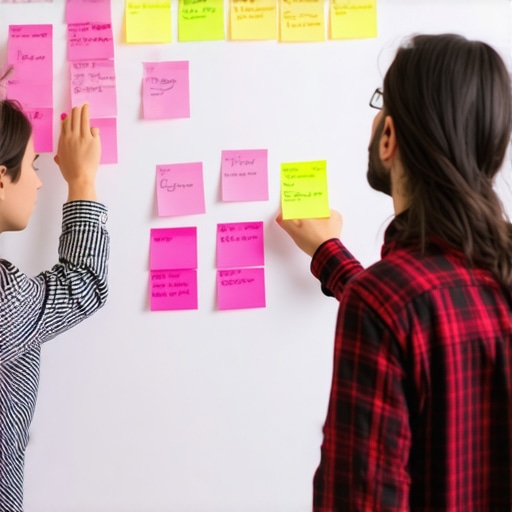
You must establish strict guardrails to prevent your loudest team member from hijacking the entire session. I use a structured method called “silent brainstorming” for the first ten minutes. Everyone in the room writes down three ideas on sticky notes in absolute silence. This simple constraint neutralizes the loudest voices and allows quiet developers or introverted copywriters to contribute on an equal playing field. During a particularly tense product sprint last quarter, we used this exact silence-first approach. The result was our quietest junior engineer proposing a workflow change that saved us dozens of development hours—an idea she admitted she would have never shouted over our louder marketing manager. For this approach to work, make sure you are in a room with ample whiteboard space. There is a massive operational reason why your team needs a dedicated brainstorming wall this week to visually map these silent ideas as they emerge.
Ditch the Digital Distractions
Nothing kills the momentum of a live workshop faster than a laptop screen flipping open. The moment someone checks an email, they are mentally checked out of the session. My rule is simple: zero active screens in the room. If someone needs to take notes, they use a physical notepad or a communal whiteboard. When we completely banned devices from our product-mapping sessions, our collaborative output doubled. If you are worried about missing key details, record the audio of the meeting or designate one single scribe to capture the whiteboard diagrams. The physical environment you choose plays a massive role in how naturally your team accepts these strict ground rules; taking your team to innovative meeting rooms that boost startup creativity makes the lack of laptop screens feel like an exciting retreat rather than a strict corporate punishment.
Map Your Ideas to Real-World Impact
An idea is worthless if your engineering team cannot build it or your marketing team cannot sell it. Once your ideas are on the wall, force your cross-departmental team to plot them onto an Impact vs. Effort matrix. This is where the magic of cross-collaboration truly happens. When the marketing lead points to a complex feature and says, “This is high impact,” the engineering lead can immediately counter with, “That is six months of development effort.” This real-time feedback loop teaches your teams to compromise and think like business owners. If your team is struggling to find the physical space to map out these large, complex matrices, booking the right venue is critical. I always look for spaces designed specifically for this kind of high-stakes planning; taking the time to learn how to choose the perfect conference room for business success is the simplest way to guarantee your team has the physical space to execute this matrix without feeling cramped.
I used to believe the ultimate startup myth: that if you just throw enough beanbags, colored sticky notes, and neon signs into a room, creative energy will naturally explode. It is a comforting lie sold by corporate designers who want you to believe that aesthetic novelty equals intellectual breakthrough. The truth is much colder. Beautiful but dysfunctional design is actually a quiet tax on your team’s mental processing power. When we moved into our second office, we fell hard for this aesthetic trap. We spent thousands of dollars leasing a space with stunning, hyper-modern, minimalist meeting rooms that looked like an art gallery. It took us exactly three weeks of failed product sprints to realize that our team was physically uncomfortable, socially self-conscious, and completely unable to get real work done because the acoustics were terrible and the chairs hurt after twenty minutes.
Why are your beautiful meeting rooms actually killing your startup’s momentum?
We have been conditioned to believe that great design is visual. However, environmental psychologists have long established that the cognitive load of a space is determined by sensory factors you cannot easily capture in a marketing brochure. A famous study by the environmental psychology department at Cornell University revealed that low-level office noise—specifically the kind of echoing hollow sound common in glass-walled, high-design meeting spaces—significantly raises cortisol levels and directly impairs logical reasoning. Everyone says you need more open, transparent glass spaces, but in my experience, those fishbowls just make your introverts feel exposed and your developers feel watched. If you want actual breakthrough thinking, you must design for psychological safety and physical comfort first, not for Instagram. If your team is constantly distracted by outside noise, taking the time to implement why quiet zones are the most important part of any workspace is infinitely more valuable than buying another designer couch.
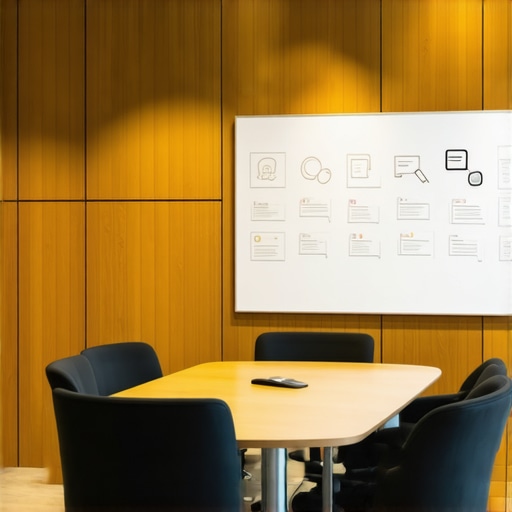
The biggest “oops” factor for growing startups is over-committing to rigid infrastructure too early. Founders love to sign long-term, expensive leases on massive conference rooms before they even know how their team naturally collaborates. We made this exact mistake and ended up paying for empty space that sat cold and unused for months. Instead of locking your young company into a physical straightjacket, utilizing creative coworking transforming meeting rooms into collaboration hubs gives you the absolute flexibility to scale your physical footprint dynamically as your actual meeting culture evolves. Have you ever fallen into this aesthetic trap of picking style over substance? Let me know in the comments below.
Once you look past the initial aesthetic traps of modern design, you run headfirst into the physical reality of maintaining a functional space. Nothing derails a high-stakes meeting faster than a minor technical failure. We have all lived through the agonizing fifteen minutes of a presenter trying to find the right dongle or battling a frozen screen. After running dozens of cross-departmental sessions, I realized that operational excellence is built on predictable, dead-simple hardware choices. If you want your team to focus on solving complex business challenges instead of fighting with cords, you have to build a reliable infrastructure. Taking the time to discover how to find a conference room that actually has working adapters is usually the first step toward sanity.
How do I maintain my collaborative meeting space over time?
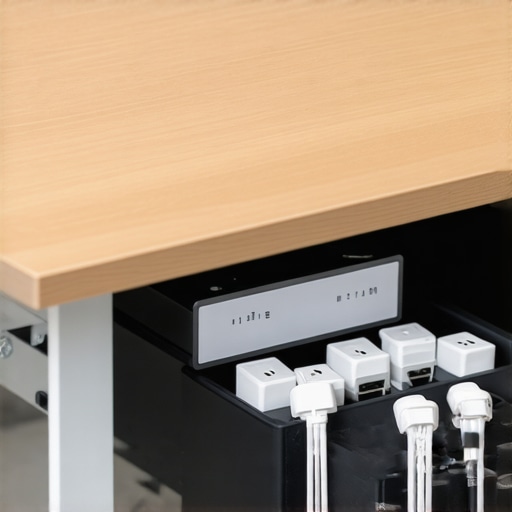
Consistency requires a strict maintenance schedule and a set of non-negotiable hardware standards. I personally recommend keeping a dedicated “emergency tech box” mounted directly beneath your main display table. In our box, we keep three specific items: an active HDMI signal booster, a high-quality USB-C multi-port hub, and a physical laminated instruction sheet. We also instituted a strict “five-minute sweep” rule at the end of every Friday. Our team checks that all dry-erase markers are functional, whiteboards are completely cleared of sensitive IP, and all charging cables are neatly coiled. If your team is constantly wasting time diagnosing connection issues, learning the trick to fixing a flickering projector in under thirty seconds can save your next presentation from disaster.
Beyond the physical cords, the software you use to capture ideas must be completely frictionless. While we strictly ban active laptop screens during the creative generation phase to prevent distraction, we always use a designated digital tablet mounted on the wall to digitize our physical whiteboard sketches immediately after we finish. We rely heavily on specialized local capture tools rather than complex cloud suites that require tedious logins. This ensures that the momentum of our physical session is captured in real time. For teams working in shared or hybrid environments, understanding the problem with bring your own device in shared meeting rooms is critical to preventing security and connection bottlenecks.
Looking ahead, the landscape of collaborative workspaces is rapidly shifting. According to workspace design specialist Jeremy Myerson of the Royal College of Art, future environments will prioritize sound-masking acoustic technologies and modular, adaptive furniture over static boardrooms. We are already seeing a massive shift toward highly flexible, temporary setups that can be configured on the fly. Startups are moving away from permanent infrastructure and utilizing flexible hubs to scale operations dynamically. This rapid evolution makes understanding the future of conference rooms in startup ecosystems essential for any founder looking to build a resilient, long-term workplace strategy. I highly encourage you to try one advanced tip today: audit your current meeting space, remove every single broken adapter, and implement a strict device-free policy for your next creative session to see how quickly your team’s output transforms.
The Brutal Truth About Why My Best Collaborators Almost Quit
When I look back at our most chaotic scaling phases, the hardest lesson I learned was that brilliant people will check out mentally if they feel their time is being treated as disposable. I used to think a diverse room was self-sustaining, but without deliberate boundaries, your quietest innovators are systematically silenced. The real breakthrough came when I realized that engineers and designers don’t just speak different professional languages—they process environmental stimulation differently. If you force an analytical mind into a noisy, chaotic, open-plan fishbowl, you won’t get innovation; you will get high cortisol and frustration. Ensuring your team has access to quiet spaces is not an aesthetic luxury, and understanding why quiet zones are the most important part of any workspace is what actually preserves their mental bandwidth for those high-stakes collaborative sessions.
My Essential Toolbox for Frictionless Sessions
To keep our momentum high and our operations clean, I rely on a highly specific set of physical tools and resources that eliminate the typical administrative friction of shared environments:
- The Physical Analog Anchor: A heavy-duty, wall-mounted butcher paper roll. We use this alongside our whiteboards to sketch out permanent, non-erasable timeline flows that teams can physical reference for days.
- The Ultimate Hub Checklist: Before booking external space, we run a strict validation process. Learning how to choose the perfect conference room for business success is our non-negotiable step before signing any offsite agreement.
- Frictionless Hardware Standard: We always pack a dedicated travel pouch containing universal adapters and active signal boosters. If you are tired of losing the first fifteen minutes of a presentation, discovering how to find a conference room that actually has working adapters will change your operational life.
Step Out of Your Routine to Build What’s Next
You cannot expect your team to design the future of your company while staring at the exact same cubicle walls that house their daily admin tasks. True creative leaps require a sensory disruption. By taking your team out of their routine and placing them in structured, flexible hubs, you give them permission to think like founders. Leveraging creative coworking transforming meeting rooms into collaboration hubs is the easiest way to inject fresh energy into a stagnant product cycle. Step out of your comfort zone, set strict boundaries, and watch your team build something remarkable.
Have you ever had a brilliant cross-department session completely derailed by a broken screen adapter or a loud, distracting environment? Let me know your worst meeting horror stories in the comments below!