

I stared at the blinking cursor for forty minutes, the flickering blue light of my monitor the only thing keeping me from nodding off in my ‘affordable’ basement suite. It was 2 PM. I had just finished my third coffee, but the four walls—painted a depressing shade of eggshell—felt like they were closing in. I had fallen into the classic trap of sacrificing vitamin D for a lower rent check, and my startup was paying the price in stagnant code and irritable team meetings. I quickly learned that why a windowless office is killing your team’s creative output isn’t just a catchy headline; it is a physiological reality. Today, I want to help you avoid my $5,000-a-month mistake. We are going to dive into the practical ways to measure, analyze, and demand better lighting before you sign that lease.
The Daylight Lesson I Learned the Hard Way
I used to think my team could thrive on grit and high-quality espresso alone. We were a lean startup, and ‘aesthetics’ felt like a luxury we couldn’t afford. But after six months in that dungeon, my lead developer’s productivity hit a wall, and our collective mood was in the gutter. It turns out, we weren’t just tired; we were light-starved. When I finally started finding a workspace that doesn’t feel like a tech prison, the difference was night and day. The air felt cleaner, the energy was higher, and we stopped dreading the Monday morning slog. Have you ever felt that 3 PM slump and realized your office has the lighting of a high-security hospital wing? Tell me about your worst ‘dark office’ experience in the comments.
Is Sunlight Really Worth the Premium Price Tag?
You might be skeptical. You might be thinking that a desk is just a desk, and as long as the Wi-Fi is fast, the sun doesn’t matter. I thought so too, until I saw the data. A famous study from Cornell University’s Department of Design and Environmental Analysis found that workers in daylight-centric office environments reported an 84 percent drop in symptoms of eyestrain, headaches, and blurred vision. That is a massive boost to your team’s health that no ergonomic chair can match. Paying a bit more for windows isn’t an expense; it is a long-term investment in your team’s retention.
Look Beyond the Floor Plan During Your Next Tour
When you are checking out potential spots, it is easy to get distracted by fancy perks. Don’t let the ping-pong table blind you to the fact that the only window faces a brick wall. You need to be methodical. I always recommend looking for 7 red flags to watch for during a space tour, and ‘peripheral-only windows’ is near the top of that list. If the light doesn’t reach the center of the room, half your team is still going to be working in a shadow. Before you even think about where the desks go, look at the orientation of the building and how the sun tracks across the sky throughout the workday.
Grab a Light Meter and Start Your Digital Audit
You wouldn’t buy a car without checking the engine, so don’t sign a lease without checking the lux levels. Download a light meter app on your phone—it’s not as precise as professional hardware, but it gives you a baseline. For deep work and coding, you want to see a minimum of 500 lux on the desk surface. I learned this the hard way when I moved my team into a ‘moody’ industrial loft. It looked cool for Instagram, but within three days, my lead designer was complaining of migraines. We checked the light levels and realized we were barely hitting 150 lux. We weren’t being edgy; we were straining our optic nerves. Now, I never walk into a space without my phone out, measuring the brightness at every desk station. 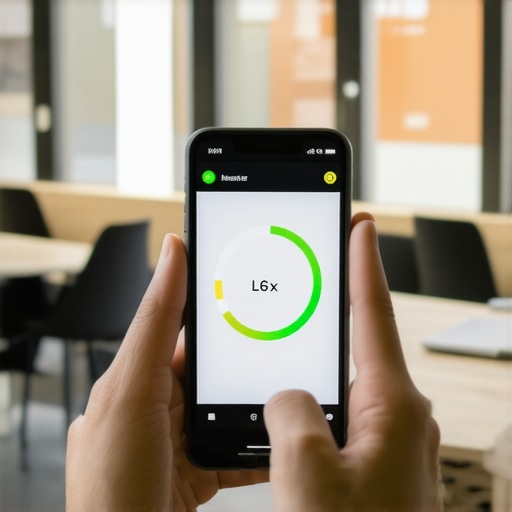
Kill the Glare Before Your VC Meeting
It’s not just about the amount of light, but the angle. I once sat for a critical seed-round pitch in a beautiful glass-walled room at 4 PM. I hadn’t accounted for the low afternoon sun. Ten minutes in, the sun hit the whiteboards behind me, creating a blinding glare that made it impossible for the investors to see my slides or my face. I looked like a silhouette in a witness protection interview. That experience taught me to always how to vet a conference room for client-facing speed by visiting at the exact time of the scheduled meeting. If you’re doing remote calls, you need to master the exact lighting setup for professional video pitches, which often requires diffused natural light from the front, not the back.
Run the 3 PM Shadow Test
The most dangerous time for startup productivity is the mid-afternoon slump. This is when the biological clock fights the cubicle lights. When you tour a space, don’t just look at it at 10 AM when the sun is high and everything looks bright. Visit again at 3 PM. See where the shadows fall. If the center of the office is plunged into darkness while the window desks are baking, you have a distribution problem. You should be looking for spaces that prioritize how to maximize productivity in your startups conference rooms by 0245 pm through the use of glass partitions and light-reflective surfaces.
Demand Transparency and Real Walls
Many trendy coworking spots use frosted glass or thin partitions to maximize ‘light flow,’ but this often comes at the cost of privacy. You need to balance the need for Vitamin D with the need for security. During your audit, check if the light-filled rooms actually offer enough acoustic isolation. I’ve seen many founders regret choosing a bright corner office when they realize why your startup needs a real door not just a glass wall for those sensitive HR or strategy sessions. If you can hear the person in the next office breathing, the natural light isn’t worth the lack of confidentiality.
Use Lighting as Your Negotiation Lever
If you find a space you love but the lighting is subpar in certain zones, use that as a bargaining chip. Don’t just walk away. Show the community manager your light meter readings and explain that the ‘shadow zone’ isn’t fit for full-time work. This is one of the most effective ways how to negotiate a better deal on monthly memberships. I once managed to shave 15% off a monthly rate by pointing out that three of our desks were in a permanent shadow, forcing us to buy our own high-end task lamps. Light is a utility, just like Wi-Fi; if it isn’t up to standard, you shouldn’t be paying top dollar for it.
Stop Chasing the Shiny Objects
Most founders get seduced by the ‘cool factor’—the beer taps and the rooftop yoga. But here is the hard truth: those perks are often a distraction from a fundamental lack of functional utility. In my journey, I’ve seen teams trade their privacy for a ping-pong table and wonder why their sprint velocity plummeted. I eventually realized that why the all-inclusive membership is usually a trap; you end up paying for a social club when you actually need a high-performance lab. Have you ever fallen into this trap where you picked a space for the vibe but left because you couldn’t actually work? Let me know in the comments.
Why Your Team Actually Hates That Innovative Glass Hub?
There is a massive misconception that glass walls and open layouts foster ‘organic collaboration.’ A landmark study by Harvard Business School researchers found that when firms transitioned to open offices, face-to-face interactions actually decreased by about 70 percent. People don’t collaborate more; they just put on larger noise-canceling headphones to escape the fishbowl. This is exactly why the open-plan office is failing your developers who require four-hour blocks of uninterrupted focus. If you aren’t providing private, sound-insulated zones, you’re essentially paying for a very expensive, shared distractions hub.
The real ‘oops’ factor I see most often is founders neglecting the floor-plan’s ‘flow.’ We once booked a beautiful room for a strategy session, only to find the layout made everyone feel like they were in a lecture hall rather than a brainstorming session. It turns out why your meeting room layout is killing participation is a real architectural phenomenon. You need circular or modular setups where the hierarchy is flattened. 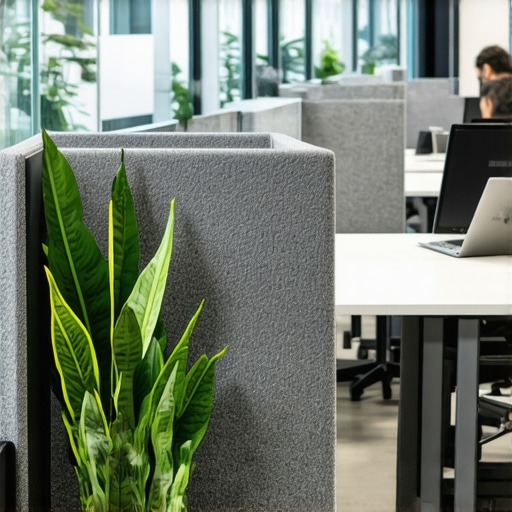
Get More Value Than Just a Front Desk
Your biggest asset isn’t the square footage; it’s the human connector running the show. I’ve learned that why your startup needs a community manager more than a lobby is about networking leverage. A great manager knows who is hiring, who just closed a Series A, and who can fix your server at midnight. Instead of just taking the keys, ask them about the ‘quiet zones.’ If they can’t point to where why developers need quiet zones to reach deep flow is respected, your engineers will be out the door in three months. Don’t sign until you’ve verified that the culture matches the output you expect from your team.
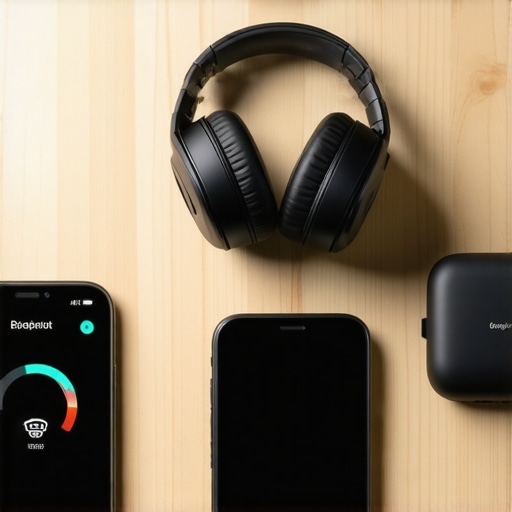
Once you’ve escaped the windowless basement, the real work of maintaining a high-performance environment begins. It’s easy to settle in and forget that your workspace needs a regular ‘tune-up’ just like your codebase. I’ve found that the honeymoon phase of a new coworking spot usually lasts about three weeks—right until the first time the Wi-Fi drops during a demo or the sun-drenched corner becomes a 90-degree sauna. To stay ahead, I’ve developed a ‘Workspace Go-Bag’ that I never leave home without. It includes a physical light meter (I use the Lumu Power for iPhone because apps can be wildly inaccurate depending on your lens quality), a travel-sized white noise machine for those echoey rooms, and a dedicated portable hotspot.
Build Your Workspace Go-Bag Today
You need to be prepared for the moment the ‘all-inclusive’ amenities fail you. I’ve been in situations where I had to how to handle a server crash from a temporary desk, and having my own hardware was the only thing that saved our deployment cycle. According to the Illuminating Engineering Society (IES) in their RP-1-12 document, the quality of light—specifically the avoidance of direct glare on screens—is just as critical as the quantity of light. If the coworking space doesn’t provide adjustable blinds, you need to bring your own solutions or move. I also recommend checking the digital infrastructure personally; don’t just take the front desk’s word for it. You should how to vet a space for high-speed fiber before you sign the contract by running your own stress tests during peak hours.
Don’t Let Bad Fiber Sink Your Pitch
Technology maintenance isn’t just about speed; it’s about security. When you’re on a shared network, why endpoint protection services matter more when your team is hybrid becomes a daily concern, not a theoretical one. I make it a rule to use a VPN and encrypted DNS even if the coworking space claims to have enterprise-grade security. If you are prepping for a big call, you need to know how to deal with technical glitches during a remote board call before they happen. I always keep a secondary ‘clean’ background setup ready in case I have to jump into a private phone booth at the last second because a neighboring startup decided to have a localized hackathon in the common area.
How do I maintain peak performance as my headcount doubles?
Scaling is the ultimate test of your workspace strategy. What worked for three founders will feel like a mosh pit when you hit ten employees. This is where you have to learn how to pick a membership that scales with your teams size without locking yourself into a five-year disaster. I predict the future of the office isn’t a fixed address, but ‘Elastic Real Estate’—where your footprint expands and contracts based on real-time sensor data and sprint cycles. We are moving toward a world where your conference room will automatically adjust its lighting and CO2 levels based on the number of people in the room to prevent that 2 PM brain fog.
Before you commit to your next month, take my advice: grab a light meter app and a Wi-Fi analyzer today. Spend twenty minutes auditing your current desk at 3 PM. If the numbers don’t add up, don’t wait for a headache to tell you it’s time to move. Use these metrics as your north star for your next negotiation.
The Hard Truths I Discovered Under Fluorescent Lights
Looking back at my time in that windowless basement, I realize I was focused on the wrong metrics. A startup isn’t just a collection of laptops; it is a living, breathing group of people who respond to their environment. One of the biggest lightbulb moments for me was realizing that the logic of choosing a flex office over a 5-year lease isn’t just about the money—it is about having the agility to leave a bad environment before it drains your team’s soul. I also learned that even in the brightest open-plan spaces, why your sales calls need a private phone booth becomes obvious the second you try to close a deal while someone else is grinding coffee beans ten feet away. Finally, remember that light is just the first layer; why founders are trading square feet for better network access is a trend for a reason—fast data is as essential as fresh air.
A Founder’s Toolkit for Stress-Testing New Offices
You don’t need a degree in architecture to vet your next office, but you do need a few reliable tools to keep the landlord honest. I never go on a tour without these three things: First, a dedicated hardware light meter like the Lumu Power; it is more consistent than any app and proves you mean business. Second, a reliable speed test tool because you must how to test the wi-fi speed before you book that venue to ensure your developers don’t revolt on day one. Lastly, I recommend the book ‘Deep Work’ by Cal Newport—it will change the way you look at office layouts forever, pushing you to prioritize flow over distracting noise. #IMAGE_PLACEHOLDER_E#
Your Move to a Better Workspace Starts Today
The transition from a cramped, dark corner to a professional coworking environment is a rite of passage for every growing startup. It is the moment you stop playing at business and start building an infrastructure that supports your ambition. Don’t let a bad lease or a windowless room be the thing that slows your momentum. Your team deserves a space where they can see the sun and the future of your company with equal clarity. When you finally find that perfect balance of light, speed, and community, you will wonder how you ever survived the basement. Have you ever stayed in a workspace way longer than you should have just to save a few bucks? Let me know your story in the comments below.