

I sat there, staring at a $2,400 invoice for a desk that was barely wide enough for my laptop and a lukewarm latte. It was my third month in the heart of the city, and the prestige I thought I was buying felt more like a lead weight. I moved there because I believed that if I wasn’t within walking distance of the big venture capital firms, I didn’t exist. I was wrong. Dead wrong. I spent more time worrying about the meter running out on my business than actually building it. Most founders I know fall into this exact same trap: we equate a high-rise view with high-level success. But after six months of bleeding cash, I realized that the address was just an expensive ego stroke.
The Hidden Tax on Your Downtown Ambition
When you look at a lease or a membership price in the city center, you’re only seeing the tip of the iceberg. I made the massive mistake of not calculating the friction costs. That’s the time spent in gridlock, the fifteen-dollar salads, and the constant distraction of a concrete jungle that never sleeps. I once thought a fancy lobby would impress partners, but making a great first impression is more about your results than the marble floors in your building. Today, I want to pull back the curtain and show you how to stop overpaying for square footage you never use. We’re going to look at why that prime desk might be the very thing holding your startup back.
Is a downtown desk really worth the massive investment?
I get the skepticism. You’re probably thinking, “If I am not where the action is, I will miss out on the networking.” It’s a valid fear. But let’s be honest: are you actually meeting people in the elevator, or are you just staring at your phone like everyone else? According to a study by the Harvard Business Review, physical proximity only increases collaboration if the space is intentionally designed for it, not just because you are in the same zip code. I have found that you can unlock networking opportunities much more effectively in spaces that focus on community rather than just a flashy location. Have you ever looked at your monthly rent and felt a pang of regret, wondering if that money could have hired a better developer instead?
The Myth of the Prime Location
We have been sold a lie that says downtown or bust. Early in my journey, I signed a multi-year deal for a suite that we outgrew in four months, then spent another eight months paying for a ghost town. It was a nightmare. Many founders are now prioritizing actual amenities over a fancy street name. They realize that cutting office rent in half does not mean losing talent; it means having more capital to actually pay that talent what they are worth. Before you sign that next check, let’s talk about what that desk is actually costing you—not just in dollars, but in sanity.
How to Strip Your Overhead Without Killing Your Culture
The biggest lie in the startup world is that you need a permanent desk to be a permanent player. I learned this the hard way when I realized I was paying for sixteen desks while my entire engineering team was working from their couches three days a week. It felt like I was paying for a gym membership I never used, but at a five-figure scale. To break this cycle, you need to transition from a ‘capacity’ mindset to an ‘on-demand’ mindset. This isn’t just about saving pennies; it is about agility. If you are still in the early stages, why you shouldn’t sign a lease for your first 10 employees becomes incredibly clear once you see the freedom of a monthly flex-plan.
Stop Paying for the Ghost Town
Start by auditing your team’s physical presence for two weeks. I did this with a simple spreadsheet and realized our ‘office’ was a ghost town on Tuesdays and Thursdays. We immediately switched to a model where we used day passes for the team on collaborative days and kept a small private suite for sensitive calls. By how we scaled our team using day passes only, we reinvested that saved $3,000 a month into targeted LinkedIn ads that actually brought in revenue. Most founders fear that not having a dedicated row of desks makes them look ‘small,’ but your bank account will look a lot bigger.
Rent the Impression Only When You Need It
I remember one specific Tuesday afternoon where I had a potential lead investor visiting. I didn’t want to meet at a noisy cafe, so I booked the most expensive ‘executive’ boardroom in the building. It had leather chairs and a view of the harbor. But when I tried to start the presentation, the proprietary software on their fancy screen crashed three times. I looked like an amateur while the clock ticked. This is why you must how to vet a conference room for client-facing speed before you invite anyone important. Now, I always arrive twenty minutes early to do a dry run. If the tech is too complex, it’s a liability, not an asset. 
Get an Inside Man Who Knows Everyone
You don’t need a fancy lobby if you have a great community manager. These people are the gatekeepers of the startup ecosystem. I used to walk past the front desk with a quick nod, but once I started actually talking to our manager, everything changed. Within a month, she had introduced me to a tax attorney and a potential co-founder for my next project. Understanding the role of community managers in the modern workspace is like having a warm intro on speed dial. They know who is hiring, who is looking for a partner, and which innovative meeting rooms that boost startup creativity are actually available when the main calendar looks full.Let’s dig deeper into the actual mechanics of these spaces. Most people assume that the more expensive the room, the better the outcome. I’ve seen founders drop $500 on a four-hour rental just to have a fancy coffee machine and a screen they couldn’t connect to. The ‘oops’ factor here is simple: we prioritize the optics of success over the infrastructure of execution. One of the biggest mistakes I see is the ‘all-inclusive’ allure. You think you’re getting a deal, but why the all-inclusive membership is usually a trap becomes obvious when you realize you’re subsidizing a pool table you never use and a ‘wellness room’ that’s always locked. I’ve found that why we prefer hourly rentals for client meetings is that it forces you to be intentional. You aren’t just ‘hanging out’ in a premium suite; you are there to close a deal. 
Stop Blaming the Wi-Fi for Bad Meetings
Everyone says you need more bandwidth, but in my experience, the layout of the room is the real culprit. We’ve been conditioned to think that open, glass-walled spaces foster transparency. They don’t; they foster performance anxiety. This is why your startup needs a real door not just a glass wall. If your team feels like they are in a fishbowl, they won’t take the risks necessary for a real breakthrough. Research from MIT’s Human Dynamics Lab, led by Alex Pentland, shows that ‘idea flow’—the way ideas circulate—is more about the frequency of brief, face-to-face interactions than the high-tech tools available. If your meeting room layout is killing participation by being too formal or too exposed, no amount of fiber-optic speed will save your brainstorm. Many founders also chase the psychology of the corner office in a shared space, thinking it projects power, but it often just alienates you from the very community you paid to join.
How do you protect your team’s focus without becoming isolated?
It is the million-dollar question for anyone moving past the ‘laptop-at-a-cafe’ stage. The nuance most beginners miss is that networking shouldn’t happen while you are trying to code. I’ve seen so many developers’ productivity tank because they were sitting in the middle of a ‘vibrant’ common area. You have to learn the secret to finding quiet corners for high-stakes sales calls and keep your deep work and your ‘networking’ entirely separate. If you’re still trying to do both at the same desk, you’re doing neither well. Furthermore, the problem with tech-heavy meeting rooms that nobody knows how to use is that they create friction exactly when you need flow. I’ve lost more momentum to a faulty HDMI adapter than to a bad business plan. I’ve also noticed that founders ignore why privacy is the new luxury in coworking. In a world where everyone is loud, the most successful people are those who can find the quietest room. Have you ever fallen into this trap? Let me know in the comments. If you’re ready to stop the bleed, feel free to contact us to discuss more efficient workspace strategies.The transition from a fixed office to a fluid one requires more than just a new set of keys. It requires a tech stack that acts as your digital glue. I have realized that the most expensive room in the world is useless if your security is a sieve. This is precisely why endpoint protection services matter more when your team is hybrid. If your engineers are pulling sensitive code at a public desk, you are not just working; you are gambling. I personally use a combination of Twingate for zero-trust access and physical privacy screens for my monitors. It is about creating a bubble of professionalism wherever you sit. According to the Cisco Hybrid Work Index, 98% of meetings now include at least one remote participant, which means your physical room is merely a portal, not the destination.
How do I maintain high output without a dedicated headquarters?
The secret is standardization. We treat every meeting room we rent like a temporary lab. Before we even unpack the laptops, we how to test the wi-fi speed before you book that venue to ensure we are not going to hit a wall mid-sprint. If the ping is over 50ms, we move on. This level of pickiness is what allows us to how to host a developer workshop without the lag without needing a ten-thousand-dollar-a-month fiber line of our own. Long-term, you will find that why small satellite offices are beating the mega-headquarters because they reduce the commute tax on your team’s brainpower. 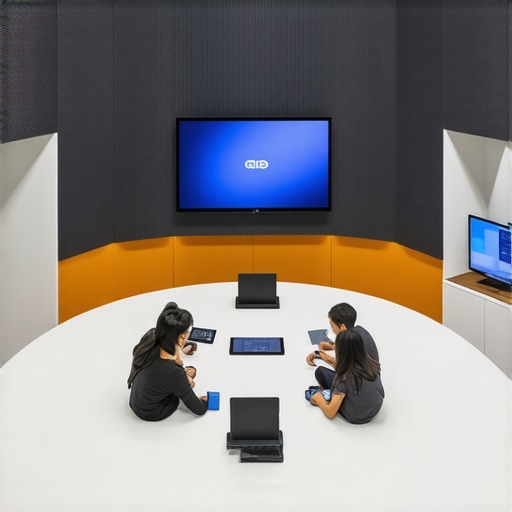 I predict that the next five years will see the death of the mega-HQ and the rise of the Neighborhood Hub—small, high-spec nodes located where people actually live. We are already seeing the future of conference rooms in startup ecosystems shift toward these hyper-local, high-tech environments. To stay ahead, stop looking for more square footage and start looking for the acoustic secrets of high-end conference rooms that allow for deep, uninterrupted focus. My advice? Spend your next office budget on top-tier noise-canceling gear for your team and a handful of credits for the best-rated rooms in your city. It is how you how to maximize productivity in your startups conference rooms by 0245 pm without the overhead of a thirty-page lease. Try this: for your next strategic meeting, skip your usual spot and book a room based purely on its acoustic rating—you will be shocked at how much faster you reach a consensus when you are not shouting over an HVAC system.
Three Hard Truths About Where Startups Actually Grow
Over the years, I have realized that visibility is never a substitute for viability. A flashy address in a high-rise might get you a few nods in the elevator, but it won’t fix a broken business model or a lagging product. One of the biggest shifts in my perspective came when I understood why your startup needs a real door not just a glass wall; true innovation requires the mental safety to fail and iterate without being on display like a fish in a tank. Another hard truth? Every dollar you sink into a long-term lease for space you don’t use is a dollar you’ve stolen from your marketing or product budget. I eventually learned how to turn a one-day desk rental into a tax write-off, which allowed us to stay lean while maintaining a professional presence when it actually mattered. Real growth happens in the quiet corners of deep work, not in the loud, performative common areas of a ‘trendy’ hub.
My Essential Toolkit for the Fluid Founder
I don’t travel light when it comes to protecting my team’s output. To keep our operations smooth without a permanent headquarters, I rely on a few specific resources. First, I always consult the checklist for your first office space search before we visit any new venue; it helps us spot red flags in the lease or infrastructure that we’d otherwise miss in the excitement of a tour. I also swear by ‘Remote: Office Not Required’ by the Basecamp founders, which helped me decouple our company culture from a physical zip code. For hardware, I never step into a shared space without a pair of high-end noise-canceling headphones and a dedicated hotspot, because even the best environments have off days. These tools aren’t just gadgets; they are the infrastructure of a modern, mobile empire.
Your Startup Is Ready to Outgrow Its Lease
The ‘perfect’ office doesn’t exist, but the perfect strategy for your specific team does. Stop waiting for the prestige of a downtown high-rise to validate your hard work—your results and your revenue will do that far more effectively than a marble lobby ever could. By embracing agility, you give your company the room it needs to breathe, pivot, and survive the unpredictable waves of the startup journey. Whether you are booking a high-spec conference room for a make-or-break investor pitch or just grabbing a quiet nook for a focus sprint, remember that the quality of the work is what defines you, not the length of your lease. Reflecting on our journey, why we ditched our long-term lease for flexibility was the single most liberating decision we made for our bottom line and our sanity. What is the one thing your current workspace is missing that would make your team twice as productive? Let me know in the comments below.