

I remember walking into our startup’s first “real” conference room—it was a windowless box that felt more like an interrogation room than a hub for creativity. We had the high-speed fiber, the 4K monitors, and the $800 chairs, but after sixty minutes in there, the energy would just vanish. My team looked like they were aging in real-time. I’d focused so much on startup success secrets like tech and furniture that I completely missed the one thing that actually makes humans feel alive: nature. It was a sterile, soul-crushing disaster, and it was costing us our best ideas.
The Day I Realized Our Startup Was Suffocating
The turning point happened during a particularly grueling sprint. I looked at my lead dev, who was staring blankly at a gray wall, and realized why a windowless office is killing your team’s creative output. I made the classic rookie mistake early on by thinking “decor” was a distraction. I even bought a giant plastic ficus because I didn’t want to deal with watering schedules. It just sat there gathering dust, a plastic monument to my own lack of vision. When I finally swapped that fake eyesore for a real Snake Plant and a few Pothos, the vibe changed instantly. People started breathing differently. Today, I’m going to show you why those leaves are the cheapest, most effective performance enhancers you’ll ever buy for your startup’s conference rooms.
Is Greenery Actually Worth the Hype?
I get the skepticism. You’re running a business, not a botanical garden. You might worry that plants are just one more thing to manage or that they look “unprofessional” to serious investors. But the data says otherwise. According to a study by the University of Exeter, employees are 15% more productive when “lean” workspaces are filled with just a few houseplants. It’s not just about aesthetics; it’s about evolutionary psychology. Have you ever noticed how your team’s mood dips when you’re stuck in a room that feels like a hospital corridor? That’s not a coincidence. When we ignore why your meeting room layout is killing participation, we often overlook the biological need for a touch of the outdoors.
Why Your Sterile Meeting Space is Stealing Your Best Ideas
In a cramped coworking environment or a high-pressure meeting room, the air gets stale and the mental fatigue sets in fast. I’ve seen it happen in innovative meeting rooms that had everything but life. Adding plants isn’t just about oxygen; it’s about reducing cortisol. When your team is staring down a deadline, a bit of green foliage acts as a visual reset button. I’ve personally found that my own stress levels dropped significantly once I stopped trying to make my office look like a futuristic lab and started making it look like a place where things actually grow. Have you ever felt that immediate sense of relief when you step outside after a long meeting? Why wouldn’t you want to bring that feeling inside? I’d love to know—have you noticed a difference in your team’s energy when you switch up the environment, or do you think it’s all just window dressing?
Turn Your Gray Box Into a High-Performance Green Engine
You wouldn’t launch a new feature without doing a technical audit, so don’t start buying plants without assessing your environment first. The biggest mistake I ever made was buying a high-maintenance Fiddle Leaf Fig for our main strategy room. It looked like a magazine cover on Monday, but by the following Friday, it was dropping leaves faster than a failing stock. I had completely ignored the fact that the room had zero natural light and the AC was blasting at 68 degrees. Before you spend a cent, you must how to vet a potential office space for natural light. If you are working with a dark cave, your plant strategy has to shift from ‘pretty’ to ‘indestructible.’
Pick the Survivors of the Botanical World
In the high-pressure world of a startup, no one has time to mist a fern every two hours. You need the ‘cockroaches’ of the plant world—species that thrive on neglect and recycled air. The Snake Plant (Sansevieria) and the ZZ Plant are my go-to recommendations for innovative meeting rooms. These plants actually prefer to be left alone and can survive in the dim light of a windowless basement. Using hardy greenery is one of the most effective 7 ways to make a shared office feel personal without adding clutter that distracts from the mission. They act as silent air purifiers, scrubbing CO2 and VOCs while your team is locked in a three-hour sprint.
Use Foliage as a Secret Weapon for Acoustics
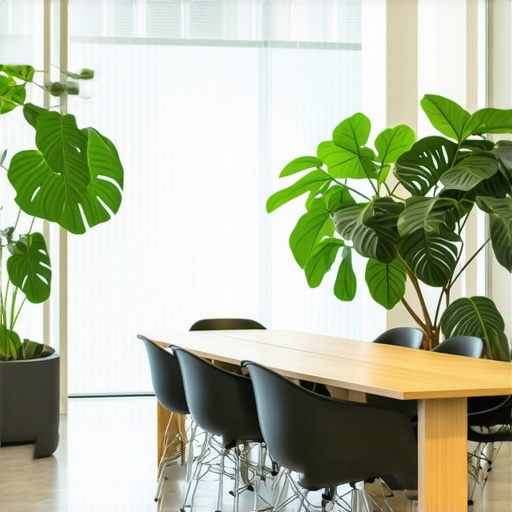
Plants aren’t just for looking at; they are functional tools. If you’ve ever been in a meeting where everyone’s voice echoes like they’re in a drainage pipe, you know how draining that is. Large, broad-leafed plants like the Monstera Deliciosa or a tall Dracaena act as natural sound diffusers. The surface area of the leaves helps break up sound waves, providing a low-tech version of the acoustic fix for echoey conference rooms. This is a critical part of why your meeting room needs to be more than just a table; it needs to be a controlled environment where communication is clear and effortless.
Automate the Care or Watch it Wither
If a task isn’t in your project management software, it probably won’t happen. In our early days, our office plants died because everyone assumed someone else had watered them. We eventually treated plant care like a server maintenance schedule. We invested in self-watering pots with built-in reservoirs—this is the ‘set it and forget it’ method for the busy founder. This ensures your startup’s conference rooms stay vibrant and professional for investors without requiring a full-time gardener. By the time we moved into a larger space, our greenery was so established it actually became a talking point during recruitment tours, proving that the team cared about the details of the work environment.
Most founders think that if two plants are good, twenty must be a masterpiece. I fell into this ‘Jungle Trap’ during our second year when we were still debating the logic of choosing a flex office over a 5-year lease. We turned our main hub into a literal thicket, thinking we were being ‘on brand.’ It looked great on Instagram, but the reality was a nightmare. When we were trying to handle a sensitive HR meeting in a shared space, the overwhelming scent of damp soil and the visual clutter made the atmosphere feel claustrophobic rather than calming. Too much of a good thing is a real productivity killer.
Stop Turning Your Meeting Rooms Into Overcrowded Jungles
The nuance many miss is a concept called ‘Visual Complexity.’ While biophilic design is vital, a study by the University of Melbourne suggests that excessive visual complexity can actually increase cognitive load. You want your team’s brain to experience ‘soft fascination’—the kind of effortless attention that allows for deep thought. If your room is a tangled mess of vines, the brain spends extra energy filtering out the background noise. This is a common mistake when founders realize why your meeting room needs to be more than just a table but then overcorrect by buying out the local nursery. Balance is your best friend.
Are Your Plants Actually Sabotaging Your High-Stakes Tech?
Here is the ‘Oops’ factor nobody talks about: the technical interference. We once spent thousands ensuring why your conference room needs better technology and fewer cables, only to realize our massive, oversized palms were blocking the line-of-sight for our wireless presentation system and actually dampening the Wi-Fi signal in the far corner of the room. Furthermore, if you don’t manage the humidity from large groupings of plants, you can actually shorten the lifespan of your high-end AV equipment. Dense foliage is great for passing the acoustics test every conference room should pass, but if a leaf is physically touching a sensitive microphone or a 4K sensor, you’re going to get feedback and glitches at the worst possible moment.
The Fine Line Between Zen and Clutter
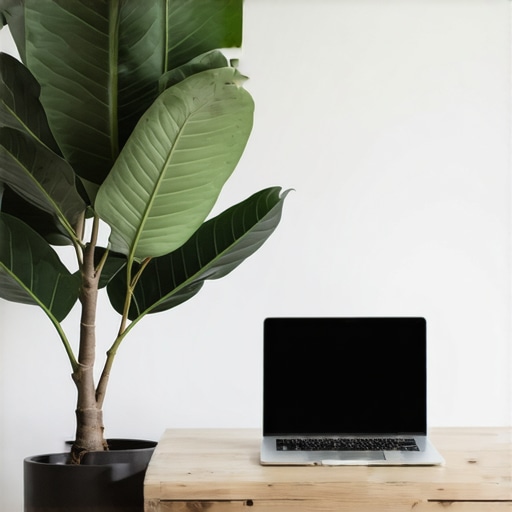
Advanced office design relies on the Attention Restoration Theory (ART) developed by Rachel and Stephen Kaplan. It posits that urban environments (and sterile offices) drain our mental batteries, while natural elements recharge them. However, for this to work in a high-stakes environment like a startup’s conference room, the greenery must be intentional. One large, healthy architectural plant like a Ficus Lyrata is often more effective than ten small, dying succulents scattered across a table. It creates a focal point without creating a mess. Have you ever fallen into the trap of over-decorating and ended up with a workspace that felt more like a garage sale than a boardroom? Let me know in the comments—I’d love to hear your ‘design gone wrong’ stories.
Once the initial excitement of a lush, vibrant workspace wears off, you’re left with the cold, hard reality of maintenance. I’ve seen countless founders build beautiful innovative meeting rooms only to watch them turn into brown, crispy graveyards three months later because they treated nature as a ‘set it and forget it’ feature. Scaling a startup is hard enough; you don’t need the added stress of a dying ecosystem. To keep our space thriving, we stopped relying on good intentions and started using a dedicated tech stack for our greenery. I personally swear by the Planta for Business app combined with Wanfei Smart Plant Monitors. These Bluetooth sensors sit in the soil and ping our Office Manager’s phone when moisture levels drop or the lux levels aren’t hitting the target. It’s the same logic we use for server uptime—monitor the vitals so you can intervene before a crash.
How do I maintain this ecosystem over the long term?
The secret isn’t a green thumb; it’s a repeatable process. We integrated plant care into our Jira sprints. Every Friday at 4:00 PM, a recurring ticket triggers for a ‘green audit.’ This ensures that while we are busy figuring out the role of flex space in a modern business scaling strategy, our physical environment isn’t degrading. If you’re using a flex office over a 5-year lease, this is even more critical. You need your plants to be portable and hardy. We use heavy-duty rolling casters on all our large planters. This allows us to move them instantly if we need to handle a sensitive HR meeting in a shared space where we need a bit more visual privacy or better acoustics.
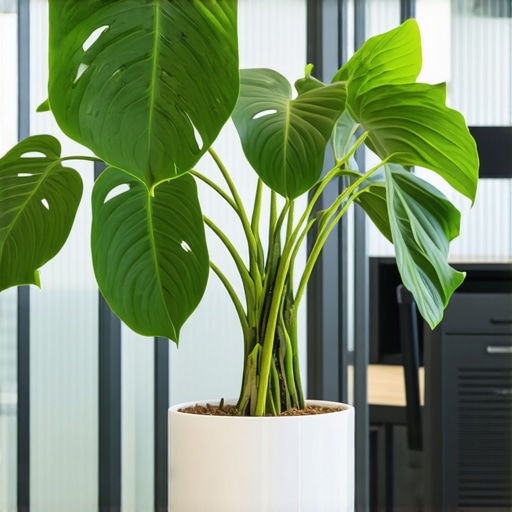
As you scale, you’ll find that scaling a hybrid team without a corporate HQ requires your physical hubs to work twice as hard. I’ve found that high-quality greenery actually helps our remote team feel more ‘grounded’ when they come in for their monthly touchpoints. They aren’t just visiting a sterile office; they are returning to a living space. According to Bill Browning, a founding partner at Terrapin Bright Green and a global expert in biophilic design, ‘the experience of nature in the workspace is not just an aesthetic luxury; it is a fundamental human need that dictates how we process information.’ His research suggests that even a 40-second micro-break looking at a green roof can significantly boost task performance compared to staring at a concrete wall.
The shift toward living architecture and smart environments
Looking ahead, the future of conference rooms in startup ecosystems isn’t just about faster Wi-Fi; it’s about ‘Bio-Digital’ integration. We are already seeing the rise of smart green walls that are plugged into the HVAC system to act as biological air filters. I predict that by 2026, we won’t just be choosing a membership tier that scales with your team based on square footage, but based on environmental health metrics like oxygen-to-CO2 ratios. Your startup’s conference rooms will eventually be self-regulating habitats that optimize themselves for human focus. My advice? Don’t wait for the future to catch up. Go out and buy a basic self-watering reservoir for your biggest conference room plant today—it’s the single best ‘productivity insurance’ you can buy for under fifty bucks.
Hard Truths from the Greenery Frontline
After years of trial and error, I’ve realized that greenery is an investment in your team’s mental bandwidth, not just a decorative afterthought. Here are a few things that standard office manuals often skip over:
- Consistency beats variety: It’s far better to have five identical, thriving Snake Plants than a chaotic mix of fifteen different species with conflicting watering schedules.
- Lighting is non-negotiable: Even the hardiest office plants will eventually give up if you don’t vet a potential office space for natural light with a critical eye.
- The ‘New Hire’ effect: I’ve had dozens of candidates tell me they chose our startup because the office felt “alive” and cared for. It’s a subtle but powerful recruiting tool for innovative meeting rooms.
- Drainage is the silent killer: Most office plants die from root rot caused by stagnant water. Always use pots with internal reservoirs or ensure your maintenance team knows the ‘finger-dry’ rule before watering.
#IMAGE_PLACEHOLDER_E#
The Toolkit for a Living Workspace
You don’t have to be a botanist to keep your office ecosystem thriving. These are the specific tools and sources that kept our workspace from turning into a brown, crispy graveyard:
- Planta for Business: This app is the gold standard for office managers. It takes the guesswork out of maintenance by sending push notifications based on species and local light levels.
- Wanfei Smart Plant Monitors: These Bluetooth-enabled sticks are a lifesaver for the expensive, architectural plants in your startup’s conference rooms.
- Biophilic Design Principles: Researching the work of Stephen Kellert helped me understand how to choose the perfect conference room for business success by focusing on biological triggers rather than just aesthetic trends.
Build a Space Where Ideas Can Breathe
Transitioning from a sterile box to a vibrant, living environment is one of the most rewarding changes you can make for your company culture. When you prioritize the environmental health of your team, you’re sending a clear signal that their well-being is as vital as the bottom line. It’s time to move past the plastic decor and create a physical hub that actually supports the intense, creative work you’re doing every day. Your startup’s conference rooms should be the engine room of your innovation, and every engine runs more efficiently when it’s in a clean, oxygenated, and inspiring environment. Have you ever noticed a significant boost in your focus after adding a bit of nature to your workspace, or do you prefer a strictly minimalist, plant-free setup? Let me know your thoughts in the comments below!