
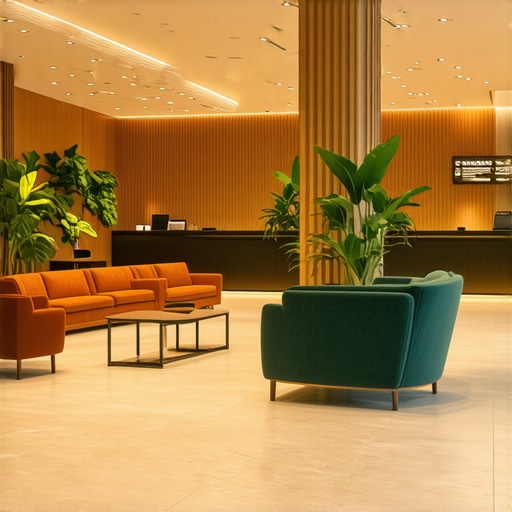
I stood there, blinking, as the smell of reheated tilapia wafted through our so-called ‘office.’ We were four people crammed around a laminate kitchen table, laptop chargers tangling like a nest of snakes under our feet. My lead designer was trying to explain a complex UI flow, but her voice was competing with the aggressive hum of a fridge that hadn’t been cleaned since the lease began. I looked at her, then at the half-empty cereal boxes stacked behind her head, and it hit me: we weren’t a high-growth startup in that moment. We were just four exhausted people in a kitchen pretending it was a workspace. That compromise was costing us our best ideas. Today, I’m going to show you why that ‘casual’ kitchen vibe is actually draining your team’s batteries and how a dedicated breakroom—not just a place with a sink—is the secret to keeping your best people from burning out. We’ll explore why your startup needs a physical anchor to thrive.
Stop Treating the Kitchen Table as a Collaboration Hub
I made a massive mistake early on by thinking ‘lean’ meant making every square inch of our space productive. I actually converted our only lounge area into a storage closet for server racks because I thought sofas were for lazy companies. Productivity didn’t go up; it tanked within two weeks. I learned the hard way that your team is more productive with a change of scenery that actually feels like a break. When your breakroom is just the kitchen, your brain never truly switches off. You’re still in ‘work mode’ because you’re surrounded by the sounds of the dishwasher and the sight of your boss’s half-eaten sandwich. Research supports this; a study in the Journal of Occupational Health Psychology highlights that mental detachment from work during breaks is essential for recovery and subsequent performance. If you’re always ‘at the table,’ you never truly recover. Have you ever found yourself trying to have a serious brainstorming session while someone else is literally three feet away struggling with a jammed toaster? It’s impossible. We need to realize that your meeting room needs to be more than just a table, and your breakroom needs to be more than just a kitchen.
Is a dedicated lounge actually worth the extra rent?
You might be worried that giving people a comfortable place to sit will lead to three-hour coffee chats, but it’s actually the opposite. When people have a designated spot to decompress, they return to their desks with more focus. I’ve seen firsthand how adding something as simple as office plants to a dedicated lounge can shift the entire mood of a Tuesday afternoon slump. A kitchen table is a place of utility; a breakroom is a place of psychological safety. By separating the two, you give your team permission to actually breathe. Let’s look at how to make that transition without breaking your budget.
Map Out Your Third Space Before Buying Furniture
I learned the hard way that you can’t just throw a beanbag in a corner and call it a ‘culture hub.’ In my second startup, I spent three thousand dollars on high-end gaming chairs for a break area that remained empty for six months. Why? Because it was literally three feet away from my desk. No one wanted to relax while the boss was staring at their back. You have to create a ‘Third Space’—a zone that feels psychologically distant from the grind. Think of it like a pressure valve on a steam engine; if there is no place for the steam to go, the whole machine eventually cracks. This is why why developers need quiet zones to reach deep flow, but they also need ‘loud zones’ where they can laugh without feeling guilty. If your current office is too small to permit this, you aren’t stuck. We eventually realized that why small satellite offices are beating the mega-headquarters because they allow for these distinct functional zones.
Kill the Fluorescent Hum with Layered Lighting
If your breakroom has the same clinical overhead lighting as the desks, your brain won’t register a change in environment. I once replaced our harsh office LEDs with two dimmable floor lamps and a string of warm Edison bulbs in our tiny lounge. The shift was instant. People actually started staying there for fifteen minutes instead of grabbing a coffee and running back to the safety of their monitors. You’re trying to signal to the nervous system that the ‘threat’ of deadlines is temporarily paused.  This is especially vital when you consider the the real cost of working from your dining table, where lighting and ergonomics are usually an afterthought. By providing a sensory shift, you’re essentially resetting the team’s focus clock.
Invest in the Social Lubricant That Actually Works
Let’s be honest: free snacks are great, but they are a band-aid. If you want people to actually talk to each other—I mean really brainstorm without a calendar invite—you need a focal point. For us, it was a high-end espresso machine. I’m not talking about a pod-waster; I’m talking about something that requires a bit of ritual. I watched two junior engineers who hadn’t spoken for a month finally solve a bug while waiting for the milk to steam. It’s about creating a ‘watercooler’ effect that isn’t forced. I’ve always argued that why high-quality coffee is more than just a perk; it’s a catalyst for the kind of accidental innovation you can’t schedule on Zoom.
Stop Policing the Lounge Area
The biggest mistake I ever made as a founder was glancing at my watch when I saw my lead dev on the sofa for the third time in an afternoon. That look killed the lounge’s utility for a week. You have to lead by example. Start taking your non-confidential syncs there. If the team sees the leadership using the space for relaxation and low-stakes chatting, they’ll feel safe doing the same. We found that innovative meeting rooms that boost startup creativity often look more like living rooms than boardrooms. When we finally stopped treating the ‘break’ as a lapse in productivity and started treating it as ‘recharging time,’ our output didn’t just stabilize—it accelerated. We also realized that the acoustic fix for echoey conference rooms can be applied to lounges too; soft surfaces like rugs and curtains make the space feel private, even in an open-plan office.
Glass Walls are Killing Your Deep Work
Most startup founders believe that a sleek, glass-walled conference room is the ultimate sign of transparency and modernity. I used to be one of them. I thought it showed we had nothing to hide, but I quickly realized that ‘fishbowl’ environments actually create a ‘transparency paradox.’ A study by Harvard Business School professor Ethan Bernstein found that when employees feel they are being watched, they are actually less likely to experiment or innovate. Instead, they perform a version of ‘productive work’ for the benefit of whoever is walking past. This is why why your meeting room layout is killing participation. If your team feels like they’re on a stage, they won’t take the creative risks necessary for a breakthrough. 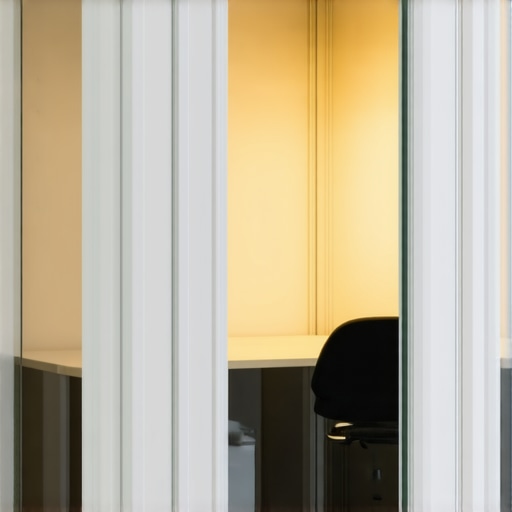
How much tech is too much for a five-person sync?
I’ve seen founders spend ten thousand dollars on integrated tablet controllers and ceiling-mounted mics before they even have a product-market fit. This is the ultimate ‘Oops’ factor. The more complex the setup, the higher the chance that your meeting starts ten minutes late because of a software update or a missing dongle. You need to realize that why your conference room needs better technology and fewer cables, not more of them. A high-quality 4K screen and a single, reliable HDMI connection often beat the ‘smart’ system that requires an IT degree to operate. We eventually learned that innovative meeting rooms that boost startup creativity are those where the technology disappears into the background, rather than becoming the focal point of frustration.
Stop Booking the Boardroom for a Two-Person Chat
One of the most common mistakes I see in scaling startups is ‘space-hogging.’ We used to have a 12-person boardroom that was constantly booked by two people who just wanted to ‘get away from the noise.’ Not only is this a waste of expensive square footage, but it also creates a massive bottleneck for actual team meetings. This is a primary reason why we stopped paying for square footage we never used and moved toward a more flexible model. You need a mix of tiny phone booths and medium huddle rooms rather than one giant status symbol. If you don’t have the right ratio, your culture will suffer as people start fighting over the calendar. It’s also nearly impossible to maintain confidentiality in those oversized echo chambers. If you’ve ever struggled with sensitive topics, you know that knowing how to handle a sensitive hr meeting in a shared space is a skill every founder must master. Before you sign a long-term lease, make sure you perform the acoustics test every conference room should pass. If you can hear the coffee machine through the wall, your trade secrets aren’t safe. The move toward professional environments is about more than just looking the part; it’s about the the logistics of moving your startup to a professional space that supports actual work, not just the appearance of it. Have you ever fallen into the ‘fishbowl’ trap where you felt watched while trying to work? Let me know in the comments.
Stop Using a Post-it Note for Your Meeting Schedule
I’ve seen too many startups use a physical calendar or, worse, a ‘knock and hope’ policy for their conference rooms. It is a recipe for resentment. We moved to a system that integrates directly with our Slack, ensuring how to book a meeting room in under sixty seconds isn’t just a goal but a daily reality. Personally, I swear by tools like Robin or Envoy because they allow you to see ‘ghost meetings’—slots where someone booked the room but never showed up. If no one checks in within ten minutes, the room releases. This is the only way how to maximize productivity in your startups conference rooms by 0245 pm without hiring a full-time office manager. It keeps the flow moving and stops the ‘squatter’ culture from taking root.
How do I maintain a high-performance workspace over time?
The secret isn’t a deep clean once a quarter; it’s a weekly audit of your ‘friction points.’ Every Friday, I spend ten minutes checking the cables and the Wi-Fi stability. If you haven’t performed how to vet a space for high-speed fiber before you sign the contract 2, you’re already behind. According to Cisco’s Visual Networking Index (VNI) benchmarks, enterprise-grade video traffic requires consistent sub-50ms latency to avoid the ‘glitch effect’ that kills high-stakes sales pitches. I use hardware like the UniFi Dream Machine Pro to monitor our bandwidth hoggers in real-time. If the dev team is pushing a massive build while I’m on an investor call, I need the network to prioritize my packets automatically.
The Gear That Saves Your Investor Pitches from Audio Hell
I finally stopped relying on built-in laptop mics and moved to a Jabra Speak 710 for our small huddle rooms. It’s a puck-sized speakerphone that daisy-chains, and the difference in clarity is why why your next big hire cares about your office location and your level of professionalism. When you’re scaling, you have to realize why your conference room needs better technology and fewer cables 2. I’ve predicted for a while that the ‘Zoom Room’ of the near future won’t just be a screen; it’ll be a spatial audio environment. We are moving toward ‘Front Row’ layouts where remote participants appear at eye level, making the future of conference rooms in startup ecosystems feel less like a TV show and more like a shared table. 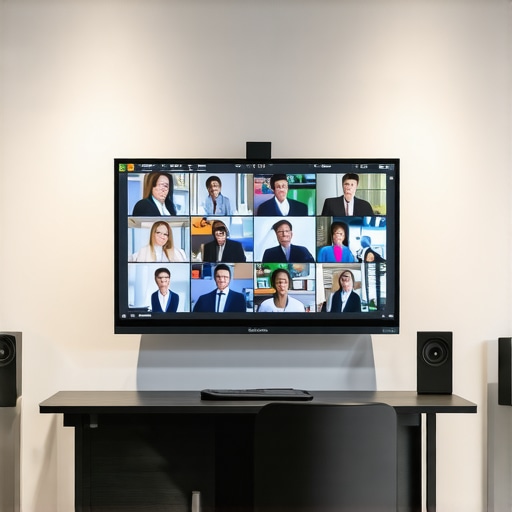
Why We Stopped Compromising on Lighting and Latency
If you can’t see the subtle expressions on a founder’s face during a call, you’re missing the nuances of the pitch. That’s why we invested in Elgato Key Lights even for our tiny internal rooms. It sounds like overkill until you realize why your pitch deck looks better on a forty-inch screen than a laptop 2. Good lighting signals that you are prepared and respect the other person’s time. As you think about how to pick an office that fits your startups growth pace 2, look at the electrical outlets and port placement as much as the view. In the next few years, I expect AI-driven cameras to become the standard, automatically framing the speaker and silencing background keyboard clicks. If you aren’t ready for that level of tech integration, you’re going to look like a relic of the 2010s. Start by following the exact checklist for vetting a high stakes board room 2 and swap one piece of consumer-grade gear for professional-grade hardware this month.
Lessons from the Trenches: What I Got Wrong About Office Growth
Reflecting on those early days, I realized that I focused too much on the square footage and not enough on the ‘flow’ of the day. I used to think a conference room was just a box with chairs, but it’s actually where your company’s most important decisions are born. I also learned that choosing the perfect conference room isn’t about the view; it’s about whether your team feels empowered to speak up when they’re inside it. Another big lightbulb moment? Realizing that the logic of choosing a flex office saved us more money in the long run than any ‘cheap’ long-term lease ever could have. It gave us the agility to pivot when our headcount doubled overnight. Growth isn’t just about hiring; it’s about providing the infrastructure that supports those new voices.
The Toolbox That Keeps My Startup Humming
I don’t recommend products unless they’ve survived a 14-hour crunch day. For scheduling, I swear by digital booking systems that prevent the ‘squatter’ mentality; it’s how you manage noise complaints and space hogging without being the ‘office police.’ For hardware, the Jabra Speak series remains my go-to for clear audio, especially in echoey rooms. If you’re struggling with the logistics of scaling a hybrid team, look into 360-degree cameras to bridge the gap between the room and the remote workers. These tools aren’t just toys; they are the essential infrastructure of a professional culture that respects everyone’s time and ears.
Stop Playing Small and Start Scaling Your Impact
You’ve worked too hard on your product to let a bad Wi-Fi connection or a cramped kitchen table kill your momentum. Making the jump to a professional environment isn’t an ego trip; it’s an investment in your team’s mental health and your brand’s credibility. Whether you are hunting for a new coworking spot or upgrading your current meeting rooms, remember that the best spaces are those that disappear and let the work take center stage. You’ve got the vision; now give your team the room to actually see it through. What is the biggest friction point in your current office setup? Let me know below.