

I spent four hours yesterday watching that little grey typing bubble dance in Slack. It’s a special kind of hell, isn’t it? Waiting for a breakthrough that never comes because everyone is over-editing their thoughts before hitting ‘Enter.’ My startup was dying a slow death by thread notification, and I almost didn’t notice until our weekly innovation meetings started feeling like a tedious chore. We were trying to pivot our entire user acquisition strategy through a series of emoji reactions and disjointed, threaded replies. It was a total disaster. I realized that while digital tools are great for logistics, they are the absolute graveyard of spontaneous genius. Look, I’m not saying Slack is the devil. It’s great for asking where the login credentials are or sharing a funny meme. But for the big, messy, world-changing stuff? Trying to brainstorm in a chat app is like trying to paint a masterpiece through a keyhole. You just can’t see the whole canvas at once.
Why I Finally Closed the Laptop and Rented a Real Room
I made a massive mistake early last quarter that I’m still slightly embarrassed to admit. I thought we could ‘hack’ our way through a complex product launch by staying completely remote to save on costs. I told the team that our digital workspace was more than enough. We ended up with three different versions of the same feature because nobody was actually talking to each other in real-time. We were just broadcasting status updates into a void. That’s when it hit me: why your hybrid team is still failing at internal communication isn’t about the software you use; it’s about the lack of shared physical energy. We needed a radical change. I booked a dedicated space because I finally understood the secret to productive brainstorming sessions away from the office. It wasn’t just about having fancy whiteboards or ergonomic chairs; it was about the immediate, high-bandwidth feedback loops that only happen when you’re standing in the same room, smelling the same office coffee, and seeing the frustration on a co-founder’s face before they even speak. [image_placeholder_1]
Is a physical room actually worth the disruption to our flow?
I know exactly what’s going through your head right now. You’ve probably spent months—maybe years—perfecting your home office or remote setup. Now, here I am, your helpful neighbor, telling you to pack a bag and leave the house. You’re worried that the commute to a coworking space will kill the deep focus you’ve worked so hard to cultivate. I felt that exact same fear. I worried we’d waste time on small talk instead of doing ‘real’ work. But the truth is that why your team is more productive with a change of scenery is actually backed by hard science. A study by MIT’s Human Dynamics Laboratory discovered that face-to-face interaction is the single most significant predictor of a team’s success, often accounting for 35% of the variation in overall performance. When we finally moved into one of those innovative meeting rooms that boost startup creativity, the energy shifted within the first ten minutes. The ‘Aha!’ moments started happening in lightning-fast succession. Today, I’m going to show you how we transitioned from digital exhaustion to physical momentum without blowing our entire budget. Tell me, have you ever spent an entire afternoon arguing in a Slack thread only to end up exactly where you started? I’d love to hear if you’re as tired of the typing bubble as I am. Let’s get into the practical steps of how we made the swap work for us.
I learned the hard way that you can’t just throw people into a random four-walled box and expect magic. The first time I tried to move our strategy session offline, I booked the cheapest windowless basement I could find. Within an hour, my lead developer looked like he was about to start clawing at the drywall. It felt more like an interrogation than an innovation session. We spent more time trying to find an outlet than we did talking about our roadmap. That’s when I realized that choosing the perfect conference room isn’t about luxury; it’s about removing the friction that stops people from thinking. If the environment is sterile, the ideas will be too.
Stop Guessing and Start Booking
You need a framework for these sessions, or you’ll just end up scrolling through Slack on a bigger screen while sitting next to each other. The goal is to maximize the ‘high-bandwidth’ nature of being together. Here is how we finally stopped wasting money on rooms that didn’t work and started seeing actual ROI from our offsites. It starts with the environment and ends with how you physically occupy the space.
Find a Room That Doesn’t Feel Like a Tech Prison
If you want people to think outside the box, don’t put them in one that feels like a jail cell. I now prioritize natural light and ergonomic setups above almost everything else. I’ve spent too many hours in workspaces that feel like a tech prison, and it kills morale faster than a server crash. Look for rooms with modular furniture—tables on wheels that let you pivot the physical layout as fast as you pivot your business model. When we did our last pivot, we literally pushed the tables to the wall and stood around a giant sheet of butcher paper on the floor. That kind of physical movement breaks the mental patterns that keep you stuck. It’s about creating a ‘war room’ atmosphere where the walls are covered in your thoughts, not just gray paint.

Test the Tech Before the Clock Starts
There is nothing that kills a creative spark faster than a ‘searching for signal’ icon. Before you bring the whole team in, you have to test the wi-fi speed before you book that venue. I once lost forty minutes of a high-stakes board meeting because the HDMI cable was frayed. Now, I treat the room tech like my pre-flight checklist. If the screens don’t sync in thirty seconds, we aren’t using them. Knowing how to maximize productivity in your startup’s conference rooms often starts with the boring stuff: cords, dongles, and reliable bandwidth. Don’t let a $5 cable ruin a $5,000 strategy day.
Choose a Membership That Actually Scales
Early on, I signed a six-month lease for a space we outgrew in six weeks. It was a nightmare of paperwork and wasted capital. Now, I advocate for picking a membership that scales with your team’s size. You need the flexibility to book a four-person huddle room on Tuesday and a twenty-person workshop space on Friday without having to jump through procurement hoops. If you’re a founder, your focus should be on the product, not on whether you have enough chairs for the new interns. We eventually moved to a model where we used day passes and flex-credits, which allowed us to try different neighborhoods until we found the one that actually boosted our output. This fluidity is the only way a fast-growing startup can survive without drowning in real estate overhead.
Ban the Laptops and Reclaim the Whiteboard
The most important step we took was a strict ‘laptops closed’ policy for the first ninety minutes. If you’re in a room together just to look at your individual screens, you might as well stay on Slack. We use the physical space to draw, map, and argue. I remember one session where our CTO and head of sales were at a complete impasse about a feature. Instead of a long-winded email chain, they grabbed markers and drew the user journey on the glass wall. Within five minutes, the misunderstanding was visible, literally. That kind of clarity is impossible in a digital thread. You need to leverage the creative coworking and meeting rooms that offer these surfaces as standard tools.
But here is the nuance that most ‘office gurus’ miss: bigger isn’t always better, and ‘all-inclusive’ is often a code word for ‘over-leveraged.’ Everyone tells you to find a space with the most perks—the kombucha on tap, the arcade games, or the rooftop lounge. In my experience, those are the red flags of a space that doesn’t understand deep work. You aren’t there to play; you’re there to solve the problems that keep you up at night. I’ve realized that why the all-inclusive membership is usually a trap is because you are often subsidizing amenities that your team will never use, while sacrificing the things that actually matter, like acoustic privacy or 24/7 access.
Stop Paying for the Illusion of Choice
The most sophisticated mistake I see founders make is choosing a space based on the ‘vibe’ rather than the friction. We often mistake aesthetic beauty for functional utility. I once signed a contract because the lobby looked like a five-star hotel, only to find out the truth about shared office noise levels in that specific building made it impossible to have a private conversation. If you can hear the startup next door celebrating their Series A, you can’t hear your own thoughts. Expertise in this world means looking past the velvet sofas and checking the thickness of the glass walls. This is precisely why your startup needs a real door, not just a glass wall when you are discussing sensitive IP or equity splits.
Can a Neutral Room Actually Change Your Pitch Result?
I’m a firm believer that the environment dictates the power dynamic. I’ve seen founders decorate their own small offices with so much company swag that it actually intimidates potential partners or hires. There is a psychological reason why a neutral meeting space leads to more honest feedback. When you are on ‘your’ turf, people subconsciously hold back; they don’t want to offend the king in his castle. But move that same conversation to a professional coworking hub, and the power dynamic flattens. Suddenly, the truth comes out. This is also why investors prefer meeting in professional settings rather than your chaotic startup garage. It signals that you value their time and have the operational maturity to use the right tool for the job. #IMAGE_PLACE_HOLDER_C#
The High Cost of the Square Footage Ego
The biggest ‘oops’ factor I’ve encountered is the ‘Square Footage Ego.’ I fell for this myself, thinking that having a massive dedicated suite proved we were ‘making it.’ The reality is that why membership flexibility is more important than square footage became painfully clear when we needed to pivot our team structure but were stuck in a rigid, multi-year lease. A study by Dr. Craig Knight at the University of Exeter found that employees in ’empowered’ spaces—where they have the flexibility to choose and move within their environment—are up to 32% more productive than those in fixed, ‘lean’ offices. When you lock yourself into a massive, stagnant lease, you are effectively capping your team’s agility and cognitive output. This is why founders are prioritizing location over fancy amenities lately; they want the ability to scale up or down without the real estate anchor dragging them under. Have you ever fallen into this trap of choosing flash over function? Let me know in the comments.
Maintaining the momentum we found in those physical rooms requires more than just a calendar invite. I eventually built what I call my ‘War Room Bag.’ It’s a dedicated backpack that never gets unpacked. Inside, I have a 100W GaN charger, two 10-foot 4K-rated HDMI cables (because the provided ones are always too short or frayed), and my secret weapon: a portable 360-degree camera. I’ve learned that how to stop your team from hating hybrid meetings starts with the hardware. If the remote person can’t see the whiteboard, they aren’t part of the meeting; they’re just a spectator. For the technical side, I always verify that the space supports Wi-Fi 6. According to the IEEE 802.11ax technical standards, the ability to handle high-density traffic without latency is what separates a professional hub from a glorified coffee shop. This is non-negotiable when you are running the checklist for a glitch-free product launch event. 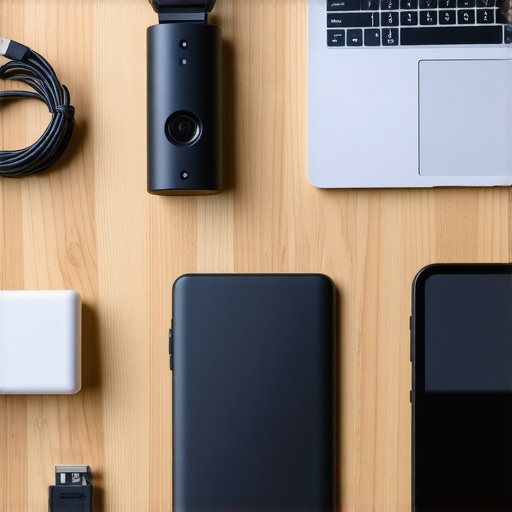
How do I maintain this collaborative spark over time?
The trap most founders fall into is making these high-energy sessions a ‘one-off’ event. You can’t just have a breakthrough in March and expect it to carry you through December. We now schedule ‘Sync Sprints’ every third Tuesday. We don’t use the time for status updates—we use it for the friction-heavy stuff that Slack ruins. To keep it working, you have to actively manage the environment. If the common area gets loud, you need to know how to handle the noise problem in open plan offices before it derails your focus. I’ve found that keeping a ‘meeting audit’—a simple note of what went wrong technically—helps us refine our room choices for the next time. We are constantly looking for those coworking spaces that unlock innovation by offering the specific tools we need, like writable walls or dedicated fiber lines.
The Future of Shared Space is Hyper-Local
I predict we are moving away from the ‘Mega-HQ’ and toward a constellation of satellite hubs. The data from recent urban planning reports suggests that the 15-minute city model is bleeding into how we work. Startups will stop renting 5,000 square feet downtown and instead buy ‘access’ to a network of smaller, high-end meeting rooms closer to where their developers actually live. The future of conference rooms in startup ecosystems isn’t about more desks; it’s about better technology and shorter commutes. We are seeing a rise in ‘AI-integrated’ rooms that automatically transcribe sessions and map out action items from the whiteboard. If you want to stay ahead of the curve, I highly recommend building your own ‘War Room Bag’ this week—don’t let a missing $10 adapter be the reason your next $100,000 idea dies in the room. Grab a dedicated bag, throw in the essentials, and stop relying on the venue to provide the magic for you.
Hard Lessons from My First Failed Office Booking
Looking back at our first few months of trying to balance remote flexibility with high-stakes strategy, I realize I fell for several common traps that I want to help you avoid. First, I focused way too much on the aesthetic ‘vibe’ of a space instead of the actual acoustics. I learned that you must understand the truth about shared office noise levels before you commit to a day of deep work; a beautiful room is useless if you can hear every word of the marketing pitch happening next door. Secondly, I let my founder ego lead me toward avoiding a long-term commitment too early was the best decision I never made. I almost signed a multi-year lease for a ‘forever home’ that would have bankrupt us during our first pivot. Finally, I stopped trusting the ‘high-speed’ marketing claims and started personally checking if the internet can actually handle a client presentation before inviting any external partners into the room.
The Minimalist Gear That Saved Our Strategy Days
You don’t need a massive corporate headquarters to be effective, but you do need a consistent system. My team stopped wasting time on logistics once we mastered using temporary access to grow without the overhead. Instead of one big office, we use several smaller satellite locations that allow us to meet where it makes the most sense for that week’s objective. I also swear by our ‘War Room Bag’ which ensures we never have a technical glitch. To keep your team agile, focus on picking a space that grows at your pace rather than trying to predict your headcount three years from now. This fluidity has been our greatest competitive advantage. [image_placeholder_5]
Get Your Team Back in the Same Room
It is incredibly tempting to stay in the comfort of your home office, letting the digital notifications dictate your day. But the most significant breakthroughs of my career didn’t happen in a thread; they happened because I had the courage to close the laptop and gather the team in high-quality meeting rooms where we could actually see the nuance in each other’s ideas. The energy of a shared physical space is the fuel that moves a startup from a ‘project’ to a ‘mission.’ Don’t let the convenience of Slack rob you of the spontaneous genius that only happens in person. Have you ever lost an entire afternoon to a Slack argument that could have been solved in five minutes if you were sitting across from each other? Let me know your biggest remote communication struggle in the comments below.