

The air in our makeshift startup HQ was thick with the smell of stale coffee and desperation. We’d been grinding in that same windowless room for ten weeks, and the ‘breakthroughs’ had turned into bickering over who left the fridge open. I realized then that my team wasn’t lazy; they were just bored of the same four walls. It was a classic case of why your team’s productivity drops after two pm, but it was lasting all day long. I finally dragged everyone to a local creative coworking space, and the energy shift was instant. We went from sluggishly checking emails to actually building features in forty-eight hours. [IMAGE_PLACEHOLDER]
Get Your Team Out of the Mental Rut Today
Scaling a startup is hard enough without fighting the mental stagnation of a dull, repetitive environment. I used to think being ‘scrappy’ meant staying in a basement until we were profitable. That was a huge mistake. I saved three thousand dollars on rent but lost tens of thousands in lost momentum because we were all uninspired. Today, I’m going to show you exactly how to use a change of scenery—whether it’s ditching the home office for a month or just booking a few hours in innovative meeting rooms—to skyrocket your output without breaking the bank.
Is a change of scenery just a fancy way to waste money?
You might think paying for a professional hub is an unnecessary overhead when you have a perfectly ‘fine’ office or a Zoom account. I used to be that guy. I prided myself on our depressing environment until I saw the actual science. According to a study published in the Journal of Environmental Psychology, environmental variety can significantly boost creative performance by breaking habitual thought patterns. If your team is stuck in a loop, your environment is likely the anchor holding them back. Have you ever noticed your developers get more done in a loud coffee shop than at their actual desks? It’s not the caffeine; it’s the shift in perspective.
Stop Overpaying for Space You Don’t Use
Many founders think they need a ten-year lease to be ‘real,’ but that’s a trap. You can actually cut your office rent in half without losing talent by leveraging flexible spaces. When you move, you aren’t just changing chairs; you are changing the social and cognitive cues that trigger work. By using coworking spaces to unlock innovation, you give your team permission to think differently. In the next section, we’ll look at how to pick the specific environment that matches your current project goals.
Pick the Right Room for the Right Job
You wouldn’t use a sledgehammer to hang a picture frame, and you shouldn’t use a twenty-person boardroom for a one-on-one strategy session. I learned this the hard way during our third month when I booked the biggest, most expensive suite available for a simple code review. We felt tiny, the acoustics were terrible, and the vibe was so formal that my lead developer felt too intimidated to tell me the architecture was failing. It was a total waste of capital and time. Now, I follow a strict rule: match the physical environment to the psychological mission. If you are doing deep, focused work, you need the secret to finding quiet corners for high-stakes sales calls. If you are conducting a post-mortem or a retrospective, knowing why a neutral meeting space leads to more honest feedback becomes your most valuable tool. It breaks down the internal hierarchy and gets people talking as equals rather than subordinates. 
Book Your Space Before Your Motivation Dies
Speed is the only real advantage a startup has. If you have to wait three days for an office manager to approve a room booking, your breakthrough idea will be dead by Tuesday. I’ve transitioned our entire team to a mindset where how to book a meeting room in under sixty seconds is the standard operating procedure. When you eliminate the friction of scheduling, you encourage spontaneous collaboration. We once had a random lunch conversation turn into a full product pivot because we could instantly grab a whiteboard room and map it out. If we had to wait for a ‘real’ office approval, we would have just finished our sandwiches and forgotten the idea. To do this right, you must learn how to choose the perfect conference room for business success based on current occupancy and tech availability rather than just aesthetics.
Check the Wi-Fi Before You Check Your Ego
The ‘Coffee Shop’ trap is the quickest way to look like an amateur in front of investors. Last year, I tried to host a pivotal demo at a trendy cafe because I thought the ‘hacker vibe’ was cool. Five minutes in, the espresso machine started screaming and the public Wi-Fi cut out during the most important slide. I lost the momentum and the deal. Since then, I never book a venue without knowing how to test the wi-fi speed before you book that venue. A professional hub provides the redundancy that a basement or a cafe cannot. This reliability is what allows you to focus on the pitch rather than the signal bars.
Use Your Neighbors as an Unofficial Resource
Don’t just sit in your private pod like it’s a corporate cubicle. You are paying for the community access, so use it. I used to be terrified of talking to strangers in the lounge, but I forced myself to apply the founders guide to networking without the awkwardness. That is literally how I met our first UI designer—he was sitting three feet away from me. When you are leading a team through a transition, learning how to facilitate a workshop that doesn’t feel like a chore involves leveraging the energy of the surrounding space to keep your own team’s spirits high.
Your Office Size Is Actually Irrelevant
Most founders brag about their ten-thousand-square-foot floor plan, but honestly, that is just vanity. You should stop overpaying for square footage you never use. I have seen teams of thirty thrive in a space half that size because they optimized for ‘collision density’—the frequency with which people bump into each other and exchange ideas. The trap is thinking that more space equals more growth. In reality, too much space creates silos. If your team is spread out across a massive, echoing room, the social friction increases, and communication dies.
Glass Walls Are a Productivity Killer for Engineers
We have all seen the modern coworking aesthetic: glass walls everywhere. While it looks great for a tour, it is often a nightmare for deep work. I have noticed that the open-plan office is failing your developers because of visual noise. According to a study published by the Harvard Business Review, open offices can actually lead to a 70% decrease in face-to-face interaction as employees retreat into headphones to cope with the lack of privacy. If you want your tech team to actually ship code, you need to look for why your startup needs a real door, not just a glass wall. 
Does a circular table actually change your board meetings?
It sounds like feng shui nonsense, but the hidden psychology of circular meeting tables is backed by behavioral science. Research from the University of British Columbia suggests that circular seating triggers a sense of belonging, whereas rectangular tables reinforce hierarchy. If you are struggling with a team that won’t speak up, it might be because your meeting room layout is killing participation. I switched our weekly syncs to a round table format and suddenly my junior hires felt empowered to challenge my assumptions.
The All-Inclusive Membership Trap
When you are comparing spaces, that all-inclusive price tag is seductive. But here is the truth: the all-inclusive membership is usually a trap. You are paying a premium for yoga classes, beer taps, and community mixers that your team is likely too busy to attend. I have found that the truth about those ultra-cheap office memberships is often that they lure you in with low base rates but gouge you on the things that actually matter, like reliable internet or room bookings. Lastly, watch out for the silence. I once moved us into a space that was so quiet it felt like a funeral home. You need to know how to tell if a coworking space is just a glorified library. If you can’t have a heated debate about a product roadmap without getting shushed, you are in the wrong place. Have you ever fallen into this trap? Let me know in the comments.
The Tech Stack That Actually Works
I’ve wasted countless hours trying to get cheap tech to work in expensive rooms. Now, I have a non-negotiable toolkit that travels with me to every hub. If you are serious about output, you need to master how to host a developer workshop without the lag. I personally never rely on the house HDMI cables anymore; I carry my own 4K-rated braided cables and a dedicated hardware encoder for streaming. This isn’t just about being a tech snob; it’s about eliminating the friction that kills a creative flow. When you are paying for premium access, the true ROI of a premium coworking membership isn’t the free fruit water—it’s the minutes saved by not troubleshooting a projector. I also advocate for a rigid security protocol. Your data is vulnerable the moment you join a shared SSID. This is why endpoint protection services matter more when your team is hybrid and moving between different networks every day. I use a hardware-based VPN (like a GL.iNet travel router) to create a private ‘bubble’ for our team inside any conference room. 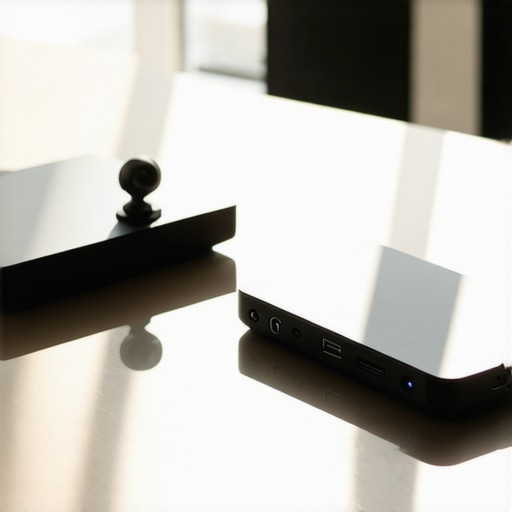
Why I Carry a Backup Router to Every Pitch
Reliability is the greatest luxury in the startup world. Most coworking spaces suffer from ‘channel congestion’ where dozens of routers fight for the same frequency. The IEEE 802.11ax (Wi-Fi 6) standard was specifically designed to handle these high-density scenarios by using Orthogonal Frequency Division Multiple Access (OFDMA), yet many older spaces are still running on outdated 802.11ac hardware. If the venue doesn’t support the latest standards, I bring my own hotspot. You should never leave your success to the chance of a shared bandwidth pool, especially when you are learning how to prep for a high-stakes board meeting. If the connection drops during a demo, the investors don’t blame the coworking space; they blame your lack of preparation.
How do I maintain this high-performance culture long-term?
Maintaining momentum is harder than starting it. To keep the team sharp, I rotate our ‘anchor’ days. Every Tuesday, we meet in a high-energy, open-plan space to foster ‘collision density.’ Every Thursday, we book a soundproof suite to hammer out deep-work tasks. This prevents the environment from becoming another ‘office’ that people want to escape. By constantly shifting the physical cues, we keep the psychological state of ‘the hustle’ alive. It is about learning how to choose the perfect conference room for business success based on the energy levels of the team rather than just the calendar.
AI and the Holographic Boardroom
Looking ahead, the physical ‘room’ is going to become much more intelligent. I predict that by 2027, the ‘smart’ meeting room will use spatial audio and AI-driven transcription as a standard, not a luxury. We are already seeing the early stages of the future of conference rooms in startup ecosystems, where the walls themselves might be interactive touchscreens that sync directly to your GitHub or Figma. The barrier between ‘remote’ and ‘local’ will finally dissolve. If you want to stay ahead of the curve, I recommend trying one advanced tip this week: use a dedicated ‘room-mapping’ app to test the acoustics of your favorite meeting space before your next client call. It sounds overkill until you land a six-figure contract because you were the only one who sounded crystal clear. Try it once and you’ll never go back to ‘winging it’ again.
What No One Tells You About Sharing a Floor With Competitors
Reflecting on my journey from a windowless basement to a bustling hub, I’ve realized that physical space is the invisible hand that guides your culture. First, transparency isn’t always your friend; knowing how to manage office politics when you share a floor with other startups is vital for keeping your intellectual property safe and your team focused. Second, those flashy amenities like beer taps are often just distractions that dilute your output. Third, you don’t need a massive team to justify a professional setting; startup success secrets choosing the perfect conference room often boils down to how it makes your three-person team feel when they walk in for a high-stakes pitch. Finally, the social energy of a shared floor is a double-edged sword; you have to learn the pros and cons of fixed desks versus hot desking to keep your internal culture from dissolving into a sea of strangers. #IMAGE_PLACEHOLDER_E#
The Founder’s Shortlist for High-Stakes Days
To stay agile, I rely on a few specific resources that go beyond the four walls of an office. For a mental framework, Cal Newport’s book Deep Work is my manual for surviving the noise of modern environments. For the physical side, I rely heavily on the local role of community managers in the modern workspace—they are the ultimate fixers who can solve a tech glitch or a logistics nightmare in minutes. For technical execution, I always keep a high-quality hardware encoder in my bag to ensure our remote pitches never lag. If you want a practical starting point, learn how to maximize productivity in your startups conference rooms before you even sign the guest log for the day.
Your Team Deserves More Than a Windowless Room
Your startup is too important to be killed by bad lighting and a dying Wi-Fi router. Making the move from a basement to a professional hub isn’t an ego play; it’s a strategic investment in your team’s collective brainpower. When you finally step into a high-energy environment, you’ll realize that the daily grind doesn’t have to feel like a slog. Take the leap and find the meeting rooms that actually inspire your best work and give your vision the stage it deserves. Have you ever stayed in a ‘scrappy’ office space for too long? Let me know in the comments below.