

I’ll never forget the look on the lead investor’s face when the industrial blender started screaming during my slide on scalability. I was mid-sentence, and suddenly, the sound of crushed ice drowned out my entire pitch. I was trying to save a few bucks by meeting at a local café instead of booking a proper space, and it was an absolute disaster. That day, I learned that the real cost of a free coffee meeting isn’t just the price of a latte—it’s the loss of your hard-earned credibility. It felt like I was playing at being a founder rather than actually being one. Today, I want to share how shifting your environment can shift your results, moving you from ‘promising startup’ to ‘solid investment’ in the eyes of those holding the checkbook.
Stop Thinking Your Dining Table is Good Enough
We’ve all heard the legendary stories of tech giants starting in a dusty garage, but in the modern market, your environment is a silent partner in your pitch. I used to think a flashy office was just vanity, a way to burn through seed money that could be spent on developers. I was wrong. When you invite a serious partner to a noisy public space, you’re unintentionally signaling that you don’t value their time or your own data security. Why physical presence still matters for early-stage funding boils down to trust; investors need to see that you have the infrastructure to support their capital. I once lost a potential partner simply because the ‘free’ Wi-Fi at my local hub cut out during a live demo. It was humiliating, and no amount of ‘we’re agile’ excuses could fix the damage. A study published in the Journal of Business Research suggests that physical environment accounts for nearly 40% of a client’s initial trust assessment, proving that where you meet is almost as important as what you say.
Is a Dedicated Boardroom Actually Worth the Hype?
You might be skeptical. Is paying for a few hours of quiet really going to change the outcome of a Series A? From my experience, absolutely. It’s about removing friction and managing the atmosphere. When you use a neutral meeting room for your investor pitch, you control the variables—the lighting, the sound, and the technology. No more fumbling with dongles or shouting over a group of teenagers. Have you ever had a high-stakes meeting derailed by something as preventable as bad background noise? I want to help you understand what investors look for before you walk into that room, ensuring your first impression isn’t your last and that your focus stays exactly where it belongs: on your vision.
Master the Logistics Before the Presentation Starts
You have to treat your meeting space like a cockpit. Before you even invite a partner to join you, you need a pre-flight ritual. I’ve found that the best way to avoid disaster is to vet a conference room for client-facing speed at least an hour before the start time. This isn’t just about the internet; it’s about the physical flow of the room. I once arrived forty-five minutes early for a pitch to a regional angel group. I thought I was being obsessive until I realized the provided HDMI cable was frayed and flickering. Because I was in a managed environment rather than a public square, I flagged the community manager, got a replacement in three minutes, and was ready before the first investor stepped out of the elevator. If I’d been at a cafe, that flickering screen would have been the ‘technical difficulties’ tombstone of my presentation. You need a checklist for a glitch-free hybrid board meeting if anyone is calling in via Zoom. Nothing kills momentum faster than spending the first ten minutes asking, ‘Can you hear me now?’
Take Command of the Technology Stack
Don’t assume the tech will work just because it’s expensive. I’ve seen million-dollar deals stall because of tech-heavy meeting rooms that nobody knows how to use. Simplicity wins every time. If the room has a complex proprietary interface, ask for a five-minute tutorial from the staff. Your goal is to walk in, plug in, and start. If you do encounter a snag, you must know what to do when the office Wi-Fi goes down mid-pitch. Have a dedicated hotspot ready as a backup and a local copy of your deck on a thumb drive. This level of preparation signals to an investor that you handle crises with a cool head—a trait they value more than the pitch itself.
Why Neutral Ground Is Your Secret Weapon
There is a specific psychological advantage to meeting on neutral turf. When you invite an investor to your ‘office’ (which might just be your living room), you are the host, but you are also vulnerable to the distractions of your own life. When you use a neutral meeting room for your investor pitch, both parties are on equal footing. It creates a professional vacuum where the only thing that matters is the data on the screen.
Find the Quiet Corners for High Stakes
Not every meeting needs a twenty-person boardroom. For the follow-up calls or the sensitive negotiations where you’re discussing equity, you need quiet corners for high-stakes sales calls. I remember trying to negotiate a bridge loan in a bustling common area. Every time I reached a critical point about interest rates, the espresso machine would hiss or someone would laugh loudly at a nearby table. It made me sound hesitant when I was actually just distracted. Now, I prioritize private phone booths or small huddle rooms. This isn’t just about sound; it’s about privacy. You shouldn’t be discussing your burn rate in a place where your competitors might be sitting at the next table.
Operationalize Your Search for the Perfect Hub
Stop looking for ‘cool’ and start looking for functional. To maximize productivity in your startup’s conference rooms, look for spaces that offer flexibility. Sometimes you need a room for an hour; sometimes you need it for a week. The art of the short-term lease allows you to scale your physical presence exactly when the heat is on, without being weighed down by a five-year commitment that could bankrupt your early-stage company.Most founders believe that more is always better—more screen real estate, more flashing lights, and more high-tech gadgets. In reality, the problem with tech-heavy meeting rooms that nobody knows how to use is that they act as a physical and psychological barrier between you and the investor. When you are fiddling with a remote or trying to get a smart-board to sync, you aren’t making eye contact. I’ve seen seasoned founders lose the entire thread of their narrative because they were distracted by a malfunctioning ‘smart’ feature. The nuance here is that high-stakes meetings are about human connection, not just information delivery. If the tech is not invisible, it is in the way. Another common mistake is thinking that an open, vibrant environment fosters creativity for everyone. It doesn’t. For high-level strategy, why privacy is the new luxury in coworking becomes apparent very quickly. You need a room that is acoustically sealed. There’s a specific ‘oops’ factor I call the ‘Glass Wall Gaze’—where you’re pitching something confidential while passersby in the hallway are literally staring at your sensitive financial projections. Always check the sightlines from outside the room before you open your laptop.
Can a Circular Table Actually Help You Close a Deal?
Research in environmental psychology, specifically studies cited in the Journal of Environmental Psychology, shows that circular seating arrangements significantly increase the feeling of equality and shared purpose among participants. When you are at a long rectangular table, there is an inherent hierarchy that places the ‘leader’ at the head. By understanding the hidden psychology of circular meeting tables, you can subtly shift the dynamic from ‘me vs. them’ to ‘us vs. the problem.’ If you’re struggling to get honest feedback from a potential partner, why your meeting room layout is killing participation might be as simple as the literal shape of the furniture.  Don’t fall for the ‘perk’ trap either. The truth about those ultra-cheap office memberships is that they usually skimp on the one thing you actually need: service reliability. You might get free beer on Fridays, but if you can’t book a room when you have an emergency board call, that membership is a liability, not an asset. When you’re ready to graduate from the coffee shop chaos, make sure you know how to choose the perfect conference room for business success based on technical infrastructure and privacy, not just aesthetics. Have you ever fallen into the trap of picking a ‘cool’ space that turned out to be completely non-functional? Let me know in the comments.
Build a Tech Survival Kit That Never Leaves Your Bag
Over the years, I have stopped relying on the ‘provided’ equipment in shared spaces. Even the best hubs have off days, and you do not want your Series B to hinge on a missing adapter. My personal command center includes a Jabra Speak 710 for crystal-clear audio and a dedicated 4K webcam that handles low-light conditions far better than any laptop lens. This is how I personally manage how to deal with technical glitches during a remote board call without breaking a sweat. When I show up, I am my own IT department. This level of self-sufficiency is one of the many startup success secrets that separates the amateurs from the pros. If you have your own hardware, you are never at the mercy of a previous tenant who might have walked off with the HDMI cable. 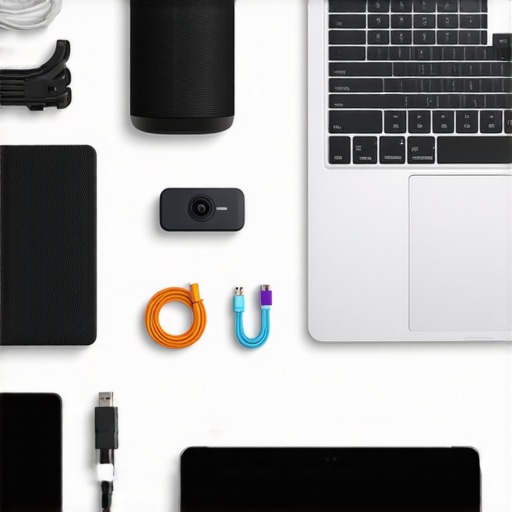
How do I keep our standards high as the team gets bigger?
Maintaining professional consistency while scaling is the hardest part of the journey. As we grew, we realized that hot-desking for everyone was killing our deep-work cycles. We eventually moved our engineering team to a private suite within the same coworking hub. This gave us the best of both worlds: a lockable door for focus and the networking energy of the common areas. When you are looking for an office space that grows with your hiring plan, you have to prioritize modularity. Don’t sign for forty desks when you only have ten; instead, find a partner that lets you add private suites as your headcount climbs.
Acoustics are the Invisible Barrier to High-Value Deals
Most founders look at the furniture, but I look at the ceiling and the walls. According to Cisco’s technical documentation on acoustic echo cancellation (AEC), even the top-tier software cannot fully compensate for poor physical room acoustics if the reverberation time (RT60) exceeds 0.5 seconds. If you are in a glass box with no sound-absorbing panels, your voice will sound thin and distant to anyone on the other end of the line. I always look for the acoustic secrets of high-end conference rooms, such as heavy drapes or felt wall coverings, before I book a space for a high-stakes negotiation.
The Shift Toward AI-Managed Workspaces
Looking ahead, I predict we are moving away from manual room bookings and toward AI-driven environments. I expect the future of conference rooms in startup ecosystems to involve sensors that automatically adjust lighting, temperature, and even noise-canceling frequencies based on the number of people in the room and the type of meeting being held. We are already seeing the first wave of this in premium hubs that use occupancy data to optimize energy use and cleaning schedules. This trend will only accelerate, making the physical office a ‘smart’ extension of your digital workflow. I want you to audit your current workspace setup this week. Pick one room you use regularly and test the acoustics using a simple decibel meter app or just record a voice memo and listen for the echo. If the sound is muddy, it is time to find a space that actually respects your voice.
The Hard Truth About Growing Past the Garage Phase
Looking back at those early failed cafe meetings, the biggest lesson wasn’t just about noise—it was about maturity. You cannot scale a world-class company if you are still operating with a ‘temporary’ mindset. Making the move from a garage to a professional hub is a psychological milestone that tells your team and your investors that you are here to stay. Secondly, I realized that silence isn’t a luxury; it’s a prerequisite for deep strategy. Finally, never underestimate the power of environment on your own confidence. When you walk into a space that reflects your ambition, you pitch better and negotiate from a position of strength rather than desperation.
Gear That Saved My Sanity in Shared Spaces
I don’t leave things to chance anymore; I’ve learned that being your own IT department is part of the founder’s job description. My ‘go-bag’ always includes a Jabra Speak 710 because laptop microphones are notorious for picking up every distant hallway conversation. I also swear by a dedicated Logitech 4K webcam—natural light is great, but finding a meeting room with decent natural light isn’t always possible when you’re booking on the fly. For software, I use a simple decibel meter app to audit the acoustic secrets of high-end conference rooms before I ever start a call. These tools ensure that even if the venue’s infrastructure has an off day, my professional standard remains unshakeable.
Own Your Space Before You Own the Market
Your physical environment is the stage where your company’s story unfolds. Don’t let a bad Wi-Fi connection or a noisy neighbor be the reason your vision doesn’t get funded. By applying these startup success secrets, you are building a moat around your credibility. Every time you choose a professional environment over a convenient one, you are investing in the future of your brand. Now is the time to graduate from the chaos and step into a space that matches your drive. Whether it is choosing a neutral meeting space or ensuring your team has the privacy to focus, the environment you build is the foundation of your success. Have you ever had a high-stakes meeting completely derailed by a technical glitch or a noisy environment? Let me know your horror stories in the comments below!