

I was sitting there, three cups of coffee deep, trying to nail down a complex piece of code when it happened. ‘NO, WE NEED TO PIVOT!’ a voice boomed from three desks away. It wasn’t just loud; it was ‘vibrating-my-keyboard’ loud. I didn’t have a private office to retreat to, and honestly, I felt like my productivity was bleeding out on the floor. I’ve been there, and I know exactly how frustrating it is when you’re trying to build something great while someone else is treating the communal lounge like their personal boardroom. Today, we’re going to walk through how to reclaim your focus without becoming the person everyone avoids in the breakroom.
Why One Loud Voice Ruins Your Whole Afternoon
It’s not just you being sensitive. According to a study by Cornell University, even low-level office noise can increase stress levels and decrease task motivation significantly. When I first made the move from a garage to a flex office, I thought the energy would be infectious. I didn’t realize that one person’s energy is another person’s migraine. If you don’t have a door to slam, you have to get creative. Learning the etiquette of taking private calls in a public coworking zone is a two-way street, but often, your neighbor hasn’t read the manual. My biggest mistake early on was staying silent and simmering. I thought being polite meant suffering in silence, but that just led to me hating my workspace. You need to know how to find quiet spaces in a busy downtown coworking hub or, better yet, how to manage the environment you’re already in. [image placeholder]
Is It Actually Possible to Change Someone Else’s Behavior?
You might be thinking that people are just set in their ways. You’re worried that if you speak up, you’ll be ‘that guy’—the fun-killer. But here’s the secret: most loud talkers have no idea they’re doing it. They are in the zone, just like you want to be. I once spent three weeks glare-staring at a guy who turned out to be partially deaf in one ear; he wasn’t rude, he was just loud! Have you ever had a moment where you were the one accidentally making too much noise? Drop a comment and let me know—I’ve definitely been there. To fix this, we need to look at managing noise complaints in an open plan office with a bit more finesse than just sending an angry Slack message. Before you book your next spot, check if the acoustics test every conference room should pass was actually considered by the space provider. We’re going to dive into the exact scripts and physical shifts you can use to get your peace back.
Master the Art of the Quiet Intervention
You don’t have to be the office police to get some peace and quiet. Instead of internalizing the stress, you need a tactical approach that treats the problem like a logistical hurdle rather than a personal attack. When you learn how to manage noise complaints in a shared workspace, you realize it is more about environment design than personality management. First, acknowledge that open-plan offices are basically acoustic petri dishes; sounds bounce and amplify in ways the designers didn’t always anticipate. Before you confront anyone, apply the acoustics hack for crystal clear client pitches to your own setup to see if you can dampen the noise at the source.
Relocate to a Productivity Hotspot
Sometimes, the battle is won simply by changing your coordinates. I spent three months fighting a losing battle against a marketing team’s daily stand-up before I finally found the exact desk location that boosted my productivity by 40 percent. It wasn’t just farther away; it was strategically shielded by a row of lockers and a heavy velvet curtain. If you are constantly being interrupted, it might be time to start considering if the move to a dedicated desk is the extra cost worth it. A dedicated desk often comes with better perimeter control and puts you among other ‘deep work’ professionals who value silence as much as you do. 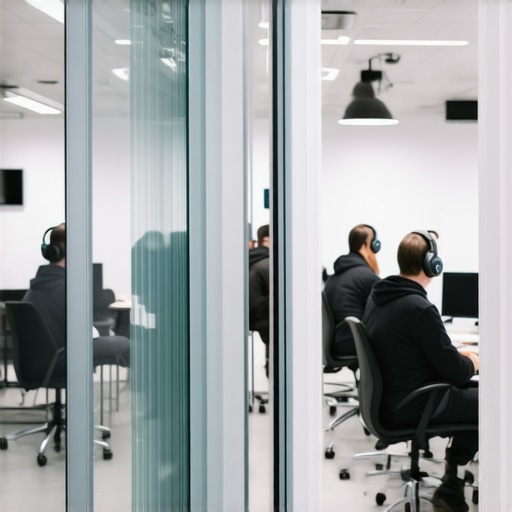
Try the 30-Second Friendly Reset Script
If moving isn’t an option, you have to talk. I once sat next to a founder who was practically screaming his Series A pitch into a speakerphone. Instead of complaining to the manager, I walked over, caught his eye with a smile, and said: ‘Hey, that pitch sounds like it’s going great, but I can actually hear your valuation numbers from my desk and I’d hate for the whole room to know your business.’ He wasn’t just quiet after that; he was grateful. He didn’t realize how much he was oversharing. This ‘privacy-first’ angle is way more effective than just telling someone they’re being loud. You are doing them a favor by protecting their trade secrets.
Push the Loud Talkers Toward Better Gear
When the noise is chronic, it’s usually because the space lacks clear boundaries. Part of your job as a coworking veteran is to gently teach people how to maximize productivity in your startups conference rooms by 0245 pm. If someone is booming in the lounge, point them toward a phone booth or a meeting room. If you’re the one booking the space, you should how to vet a meeting room for acoustic privacy before booking to ensure your own team isn’t the problem. I’ve seen countless entrepreneurs fail to close deals because they didn’t realize why your pitch fails in a noisy lobby—it’s not just about the distraction for you, it’s about the lack of professionalism it signals to the person on the other end of the line.
The Glass Wall Trap and Why It Kills High-Stakes Deals
Most founders make the mistake of choosing a conference room based on the quality of the coffee or the size of the monitor. While it’s true that why your pitch deck looks better on a forty inch screen than a laptop 2 is a valid consideration, it’s a surface-level victory. The real “oops” factor I see repeatedly is the “fishbowl effect.” We’ve all been seduced by those sleek, all-glass meeting rooms that look like they belong in a Bond movie. But here’s the contrarian truth: glass is an acoustic nightmare and a visual security leak. If you’re pulling up sensitive financial data, anyone walking by with a latte can see your burn rate. Beyond the visual leak, there’s the issue of sound. High-end design often prioritizes “openness” over actual utility. You need to know how to keep your startups trade secrets safe in a public lounge, but that safety shouldn’t end once you close the meeting room door. I’ve sat in “premium” rooms where I could hear the person in the next room sneezing. This is why the acoustics test every conference room should pass is so vital before you sign a long-term membership. A study by the Center for the Built Environment at UC Berkeley found that speech privacy is the most common complaint in modern office layouts, yet startups keep booking the most “open” looking rooms.
Does Your Conference Room Actually Pass the ‘Eavesdrop Test’?
This is the advanced level of space selection. It’s not just about the volume; it’s about the frequency. If you can understand the words being said in the next room, even muffled, your brain will subconsciously tune in. That’s a productivity killer. When you’re looking for innovative meeting rooms that boost startup creativity, look for features like offset door seals and acoustic baffling on the ceiling—not just cool wallpaper. This is the difference between a room for “hanging out” and the difference between a standard meeting room and a real war room 2.  Another hidden nuance: the “adapter gamble.” Nothing kills the momentum of a high-stakes meeting like spending twenty minutes looking for a dongle. You should always know how to find a conference room that actually has working adapters. It sounds small, but these technical frictions are symptoms of a poorly managed space. If the adapters are missing, the Wi-Fi is probably unstable too. I always recommend using the exact checklist for vetting a high stakes board room 2 to avoid these professional embarrassments. Have you ever fallen into the trap of booking a room that looked great on Instagram but was a total disaster in reality? Let me know in the comments; I’d love to hear your horror stories. Finally, don’t ignore the psychological impact of the room. We often focus on why your pitch deck wont save you from a noisy meeting space, but we forget about why your team is more creative in a room with high ceilings. There’s actual science behind how physical volume affects abstract thinking. If you’re stuck in a cramped, low-ceiling basement, your strategy sessions will likely feel just as constrained. Before your next big session, rethink your space—it’s more than just a table and chairs.I’ve learned the hard way that a beautiful room is useless if the hardware fails the moment you have an investor on the line. After years of navigating different hubs, I realized that the real secret to keeping a workspace functional isn’t just the initial design—it’s the obsessive maintenance of the small things. You need to ensure that why your conference room needs better technology and fewer cables 2 is a priority, not an afterthought. I’ve seen million-dollar pitches stall because of a frayed HDMI cord. That’s why I’m a huge advocate for spaces that go the extra mile; for instance, why our private office suites stock extra surface pro chargers for members is a perfect example of the kind of attention to detail you should demand. It’s not about the luxury; it’s about removing every possible friction point between you and your next milestone.
How Can You Scale Your Team Without Losing the Vibe?
Maintaining your startup’s momentum over time requires a shift from ‘scrappy’ to ‘strategic’ as your headcount grows. You might start with a few people in a lounge, but you quickly need to learn scaling from 2 to 20 when to stop hot desking. There is a tipping point where the noise and lack of permanent structure begin to cost you more in lost productivity than you’re saving on rent. When you reach this stage, I always recommend applying the two pizza rule for booking the right size meeting room to keep your internal sessions efficient. Don’t book a twelve-person boardroom for a three-person sync; it drains the energy from the conversation. According to the technical guidelines from ASHRAE (the American Society of Heating, Refrigerating and Air-Conditioning Engineers), maintaining specific Room Criteria (RC) levels for background noise is essential for speech intelligibility, a standard often ignored in cheap builds. 
Stop Settling for Retrofitted Solutions
As we look toward the next few years, the landscape of work is shifting again. I predict that the future of conference rooms in startup ecosystems will move away from static boxes toward highly modular, AI-integrated environments that adjust lighting and acoustics based on the number of people in the room. This isn’t science fiction; it’s a necessary evolution to support hybrid teams. If you’re currently in a growth phase, you should be considering the role of flex space in a modern business scaling strategy 2. It allows you to expand your footprint without the anchor of a five-year lease. However, keep a close eye on your team’s connection to the brand, as you must understand what happens to your culture when you move to a private suite. You gain privacy, but you lose that ‘shared struggle’ energy of the open floor. To keep your results consistent, I recommend doing a ‘tech audit’ once a month: test every adapter, check the Wi-Fi dead zones, and ensure your team still has the quiet they need to actually build. Try this today: walk into your most-used meeting room and attempt to connect your laptop without using any of your own accessories. If it takes more than 60 seconds to see your screen on the wall, your setup is costing you money.
The Expensive Realization That Transformed My Productivity
Looking back at my first few months in a shared office, I realized I was chasing the wrong metrics. I wanted the flashy lounge and the craft beer on tap, but those things didn’t help me close my seed round. The real lightbulb moment came when I stopped looking for a “cool” space and started looking for a functional one. I learned that silence isn’t a luxury; it’s a fundamental business requirement. I also discovered that why small talk at the printer is the most valuable part of your day—not because it’s work, but because it builds the social capital you need when you eventually have to ask someone to lower their voice. My hardest lesson? Never assume a room is soundproof just because it has a door. Always do a quick voice test before you bring in a high-stakes lead.
What I Pack for a High-Stakes Sprint
If you want to move beyond the amateur level of coworking, you need a personal protocol. I never walk into a new building without the exact checklist for vetting a high stakes board room 2 to ensure the environment matches my technical needs. My “Deep Work Kit” always includes a high-quality thunderbolt bridge because I’ve learned how to find a conference room that actually has working adapters is often a game of luck. I also keep a physical copy of my core presentation—not for the meeting, but for the peace of mind in case the local network drops during a crucial moment. Trusting your environment is good, but verifying the hardware is what separates the scaling founders from the dreamers. [image placeholder]
Your Next Milestone Starts with the Right Silence
At the end of the day, your workspace is a tool, not just a place to sit. Whether you are currently following the checklist for moving your startup into its first real office or just trying to survive a loud Tuesday afternoon, remember that you have the power to shape your surroundings. Finding startup success secrets choosing the perfect conference room at 0817 am is about more than aesthetics; it’s about creating a container where your best ideas can actually breathe. Don’t be afraid to be the person who asks for better acoustics or a different desk location. Your focus is your most valuable asset—guard it fiercely. Have you ever had a million-dollar meeting ruined by bad office design or a loud neighbor? Let me know in the comments below!