

There I was, sitting in a beautiful, sunlit workspace with a fifteen-dollar artisanal flat white in my hand and absolutely nothing to show for it. It was 3:00 PM on a Tuesday, and I had spent the last five hours doing exactly what I could have done on my couch: clearing basic emails, browsing social media, and occasionally staring at the high-end light fixtures. I had paid thirty-five dollars for a day pass at a premium space, and my total output was roughly equivalent to a slow Sunday morning. It was a massive wake-up call. I realized that treating a shared office like a fancy coffee shop is the fastest way to flush your productivity—and your hard-earned cash—down the drain.
The Trailing Cost of Unstructured Workspace Days
When you buy a temporary ticket into a high-energy environment, you aren’t just paying for a desk and some decent Wi-Fi. You are investing in a high-focus window. Yet, most of us treat it like a luxury field trip. During my first year running a startup, I made the classic rookie mistake of arriving at a premium hub without a game plan, hoping the “innovative vibe” would magically cure my procrastination. Spoiler alert: it didn’t. To truly get your money’s worth, you have to approach your day with surgical precision. Today, we are going to fix that by mapping out exactly how to plan your day, target your high-impact tasks, and use the physical space to your advantage.
Is a single day pass actually worth the hype?
It is easy to be skeptical. After all, why pay for a desk when your kitchen table is free? The truth is that a change of environment can dramatically reset your cognitive focus, but only if you actively separate your deep work from your administrative busywork. According to a study published in the Journal of Environmental Psychology, physical workspace design and a change of scenery directly correlate with a significant spike in creative cognitive performance. However, if you do not actively manage your environment, you will fall into the trap of the truth about productivity in a room full of total strangers, which can quickly turn into a distraction circus if you are unprepared.
Get Your Mind Right Before You Badge In
The secret to a killer workspace session happens the night before. If you show up trying to decide what to work on, you have already lost. I always designate my pass days for massive, hard-to-start projects—like writing a pitch deck, mapping out a marketing funnel, or building a complex financial model. I highly recommend checking out the best ways to use a day pass for maximum output impact to understand how to segment your schedule before you even walk through the front door. Have you ever spent an entire paid day at a desk only to realize you spent the whole time fixing formatting issues on a slide deck? Tell me I’m not the only one who has fallen into this trap! Keep your administrative overhead low, pack your favorite noise-canceling headphones, and treat that desk like a temporary war room.
Arriving at a high-energy shared space without a tactical blueprint is like buying a ticket to an all-you-can-eat buffet when you are already full. You end up grazing on the cheap bread of administrative busywork instead of devouring the high-value tasks that actually move your business forward. To get a massive return on your day pass investment, you must treat your workspace like a high-performance machine. Let us break down the exact execution strategy that turns a potentially wasted afternoon into your most productive sprint of the month.
Block Your Time Like a Defensive Coordinator
When you are paying by the hour or the day, time is your ultimate bottleneck. I divide my day pass sessions into two distinct sprints separated by a hard-reset lunch break. The morning is for deep, creative architecture. The afternoon is for rapid-fire logistics. If you mix the two, you context-switch yourself into cognitive exhaustion. During my last sprint, I spent the first three hours entirely offline, drafting a complex system migration plan, before I ever allowed myself to connect to the shared network.
Secure Your Best Desk Location First
The layout of a communal workspace is a battlefield, and your physical position determines your mental output. Do not just sit at the first empty table next to the bustling espresso machine unless you want a front-row seat to everyone else’s conversations. I learned this the hard way at a downtown hub when I sat near the main hallway and lost ninety minutes to polite nods and accidental small talk. If you want to optimize your setup, choose your seat with intention. Take a look at the exact desk location that boosted my productivity by 40 percent to understand how proximity to natural light and quiet zones can shift your focus into overdrive. Find a corner, face the wall to limit visual distractions, and plant your flag early.

Navigate Communal Etiquette and Loud Neighbors
Even the most premium locations will have their share of distractions. You will inevitably encounter the person who treats the open lounge like their personal boardroom or a founder loudly pitching their pre-seed round to anyone within earshot. Do not let this ruin your flow. Knowing how to handle a loud neighbor without making it weird is a critical skill for anyone using public zones. Put on your heavy-duty headphones, use white noise apps, or politely relocate to a designated quiet area before your frustration eats into your billable hours.
Leverage Shared Meeting Spaces to Seal Deals
If you are using your day pass to meet with potential clients or investors, the open lounge is not going to cut it. You need a dedicated environment that projects authority and keeps your conversations confidential. This is where booking a professional room becomes a tactical necessity. It is about creating an environment that feels organized, professional, and entirely under your control.
Avoid Meeting Room Disasters Before They Start
Nothing kills the momentum of a hot pitch faster than spending fifteen minutes struggling with a proprietary AV system while your client stares at a blank wall. I once lost a major consulting contract because I could not get my presentation to sync with a wall monitor that lacked the correct HDMI adapters. To prevent this, always do a quick prep run or look into how to find a conference room that actually has working adapters before your guests arrive. A quick technical sweep guarantees you can focus entirely on your delivery rather than troubleshooting cords.
Book Smart and Protect Your Intellectual Property
If you are discussing proprietary algorithms, financial projections, or hiring strategies, remember that glass walls have ears. In busy innovation hubs, confidential details can easily slip out. When discussing sensitive information, it is crucial to know how to keep your startups trade secrets safe in a public lounge or closed room. Use frosted-glass spaces, keep your screen angles tight, and choose corner rooms where your slides are not on display to passersby.
We have all been sold a very specific, highly polished dream. It is the vision of a sunlit room where sleek glass walls, mid-century modern armchairs, and a state-of-the-art espresso machine somehow conspire to help you close a seven-figure funding round. But let us dig deeper. Over the past five years, I have booked dozens of spaces across the country, and I have come to realize that what most founders get wrong about high-energy hubs is their blind faith in the physical environment. They assume that simply reserving a premium space guarantees a high-yield day. It doesn’t.
In fact, the biggest mistake you can make is treating a collaborative room like a magic pill for strategic alignment. Everyone tells you to buy a day pass or book a room to foster creative synergy, but in my experience, too much aesthetic stimulation actually fractures your attention span. If you do not actively structure your session, you are just paying a premium to procrastinate in a prettier environment. To combat this, you need to treat your booked hours like a high-performance sprint rather than a casual hang-out session.
Why do your brainstorms fail despite booking premium collaborative spaces?
The nuance lies in cognitive overstimulation and poor spatial prep. A fascinating study on modern workspace psychology from the Harvard Business Review revealed that open-concept, highly collaborative environments can actually cause employees to withdraw socially and rely more heavily on digital communication to cope with the sensory overload. When you throw a team into an unfamiliar, hyper-designed room without tight parameters, they spend the first hour adjusting to the novelty rather than working. The “oops” factor here is letting the luxury of the space dictate the pace of your meeting. If you do not establish a hyper-specific agenda before the door clicks shut, your team will spend their time admiring the lighting fixtures and grazing on snacks instead of working on your core product.
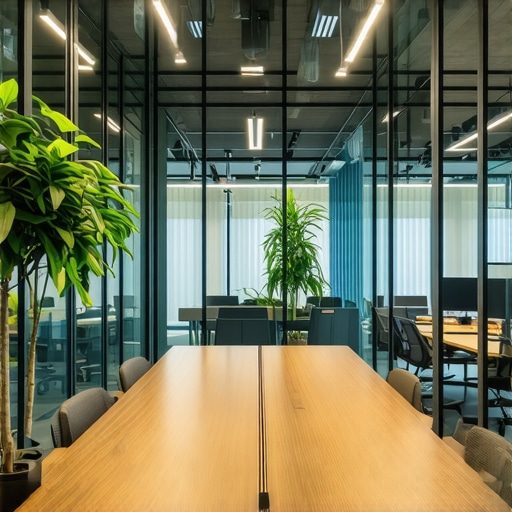
If you really want to change how your team operates, you have to move beyond the superficial perks. Stop choosing spaces based on the quality of their free beer and start focusing on functional design. For instance, understanding why your team is more creative in a room with high ceilings can completely change how you select a space for complex problem-solving sessions. Similarly, before you commit your budget, you need to make sure you are not walking into a technological dead-zone. Knowing the problem with bring your own device in shared meeting rooms will save you from spending the first twenty minutes of your precious booking trying to get a basic screen-share to work. Have you ever fallen into this trap? Let me know in the comments. Let’s discuss how you keep your offsite sessions focused and productive.
Designing a high-yield workflow in a premium shared workspace is only half the battle; the real test lies in maintaining that high-performance baseline over months of scaling. When your startup begins growing, you cannot simply keep booking the same day passes and hoping your operational momentum survives the transition. You need a dedicated, long-term approach to your tooling and environment. If you do not actively build a framework to maintain this productivity, your team will fall victim to standard operational drift, turning high-energy collaborative sessions into expensive, unstructured coffee chats.
How do I maintain team focus in shared environments over time?
The secret to keeping your output high week after week is ruthless standardization of your mobile setup. Personally, I never leave my office without a pre-packed tech pouch. Inside is a dedicated USB-C hub with hardwired Ethernet capabilities, an HDMI adapter that has been tested on multiple screen types, and an external battery pack. If you want to keep your operations sleek, check out the checklist for moving your startup into its first real office to see how your hardware needs shift as you grow. By standardizing your physical toolkit, you remove the daily friction of setting up a new desk, letting your team focus entirely on execution.
The Tech Stack for Collaborative Agility
Beyond the physical adapters, your software ecosystem must support frictionless transitions between home, the office, and the meeting room. To avoid wasting twenty minutes setting up local servers, our development team relies heavily on virtualization. We implemented virtual machines to keep our environments identical. Read about how Parallels Desktop saved our dev team from the two laptop shuffle, which is a perfect example of utilizing smart software to bypass physical hardware bottlenecks. Combining these virtualization tools with cloud-based digital whiteboards ensures that when you step into a collaborative space, your digital environment is already waiting for you.
As remote work matures, the future of these spaces will rely on automated, contextual room configurations. According to a workspace design brief by the design experts at Steelcase, environments that seamlessly integrate digital collaboration tools with adaptive spatial boundaries see a 34% increase in sustained focus during long meetings. Soon, booking systems will automatically load your team’s digital assets onto the room’s displays the moment you walk through the door. Until then, you have to build that seamless loop manually. Try this advanced tip during your next offsite: assign one teammate to be the dedicated ‘Tech Marshal’ who arrives ten minutes early specifically to sync devices, load presentation tabs, and test the audio. Do not wait for the meeting to start to find out if your system works. Take charge of your physical environment, configure your tools beforehand, and keep your focus on scaling your business.
What Everyone Gets Wrong About the Shared Desk Hustle
Over the years, I have noticed a massive disconnect between how founders think they will use a shared ecosystem and how they actually behave. The biggest myth is that you can simply show up, sit anywhere, and absorb success through osmosis. It does not work that way. I learned that treating a hot desk like your personal living room is a surefire way to kill your momentum. In reality, the truth about hot desking is that it requires more discipline, not less, than a traditional corporate setup. If you do not actively establish boundaries, you will find yourself wasting half your morning on casual chats and adjusting your seat heights.
Another common mistake is underestimating the psychological toll of changing environments daily. Consistency is the secret engine of execution. When you constantly switch your surroundings without a anchoring routine, your brain wastes energy adapting to new stimuli instead of focusing on deep work. To combat this cognitive fatigue, I recommend standardizing your daily arrival habits. Set up your notebook in the exact same orientation, plug in your accessories immediately, and utilize the trick to getting the best window seat every single morning to secure your preferred zone before the rest of the workspace wakes up.
The Tech and Tactics I Trust for High-Impact Sprints
You cannot run a modern business using just a laptop and a prayer; you need a vetted toolkit that adapts as quickly as your physical location. When I plan an intensive, high-stakes sprint, I rely heavily on three core components to keep my operations seamless:
- A Dedicated Travel Router: Relying solely on public Wi-Fi can be a massive security risk. I always travel with an encrypted mobile hotspot to secure our team\’s digital pipeline.
- Modular Software Virtualization: We keep our local developments agile. Tools like virtual machine software completely eliminate spatial hardware limits and prevent the dreaded two-device juggle.
- Comprehensive Meeting Room Audits: I never invite an investor to a meeting without knowing the room\’s layout. I always choose locations with proven tech pipelines to ensure we don\’t run into presentation delays. If you\’re booking a high-stakes pitch, how to choose the perfect conference room for business success is an essential read to make sure your space matches your professional ambitions.
Your Blueprint to Conquer the Flex Office Game
Now is the time to transition from being a passive observer in these spaces to a high-performance operator. Don\’t let the luxury finishes or free cold brew distract you from your core mission. The next time you reserve a day pass, treat that booking like a targeted sprint. Plan your goals the night before, secure your optimal corner, and protect your schedule with absolute focus. When you treat physical environments like temporary high-power accelerators, you will unlock a level of velocity you didn\’t think was possible in a public space.
Have you ever struggled to stay focused during a long day pass session? Let me know your favorite desk setups or how you handle distractions in the comments below!