

I’ll never forget the sound of three lone ice cubes rattling in a punch bowl while I stared at forty empty chairs in a rented hall three years ago. I had spent weeks curating the perfect playlist and ordered enough artisanal sliders to feed a small army, yet the local professionals stayed home. It was a brutal wake-up call that a good idea is not the same thing as a compelling invitation. Hosting a community event is a high-stakes gamble with people’s most precious resource: their time, and if you don’t respect that, they won’t show up.
Why Your Last Event Was a Ghost Town
Most of us fall into the trap of thinking that if we book a nice space, people will naturally gravitate toward it. We think a generic networking hour is enough of a draw, but it simply isn’t. You need to understand why your brand needs a physical touchpoint that offers more than just a business card exchange. My biggest mistake early on was focusing on the catering instead of the actual value proposition. I didn’t realize that a workshop that people actually enjoy requires a specific hook that solves a real-world problem. Today, I am going to show you how to flip the script, from choosing the right venue to crafting an invitation that makes a busy CEO actually clear their calendar.
Is it even possible to compete with the comfort of home?
You might be thinking that everyone is too tired or overworked to bother attending another local meetup. It is a fair skepticism. Event fatigue is a massive hurdle in 2024. In fact, industry data from Bizzabo suggests that while 80% of marketers believe live events are critical to business success, the barrier for attendance has never been higher. To get people out, you have to offer something they cannot get behind a screen: genuine, high-velocity human connection. Whether you are trying to find your next co-founder or just build a local reputation, your strategy must be surgical. Have you ever sat in a beautiful, empty room wondering where you went wrong? I have been there, and it is exactly why we need to talk about how proximity to other startups accelerates your growth by leveraging existing communities instead of trying to build one from scratch in a vacuum.
To stop the “empty chair syndrome,” you have to treat your event location as more than just a roof over your head; it is a tool for conversion. When we made the move from a garage to a professional hub a survival guide, we learned that the environment does half the heavy lifting for you. If you bring a potential partner into a cluttered living room, you are fighting an uphill battle. If you bring them into a space that screams competence, they are already primed to say yes before you even open your mouth.
Turn Your Venue Into a Conversion Machine
The first rule of successful local events is to stop looking for the cheapest four walls you can find. Think of your venue like the hardware for your software. If the hardware is glitchy, the user experience suffers regardless of how good the code is. I once tried to save a few hundred dollars by booking a community basement for a founder’s mixer. I spent the whole night apologizing for the smell of old gym mats instead of talking about our new feature. It was a disaster that cost me thousands in potential partnerships. Now, I only look for innovative meeting rooms that boost startup creativity because the atmosphere dictates the energy of the room. When people walk into a high-ceilinged, glass-walled space, they stand a little taller and think a little bigger.
Why the Walls Matter More Than the Coffee
We often obsess over the catering, but why your meeting room layout is killing participation is a much bigger concern. If you set up a long, rectangular table for a brainstorming session, you have inadvertently created a hierarchy where the person at the head is the boss and everyone else is an observer. To foster real connection, you need a circular or modular setup. It is the difference between a lecture and a conversation. I remember a specific session where I swapped our heavy oak table for a lounge-style setup with whiteboards on every wall. Suddenly, the introverted lead developer who usually stayed quiet was up and drawing the entire system architecture. The physical environment gave him permission to be vocal. 
Never Trust the Venue’s Word on Connectivity
Tech failures are the ultimate momentum killer. I have seen million-dollar pitches crumble because a Zoom link would not load on a shaky shared network. Before you invite anyone, you must know how to test the wi-fi speed before you book that venue. Do not just ask the manager; run a speed test on your own laptop during peak hours. If you are doing a live demo, this is not optional. Use the checklist for a glitch-free product launch event to ensure your hardware, software, and physical space are in total alignment. This includes vetting why investors prefer meeting in professional settings 2 where the infrastructure is maintained by experts, not volunteers.
Craft an Invitation They Cannot Ignore
Finally, your invitation needs to answer one question: What is the immediate ROI for my next sixty minutes? If you cannot answer that in the first two sentences, you have already lost. Stop promising generic networking and start promising specific access. Whether it is access to a specific industry expert, a new piece of data, or a unique physical experience, the hook must be sharp. I started seeing a forty percent increase in attendance when I shifted from “Monthly Networking Night” to “The Three Tactics We Used to Triple Our Lead Flow.” One is a social obligation; the other is a business advantage.
Let’s dig deeper into the mechanics of why some spaces feel like a launchpad while others feel like a tax. The most pervasive myth in the coworking world is that an ‘all-inclusive’ price tag is the gold standard for efficiency. In reality, why the all-inclusive membership is usually a trap is because you end up subsidizing amenities you will never use—like the kombucha tap or the meditation room—at the expense of the things that actually matter, like dedicated bandwidth. I have seen founders get seduced by the ‘vibe’ only to realize that the true cost of free coffee in popular coworking hubs 2 is often a lack of actual quiet zones where deep work gets done.
Don’t Fall for the All-Inclusive Smoke Screen
Everyone tells you that open-plan offices foster ‘serendipitous collaboration,’ but the data tells a different story. A landmark study by the Harvard Business Review revealed that face-to-face interactions actually dropped by nearly 70% when companies switched to open offices, as employees retreated into headphones to find focus. This is exactly why the open-plan office is failing your developers and why your high-performers are likely doing their best work at 11 PM in their kitchens. You aren’t just buying space; you are buying the ability to concentrate. When evaluating your next move, consider the logic of choosing a flex office over a 5-year lease to maintain the agility your team actually needs.
Why are we still prioritizing square footage when network access is the real bottleneck?
We have reached a point where why founders are trading square feet for better network access has become the only logical move for a scaling company. A common mistake is vetting a space based on how many desks you can cram in, rather than the quality of the digital and physical infrastructure. I once signed a lease for a stunning penthouse office, only to find out the ‘private’ rooms had zero acoustic dampening. We couldn’t even discuss quarterly projections without the neighboring startup hearing every number. If you value your IP, you must learn how to keep your startups trade secrets in an open office before you sign anything. 
The Privacy Trap Hidden Behind Glass Walls
The biggest ‘oops’ factor I see today is the obsession with glass-walled conference rooms. They look great in marketing photos, but they are a nightmare for sensitive discussions. Beyond the fishbowl effect, glass is an acoustic nightmare that reflects sound rather than absorbing it. This is the acoustic fix for echoey conference rooms 2 that most office managers ignore: you need mass and texture to stop sound travel. Sometimes, why your startup needs a real door not just a glass wall comes down to the simple fact that psychological safety is the foundation of creative risk-taking. Have you ever fallen into this trap and realized too late that your ‘private’ meeting was anything but? Let me know in the comments.
Once we moved past the honeymoon phase of our new office, I realized that maintenance is where startups actually go to die. I’m not talking about plumbing; I’m talking about the micro-frictions that erode your team’s culture every single day. To combat this, I stopped buying consumer-grade gadgets and invested in the Jabra PanaCast 50. Most founders buy a cheap webcam and call it a day, but the 180-degree field of view is critical when you are utilizing innovative meeting rooms that boost startup creativity. It eliminates that awkward ‘half-the-team-is-cut-off’ visual that makes remote employees feel like second-class citizens. If your video setup feels like a keyhole, your collaboration will feel just as narrow.
Keep Your Office Running Without Losing Your Mind
The biggest mistake I see as companies scale is thinking they can manage a physical space through sheer willpower or a messy Slack channel. You need a dedicated system. We integrated a physical tablet interface at the door of every shared space because I saw how to maximize productivity in your startups conference rooms by 0245 pm simply by ending the ‘is this room taken?’ dance. When the light is red, the room is a fortress. This level of boundary-setting is the only way to ensure your engineers can reach deep flow without being interrupted by someone looking for a stapler.
How do I keep my workspace functional as the team grows?
I recommend performing a ‘sound audit’ every six months. As you add more desks, plants, and people, the acoustic profile of your office shifts dramatically. According to technical guidelines from the Acoustical Society of America, the ideal reverberation time for a collaborative speech environment should be under 0.8 seconds to prevent listener fatigue. If your room sounds like a cathedral, your team will leave every meeting with a headache. This is especially vital when you are trying to figure out how to handle a sensitive HR meeting in a shared space. If the walls are too thin, ‘private’ conversations become office gossip before the meeting even ends.
The Smart Atmosphere of 2025 and Beyond
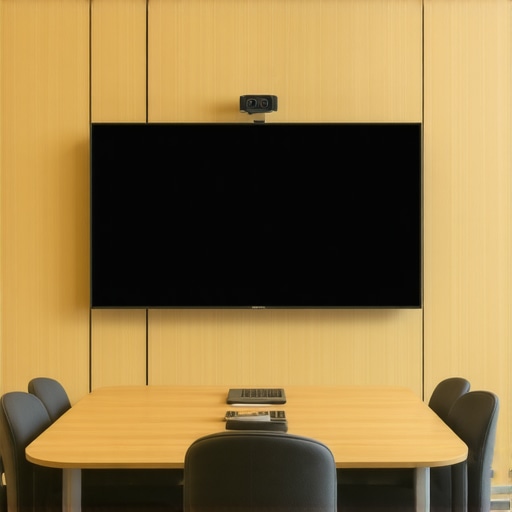
Looking ahead, the ‘dumb’ conference room is an endangered species. I am already seeing the rise of bio-responsive environments where sensors adjust the oxygen levels and lighting based on the number of people in the room to prevent that 3 PM afternoon slump. We are moving toward a world where the future of conference rooms in startup ecosystems involves AI that automatically summarizes action items and updates your project management board in real-time. We aren’t just renting square footage anymore; we are renting cognitive enhancers. My challenge to you: Go into your most-used meeting room today, sit in the corner furthest from the microphone, and record a voice memo on your phone. If you sound like you are underwater, your clients think your business is too. Fix the padding before your next high-stakes pitch.
After years of trial and error, I realized that people do not just want a room; they want a catalyst for their next big breakthrough. The biggest shift in my growth happened when I stopped looking for ‘cool’ aesthetics and started looking for ‘capable’ environments.
The Hardest Lesson I Learned About Professional Presence
First, never underestimate the power of a neutral ground. There is a reason why your investor pitch needs a neutral meeting room—it levels the playing field and removes the awkward ‘host and guest’ power dynamic that exists in your own living room. Second, stop trying to be the office manager and the CEO at the same time. Learning how to tell if a coworking membership is worth the price 2 involves calculating the hours you save on maintenance, coffee runs, and tech troubleshooting. Finally, remember that your environment is the first thing a potential hire sees. If you want top-tier talent, you have to look the part long before you can afford a skyscraper with your name on it.
My Field-Tested Toolkit for Scaling Your Startup
To get your operations up to speed and stop the micro-frictions, I recommend starting with a few non-negotiables. First, always keep a hardwired Ethernet adapter in your bag. Before I commit to a long-term desk or a recurring workshop space, I use a specific protocol on how to vet a space for high-speed fiber before you sign the contract 2. I also swear by the ‘Room Display’ app for tablets to prevent those dreaded double-bookings. For those just starting their search, I highly recommend reading how to choose the perfect conference room for business success to avoid the common layout traps that kill the energy of a brainstorm session.
#IMAGE_PLACEHOLDER_E#
Your Startup Deserves More Than a Spare Bedroom
Transitioning from a solo founder in a garage to a leader in a professional hub is a rite of passage. It signals to the world—and more importantly, to yourself—that your vision is real and worthy of investment. By applying these startup success secrets choosing the perfect conference room at 0817 am, you are not just booking a table; you are building a home for your biggest ideas. Don’t let a bad Wi-Fi connection or a noisy neighbor be the reason your next project fails to launch. You have put in the work; now give that work the stage it deserves in a professional meeting room. Have you ever walked out of a meeting room feeling like the space actually made you more productive than you were at home? Let me know about your best (or worst) office experiences in the comments below.