

The air was thick, the lighting was a sickly fluorescent yellow, and I was fairly certain the mahogany table was slowly absorbing my soul. We have all been there. You are in a meeting that was supposed to be a quick sync, but it has somehow ballooned into a half-day marathon. I once sat through a budget review so grueling that I genuinely forgot my own middle name for a second. The worst part? I was the one who booked the room. I made the classic rookie mistake of choosing a space based on its proximity to the coffee machine rather than actual air quality or comfort. I learned the hard way that picking a room that doesn’t smell like old carpet is a strategic business move, not a luxury. Today, I am going to share exactly how I transformed my approach to these endurance tests so you can stop counting ceiling tiles and start actually contributing. [image placeholder]
My Most Humiliating Moment in a Windowless Boardroom
It was hour three of our quarterly review. My eyes were burning, and the CEO’s voice had morphed into a rhythmic, hypnotic drone. I didn’t just lose focus; I completely checked out. I started mentally redesigning the office floor plan just to feel a spark of cognitive life. By the time someone asked for my input on the Q4 projections, I had to ask them to repeat the question. Twice. It was the kind of professional embarrassment that stays with you, and it all happened because I didn’t know how to survive a 4-hour board meeting without my brain turning into mush. I realized then that staying sharp is not about willpower; it is about the environment and the pace you set. Have you ever found yourself nodding along to a presentation while your brain was actually miles away at the beach?
Is my brain just broken, or is it the room?
Skepticism is natural. You might think that a lack of focus is just a personal failing or a sign that you need more espresso. However, the science says otherwise. According to the MIT Sloan Management Review, senior managers spend nearly 23 hours a week in meetings, and the sheer volume often leads to a phenomenon known as meeting recovery syndrome. If you are stuck in a space that feels like a dungeon, your productivity is doomed before the first slide even appears. I spent years thinking I was the problem until I started looking at the checklist for a boardroom that doesn’t feel like a hospital. When you are trapped, even small things like the height of the ceiling or the acoustic privacy of the space can make or break your stamina. If you are currently dealing with a space that feels like a prison, you should check out these ways to make a windowless meeting room feel less like a prison. Trust me, it changes the entire energy of the discussion. We are going to dive into the physical hacks and mental resets that will keep you on the ball from the first minute to the last, ensuring you never have to ask for a question to be repeated for the third time again. Knowing the secret to running a board meeting that stays on schedule is only half the battle; the other half is surviving the ones that don’t.To keep your brain from flatlining, you need to treat the boardroom like a high-performance cockpit. Every lever—from the lighting to the humidity—needs to be calibrated before the first attendee walks in. I learned this during a pitch that went south because the room was so hot I looked like I was undergoing a police interrogation rather than presenting a SaaS solution. Now, I run a 10-minute audit to see if your office space is wasting money and sanity before I ever let a client step through the door.
Run a Physical Sweep Before You Start
The very first step is to optimize the oxygen levels. If a room is sealed tighter than a submarine, carbon dioxide builds up and makes everyone drowsy. I always prop the door open for ten minutes before the start to flush the space. Next, look at the equipment. There is nothing that kills momentum faster than a CEO fumbling with a HDMI cable that doesn’t fit. I make it a point to know how to find a conference room that actually has working adapters because waiting for IT to find a dongle is the fastest way to lose an audience. 
Check for Sound Leaks and Visual Noise
If you can hear the startup next door celebrating their seed round, you have an acoustic problem. Privacy isn’t just about secrets; it is about focus. You should always vet a meeting room for acoustic privacy before booking to ensure your team isn’t distracted by hallway chatter. I once lost a talent hire because our ‘private’ office was so thin-walled they could hear our competitors being discussed in the next room. If the walls are glass, use the acoustics hack for crystal clear client pitches—positioning your voice toward the softest surface in the room to minimize echo.
Pick a Room That Fits the Group
Size matters more than you think. A tiny room for ten people creates physical heat and psychological tension. Conversely, two people in a massive boardroom feels cold and impersonal. I strictly follow the two-pizza rule for booking the right size meeting room. If the group is small, keep the space intimate to foster collaboration.
Change the Scenery to Save the Culture
When the energy dips, move the meeting. I remember trying to force a pivot strategy discussion in our standard 4-person pod; it felt claustrophobic and uninspired. We immediately moved our quarterly reviews to a neutral offsite with floor-to-ceiling windows. Suddenly, the ideas stopped being defensive and started being expansive. There is a documented reason why your team is more creative in a room with high ceilings; the physical volume of the space gives your thoughts room to breathe and think outside the usual constraints.
Master the Lighting Game
Fluorescent lights are the enemy of focus. If you are demoing a new app, use the lighting trick that makes your product demo look expensive: dim the overheads and use a secondary warm light source near the screen. It draws the eye and reduces the ‘hospital’ vibe of a standard office. Knowing how to maximize productivity in your startups conference rooms isn’t about working harder; it is about engineering an environment that refuses to let your brain shut down.Most founders think that a ‘cool’ office means beanbags and a glass-walled conference room right in the center of the floor. Everyone says this fosters transparency, but in my experience, it is a recipe for a productivity disaster. People think transparency is king, but the truth about productivity in a room full of total strangers or even your own team is that humans need psychological walls to do deep work. When you are in a fishbowl, you are performing for the office, not solving hard problems. One specific ‘oops’ factor I see constantly is over-investing in display tech while ignoring the digital foundation. You can have a 90-inch 8K screen, but if the internet drops frames during a crucial demo, you look like an amateur. I call this the hidden drag of slow office wi-fi on your burn rate. It is not just about the monthly bill; it is about the lost momentum when a video call stutters.
Does your ‘transparent’ culture actually lead to a lack of privacy?
According to a study by Harvard Business School researcher Ethan Bernstein, open-plan offices and glass-walled meeting rooms can actually reduce face-to-face interaction by up to 70%. When people feel like they are being watched, they socially withdraw and shift their communication to email or Slack. This is the ultimate irony of the modern startup office. This is why innovative meeting rooms that boost startup creativity are now incorporating acoustic baffles and switchable privacy glass. You need a space where you can fail, argue, and iterate without the entire floor watching your facial expressions. 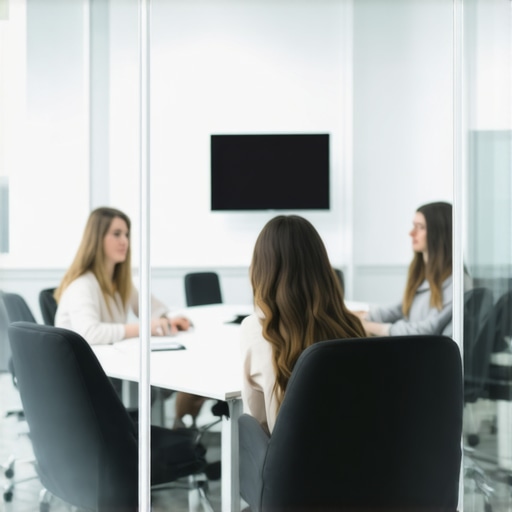
Aesthetics are the ultimate trap for new founders
Another nuance that people miss is the ‘energy’ of the surrounding space. Investors are not just looking at your slides; they are subconsciously evaluating your environment. There is a strategic reason why investors prefer meeting in a high-energy hub over a quiet cafe. A quiet cafe suggests a lifestyle business; a high-energy hub implies a company that is part of a larger, moving machine. However, don’t confuse energy with chaos. Why quiet zones are the most important part of any workspace is a lesson I learned after seeing a team burn out because they had no place to retreat from the constant buzz. Furthermore, don’t overlook the furniture as a mere line item. Why boring office furniture is draining your teams creative energy is more than just an aesthetic complaint; it’s about ergonomics. If your chairs are uncomfortable, your meetings will be short, but they will also be shallow because everyone is focused on their aching lower back rather than the roadmap. I always tell founders that why ergonomic furniture is the best investment for your seed round isn’t about luxury—it’s about increasing the ‘effective hours’ your team can actually work. The biggest mistake is scaling too fast into a rigid physical identity. I have seen startups fail because they signed a five-year lease for a space they outgrew in six months. Moving to a private suite also changes things; you have to ask yourself what happens to your culture when you move to a private suite before you pull the trigger. Understanding why your first office shouldnt be a 5-year commitment is the ultimate hedge against market volatility. You want the future of conference rooms in startup ecosystems: spaces that are modular and on-demand. Have you ever fallen into this trap? Let me know in the comments.Scaling from a few founders in a garage to a full team is the most exhilarating—and terrifying—transition you will ever experience. I remember the exact moment we realized we were outgrowing our scrappy roots. It was during the move that helped us scale from 3 to 15 people in six months, and suddenly, our single-cable AV setup wasn’t just ‘charming,’ it was a bottleneck. To keep your startup from stalling, you need to transition from ‘making it work’ to ‘making it professional.’ This means investing in tools that actually solve the friction points of a growing team. For our developers, the biggest headache was the constant switching between environments, which is exactly how Parallels Desktop saved our dev team from the two-laptop shuffle. Efficiency in the meeting room starts with the efficiency of the individuals walking into it.
Don’t Let Your Tech Stack Sabotage Your Culture
In my experience, the biggest tech fail isn’t the big-ticket items; it is the small, missing pieces that drive everyone crazy. I have seen million-dollar deals stall because a tablet died or a charger went missing. That is exactly why our private office suites stock extra Surface Pro chargers for members. It sounds trivial, but that level of preparedness creates a culture of reliability. As noted in the Cisco 2024 Hybrid Work Report, nearly 98% of meetings now include at least one remote participant, which means your AV reliability is no longer a luxury—it is a core business function. If you are struggling with choppy calls, you need to stop guessing and learn how to vet a workspaces internet speed before you pay a dime. 
How do I keep my meeting rooms from falling apart over time?
Consistency requires a maintenance schedule that is just as rigorous as your code reviews. I recommend a bi-weekly ‘hardware health check.’ We learned this the hard way when our main conference screen flickered out during a board meeting. I realized then that why a basic warranty wont save your startup from a hardware disaster is a lesson you don’t want to learn in real-time. You need a dedicated kit of spare HDMI cables, dongles, and even backup mics tucked away in every room.
The Future is Ambient and Aware
Looking ahead, I predict that the future of conference rooms in startup ecosystems will move toward ‘ambient awareness.’ We are already seeing rooms that can automatically adjust lighting and sound based on the number of people present and the tone of the conversation. This level of automation will eventually be the standard for any innovative meeting rooms that boost startup creativity. For now, my best advanced tip for you is this: before your next high-stakes presentation, run a full tech dry run 30 minutes prior. It sounds basic, but it is the one thing the pros never skip. If you want to see if your current setup is actually working, go run a speed test right now and see if your upload speed can actually handle a 4K stream without choking.
The Meeting Room Traps I Still See Founders Falling Into
After years of managing teams and burning through office leases, I have noticed that the most dangerous traps are often the most invisible. First, don’t fall for the ‘Acoustic Mirage.’ A room might look sleek and modern, but if you don’t vet a meeting room for acoustic privacy before booking, you risk your internal strategy becoming the hallway’s morning gossip. I have also seen countless pitches lose momentum because of the problem with bring your own device in shared meeting rooms; if you are fumbling with cables for ten minutes, the audience has already checked their emails. Finally, remember that while innovative meeting rooms that boost startup creativity are great tools, they cannot replace a clear agenda. A high-tech room with a low-energy plan is just an expensive way to waste time.
My Non-Negotiable Setup for Serious Work
Over time, I have developed a toolkit that keeps my team efficient regardless of where we are. For our developers, software flexibility is as vital as the physical space, which is how Parallels Desktop saved our dev team from the two-laptop shuffle during our last pivot. We also focus on the small details that prevent large disasters; for example, why our private office suites stock extra Surface Pro chargers for members is a lesson in preparedness that keeps our workflows uninterrupted. Beyond hardware, I personally prioritize the community aspect of my workspace. I have found that you can unlock networking opportunities in top coworking environments that simply don’t exist in a traditional, isolated office suite. I also highly recommend reading ‘Atomic Habits’ by James Clear to help your team build the discipline needed to stay focused in dynamic environments.
Stop Settling for Uninspired Spaces
Your environment is a direct reflection of your company’s ambition and respect for its employees. Choosing to work in a space that challenges the status quo and supports deep focus is not just a luxury—it is a core growth strategy. When you master how to choose the perfect conference room for business success, you are actually learning how to engineering a space where your team feels valued and empowered to do their best work. Don’t let a poorly lit, airless room be the thing that stifles your next big breakthrough. What is the one thing you always check before booking a conference room for an important pitch? Let me know in the comments below.