

I will never forget the absolute disaster of my 2:00 PM investor pitch last spring. There I was, sweating through my blazer, trying to explain our scale-up projection while a thunderous chorus of laughter, clinking espresso cups, and someone furiously printing a hundred-page PDF echoed right through the thin glass wall. I had booked what looked like a sanctuary, but at that specific hour, it was essentially a fishbowl in the middle of a carnival. It was a brutal lesson: finding the right space is only half the battle; timing is everything.
The Secret Rhythm of Your Shared Workspace
Most founders and remote teams think that booking a meeting space is just about looking at an open calendar slot and clicking ‘reserve.’ But after months of trial and error—and more than a few ruined client calls—I realized that coworking spaces have their own invisible, breathing schedules. If you do not understand these daily tides, you are bound to end up with a room that feels less like a professional suite and more like a crowded transit station. It pays to understand how to choose the perfect conference room for business success before you lock in your next critical session.
Is mid-afternoon booking actually a trap?
Yes, it absolutely is. The dreaded 2:00 PM to 4:00 PM window is what I call the ‘caffeine rush hour.’ Everyone is sluggish, everyone needs a change of scenery, and the communal areas right outside your glass walls are buzzing with high-volume chatter. Early on, I made the mistake of scheduling my most sensitive feedback loops during this block, only to have confidential numbers drowned out by the office espresso machine. To keep your team focused, you might want to look into why your friday afternoon meetings are always a waste of time and how shifting your hours can save your sanity.
Why the Golden Hours Can Make or Break Your Pitch
If you want absolute silence, you have to target the sweet spots that the average worker avoids. According to workspace utilization studies compiled by real estate data analysts, average office occupancy spikes heavily between 10:30 AM and 3:00 PM, meaning the early morning hours before 9:00 AM and the late afternoon slots after 4:30 PM offer a massive drop in ambient noise. Booking during these golden windows ensures that the surrounding hot desks are quiet and the bandwidth is entirely yours. Have you ever had a high-stakes call completely derailed by background noise in a shared office? Let me know, because I feel your pain, and I want to help you avoid it next time.
For those critical moments where you cannot afford a single distraction, planning around these natural traffic dips is the ultimate hack. If you are preparing for a major milestone, combining the right hour with the right environment is crucial; check out our guide on choosing the perfect conference room to make sure your next meeting goes off without a single hitch.
When you are trying to close a crucial round of funding, you cannot treat your meeting space like a casual hot desk. You must approach physical logistics with the same precision you apply to your software architecture or financial modeling. Over my years of building startups in shared workspaces, I have developed a tactical checklist to insulate high-stakes meetings from the unpredictable chaos of communal office life.
How to Secure and Bulletproof Your Next Meeting Room
Getting the space you need requires a mix of strategic timing and physical verification. You cannot trust an online booking system to tell you the real-world conditions of a room. This process turns a standard reservation into an impenetrable boardroom.
Vetting the physical environment before you pay
Never book a space sight unseen. Two years ago, I booked a room for a critical partner alignment meeting based entirely on beautiful, minimalist photos on a website. When we arrived, the room was a windowless box that smelled like decades of damp wool, and our team immediately lost focus. To avoid a similar disaster, learn how to pick a meeting room that doesn’t smell like old carpet before you sign any short-term agreement. Walking the floor beforehand allows you to check for hidden issues like vibrating HVAC units, squeaky door hinges, or thin glass walls that let everyone hear your private financial projections.
Checking the hardware with a quick dry run
The biggest threat to your meeting momentum is the adapter dance. I once watched an engineer struggle for twelve minutes to connect a USB-C laptop to an older HDMI television while our potential lead investor checked his watch. It was excruciating. To prevent this, perform a quick run-through. Learn how to find a conference room that actually has working adapters and verify that the screen resolution does not wash out your pitch deck. If you are demoing software, you must also run a speed test from inside that specific room. The general communal Wi-Fi might be blazing fast in the lounge, but deep inside a concrete-insulated meeting room, it can drop to a crawl.

Scheduling your sessions during natural lulls
Once you have verified the hardware, you must schedule around the organic flows of the community. In my experience, Friday afternoons are the absolute best times for sensitive internal reviews or delicate negotiations because the shared workspace is practically empty. If you need to lock down a space quickly without the usual scheduling headache, try using a few smart tactics on how to book a meeting room on a friday afternoon without the stress. This lets you utilize premium resources without competing with dozens of other active startup teams who are busy celebrating their end-of-week milestones in the communal lounge.
The Logistics of Keeping Secrets Safe
A major downside of modern shared offices is acoustic leakage. Glass-walled rooms look beautiful, but they act like speakers if they lack proper soundproofing. If your team is discussing sensitive product roadmaps or discussing proprietary user data, you must take active steps to keep your conversations inside the room.
Stopping acoustic spillover without expensive modifications
If you find yourself in a room that feels like an echo chamber, you can employ simple tricks to absorb sound. Closing the blinds, placing soft backpacks along the base of glass walls, and using your own portable Bluetooth speaker to play low-level pink noise outside the door can make a massive difference. To maintain professional standards, always ensure you understand the acoustics hack for crystal clear client pitches so your voice sounds rich, authoritative, and completely isolated from the busy communal hallway.
When you are trying to close a crucial round of funding, you cannot treat your meeting space like a casual hot desk. You must approach physical logistics with the same precision you apply to your software architecture or financial modeling. Over my years of building startups in shared workspaces, I have developed a tactical checklist to insulate high-stakes meetings from the unpredictable chaos of communal office life.
How to Secure and Bulletproof Your Next Meeting Room
Getting the space you need requires a mix of strategic timing and physical verification. You cannot trust an online booking system to tell you the real-world conditions of a room. This process turns a standard reservation into an impenetrable boardroom.
Vetting the physical environment before you pay
Never book a space sight unseen. Two years ago, I booked a room for a critical partner alignment meeting based entirely on beautiful, minimalist photos on a website. When we arrived, the room was a windowless box that smelled like decades of damp wool, and our team immediately lost focus. To avoid a similar disaster, learn how to pick a meeting room that doesn’t smell like old carpet before you sign any short-term agreement. Walking the floor beforehand allows you to check for hidden issues like vibrating HVAC units, squeaky door hinges, or thin glass walls that let everyone hear your private financial projections.
Checking the hardware with a quick dry run
The biggest threat to your meeting momentum is the adapter dance. I once watched an engineer struggle for twelve minutes to connect a USB-C laptop to an older HDMI television while our potential lead investor checked his watch. It was excruciating. To prevent this, perform a quick run-through. Learn how to find a conference room that actually has working adapters and verify that the screen resolution does not wash out your pitch deck. If you are demoing software, you must also run a speed test from inside that specific room. The general communal Wi-Fi might be blazing fast in the lounge, but deep inside a concrete-insulated meeting room, it can drop to a crawl.
Scheduling your sessions during natural lulls
Once you have verified the hardware, you must schedule around the organic flows of the community. In my experience, Friday afternoons are the absolute best times for sensitive internal reviews or delicate negotiations because the shared workspace is practically empty. If you need to lock down a space quickly without the usual scheduling headache, try using a few smart tactics on how to book a meeting room on a friday afternoon without the stress. This lets you utilize premium resources without competing with dozens of other active startup teams who are busy celebrating their end-of-week milestones in the communal lounge.
The Logistics of Keeping Secrets Safe
A major downside of modern shared offices is acoustic leakage. Glass-walled rooms look beautiful, but they act like speakers if they lack proper soundproofing. If your team is discussing sensitive product roadmaps or discussing proprietary user data, you must take active steps to keep your conversations inside the room.
Stopping acoustic spillover without expensive modifications
If you find yourself in a room that feels like an echo chamber, you can employ simple tricks to absorb sound. Closing the blinds, placing soft backpacks along the base of glass walls, and using your own portable Bluetooth speaker to play low-level pink noise outside the door can make a massive difference. To maintain professional standards, always ensure you understand the acoustics hack for crystal clear client pitches so your voice sounds rich, authoritative, and completely isolated from the busy communal hallway.
The Shared Room Fallacy That Quietly Kills Your Conversions
Most pitch coaches will tell you to booking the biggest, flashiest boardroom in a coworking hub to display power and scale. I strongly disagree. The common startup myth is that size equals authority, but packing five people into a cold, cavernous thirty-seat room actually signals emptiness, distance, and a massive waste of resources. This visual disconnect is deeply rooted in environmental psychology. A groundbreaking study from the Journal of Environmental Psychology shows that room dimensions and ceiling heights directly dictate cognitive processing, collaborative behavior, and negotiation dynamics. When you sit miles apart across a colossal oak table, you lose the crucial physical intimacy required to build authentic investment trust. Have you ever fallen into this trap of booking a room that was entirely too big just to look fancy? Let me know in the comments.
Are you ignoring the subtle physical signals your room sends?
You cannot afford to let your surroundings work against your deal. Instead of going for pure square footage, choose a space that facilitates natural, energetic collaboration. For most early-stage teams, this means applying the two-pizza rule for booking the right size meeting room. This guarantees your team and your prospects sit close enough to feel like partners, rather than opposing parties in a corporate courtroom drama. By shifting away from sterile executive boardrooms and finding creative coworking spaces that transform meeting rooms into collaboration hubs, you naturally foster a vibrant, solution-oriented energy that makes your startup irresistible to modern venture funds.

Ultimately, the physical layout of your office dictates how prospective hires and investors view your trajectory. If you are building for the long haul, optimize every square inch. Take some time to study how to maximize productivity in your startups conference rooms, because the hidden details of how you interact within those glass walls will define your execution speed and culture for years to come.
My Personal Toolkit for Unlocking Flawless Room Operations
Over the past three years of scaling my current startup from a three-person operation to a fully functional regional team, I have realized that relying on a workspace’s built-in amenities is a recipe for sudden, public failure. It does not matter how high-tech the space claims to be; eventually, an adapter will fail, the Wi-Fi will choke under a heavy load, or a neighboring startup will decide to blast techno music during your investor pitch. To counter this, I carry a dedicated ‘meeting survival kit’ in my backpack. Inside, you will find a portable USB-C powered HDMI transmitter, an active sound-masking white noise machine no larger than an apple, and a hardwired Cat6 Ethernet cable.
Whenever I book a space, I do not just log on to the public network. I immediately search for an active wall port and run a hardwired connection. If you want to know how to set yourself up for this level of stability without paying corporate-level fees, you should read our guide on how to get a private office for half the price using flex terms. This small change in physical preparation has saved our live product demos more times than I can count.
How do I maintain consistent meeting room quality over time?
Consistency is not about luck; it is about building a highly repeatable routine. Every single Monday, my chief of staff conducts a rapid, ten-minute physical audit of the rooms we plan to use throughout the week. We check for three non-negotiable elements: active power ports, physical cleanliness, and potential acoustic leaks from newly rented adjacent desks. If the environment has degraded—perhaps because the space recently signed a massive, noisy sales team next door—we immediately pivot. This proactive approach is a core part of how to maximize productivity in your startups conference rooms before small annoyances turn into lost revenue.
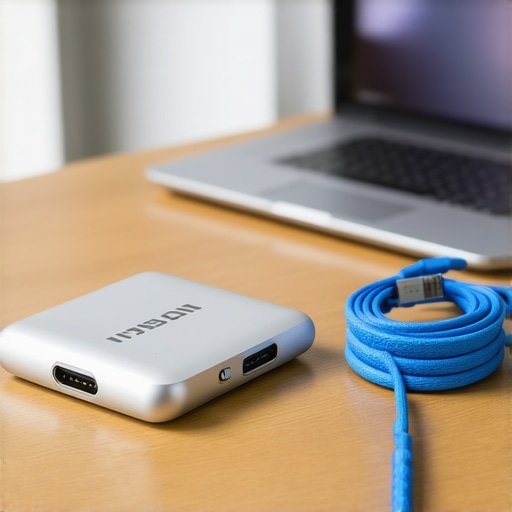
As remote work models mature, workspace experts like those at the Global Workspace Association predict that future conference rooms will rely on automated, hyper-localized environmental controls that adjust acoustics and lighting based on real-time biometric stress signals from the attendees. Until those sci-fi systems arrive, we have to rely on manual vigilance and smart booking habits. If you are struggling with poor audio quality or distracting echoes during your calls, you can immediately improve your setup by implementing the acoustics hack for crystal clear client pitches. Stop letting poor spatial planning dictate your professional image. Try running a hardwired connection and testing your adapters thirty minutes before your next big meeting, and see how much your execution confidence improves.
I will never forget the absolute disaster of my 2:00 PM investor pitch last spring. There I was, sweating through my blazer, trying to explain our scale-up projection while a thunderous chorus of laughter, clinking espresso cups, and someone furiously printing a hundred-page PDF echoed right through the thin glass wall. I had booked what looked like a sanctuary, but at that specific hour, it was essentially a fishbowl in the middle of a carnival. It was a brutal lesson: finding the right space is only half the battle; timing is everything.
The Secret Rhythm of Your Shared Workspace
Most founders and remote teams think that booking a meeting space is just about looking at an open calendar slot and clicking ‘reserve.’ But after months of trial and error—and more than a few ruined client calls—I realized that coworking spaces have their own invisible, breathing schedules. If you do not understand these daily tides, you are bound to end up with a room that feels less like a professional suite and more like a crowded transit station. It pays to understand how to choose the perfect conference room for business success before you lock in your next critical session.
Is mid-afternoon booking actually a trap?
Yes, it absolutely is. The dreaded 2:00 PM to 4:00 PM window is what I call the ‘caffeine rush hour.’ Everyone is sluggish, everyone needs a change of scenery, and the communal areas right outside your glass walls are buzzing with high-volume chatter. Early on, I made the mistake of scheduling my most sensitive feedback loops during this block, only to have confidential numbers drowned out by the office espresso machine. To keep your team focused, you might want to look into why your friday afternoon meetings are always a waste of time and how shifting your hours can save your sanity.
Why the Golden Hours Can Make or Break Your Pitch
If you want absolute silence, you have to target the sweet spots that the average worker avoids. According to workspace utilization studies compiled by real estate data analysts, average office occupancy spikes heavily between 10:30 AM and 3:00 PM, meaning the early morning hours before 9:00 AM and the late afternoon slots after 4:30 PM offer a massive drop in ambient noise. Booking during these golden windows ensures that the surrounding hot desks are quiet and the bandwidth is entirely yours. Have you ever had a high-stakes call completely derailed by background noise in a shared office? Let me know, because I feel your pain, and I want to help you avoid it next time.
For those critical moments where you cannot afford a single distraction, planning around these natural traffic dips is the ultimate hack. If you are preparing for a major milestone, combining the right hour with the right environment is crucial; check out our guide on choosing the perfect conference room to make sure your next meeting goes off without a single hitch.
When you are trying to close a crucial round of funding, you cannot treat your meeting space like a casual hot desk. You must approach physical logistics with the same precision you apply to your software architecture or financial modeling. Over my years of building startups in shared workspaces, I have developed a tactical checklist to insulate high-stakes meetings from the unpredictable chaos of communal office life.
How to Secure and Bulletproof Your Next Meeting Room
Getting the space you need requires a mix of strategic timing and physical verification. You cannot trust an online booking system to tell you the real-world conditions of a room. This process turns a standard reservation into an impenetrable boardroom.
Vetting the physical environment before you pay
Never book a space sight unseen. Two years ago, I booked a room for a critical partner alignment meeting based entirely on beautiful, minimalist photos on a website. When we arrived, the room was a windowless box that smelled like decades of damp wool, and our team immediately lost focus. To avoid a similar disaster, learn how to pick a meeting room that doesn’t smell like old carpet before you sign any short-term agreement. Walking the floor beforehand allows you to check for hidden issues, like vibrating HVAC units, squeaky door hinges, or thin glass walls that let everyone hear your private financial projections.
Checking the hardware with a quick dry run
The biggest threat to your meeting momentum is the adapter dance. I once watched an engineer struggle for twelve minutes to connect a USB-C laptop to an older HDMI television while our potential lead investor checked his watch. It was excruciating. To prevent this, perform a quick run-through. Learn how to find a conference room that actually has working adapters and verify that the screen resolution does not wash out your pitch deck. If you are demoing software, you must also run a speed test from inside that specific room. The general communal Wi-Fi might be blazing fast in the lounge, but deep inside a concrete-insulated meeting room, it can drop to a crawl.
Scheduling your sessions during natural lulls
Once you have verified the hardware, you must schedule around the organic flows of the community. In my experience, Friday afternoons are the absolute best times for sensitive internal reviews or delicate negotiations because the shared workspace is practically empty. If you need to lock down a space quickly without the usual scheduling headache, try using a few smart tactics on how to book a meeting room on a friday afternoon without the stress. This lets you utilize premium resources without competing with dozens of other active startup teams who are busy celebrating their end-of-week milestones in the communal lounge.
The Logistics of Keeping Secrets Safe
A major downside of modern shared offices is acoustic leakage. Glass-walled rooms look beautiful, but they act like speakers if they lack proper soundproofing. If your team is discussing sensitive product roadmaps or discussing proprietary user data, you must take active steps to keep your conversations inside the room.
Stopping acoustic spillover without expensive modifications
If you find yourself in a room that feels like an echo chamber, you can employ simple tricks to absorb sound. Closing the blinds, placing soft backpacks along the base of glass walls, and using your own portable Bluetooth speaker to play low-level pink noise outside the door can make a massive difference. To maintain professional standards, always ensure you understand the acoustics hack for crystal clear client pitches so your voice sounds rich, authoritative, and completely isolated from the busy communal hallway.
The Shared Room Fallacy That Quietly Kills Your Conversions
Most pitch coaches will tell you to booking the biggest, flashiest boardroom in a coworking hub to display power and scale. I strongly disagree. The common startup myth is that size equals authority, but packing five people into a cold, cavernous thirty-seat room actually signals emptiness, distance, and a massive waste of resources. This visual disconnect is deeply rooted in environmental psychology. A groundbreaking study from the Journal of Environmental Psychology shows that room dimensions and ceiling heights directly dictate cognitive processing, collaborative behavior, and negotiation dynamics. When you sit miles apart across a colossal oak table, you lose the crucial physical intimacy required to build authentic investment trust. Have you ever fallen into this trap of booking a room that was entirely too big just to look fancy? Let me know in the comments.
Are you ignoring the subtle physical signals your room sends?
You cannot afford to let your surroundings work against your deal. Instead of going for pure square footage, choose a space that facilitates natural, energetic collaboration. For most early-stage teams, this means applying the two-pizza rule for booking the right size meeting room. This guarantees your team and your prospects sit close enough to feel like partners, rather than opposing parties in a corporate courtroom drama. By shifting away from sterile executive boardrooms and finding creative coworking spaces that transform meeting rooms into collaboration hubs, you naturally foster a vibrant, solution-oriented energy that makes your startup irresistible to modern venture funds.
Ultimately, the physical layout of your office dictates how prospective hires and investors view your trajectory. If you are building for the long haul, optimize every square inch. Take some time to study how to maximize productivity in your startups conference rooms, because the hidden details of how you interact within those glass walls will define your execution speed and culture for years to come.
My Personal Toolkit for Unlocking Flawless Room Operations
Over the past three years of scaling my current startup from a three-person operation to a fully functional regional team, I have realized that relying on a workspace’s built-in amenities is a recipe for sudden, public failure. It does not matter how high-tech the space claims to be; eventually, an adapter will fail, the Wi-Fi will choke under a heavy load, or a neighboring startup will decide to blast techno music during your investor pitch. To counter this, I carry a dedicated ‘meeting survival kit’ in my backpack. Inside, you will find a portable USB-C powered HDMI transmitter, an active sound-masking white noise machine no larger than an apple, and a hardwired Cat6 Ethernet cable.
Whenever I book a space, I do not just log on to the public network. I immediately search for an active wall port and run a hardwired connection. If you want to know how to set yourself up for this level of stability without paying corporate-level fees, you should read our guide on how to get a private office for half the price using flex terms. This small change in physical preparation has saved our live product demos more times than I can count.
How do I maintain consistent meeting room quality over time?
Consistency is not about luck; it is about building a highly repeatable routine. Every single Monday, my chief of staff conducts a rapid, ten-minute physical audit of the rooms we plan to use throughout the week. We check for three non-negotiable elements: active power ports, physical cleanliness, and potential acoustic leaks from newly rented adjacent desks. If the environment has degraded—perhaps because the space recently signed a massive, noisy sales team next door—we immediately pivot. This proactive approach is a core part of how to maximize productivity in your startups conference rooms before small annoyances turn into lost revenue.
As remote work models mature, workspace experts like those at the Global Workspace Association predict that future conference rooms will rely on automated, hyper-localized environmental controls that adjust acoustics and lighting based on real-time biometric stress signals from the attendees. Until those sci-fi systems arrive, we have to rely on manual vigilance and smart booking habits. If you are struggling with poor audio quality or distracting echoes during your calls, you can immediately improve your setup by implementing the acoustics hack for crystal clear client pitches. Stop letting poor spatial planning dictate your professional image. Try running a hardwired connection and testing your adapters thirty minutes before your next big meeting, and see how much your execution confidence improves.
The Hardest Lessons I Learned Managing Boardroom Chaos
After orchestrating dozens of pitches, board reviews, and critical team sessions in shared spaces, three stark realities became painfully obvious. First, assuming a room is clean because it is empty is a fast track to embarrassment; always budget five minutes to sweep away the previous occupants’ leftover coffee cups. Second, never trust a glass wall to keep your growth charts private unless you have personally verified the visual angles from the hallway. Finally, relying on the host venue’s built-in technology without bringing your own backup cables is the single biggest point of failure for modern presenters.
Gear that Keeps My Presentations Alive
I never walk into a booked space without my custom travel kit. I highly recommend investing in a portable Anker USB-C hub, a long HDMI cable, and a simple rolling whiteboard marker set that actually has ink. For high-speed transfers, I rely on a heavy-duty Ethernet adapter to secure a direct, physical port connection whenever the local Wi-Fi acts up. To find the ultimate space where these tools can shine, check out our roundup of the top meeting rooms of 2025 that have successfully modernized their technical infrastructure.
Take Command of Your Physical Workspace Today
The layout and schedule of your shared workspace should never be left to chance. Every detail, from the room size to the booking time, directly shapes how your team performs and how investors view your potential. Take control of your next meeting room setup, run your diagnostics early, and command the room with absolute confidence.
Have you ever had a critical client call derailed by terrible meeting room acoustics or a sudden technical failure? Let me know in the comments below.