

I was staring at the ‘connection unstable’ banner for the fifth time that hour, watching my lead developer’s face freeze into a grotesque mask of pixels. We were in the middle of a high-stakes pivot, or at least we were trying to be. Instead of high-fiving over a breakthrough, we were collectively sighing into our webcams. I spent three months convinced that we could build a world-changing company from our respective bedrooms, but the truth was staring me in the face: we weren’t a team; we were just a collection of people in a group chat. It was a mistake that nearly cost us our first seed round because the energy just wasn’t there. Have you ever felt that sinking feeling when a ‘quick’ Zoom call turns into a two-hour energy drain where nothing actually gets decided? Today, I want to show you why ditching the screen for a real table is the secret weapon you’re currently ignoring.
Digital Fatigue is the Silent Killer of Good Ideas
The friction of digital tools is real. When we finally decided to swapped Slack for physical brainstorming sessions, everything changed overnight. In a room, you can read the room. You see the half-smirk of a skeptic or the leaned-in posture of someone with a brilliant counter-point. On a video call, those nuances are lost in the lag. According to the Allen Curve, a principle established by MIT professor Thomas J. Allen, communication frequency drops exponentially as distance increases, regardless of the technology used. This distance creates a wall that no amount of emojis can fix. It’s exactly why your hybrid team feels disconnected on Mondays; you’re trying to build culture through a fiber-optic cable.
Is paying for a meeting room actually worth the investment?
Many founders worry about the overhead, but the cost of a missed insight is much higher than a day pass. When you transition your team from a garage to a real office environment or even just a shared hub, you aren’t just buying desks. You’re buying the ‘serendipity factor’—those random conversations by the coffee machine that lead to your next feature idea. This is why your startup needs a physical anchor to ground your vision. You need a place where the whiteboard doesn’t have a ‘clear all’ button that accidentally deletes the future of your company. I learned the hard way that trying to save a few bucks on rent while losing your team’s soul is a losing game. Let’s look at how to bring that physical spark back without breaking your burn rate.Executing a shift to a physical hub isn’t about signing a five-year lease and buying expensive chairs; it’s about creating a ‘war room’ environment that forces decisions through friction. When I first moved our team, I thought any room with four walls would do. I was wrong. I once hosted a high-stakes pitch in a room that looked like a storage closet with a table. The echo was so bad that the investor couldn’t hear our developer’s projections. We lost that lead because we looked like amateurs. Knowing how to choose the perfect conference room for business success is the difference between being a hobbyist and a real contender.
Vetting Your Future War Room Without the Fluff
Before you commit even to a day pass, you need to look at the space through the lens of a mission-critical operation. Most founders ignore the logistics until they are in the room with a client and the TV won’t sync. You have to vet a space for high speed fiber before you sign the contract because ‘good enough’ Wi-Fi is the killer of momentum. I now use the exact checklist for vetting a high stakes board room every time we have an investor update. If the chairs are uncomfortable after twenty minutes, your investors will be thinking about the exit, not your equity.
Technology Should Fade Into the Background
The tech in your room should be like a referee: if you notice it, it’s doing a bad job. I’ve seen million-dollar ideas die because of a faulty HDMI cable. When you realize why your meeting room needs to be more than just a table, you start looking for integrated audio-visual systems that just work. It’s about professionalism. I learned how to host a product demo that looks professional on a budget by picking spaces that already had 4K monitors and high-end cameras built-in. 
The Proximity Effect is Your Unfair Advantage
The ‘meat’ of the physical experience isn’t just within your four walls; it’s what happens in the hallway. This is the ‘human API.’ In a digital-only world, you have to schedule a ‘coffee chat’ three weeks in advance. In a coworking environment, you can lean over a counter and ask a neighboring CEO who they use for cloud security. It’s clear why proximity to other startups accelerates your growth—you’re basically crowdsourcing your troubleshooting.
Create a Ritual of Presence
Don’t just tell your team to show up; create a rhythm. For us, Tuesday is ‘High-Bandwidth Day.’ We don’t do status updates; we do hard-problem solving that requires a whiteboard. If you are trying to maximize productivity in your startups conference rooms, you need to ban laptops for the first thirty minutes. Use the physical space to reconnect with the humans behind the avatars. When we started doing this, our shipping speed increased by 40% because we stopped waiting for Slack replies and started pointing at diagrams on the wall. This is the core of transforming meeting rooms into collaboration hubs that actually move the needle.But here is where most founders trip up: they confuse ‘aesthetic’ with ‘functional.’ We’ve been conditioned by stock photos to believe that a glass-walled fishbowl in the center of a bustling hub is the pinnacle of startup culture. It’s not. In fact, it’s often a productivity trap. While it looks great on Instagram, the psychological reality is different. A landmark study from Harvard researchers Ethan Bernstein and Stephen Turban revealed that moving to open-plan, highly visible environments actually reduced face-to-face interaction by roughly 70%. People feel ‘on stage,’ so they put their headphones on and retreat into their shells. This is exactly why your startup needs a real door, not just a glass wall if you want real, uninhibited brainstorming. If your team feels like they are being watched by the entire coworking floor, they won’t share the ‘stupid’ ideas that eventually become the smart ones. The ‘oops’ factor I see most often? Neglecting the auditory environment. I once booked a stunning ‘modern’ room for a sensitive board meeting, only to realize the walls were so thin we could hear the neighbor’s sales team celebrating a win. Not only was it distracting, but it made us paranoid about how to keep your startups trade secrets in an open office environment. You have to look past the furniture and understand the truth about shared office noise levels. Before you sign off on a space, perform the acoustics test every conference room should pass: stand in the corner and clap. If it sounds like a cathedral, your remote participants won’t hear a word you say.
How Do You Spot a Productivity Killer Before the Meeting Starts?
The most sophisticated mistake is ignoring the spatial psychology of the room. I’ve seen teams try to have a collaborative ‘war room’ session around a massive, rectangular boardroom table. It’s a disaster because it reinforces a hierarchy—someone is always at the ‘head.’ If you want everyone contributing, you need a different setup. This is the difference between a standard meeting room and a real war room; the latter is designed for movement, with peripheral whiteboards and flexible seating. If you find your team staying silent, it’s highly likely why your meeting room layout is killing participation. 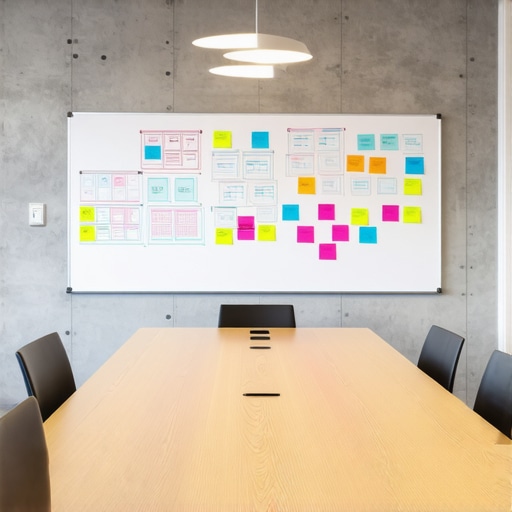 We also tend to romanticize natural light. Don’t get me wrong, I love a view, but there is a nuance to ‘too much.’ I’ve sat in meetings where the glare was so intense we couldn’t see the projector, and the heat turned the room into a greenhouse by 2:00 PM. While why a windowless office is killing your teams creative output is a valid concern for long-term desks, for a high-intensity 90-minute session, a controlled, internal ‘bunker’ can sometimes keep the focus razor-sharp. Have you ever fallen into this trap of picking style over substance? Let me know in the comments. We’re all trying to figure out the balance between looking professional and actually being productive. If you’re ready to move beyond the basics and find a space that actually works, check out the future of conference rooms in startup ecosystems. It’s not about the fancy espresso machine; it’s about the friction-free flow of ideas.To keep that flow from drying up, you need a hardware stack that acts as a bridge, not a barrier. I’ve wasted too many hours wrestling with dongles to not tell you this: invest in a dedicated room system. I personally use the Jabra PanaCast 50. Most webcams have a field of view that makes everyone look like they’re squeezed into a submarine, but the PanaCast gives you 180 degrees, which means the person at the far end of the table isn’t just a disembodied voice. It’s about maintaining that eye contact that makes remote hires feel truly seen. If you want to scale, you have to realize why your conference room needs better technology and fewer cables.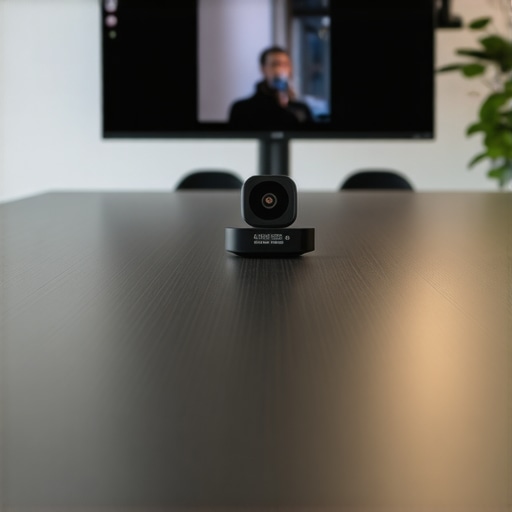
Build a Tech Stack That Doesn’t Fail You
Beyond visual clarity, you have to tackle the invisible enemy: echo. The Acoustical Society of America (ASA) suggests a reverberation time (RT60) of less than 0.6 seconds for clear speech in small-to-medium conference rooms. If your chosen space sounds like a cavern, your remote team will tune out within ten minutes. I often bring portable acoustic panels or look for rooms with heavy carpeting and soft furniture. It is especially critical when you need to how to handle a sensitive hr meeting in a shared space without the entire floor eavesdropping on your conversation.
How do I maintain peak productivity as the team scales?
Maintenance isn’t just about the gear; it’s about the logistics of the ‘physical-to-digital’ bridge. We use a physical Kanban board during our war room sessions, but I designate one person as the ‘Digital Scribe’ who mirrors everything in Notion in real-time. This prevents the dreaded ‘post-meeting lag’ where ideas stay trapped on a physical whiteboard for three days. As you grow, you’ll find that the logistics of scaling a hybrid team without a corporate hq requires a rotating schedule of room bookings across different spots that aren’t overcrowded. This ensures your culture remains high-bandwidth without the overhead of a permanent lease.
Expect AI to Take Over the Meeting Notes for You
Looking ahead, I predict the ‘meeting room’ will soon become an active participant in your workflow. We are already seeing the rise of ‘Spatial Audio’ and AI-driven room orchestration that can identify exactly who is speaking and generate action items based on the context of the physical movements in the room. This will be vital for anyone trying to how to pick an office that fits your startups growth pace, as the tech in the room will matter more than the square footage. My challenge to you: next time you book a space, do the clap test for acoustics, but also measure the Wi-Fi upload speed—not just the download—to ensure your high-stakes stream doesn’t drop when it matters most.
Hard Truths I Discovered in the War Room
Moving from a Slack-first culture to a physical hub taught me more about my team in a week than a year of Zoom calls did. First, I realized that conflict is actually healthy when you are face-to-face; it leads to resolutions rather than resentment. Second, never underestimate the power of a professional environment for your own mental shift. When you look at startup success secrets choosing the perfect conference room, it is about finding a space that validates your ambition. Finally, the best ideas almost always happen during the walk to the car or the elevator—those unscripted moments are where the real ‘pivot’ usually begins.
The High-Bandwidth Toolkit for Growing Teams
If you are tired of the ‘can you hear me now’ dance, you need a reliable setup. I personally swear by the Jabra PanaCast 50 for video because it captures the whole room without distortion. For documentation, we use a ‘Physical to Digital’ workflow where we snapshot whiteboards directly into Notion. If you are still scouting for a permanent home, I recommend reading up on the future of conference rooms in startup ecosystems to see how AI is changing the game. Also, take a moment to understand how to choose an office that supports your scaling speed so you don’t outgrow your lease in six months. Lastly, never settle for a space with poor acoustics; it’s the fastest way to lose an investor’s attention.
Step Out of the Digital Void
Technology is a bridge, but it shouldn’t be the destination. Your startup deserves the clarity and energy that only comes from being in the same zip code. When you finally lock in that perfect conference room, you’ll feel the difference in the very first hour. Don’t let the friction of digital tools hold your vision hostage any longer. If you need help finding the right spot to land, feel free to get in touch with us. We’ve seen it all, from garage beginnings to professional hubs, and the transition is always worth it. Have you noticed a difference in your team’s energy when meeting in person versus over a screen? Let me know in the comments below!