

The AC hum was the only sound in that 40-foot-high lobby, and honestly, it was deafening. I stood there, clutching a cold espresso, looking at a directory of thirty companies that all seemed to do the exact same thing: “Synergistic Solutions.” I felt like a cog in a machine I didn’t even want to operate. My startup was supposed to be different, yet here we were, tucked away in a sterile business park three miles from the nearest decent sandwich. It was a mistake I made early on, thinking that “professionalism” meant glass towers and silent elevators. I signed a lease that felt more like a prison sentence, and it nearly killed our culture before we even launched.
The Day I Realized Corporate Parks Are Where Creativity Goes to Die
We spent six months in that generic park, and our productivity tanked. Why? Because there was no soul. Every morning was a trek through a parking lot that felt like a desert, only to sit in a room that looked like a hospital wing. I realized that your first office shouldn’t be a 5-year commitment to a space that doesn’t inspire you. I’d fallen for the trap of thinking a prestigious address mattered more than the energy of the room. Our pitch meetings were flat, our dev team was bored, and the noisy, hollow meeting spaces made every client call feel like we were broadcasting from a canyon. We needed a change. We needed people. We needed a place where the person at the next desk might actually know our names, or at least share a passion for building something from scratch. That’s when we looked toward a local hub in the heart of the city. According to a study by the Harvard Business Review, people who belong to coworking spaces report levels of thriving that are an average of a point higher on a seven-point scale than those who work in traditional offices. It wasn’t just about the desk; it was about the ecosystem.
Is a local hub actually worth the extra commute?
You might be thinking, “But aren’t those places just noisy warehouses full of people on beanbags?” I had that fear too. I worried we’d trade the sterile silence for a chaotic mess where we couldn’t get a single line of code written. But what I found was that the right neighborhood matters more than the desk itself. A local hub isn’t just a room; it’s a filter for the kind of people you want to be around. Have you ever felt like your office was actually working against your team’s energy? We decided to stop paying for square footage we didn’t use and started investing in a community. The transition wasn’t just about moving furniture; it was about reclaiming our identity as a startup that actually gives a damn about the world around us. Here is how we finally broke free and what we looked for in our new home.
Test the Vibe Before You Sign Anything
I learned the hard way that a glossy brochure is just a filtered photo of reality. Before we moved our entire dev team, I spent a Tuesday working out of the lounge on a day pass. You need to how to use a day pass to test your next potential office because that’s the only way to see if the community manager actually helps or just hides in the back office. During that trial, I realized the designated quiet zone was right next to a heavy-duty coffee grinder. If I hadn’t tested it personally, we would have been stuck in a noise nightmare for the next twelve months.
Run a Real-World Acoustics Test
When you’re pitching an investor, a thin wall is your worst enemy. We once almost lost a seed lead because the person in the adjacent room was shouting about their fantasy football league during our pitch. Now, I always perform the acoustics test every conference room should pass. Walk in, shut the door, and have someone stand outside and talk at a normal volume. If you can hear the specifics of their conversation, your trade secrets are basically public property. You have to how to vet a meeting room for acoustic privacy before booking before you trust it with a high-stakes board meeting.
Check for Cables and Adapters Not Just Aesthetic Chairs
Startups love fancy furniture, but an expensive ergonomic chair won’t help you if the monitor doesn’t connect to your hardware. I’ve spent twenty minutes of a thirty-minute client call sweating while trying to find a dongle that actually worked. It’s better to how to find a conference room that actually has working adapters than to rely on luck. Our rule now is simple: if the tech doesn’t work in the first sixty seconds, the space isn’t ready for a professional team. A hub should accelerate your work, not add a find the HDMI cable quest to your daily to-do list.

Find the Kitchen Where the Real Work Happens
The real value of a hub isn’t the desk; it’s the communal kitchen. I used to think small talk was a waste of time until I met our lead engineer while waiting for the microwave. This is why communal kitchens are the best place to find your next CTO. It’s a low-pressure environment where you can learn the best ways to network in a shared space without being annoying. We stopped looking at our office as a fortress and started viewing it as a filter for talent and resources. It changed our growth trajectory overnight.
Most founders I talk to fall for the ‘perk trap.’ They see a nitro cold brew tap and a pool table and think they’ve found the holy grail of startup culture. But in my experience, the more ‘noise’ a space creates with freebies, the less work actually gets done. It’s a classic misdirection. You think you’re paying for a community, but you’re often just subsidizing expensive distractions. I’ve seen teams spend three hours a day at the ping-pong table and then wonder why their burn rate is so high. The truth about free perks you never actually use is that they are often a smoke screen for mediocre Wi-Fi or poor acoustic privacy. We once toured a space that had a private gym, but the internet dropped every time someone used the microwave in the communal kitchen. That is not a workspace; it is an adult playground.
Stop Chasing the Perk Dragon
The myth of ‘automatic networking’ in coworking spaces is another common pitfall. Everyone tells you that you’ll meet your next investor at the coffee machine. But real networking is intentional. If you’re just sitting there hoping for a miracle, you’re wasting valuable development time. You need a strategy for the best ways to network in a shared space without being annoying. I’ve seen founders spend more time ‘networking’ than building their product, which is a fast track to failure. The hub should be a tool for your business, not the primary focus of your day.
Can your team actually handle the noise of a ‘collaborative’ environment?
Many ‘expert’ guides tell you that open-plan spaces are necessary for serendipitous innovation. However, a study by researchers at the University of Sydney found that the loss of productivity due to noise distraction and lack of privacy in open offices far outweighs the supposed benefits of increased interaction. They discovered that nearly 50% of people in open-plan offices cite a lack of sound privacy as a significant issue. This is why the truth about hot desking is more nuanced than a simple ‘yes’ or ‘no.’ If your engineers are constantly wearing noise-canceling headphones, you’ve already lost the battle for collaboration. You don’t need an open room; you need a space that respects the boundary between deep work and social interaction. 
Why High-Tech Beats High-Square-Footage
Another major ‘oops’ moment is overestimating your initial needs. Founders often sign up for the ‘Executive’ tier because they want to feel like a big fish, but they end up paying for hours of unused conference time. It’s much smarter to pick a membership tier that scales with your team rather than over-committing to square footage you won’t touch for six months. I’ve seen startups go bust simply because their fixed overhead was built for their ‘Year 3’ projections instead of their ‘Day 1’ reality. In the early days, you need liquidity, not a 12-person boardroom you only use for one hour-long standup a week. Focus on functional density instead. Always look for why your conference room needs better technology and fewer cables instead of more square feet. A small, high-tech room is worth ten cavernous boardrooms with faulty projectors. Before you sign any long-term agreement, use the exact checklist for vetting a high stakes board room to ensure you aren’t paying for aesthetic fluff. We learned that lesson when an investor could not connect their iPad to a ‘premium’ screen because the hub hadn’t updated its adapters since 2018. It looked unprofessional and cost us momentum. Have you ever fallen into this trap where the ‘cool’ factor of an office blinded you to its practical flaws? Let me know in the comments.
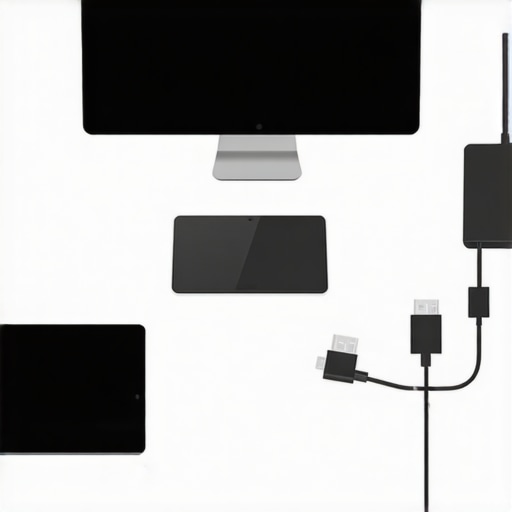
I used to think that as long as we had a table and a signal, we were in business. I was wrong. The reality of building a startup in a shared environment is that the ‘small stuff’—the technical friction points you ignore—eventually becomes a massive drag on your output. I’ve realized that the tiny details, like why our private office suites stock extra Surface Pro chargers for members, are what actually keep a team from losing an entire afternoon of productivity to a dead battery. It’s about removing every possible excuse to stop working. When you are in the zone, a missing adapter isn’t just an annoyance; it’s a momentum killer.
The Gear That Actually Saved My Sanity
In our second year, we stopped looking at the aesthetics of the room and started looking at the backbone. The hidden drag of slow office wi-fi on your burn rate is a very real financial metric that most founders ignore. If your team of five loses ten minutes an hour to jittery video calls or slow uploads, you are effectively burning thousands of dollars a month on ‘digital waiting rooms.’ I now carry a dedicated toolkit, but I also vet spaces for their hardware redundancy. According to technical documentation from Cisco regarding Wi-Fi 6 (802.11ax) deployments, enterprise-grade hubs can handle up to four times the capacity of older standards. If your hub is still running on legacy routers, your team is fighting a losing battle against congestion.
High-Density Connectivity is Your Lifeblood
I’ve learned to be ruthless about this. Before we commit to a long-term membership, I run a packet loss test during the Tuesday morning ‘rush hour.’ If that loss is over 1%, we don’t sign. You have to know how to manage office politics in a space you don’t own, and that often starts with having the technical leverage to prove the infrastructure isn’t meeting your needs. We also started looking at the future of conference rooms in startup ecosystems, moving toward spaces that offer more than just a screen, but integrated environments that facilitate hybrid work seamlessly. The goal isn’t just to survive in a shared space; it’s to thrive in spite of the shared nature of it.
How do I keep the momentum going as we scale?
Scaling is where most founders trip. You start as two people on a day pass and suddenly you’re a team of ten needing a private suite. The trick is knowing the exact timing for scaling from 2 to 20 and when to stop hot desking. If you stay in the open lounge too long, you’ll find yourself spending more time on how to manage noise complaints in a shared workspace than on your actual product. We eventually transitioned to a dedicated office within a hub, which gave us a door to close for deep work but kept the kitchen for the social ‘collision’ moments that drive innovation. Looking ahead, I predict we will see a shift toward AI-managed spatial dynamics, where the environment automatically adjusts lighting and sound masking based on the specific task your team is tackling that hour.
My challenge to you: Don’t just take the tour. This week, perform a ‘stress test’ on your current workspace. Run a latency check during a peak-hour video call. If your tech is holding you back, it’s time to find a hub that treats your connectivity as seriously as you treat your code. Don’t let a cheap router be the reason your next big demo fails.
The Hardest Lessons I Learned While Hunting for the Right Hub
Looking back at my journey from that sterile 40-foot lobby to a thriving city hub, I’ve realized that the environment doesn’t just host your team; it shapes your output. One of the most vital startup success secrets is that your space must be a friction-less tool, not a hurdle. I learned that having redundant technical systems is non-negotiable. If the Wi-Fi fails during a high-stakes demo, it doesn’t matter how ‘synergistic’ your solutions are.
Another lightbulb moment was realizing that why we moved our dev team to a dedicated startup hub was less about the free coffee and more about the psychological ‘permission’ to work hard. When you see others grinding around you, it becomes infectious. But remember, the social side is a double-edged sword; you must protect your focus time by choosing spaces that respect the boundary between the kitchen chat and the deep-work zone.
My Survival Kit for High-Stakes Coworking
I never walk into a new space for an office tour without these four essentials. First, I always keep a copy of The Lean Startup by Eric Ries nearby to remind me that overhead is the enemy of innovation; don’t buy more space than you can fill with energy. Second, I rely on the Speedtest.net app to quantify the hidden drag of slow office wi-fi on your burn rate before I even open my laptop. Third, I carry a universal adapter kit—specifically a Satechi multi-port hub—because I’ve seen too many pitches die due to a missing dongle. Finally, I trust the philosophy behind why your meeting room needs to be more than just a table; I look for spaces with integrated digital whiteboards that allow us to bridge the gap between our physical presence and our remote team members seamlessly.
Your Startup Deserves More Than a Sterile Desk
Ultimately, the journey from a lonely garage or a soul-crushing corporate park to a high-energy hub is about finding where you belong. Don’t be afraid to be the founder who asks the ‘annoying’ technical questions or the one who tests the acoustics with a phone call from the hallway. You are building something important, and choosing the perfect conference room is just one piece of the puzzle that ensures your voice is actually heard when it matters most. The future of your company depends on the energy you cultivate today. Take that day pass, run those tests, and find the place that makes you feel like the innovator you were meant to be.
Have you ever had a brilliant idea completely derailed by a technical glitch in a shared meeting room? Let me know in the comments below!