

I remember the exact moment my “digital-only” dream started to crumble. I was sitting in my living room, wearing a nice shirt but pajama bottoms, trying to close a deal that would have paid my mortgage for a year. The client asked, “Can we come by Friday to meet the team and sign the paperwork?” I panicked. I didn’t have a team in one place, and I certainly didn’t have a door with my name on it. I suggested a local cafe, thinking I was being modern. Huge mistake. Between the espresso machine screaming and a toddler having a meltdown at the next table, the professional image I’d spent months building evaporated in twenty minutes. I realized right then that while the internet is great for reaching people, it’s often terrible for holding them.
The day a loud blender killed my fifty thousand dollar deal
It’s easy to get sucked into the idea that a laptop and a decent Wi-Fi signal are all you need to build an empire. I fell for it. I thought I was being lean and smart, but I was actually becoming invisible. When I lost that contract, I had to face a hard truth: investors prefer meeting in professional settings because it signals stability. My “lean” setup just looked like I wasn’t serious. I spent way too much time ignoring the real cost of working from my dining table, thinking the lack of rent was a win. In reality, the lack of a professional anchor was a massive tax on my credibility.
Is a physical office actually worth the cost right now?
I hear this all the time from my neighbors and fellow founders. “Why should I pay for a desk when I have a perfectly good couch?” Look, I get it. Every dollar matters in a startup. But there is a psychological shift that happens when you step into a space dedicated to work. Research published by the Harvard Business Review shows that face-to-face requests are 34 times more successful than digital ones. That is a staggering difference. If you are trying to convince someone to trust you with their money or their career, a screen is a barrier. Have you ever felt that sinking feeling when a potential partner asks to visit your office and you have to make an excuse?
Why your brand needs more than a URL
A website is a brochure; a physical space is an experience. Even for remote teams, having a central hub—a place where people can actually look each other in the eye—is vital. I learned this the hard way after my pitch failed in that noisy coffee shop. It wasn’t just about the noise; it was about the lack of control. When you own the environment, you own the narrative. This is exactly why your startup needs a physical anchor. It provides a sense of legitimacy that a Slack channel simply cannot replicate. We’re going to dive into how you can create this touchpoint without burning your entire seed round on a five-year lease. It starts with understanding that your physical presence is your most valuable asset.
Audit your ego before you audit the floor plan
The transition from a digital-first to a physical-anchor model is where most founders stumble. They either overspend on vanity or underspend on credibility. To avoid the latter, you need to stop overpaying for square footage you never use and focus on utility. I once made the mistake of renting a space based on the view rather than the connectivity. I had a gorgeous skyline behind me, but my Zoom calls looked like a stop-motion film because I didn’t vet the space for high-speed fiber before signing. The result? A lost partnership because I looked like a kid in a fancy room with a broken toy. Learn to prioritize the backbone of your business—the speed, the access, and the reliability—over the aesthetic fluff. This is the first step in the move from garage to office that actually sticks.
Pick a zip code that validates your business
Where you plant your flag tells the world who you are. If you are in fintech, being near the financial district matters; if you are in creative tech, the artistic hub is your home. I’ve seen brilliant teams fail to attract talent because they were hidden in an industrial park where the only lunch option was a vending machine. The right neighborhood matters more than the desk itself because it provides a halo effect to your brand. It’s better to have a single hot desk in a prestigious district than a massive private suite in a ghost town.
How to stage the perfect investor encounter
When a VC agrees to meet, the environment is your home-field advantage. You shouldn’t invite them to your home, and you definitely shouldn’t invite them to a place where you don’t control the volume. This is why your investor pitch needs a neutral meeting room that screams professionalism. I remember hosting a seed-round meeting where we used a room with terrible acoustics. Every time I made a point about our ‘disruptive tech,’ the echo made it sound like I was shouting into a canyon. The investors spent more time squinting at the screen than listening to me. Now, I always vet a conference room for client-facing speed and sound quality before the calendar invite goes out.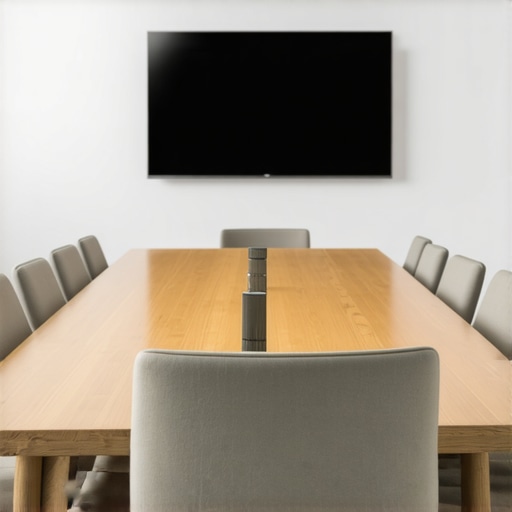
Trade the five-year lease for a flexible anchor
The old way of doing business involved signing your life away on a long-term lease before you even knew your churn rate. That is a death sentence for a startup. Today, the logic of choosing a flex office is undeniable. It allows you to scale up when you hire those three new developers and scale down if the market takes a dip. During my second venture, we used day passes and flex-spaces for six months. It felt ‘unsettled’ at first, but it saved us forty thousand dollars in overhead that we eventually poured back into our marketing budget. By using how we cut our office rent in half as a strategy, we kept the team together without the crushing weight of a fixed liability. Focus on being nimble; your physical presence should be a tool, not a tether.Everyone tells you that transparency is the hallmark of a modern startup. They want the glass walls, the open desks, and the communal bean bags. But let’s be honest: in my experience, the fishbowl effect is a productivity poison. We’re led to believe that seeing each other work 24/7 builds culture, but why your startup needs a real door not just a glass wall becomes painfully obvious the moment you need to have a serious, grown-up conversation. When your team feels like they are on a stage, they stop taking risks. They stop doing the messy, deep work that actually moves the needle. I fell for the all-inclusive marketing pitch early on. It sounded so simple: one monthly fee for everything. The trap? Those memberships often throttle the very things you need to scale. I found out the hard way that inclusive usually means the basics only. The moment I needed to host a high-stakes workshop, the hidden fees for tech support and after-hours utilities started piling up. This is why the all-inclusive membership is usually a trap if you do not read the fine print. You end up paying a premium for coffee and snacks while starving your budget for actual infrastructure.
How do you handle a sensitive HR meeting in a space where everyone can see you?
This is the advanced-level nightmare nobody warns you about. You need to let someone go, or you have to discuss a sensitive legal pivot, and your office is a glass box in the middle of a high-traffic zone. You cannot just whisper. Research by Harvard Business School professor Ethan Bernstein found that when companies switch to open offices, face-to-face interaction actually decreases by about 70 percent. People create digital walls by wearing headphones and avoiding eye contact. If you are in this situation, you need a strategy for how to handle a sensitive HR meeting in a shared space before it becomes public gossip. The oops factor I see most often is founders neglecting the acoustic reality of their environment. They vet the furniture but forget the frequency. I’ve seen million-dollar deals die because the modern industrial meeting room had the echo of a cathedral, making the pitch sound amateurish. This is the truth about shared office noise levels: if you cannot control the sound, you cannot control the outcome. For those high-stakes moments, you have to realize why a neutral meeting space leads to more honest feedback and better results than a trendy, loud hub. Don’t let the aesthetic of a cool workspace blind you to the functional requirements of a growing business. Whether it is ensuring why developers need quiet zones to reach deep flow or simply having a place where a private conversation stays private, the nuances matter more than the mural in the lobby. Have you ever fallen into this trap? Let me know in the comments.I used to think my laptop was the only tool I needed, but after three years of bouncing between flex-spaces, I realized my real ‘office’ is the bag on my back. If you want to keep the momentum going, you need a hardware stack that removes the friction of a new environment. I carry a dedicated 10-foot Ethernet cable and a Thunderbolt dock because I never trust a Wi-Fi card to handle a 4K stream on its own. It’s about more than just speed; it’s about stability. This is why you must vet the space for high-speed fiber before you even think about unpacking your gear. I’ve seen too many founders scramble because they didn’t have a plan for what to do when the office wi-fi goes down mid-pitch. I also use a hardware security key for everything. When you are on shared networks, your password is only the first line of defense, and why endpoint protection services matter more when your team is hybrid is a lesson you don’t want to learn through a data breach. According to the Cisco Annual Internet Report, global network speeds are increasing but so is the complexity of security threats in public spaces. You need to be the one with the direct line.
How do I maintain my workflow when I’m constantly switching desks?
The secret is a ‘zero-config’ setup. I keep the exact lighting setup for professional video pitches in a small hardshell case so I can turn any dim corner into a studio in under ninety seconds. Consistency is the enemy of the ‘startup struggle’ vibe. If your background changes, your quality shouldn’t. I also recommend using a tool like Tailscale to create a private network between your devices, ensuring your ‘home’ environment follows you everywhere even when you’re using a hot desk.
The physical anchor of 2030 looks like your local neighborhood
I’m calling it now: the era of the 50-story corporate tower is over. The future belongs to the ‘hub-and-spoke’ model where why suburban flex spaces are the new downtown office becomes the industry standard. We are going to see AI-optimized meeting rooms that adjust their own soundproofing based on the pitch of the speaker’s voice—tech that was once reserved for high-end recording studios. If you want to stay ahead, you need to start thinking about how to choose an office that supports your scaling speed today. Don’t just look at the floor plan; look at the tech backbone. My challenge to you: next time you walk into a shared space, don’t just ask for the Wi-Fi password. Ask for a speed test result from the specific room you’re booking. If they can’t give it to you, they aren’t ready for your business.
The Hardest Lesson I Learned About Shared Walls
First, nobody tells you that the ‘freedom’ of working from a couch is actually a prison for your productivity. If your environment doesn’t change, your mindset won’t either. I spent years thinking I was saving money, but I was actually losing out on the serendipity that only happens in a shared environment. For instance, the hidden benefits of a diverse desk neighbor are worth more than any networking event; my biggest pivot came from a casual chat with a developer sitting two desks over. Second, you have to realize that how to stop your team from hating hybrid meetings isn’t about the software—it is about having a dedicated room where the remote person feels like a participant rather than a spectator on a screen. Finally, always remember that ‘free’ space usually comes with a tax on your focus. Whether it is a noisy neighbor or a spotty connection, you pay for what you don’t spend in rent with your mental energy.
What I Keep in My Go-Bag to Stay Professional
To navigate the hybrid world effectively, I’ve curated a specific toolkit that ensures I never look like an amateur, regardless of where I am sitting. Tailscale: This is my go-to for creating a secure, private network between my devices. As I’ve learned, why endpoint protection services matter more when your team is hybrid is a lesson you want to learn before a breach, not after. The 4K Thunderbolt Dock: I never rely on a single laptop port. This dock stays in my bag so I can instantly connect to high-end monitors and cameras, ensuring I maintain the exact lighting setup for professional video pitches even in a windowless huddle room. The HBR Guide to Persuasive Presentations: Technology is the skeleton, but your delivery is the soul. I keep this book handy to remind myself that even in the most tech-forward coworking hub, the human element of the pitch is what closes the deal.
#IMAGE_PLACEHOLDER_E#
Stop Hiding and Start Scaling
Your startup deserves a home that doesn’t share a wall with a kitchen or a laundry room. Transitioning to a professional setting isn’t just an expense; it is a declaration of intent to the world—and to yourself. When you finally move into a dedicated space, you’ll realize that the boundaries you set are exactly what allow your business to grow without limits. It is time to stop making excuses for the coffee shop noise and start building your legacy from a place of stability. Take the leap, book that tour, and pick a membership that scales with your teams size. Your future self will thank you for the professional anchor you planted today. What was the one ‘unprofessional’ moment that finally convinced you it was time to get a real office? Let me know in the comments below.