

The espresso machine hissed like a frustrated dragon just as I was about to hit ‘send’ on the most important email of my week. I was sitting in what a glossy brochure called a “premium focus hub,” but my brain felt like it was being put through a blender. Three rows over, a founder was loudly pitching a seed round, and the rhythmic ‘thump-thump’ of the lobby’s lo-fi hip-hop playlist was vibrating through my chair. I realized then that a “quiet zone” sign is often just a suggestion, not a rule. I spent three months paying for a membership I couldn’t actually use for real work because I didn’t know how to look past the aesthetics. If you’ve ever felt like your expensive desk is just a front-row seat to someone else’s startup drama, you’re not alone. Today, I’m going to share the subtle red flags I’ve learned to spot after years of hopping between shared offices, so you can stop fighting your environment and start actually working.
Stop Trusting the Quiet Zone Sign
It’s a bitter pill to swallow when you realize your focus is being sold out for a “vibrant community” vibe. Early in my journey, I made the huge mistake of assuming that if a place looked professional, it would sound professional. I didn’t realize that managing noise complaints in a shared workspace is often a losing battle for the management. I once signed a six-month lease for a beautiful glass-walled office, only to find out that glass is basically an acoustic trampoline. Every whisper in the hallway felt like it was being shouted directly into my ear. [image_placeholder_1]
Is silence actually achievable in a coworking environment?
You might be skeptical that any shared space can be truly quiet, and you’re partially right. Perfect silence is a myth, but “acoustic predictability” is real. According to research from the University of Sydney, the most significant distraction in open-plan offices isn’t the volume of noise, but the “irrelevant speech”—those snippets of conversation you can’t help but track. This is why your pitch deck won’t save you from a noisy meeting space if the walls are paper-thin. I’ve learned that the hard way, usually while trying to host a client call next to a communal microwave. We need to look for spaces that understand the acoustics test every conference room should pass before we commit our hard-earned revenue. Have you ever had a day where you spent more time adjusting your noise-canceling headphones than actually typing? If so, it’s time to look closer at the environment around you. Let’s dive into the non-obvious signs that your current spot is actually a productivity trap.
Perform a Ghost Walk During Peak Hours
To find a space that actually works for your workflow, you need to go beyond the glossy tour led by a salesperson. I call this the ‘Ghost Walk.’ Show up on a Tuesday at 11:00 AM—the absolute peak of office chaos—and observe. Don’t just look at the desks; watch the movement. If the line for the communal kitchen is ten people deep and everyone is shouting over a high-powered espresso machine, that noise is your future soundtrack. I spent months in a space that looked like a library during my 9:00 AM tour, only to realize by noon it transformed into a chaotic networking mixer. You must learn how to use a day pass to test your next potential office properly before you ever sign a contract.
Don’t Book a Room Without Testing the Tech
I once walked into a ‘premium boardroom’ for a high-stakes investor pitch, only to realize the TV only accepted a frayed VGA cable while I had a modern Surface Pro. I was frantic, digging through my bag while the clock ticked away my credibility. It was a disaster that cost me the lead. Now, I always verify how to find a conference room that actually has working adapters before I even commit to a day-rate agreement. It sounds like a small detail, but when your burn rate is high, three minutes of tech lag is a mortal sin. This is exactly why our private office suites stock extra surface pro chargers for members—because small tech gaps shouldn’t derail big ideas. 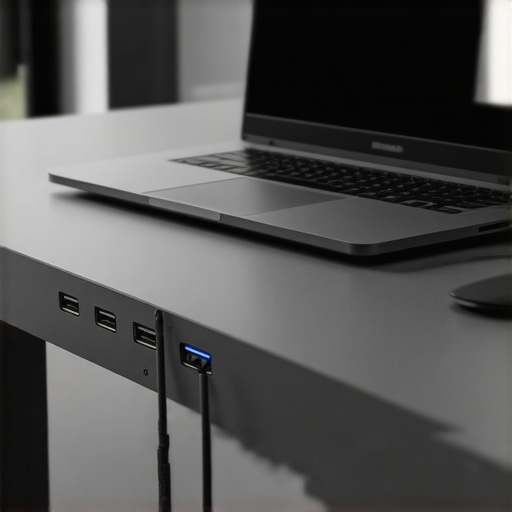
The Knock-on-the-Wall Privacy Check
If the walls sound hollow when you give them a light rap, your trade secrets are essentially public property. I’ve seen teams lose their competitive edge because their ‘private’ strategy sessions were audible to every stranger in the lounge. You need to know how to vet a meeting room for acoustic privacy before booking because a glass door without a proper rubber seal is just a window into your business plan. If you can hear the conversation in the room next door, they can hear yours. This is why the acoustics test every conference room should pass is the most important part of my vetting process.
Why the Middle of the Room is a Productivity Death Trap
Your specific desk location is the final hurdle to deep work. The middle of an open-plan room is a literal bullseye for distractions; you are vulnerable to 360 degrees of movement. I discovered that the exact desk location that boosted my productivity by 40 percent was a tucked-away corner near a window, with a pillar blocking my peripheral vision of the printer. By limiting your ‘visual horizon,’ you protect your focus from the constant ‘irrelevant speech’ and movement that triggers the brain’s startle response. Additionally, always check the desk height; if it isn’t ergonomic, you are just paying for a future back appointment.
Vetting the Invisible Infrastructure
Finally, look at the community manager. Are they a bouncer or a host? If they seem overwhelmed by basic tasks, they won’t be able to help when the hidden drag of slow office wi-fi on your burn rate starts to hurt your bottom line. You want a team that understands how to handle package deliveries without a permanent front desk staff efficiently so you aren’t interrupted every time a courier arrives. If you can’t trust the infrastructure, you can’t trust the space with your business.
The Boardroom Size Myth
Most founders believe that booking the biggest, most expensive boardroom is a power move when meeting investors. I’ve seen this backfire more times than I can count. When you’re a three-person team sitting at a table designed for twenty, the psychological effect isn’t one of prestige; it’s one of emptiness. You lose that tight-knit, high-energy ‘scrappy startup’ vibe that actually builds confidence. In my experience, a smaller, high-intensity environment often works better for closing deals than a cold, oversized hall. You need to know how to choose the perfect conference room for business success by matching the room’s scale to your team’s current stage. If the room is too big, your presentation feels like a whisper in a cathedral.
Why High Ceilings Change Your Brain
If you’re planning a deep-dive strategy session, the actual height of the room matters more than the coffee quality. There is a cognitive phenomenon known as the ‘Cathedral Effect.’ Research by environmental psychologist Joan Meyers-Levy suggests that high ceilings promote abstract, creative thinking, while lower ceilings are better for detail-oriented, technical tasks. Most people get this wrong by trying to innovate in a cramped basement. This is exactly why your team is more creative in a room with high ceilings when you’re in the ideation phase. Conversely, if you’re doing a final audit of your legal documents, find a room with a lower profile to help your brain focus on the minutiae. 
Is your ‘private’ war room actually leaking your next big feature?
This is the ‘Oops’ factor most people ignore until it’s too late: visual privacy is not the same as acoustic privacy. I once watched a competitor’s entire product roadmap being sketched out on a whiteboard through a glass wall because they forgot to check the sightlines from the communal lounge. Even if no one can hear you, they can see your sticky notes. You must understand the difference between a standard meeting room and a real war room before you start pinning up sensitive data. A true war room should have frosted glass or solid walls to protect your intellectual property.
The Trap of the ‘Fancy’ Tech Stack
We’ve all been there: you book a room because the website promises ‘state-of-the-art AV,’ only to spend twenty minutes trying to figure out a proprietary tablet-based lighting system. Complexity is the enemy of a good meeting. In reality, why your conference room needs better technology and fewer cables is about reliability, not flashy gadgets. I now carry a universal adapter kit because I’ve learned the hard way that ‘universal’ is a relative term in the coworking world. Beyond the tech, watch out for the ‘smell test.’ I’ve walked into beautiful rooms that smelled like damp upholstery—an instant deal-killer for a VIP lunch. Always verify how to pick a meeting room that doesn’t smell like old carpet before the guest of honor arrives. Have you ever fallen into this trap where the ‘premium’ room actually hindered your work? Let me know in the comments.I’ve realized that finding the “perfect” room is only half the battle. The other half is the gear you bring to the table to maintain those standards. Even the most high-end conference room can’t save you from a teammate’s poor microphone or a jittery internet connection that drops during a final pitch. When I’m on the road or bouncing between hubs, I never rely solely on the building’s internal infrastructure. I’ve seen the hidden drag of slow office wi-fi on your burn rate kill more productivity than any noisy neighbor ever could. That’s why I carry a GL.iNet travel router to create my own secure, stable sub-network. It’s a small investment that ensures I can host a webinar without background noise or connection drops, even when the communal network is being hammered by fifty other members during a lunch rush.
The Portable Studio in My Backpack
I’m often asked why I carry so much gear instead of just using what the space provides for free. The truth is, “good enough” is a dangerous mindset for a founder. If you’re serious about your brand, you need to control your variables. I personally use the Elgato Key Light Mini because most coworking spaces have terrible overhead lighting that makes you look tired on video. I combine this with a Jabra Evolve2 85 headset; it’s not just about the active noise cancellation for me, but the professional-grade boom mic that filters out the ambient “espresso machine hiss” I mentioned earlier. This setup allows me to maintain a professional presence regardless of the environment. If you’re planning a marathon session, don’t forget that the exact chair you need for a 12-hour coding sprint might not be the one the office provides—I sometimes bring a portable lumbar support cushion to bridge the gap and save my back. 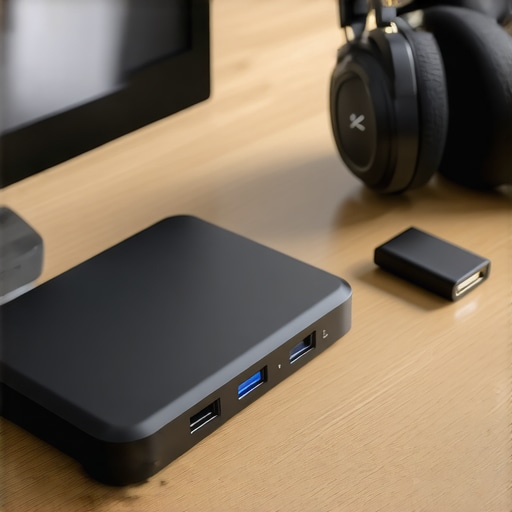
How do I keep my setup working as my team scales up?
Maintenance isn’t just about cleaning the whiteboard; it’s about auditing your digital and physical footprint every single month. As you grow, you’ll find that scaling from 2 to 20 members requires a total shift in how you use shared resources. You need to move beyond the daily scramble and start looking at how to pick an office that fits your startup’s growth pace. According to the ISO 3382-3 standard, which focuses on the measurement of acoustic parameters in open-plan offices, the “distraction distance” is the most critical metric to manage. As my team grew, I had to stop looking for “cool” looking spaces and start looking for those with high “spatial decay of speech” metrics. This is the point where you should consult the checklist for moving your startup into its first real office to ensure you aren’t just trading one set of distractions for another.
The Future of the Shared Office is Smarter than You Think
In the next few years, I predict we will see the rise of “intelligent environments” where your membership includes a digital twin of the office. Imagine walking into a room and your laptop automatically syncing with the wall-mounted displays and adjusting the lighting to your preferred color temperature via an API. We are moving away from passive spaces toward active, responsive ecosystems. This is the future of the office, where the environment adapts to the worker, not the other way around. Don’t wait for the management to upgrade your experience—start by bringing one piece of “pro” gear into your next session, like a dedicated external webcam, and watch how it changes your focus immediately.The espresso machine hissed like a frustrated dragon just as I was about to hit ‘send’ on the most important email of my week. I was sitting in what a glossy brochure called a “premium focus hub,” but my brain felt like it was being put through a blender. Three rows over, a founder was loudly pitching a seed round, and the rhythmic ‘thump-thump’ of the lobby’s lo-fi hip-hop playlist was vibrating through my chair. I realized then that a “quiet zone” sign is often just a suggestion, not a rule. I spent three months paying for a membership I couldn’t actually use for real work because I didn’t know how to look past the aesthetics. If you’ve ever felt like your expensive desk is just a front-row seat to someone else’s startup drama, you’re not alone. Today, I’m going to share the subtle red flags I’ve learned to spot after years of hopping between shared offices, so you can stop fighting your environment and start actually working.
Stop Trusting the Quiet Zone Sign
It’s a bitter pill to swallow when you realize your focus is being sold out for a “vibrant community” vibe. Early in my journey, I made the huge mistake of assuming that if a place looked professional, it would sound professional. I didn’t realize that managing noise complaints in a shared workspace is often a losing battle for the management. I once signed a six-month lease for a beautiful glass-walled office, only to find out that glass is basically an acoustic trampoline. Every whisper in the hallway felt like it was being shouted directly into my ear. [image_placeholder_1]
Is silence actually achievable in a coworking environment?
You might be skeptical that any shared space can be truly quiet, and you’re partially right. Perfect silence is a myth, but “acoustic predictability” is real. According to research from the University of Sydney, the most significant distraction in open-plan offices isn’t the volume of noise, but the “irrelevant speech”—those snippets of conversation you can’t help but track. This is why your pitch deck won’t save you from a noisy meeting space if the walls are paper-thin. I’ve learned that the hard way, usually while trying to host a client call next to a communal microwave. We need to look for spaces that understand the acoustics test every conference room should pass before we commit our hard-earned revenue. Have you ever had a day where you spent more time adjusting your noise-canceling headphones than actually typing? If so, it’s time to look closer at the environment around you. Let’s dive into the non-obvious signs that your current spot is actually a productivity trap.
Perform a Ghost Walk During Peak Hours
To find a space that actually works for your workflow, you need to go beyond the glossy tour led by a salesperson. I call this the ‘Ghost Walk.’ Show up on a Tuesday at 11:00 AM—the absolute peak of office chaos—and observe. Don’t just look at the desks; watch the movement. If the line for the communal kitchen is ten people deep and everyone is shouting over a high-powered espresso machine, that noise is your future soundtrack. I spent months in a space that looked like a library during my 9:00 AM tour, only to realize by noon it transformed into a chaotic networking mixer. You must learn how to use a day pass to test your next potential office properly before you ever sign a contract.
Don’t Book a Room Without Testing the Tech
I once walked into a ‘premium boardroom’ for a high-stakes investor pitch, only to realize the TV only accepted a frayed VGA cable while I had a modern Surface Pro. I was frantic, digging through my bag while the clock ticked away my credibility. It was a disaster that cost me the lead. Now, I always verify how to find a conference room that actually has working adapters before I even commit to a day-rate agreement. It sounds like a small detail, but when your burn rate is high, three minutes of tech lag is a mortal sin. This is exactly why our private office suites stock extra surface pro chargers for members—because small tech gaps shouldn’t derail big ideas.
The Knock-on-the-Wall Privacy Check
If the walls sound hollow when you give them a light rap, your trade secrets are essentially public property. I’ve seen teams lose their competitive edge because their ‘private’ strategy sessions were audible to every stranger in the lounge. You need to know how to vet a meeting room for acoustic privacy before booking because a glass door without a proper rubber seal is just a window into your business plan. If you can hear the conversation in the room next door, they can hear yours. This is why the acoustics test every conference room should pass is the most important part of my vetting process.
Why the Middle of the Room is a Productivity Death Trap
Your specific desk location is the final hurdle to deep work. The middle of an open-plan room is a literal bullseye for distractions; you are vulnerable to 360 degrees of movement. I discovered that the exact desk location that boosted my productivity by 40 percent was a tucked-away corner near a window, with a pillar blocking my peripheral vision of the printer. By limiting your ‘visual horizon,’ you protect your focus from the constant ‘irrelevant speech’ and movement that triggers the brain’s startle response. Additionally, always check the desk height; if it isn’t ergonomic, you are just paying for a future back appointment.
Vetting the Invisible Infrastructure
Finally, look at the community manager. Are they a bouncer or a host? If they seem overwhelmed by basic tasks, they won’t be able to help when the hidden drag of slow office wi-fi on your burn rate starts to hurt your bottom line. You want a team that understands how to handle package deliveries without a permanent front desk staff efficiently so you aren’t interrupted every time a courier arrives. If you can’t trust the infrastructure, you can’t trust the space with your business.
The Boardroom Size Myth
Most founders believe that booking the biggest, most expensive boardroom is a power move when meeting investors. I’ve seen this backfire more times than I can count. When you’re a three-person team sitting at a table designed for twenty, the psychological effect isn’t one of prestige; it’s one of emptiness. You lose that tight-knit, high-energy ‘scrappy startup’ vibe that actually builds confidence. In my experience, a smaller, high-intensity environment often works better for closing deals than a cold, oversized hall. You need to know how to choose the perfect conference room for business success by matching the room’s scale to your team’s current stage. If the room is too big, your presentation feels like a whisper in a cathedral.
Why High Ceilings Change Your Brain
If you’re planning a deep-dive strategy session, the actual height of the room matters more than the coffee quality. There is a cognitive phenomenon known as the ‘Cathedral Effect.’ Research by environmental psychologist Joan Meyers-Levy suggests that high ceilings promote abstract, creative thinking, while lower ceilings are better for detail-oriented, technical tasks. Most people get this wrong by trying to innovate in a cramped basement. This is exactly why your team is more creative in a room with high ceilings when you’re in the ideation phase. Conversely, if you’re doing a final audit of your legal documents, find a room with a lower profile to help your brain focus on the minutiae.
Is your ‘private’ war room actually leaking your next big feature?
This is the ‘Oops’ factor most people ignore until it’s too late: visual privacy is not the same as acoustic privacy. I once watched a competitor’s entire product roadmap being sketched out on a whiteboard through a glass wall because they forgot to check the sightlines from the communal lounge. Even if no one can hear you, they can see your sticky notes. You must understand the difference between a standard meeting room and a real war room before you start pinning up sensitive data. A true war room should have frosted glass or solid walls to protect your intellectual property.
The Trap of the ‘Fancy’ Tech Stack
We’ve all been there: you book a room because the website promises ‘state-of-the-art AV,’ only to spend twenty minutes trying to figure out a proprietary tablet-based lighting system. Complexity is the enemy of a good meeting. In reality, why your conference room needs better technology and fewer cables is about reliability, not flashy gadgets. I now carry a universal adapter kit because I’ve learned the hard way that ‘universal’ is a relative term in the coworking world. Beyond the tech, watch out for the ‘smell test.’ I’ve walked into beautiful rooms that smelled like damp upholstery—an instant deal-killer for a VIP lunch. Always verify how to pick a meeting room that doesn’t smell like old carpet before the guest of honor arrives. Have you ever fallen into this trap where the ‘premium’ room actually hindered your work? Let me know in the comments.I’ve realized that finding the “perfect” room is only half the battle. The other half is the gear you bring to the table to maintain those standards. Even the most high-end conference room can’t save you from a teammate’s poor microphone or a jittery internet connection that drops during a final pitch. When I’m on the road or bouncing between hubs, I never rely solely on the building’s internal infrastructure. I’ve seen the hidden drag of slow office wi-fi on your burn rate kill more productivity than any noisy neighbor ever could. That’s why I carry a GL.iNet travel router to create my own secure, stable sub-network. It’s a small investment that ensures I can host a webinar without background noise or connection drops, even when the communal network is being hammered by fifty other members during a lunch rush.
The Portable Studio in My Backpack
I’m often asked why I carry so much gear instead of just using what the space provides for free. The truth is, “good enough” is a dangerous mindset for a founder. If you’re serious about your brand, you need to control your variables. I personally use the Elgato Key Light Mini because most coworking spaces have terrible overhead lighting that makes you look tired on video. I combine this with a Jabra Evolve2 85 headset; it’s not just about the active noise cancellation for me, but the professional-grade boom mic that filters out the ambient “espresso machine hiss” I mentioned earlier. This setup allows me to maintain a professional presence regardless of the environment. If you’re planning a marathon session, don’t forget that the exact chair you need for a 12-hour coding sprint might not be the one the office provides—I sometimes bring a portable lumbar support cushion to bridge the gap and save my back.
How do I keep my setup working as my team scales up?
Maintenance isn’t just about cleaning the whiteboard; it’s about auditing your digital and physical footprint every single month. As you grow, you’ll find that scaling from 2 to 20 members requires a total shift in how you use shared resources. You need to move beyond the daily scramble and start looking at how to pick an office that fits your startup’s growth pace. According to the ISO 3382-3 standard, which focuses on the measurement of acoustic parameters in open-plan offices, the “distraction distance” is the most critical metric to manage. As my team grew, I had to stop looking for “cool” looking spaces and start looking for those with high “spatial decay of speech” metrics. This is the point where you should consult the checklist for moving your startup into its first real office to ensure you aren’t just trading one set of distractions for another.
The Future of the Shared Office is Smarter than You Think
In the next few years, I predict we will see the rise of “intelligent environments” where your membership includes a digital twin of the office. Imagine walking into a room and your laptop automatically syncing with the wall-mounted displays and adjusting the lighting to your preferred color temperature via an API. We are moving away from passive spaces toward active, responsive ecosystems. This is the future of the office, where the environment adapts to the worker, not the other way around. Don’t wait for the management to upgrade your experience—start by bringing one piece of “pro” gear into your next session, like a dedicated external webcam, and watch how it changes your focus immediately.
Why I Stopped Chasing Aesthetics and Started Measuring Decibels
The hardest lesson I’ve learned is that a beautiful lounge is often a distraction in disguise. I used to be swayed by the mid-century modern furniture and the promise of “synergy” at the communal bar. Now, I look for the exit signs. If the only quiet place to take a call is the bathroom, you aren’t in a workspace; you’re in a high-priced social club. I realized that managing noise complaints in an open-plan office isn’t something management can solve for you—it’s something you must avoid during the vetting process. Trust your ears over the brochure every single time.
- Don’t be afraid to be the ‘annoying’ visitor who asks for the Wi-Fi speed test results before signing a long-term lease.
- Check the density of desks; if they are packed like sardines, the “vibrant energy” will quickly turn into simple irritation.
- Ensure you know how to find a coworking space that matches your company values, because a culture clash with your neighbors is harder to fix than a broken printer.
The Pro Founder’s Survival Bag
I never walk into a meeting room expecting it to be perfect. My toolkit includes three non-negotiables: a dedicated mobile hotspot for when the gigabit fiber fails, a 10-foot HDMI cable because the one in the wall is always too short, and a set of fresh whiteboard markers. I’ve found that why your pitch deck looks better on a forty-inch screen than a laptop is a lesson you only want to learn once—ideally, before the investor walks in. Carry your own adapters, and you’ll never have to apologize for technical difficulties again.
Build Where You Can Actually Breathe
Ultimately, your workspace is the foundation of your company culture. Whether you are transitioning your team from a garage to a real office or upgrading to a premium suite, the goal is the same: to create an environment where your best work happens by default, not by accident. Don’t settle for a space that drains your energy just because it looks good on Instagram. Choose the space that respects your focus and fuels your growth. Have you ever signed a lease only to realize the noise was unbearable on day two? Let me know your coworking horror stories below.