

I was halfway through a high-stakes pitch when my neighbor started his leaf blower right outside my window. There I was, suit jacket on top, sweatpants on the bottom, frantically trying to explain our Q3 projections while my connection stuttered. It was a mess. Your home Wi-Fi is failing your presentations, and quite frankly, so is your kitchen chair. I spent years thinking I could hack a productive life out of a 1,200-square-foot house with two kids and a dog. I was wrong. The “office” isn’t a skyscraper downtown anymore, but it’s definitely not my dining room table either. Today, we’re going to look at why the most successful founders are ditching the commute and finding professional sanity right in their own neighborhoods.
Stop Pretending Your Kitchen Table is a Boardroom
For a long time, I made the classic mistake of thinking flexibility meant working from bed. I even ignored the hidden costs of running a startup from my garage because I thought I was saving money. In reality, I was losing my mind. My productivity tanked, and my team felt adrift. The data backs this up: according to Stanford economist Nicholas Bloom, working from home is actually most effective when it’s a hybrid model that includes professional spaces near where people live, not just total isolation. This is exactly why suburban coworking is booming for people like us. We need a place that smells like coffee and feels like work, without the hour-long train ride.
Is a neighborhood office actually worth the hype?
You might be skeptical. I get it. Why pay for a desk when you have a perfectly good one at home? But let me ask you this: Have you ever found yourself hiding in the bathroom or your car just to get a quiet moment for a sensitive HR call? If you have, you’ve already felt the friction. The real cost of working from your dining table isn’t just the ergonomics; it’s the professional image you lose. When I finally moved our operations to a local hub, we cut our office rent in half compared to our old city-center lease, and my team’s morale skyrocketed because they could walk to work.
Why the Five-Year Lease is Finally Dead
Early in my career, I signed a five-year lease for a fancy glass-walled office downtown. I thought it was a badge of honor. It turned out to be an anchor. When we hit a rough patch, that rent almost sunk us. Nowadays, the right neighborhood matters more than the desk itself. We’re seeing a massive shift toward third spaces—spots that bridge the gap between home and the corporate grind. It’s about being near other builders without the overhead of a skyscraper. Have you ever felt trapped by a lease that no longer fits your team’s lifestyle?The transition from a home setup to a professional neighborhood hub requires more than just a signed agreement; it requires a tactical approach to your environment. When I first made the move, I thought simply having a desk would solve my problems. It didn’t. I had to learn the hard way that not all spaces are created equal.
Look Beyond the Coffee and Beer
It is easy to get swayed by the ‘cool factor’ of a startup hub. I once joined a space solely because they had a vintage arcade machine and a top-tier espresso bar. Within a week, I realized the ‘free’ amenities were a mask for a spotty internet connection that dropped every time I had a client on the line. You must vet a space for high-speed fiber before you sign the contract. Take your laptop, go to the furthest corner from the router, and run a stress test. If it fails there, it will fail you when you are in a high-stakes pitch. 
Audit the Technical Infrastructure First
Beyond the Wi-Fi, you need to spot a bad coworking community before joining by observing the ‘unwritten rules’ of the space. Is there a culture of respect for quiet work, or is the common area a constant roar of networking? I spent three months in a place where people treated the ‘quiet zone’ like a social club. Now, I always ask to see the private phone booths before I sign. You will eventually need them because your sales calls need a private phone booth to maintain a professional edge and keep your trade secrets safe from eavesdroppers.
Use Professional Rooms for High-Stakes Wins
Your neighborhood hub is your tactical advantage for external optics. Don’t host an investor in the open lounge. I made that mistake once; a guy in a hoodie was loudly eating a tuna sandwich three feet away while I was trying to explain our valuation. It was a disaster. You need to choose the perfect conference room for business success. This means checking for acoustic privacy and modern AV setups. In fact, your investor pitch needs a neutral meeting room that reflects professional stability, not the chaos of a garage or the clutter of a home office.
Protect Your Team From Constant Interruptions
If you are bringing a small team along, you have to manage the ‘open office’ fatigue. Developers need quiet zones to reach deep flow, and as a founder, you have to be the gatekeeper of their time. I found that the secret to avoiding distractions in these shared environments is setting clear boundaries—both physical and digital. Use the professional hub for collaborative bursts and the conference rooms for deep-dives, but always ensure you pick an office that fits your startup’s growth pace. If the space is already at ninety-five percent capacity, you will have nowhere to go when you hire your next three engineers.But hiring is only half the battle. Most founders I talk to are obsessed with the ‘all-in’ price when they start looking at neighborhood hubs. They want one bill that covers every possible amenity. But here’s the contrarian truth: the all-inclusive membership is usually a trap. In my experience, you end up heavily subsidizing the lifestyle of the ‘lifestyle entrepreneur’ next door who spends four hours a day at the espresso bar while you are actually trying to ship code. I have found it is far more cost-effective to pay for what you actually use and prioritize membership flexibility over square footage. If you cannot scale down your desk count during a pivot or an off-season, you are just in a shorter, more expensive version of a traditional lease.
Don’t fall for the ‘Meeting Room Myth’
Then there is the common mistake of thinking a conference room is just a room with a door. I have sat in beautiful, glass-walled rooms where we had to whisper because the acoustics were so bad that everyone in the kitchen could hear our financial projections. If you are looking at a potential space, you need the exact checklist for vetting a high-stakes board room. Don’t just look at the high-end chairs; look at the ceiling and the walls. If the space is full of hard surfaces and lacks sound-dampening materials, you will eventually need the acoustic fix for echoey conference rooms or your remote clients will spend half the meeting asking you to repeat yourself.
Does your room layout actually sabotage your brainstorm?
It is not just about the noise; it is about the psychology of the physical space. According to a study published in the Harvard Business Review, physical proximity and the visual ‘openness’ of a room—specifically how people are oriented toward one another—can increase collective intelligence and collaborative output by up to 20%. This is exactly why your meeting room layout is killing participation if it is designed like a rigid, 1990s law firm boardroom. For true innovation, you need circular or oval setups where everyone has equal eye contact and easy access to digital whiteboards. 
Avoid the invisible technical debt of cheap spaces
The biggest ‘oops’ factor I see with new founders is ignoring the legal and technical fine print because they are enamored with the community vibe. You have to spot a predatory lease before you sign. Some shared spaces include hidden ‘restoration fees’ or notice periods that are designed to trap your capital just when you need to hire your next lead dev. Remember, your meeting room needs to be more than just a table; it is a conversion tool. If the guest Wi-Fi is restricted or requires a complex login, you are hurting your optics. Your brand needs a physical touchpoint that feels seamless and professional. I have learned that the secret to finding quiet corners for high-stakes sales calls isn’t just about the physical room, but about understanding the ebb and flow of the community’s energy. Have you ever fallen into this trap—paying for a ‘premium’ space only to find out the basics didn’t work when it mattered most? Let me know in the comments.
The trap is thinking the tech will manage itself. It doesn’t. Once you move past the honeymoon phase of your new neighborhood desk, the friction of daily operations starts to creep back in. If you aren’t careful, you’ll find yourself right back where you started: frustrated by glitches and missing the deep work you actually moved here to do. To keep things running at peak performance, you need a personal infrastructure that travels with you. For me, that meant moving away from the default laptop setup and investing in a dedicated mobile kit.
Stop trusting your laptop’s built-in microphone
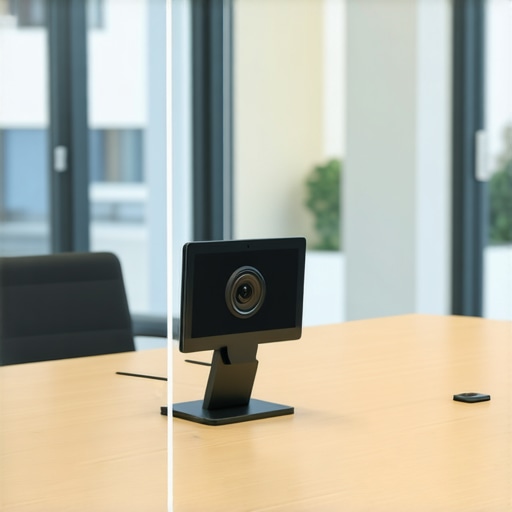
If you want to maintain your edge, you have to stop sounding like you are in a wind tunnel. Even the best shared spaces have ambient noise. I personally swear by a dedicated USB condenser mic—specifically something with a tight cardioid pattern to ignore the guy laughing in the kitchen. According to Cisco’s technical specifications on Acoustic Echo Cancellation (AEC), the physics of sound reflection in small, hard-surfaced rooms can degrade voice clarity by over 40% regardless of your internet speed. This is exactly why you need to learn how to stop your team from hating hybrid meetings by bringing your own audio reliability to the table. When you take control of your input, you aren’t at the mercy of the room’s acoustics.
How do I keep this setup from falling apart after six months?
Maintenance is more than just hardware; it is about the social and cultural rhythm of your team. It’s easy to get lazy and stop coming into the hub once the novelty wears off. I’ve found that your startup needs a physical anchor for its remote team to prevent the drift that happens on Slack. We set a ‘non-negotiable Tuesday’ where everyone is physically present. This ensures we maximize productivity in your startups conference rooms by 0245 pm before the afternoon slump hits. If you treat the space as a tool rather than a luxury, you’ll find that you actually use it to its full potential instead of letting a membership go to waste.
Why the future belongs to hyper-local networks
I predict we are moving toward a world of ‘sovereign neighborhood hubs.’ In the next three to five years, the massive, corporate-owned coworking giants will lose ground to smaller, founder-led spaces that prioritize deep-work zones over ping-pong tables. We are already seeing that suburban flex spaces are the new downtown office. The goal for any fast-moving founder should be to find the art of the short term lease for fast moving startups—staying lean enough to pivot but established enough to have a home base. We actually proved this when we scaled our team using day passes only during our first year, refusing to pay for empty desks until we had the revenue to back it up. Go to your favorite coworking space tomorrow and actually audit the audio and lighting before your next big call—don’t just hope for the best; engineer it.
The Hardest Lessons I Learned While Scaling My Business in Shared Spaces
When I first moved out of the garage, I thought every desk was a win. I was wrong. I quickly learned that the social energy of a space can either fuel you or drain you. I realized that proximity to other startups accelerates your growth because you stop solving problems in a vacuum. Another realization? You can’t put a price on the sanity that comes from a physical boundary between ‘home life’ and ‘CEO duties.’ I also learned that you should never underestimate the importance of a real door; glass walls are visually appealing, but why your startup needs a real door becomes painfully obvious the moment you need to have a difficult conversation about burn rates or private strategy.
#IMAGE_PLACEHOLDER_E#
Tools and Tactics I Trust for Peak Performance
I don’t leave my productivity to chance anymore. Before I commit to any new location, I use a high-end mobile audio kit to ensure my calls are studio-quality. I highly recommend checking out the acoustic fix for echoey conference rooms if you find a space you love that sounds like a cavern. I also rely on the exact checklist for vetting a high-stakes board room to ensure my investor meetings aren’t derailed by bad hardware or connectivity. For long-term strategy, I’ve found that why your startup needs a physical anchor for its remote team is the most important concept to grasp if you want to keep your culture from dissolving into a series of impersonal Slack pings.
Stop Thinking Like a Freelancer and Start Building Like a Founder
The transition from a home-based project to a legitimate startup happens the moment you start valuing your professional environment as much as your product code. Whether it is finding the right coworking spot or mastering how to maximize productivity in your startups conference rooms by 0245 pm, every small optimization adds up to significant gains in output. Your workspace should be a catalyst for your mission, not a hurdle you have to clear every morning. It is time to step away from the distractions of the kitchen table and give your vision the conference room and the professional stage it deserves. What is the one thing that has stopped you from moving into a professional coworking space earlier? Let me know your thoughts in the comments below.