

I remember sitting in my first “hot desk” spot a few years ago. I was surrounded by fifty people, yet the room was so quiet you could hear a pin drop. I had this grand vision of a buzzing startup culture where ideas flew across desks like paper planes. Instead, I found myself tethered to a pair of noise-canceling headphones, terrified that even a heavy sigh would annoy the developer next to me. We were all just islands. It was lonely. And frankly, our innovation was stalling because my team stopped talking to avoid “disturbing” the peace. I remember one specific Tuesday where I had a breakthrough idea for our user interface. I turned to my co-founder, opened my mouth to speak, and then saw the “Quiet Zone” sign staring me down. I swallowed the idea and sent a Slack message instead. By the time he read it twenty minutes later, the spark was gone. That was the moment I realized we weren’t just sharing a space; we were being stifled by it. I realized then that a collaborative culture doesn’t just happen because you share a Wi-Fi password. [IMAGE_PLACEHOLDER]
Why the “Library Vibe” is Killing Your Innovation
The biggest mistake I made early on was assuming that proximity equals collaboration. It doesn’t. In fact, if you aren’t careful, why your hybrid team feels disconnected on Mondays becomes your daily reality even when you’re sitting three feet apart. I spent six months watching my team grow more isolated because I hadn’t set the “rules of engagement” for our shared environment. We were paying for a community but living in a vacuum. We needed to realize that why your team is more productive with a change of scenery only works if the culture allows for interaction. Look, I’ve been there—trying to whisper about a pivot while the guy three desks over is clearly trying to finish his accounting. It’s awkward. But if you don’t intentionally carve out space for your team to be a team, you’re just a collection of freelancers who happen to share a printer. Today, I want to show you how to break those invisible walls and actually get people talking without being “that guy” who ruins everyone’s focus. We’re going to look at how to move past the awkwardness. We’ll explore why why your meeting-room layout is killing participation and how transforming meeting rooms into collaboration hubs can change the entire vibe of your workday.
Is a Shared Office Actually Worth the Effort for Culture?
You might be wondering if it’s even possible to build a deep, meaningful culture when you don’t own the four walls around you. I used to think the answer was no. I thought we needed a private suite with our logo on the door to feel like a team. But the truth is, some of the most vibrant cultures I’ve seen exist in the messy, open-plan trenches. According to research from the Harvard Business Review, the most important predictor of a team’s success is actually the energy and engagement developed outside of formal meetings, rather than the individual intelligence of members. This is why the hidden value of the casual coffee machine chat is more than just a cliché; it’s the glue. Have you ever felt like you were walking on eggshells in your own shared office, or is it just me? Hit me up in the comments—I really want to know if this silent-office syndrome is as widespread as I think it is.
Give Your Team Permission to Be Loud
The first thing I had to do was kill the ‘shushing’ culture. I realized that if we treated our coworking space like a sanctuary for silence, we were effectively killing any chance of spontaneous problem-solving. I started by clearly defining our internal geography. We had to decide on the pros and cons of fixed desks versus hot desking to see what allowed us to huddle. We settled on a small cluster of fixed desks that served as our ‘Home Base’ where talking was the default, not the exception. If you needed deep work, you moved to the communal quiet library. This simple shift meant that nobody felt guilty for asking a quick question about a line of code. We stopped treating the office like a minefield where one loud laugh would set off a chain reaction of annoyed glares from other tenants.
Stop Wasting Your Meeting Room Budget
I’ve seen so many founders book a room for an hour, sit in silence for forty minutes, and leave with nothing. It’s a tragedy of wasted overhead. To build culture, you have to treat these rooms as high-intensity labs. You need to know how to maximize productivity in your startups conference rooms by arriving with a ‘no-laptops’ rule. I remember a specific Wednesday where we were struggling with a churn issue. We booked a room, but instead of the usual slide deck, I covered the walls in sticky notes. By the end, the room was a mess, but the team was electric. We learned that why your meeting room layout is killing participation is usually down to the ‘head of the table’ syndrome. We ditched the long table for a circle of chairs, and suddenly, my junior designer was leading the conversation. 
Protect Your Focus Without Living in a Bubble
You can’t be collaborative 100% of the time, or you’ll never ship anything. The secret is knowing when to unplug and how to do it without being a hermit. I used to think the answer was just better gear, but I found that the truth about noise canceling headphones in shared spaces is that they are a signal, not just a tool. When the cans are on, the team knows you’re in ‘Deep Flow.’ However, for high-stakes moments, you can’t just hide behind a headset. I once tried to take an investor call from my desk during a particularly rowdy lunch hour in the common area. It was a disaster; the investor could hear a birthday party in the background while I was trying to talk Series A numbers. That was the day I realized why your sales calls need a private phone booth. It’s about professionalism, not just silence.
Why We Swapped Slack for Physical Brainstorming
There was a month where our team communication was 90% digital, despite sitting four feet apart. We were ‘ghosting’ each other in real life. I made the call to ban Slack for anything that required more than a two-sentence answer. We started doing ‘The 10-Minute Stand-up’ near the coffee machine. This is where the hidden value of the casual coffee machine chat became our most powerful weapon. These micro-interactions built more trust in a week than a month of ‘General Channel’ memes ever did. We realized why we swapped slack for physical brainstorming sessions was the only way to catch the nuances of tone and body language that a screen simply eats alive. It turned our workday from a series of notifications into a series of breakthroughs.
But even physical brainstorming has its pitfalls if you aren’t honest about the environment. Most founders make the mistake of thinking ‘culture’ is something you buy with a high-end membership. They focus on the perks and forget the plumbing—both literal and metaphorical. Let’s talk about the nuance that separates high-growth teams from those that just enjoy the free beer.
Stop Falling for the Glass Wall Fallacy
Everyone says that open-plan offices and glass-walled conference rooms are the pinnacle of modern transparency. In my experience, that’s a total myth that actually hurts collaboration. When you’re trying to have a high-stakes board meeting and every passerby can see your internal runway projections on the screen, your team doesn’t act naturally—they act ‘for the room.’ It creates a culture of performance rather than problem-solving. This is exactly why your startup needs a real door, not just a glass wall. Visual privacy allows for the psychological safety required to admit when a product is failing. If you feel like you’re on display, you’re less likely to take risks. I’ve seen teams flourish simply by moving to a room with frosted glass where they could fail in private before they presented to the world.
Can You Really Protect Your Intellectual Property in an Open Office?
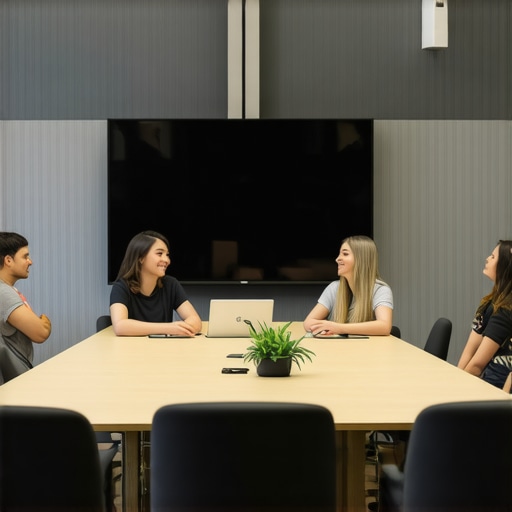
This is the question that keeps most CTOs up at night. The ‘oops’ factor here is assuming that everyone in the lounge is as professional as you are. I’ve overheard multi-million dollar acquisition talks just because someone forgot to check the acoustics of a ‘private’ booth. Research published in the Journal of Environmental Psychology confirms that lack of sound privacy is consistently the number one complaint in shared work environments, affecting both productivity and confidential security. To avoid this, you need to look beyond the aesthetic and find the acoustic fix for echoey conference rooms that ensures your trade secrets stay in the room. Don’t just look at the furniture; listen to the walls. If you can hear the person next door ordering a sandwich, they can hear your pivot strategy.
Why Noise Management is a Cultural Issue
The biggest trap for a scaling startup is the ‘Amenity Trap.’ You get blinded by the rooftop deck and ignore the fact that the Wi-Fi drops every time forty people join a Zoom call. I’ve seen founders sign a year-long contract because of a nice lobby, only to find themselves paying a fortune for unusable space. It’s vital to know how to spot a predatory lease before you sign, especially those that charge extra for the very things—like conference room hours—that you need for culture building. We learned the hard way that the truth about shared office noise levels is that they are managed by people, not just architecture. A good culture requires a space that offers flexibility over square footage. You want to be in a position where you can scale your room usage based on your sprint cycle, which is why membership flexibility is more important than square footage in the long run. If the space doesn’t grow with you, it will eventually choke your progress. Have you ever fallen into this trap where the ‘vibe’ looked great but the reality was a nightmare? Let me know in the comments. To really win, you have to know how to maximize productivity in your startups conference rooms by treating them as tools, not just locations.
Once you’ve moved past the initial ‘library vibe’ and established your home base, the real challenge begins: keeping that momentum alive as your team hits double digits. I’ve learned that culture isn’t just a feeling; it’s a set of systems that protect your team’s time and energy. If you don’t have the right tools in place, you’ll spend 40% of your day just managing the logistics of your environment instead of building your product.
The Hardware That Finally Fixed Our Hybrid Mess
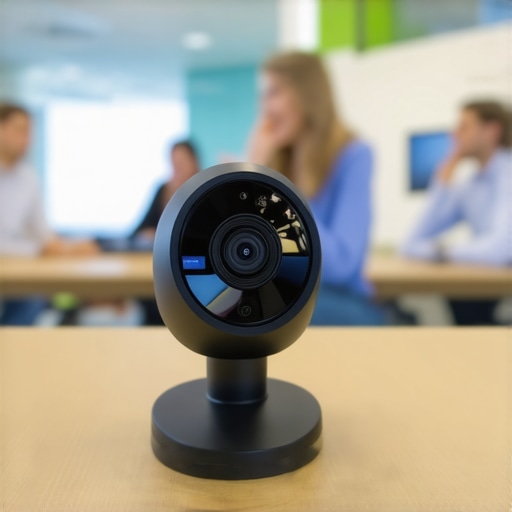
For a long time, our remote team members felt like ghosts. We’d be in a buzzing conference room, and they’d be a tiny, silent square on a laptop screen at the end of the table. It was a disaster for morale. To fix this, I personally invested in a Meeting Owl 3. It’s a 360-degree camera that automatically shifts focus to whoever is speaking. Why this specific tool? Because it removes the ‘us versus them’ dynamic. When your remote CTO can see the nuances of a brainstorm, how to stop your team from hating hybrid meetings becomes a solved problem. We also stopped guessing about technical stability. Before every major sprint, I have our lead dev run a diagnostic because knowing how to vet a space for high speed fiber before you sign the contract is only the first step—you have to maintain that standard every single week.
Beyond the hardware, we use Robin for room scheduling. There is nothing that kills a creative flow faster than the ‘door-knock of doom’—that moment someone interrupts your breakthrough because they think the room is free. By learning how to book a meeting room in under sixty seconds and making it a non-negotiable rule, we created a culture of respect for deep work.
How do I keep this collaborative energy alive for the long haul?
The secret is managing the ‘social loafing’ that happens as teams grow. According to the Ringelmann Effect, first observed by French agricultural engineer Max Ringelmann, individual productivity often decreases as group size increases because people feel less personally accountable. In a coworking space, this is exacerbated by the lack of physical boundaries. To combat this, I’ve found that how to pick a membership that scales with your teams size is about more than just adding chairs; it’s about creating sub-clusters. We treat our team of fifteen like three teams of five, each with their own ‘micro-culture’ within the shared space. We also religiously follow the ‘Two-Pizza Rule’ for meetings. If two pizzas can’t feed everyone in the room, the meeting is too big. This is how to maximize productivity in your startups conference rooms without letting the ‘Ringelmann Effect’ sap your team’s drive.
The Future Belongs to the Neighborhood Hub
I’m calling it now: the era of the massive, 500-person downtown headquarters is dead. The next five years will be dominated by ‘hub-and-spoke’ models. Startups will have a small, high-quality central meeting point but will rely heavily on localized, flexible offices for their distributed talent. We are already seeing the future of conference rooms in startup ecosystems shifting toward modular, AI-integrated spaces that handle transcription and task-tracking automatically. This allows you to focus on the human connection while the room handles the bureaucracy. If you want to stay ahead, stop looking for more square footage and start looking for more flexibility. My challenge to you: Try the ‘circle of chairs’ method for your next brainstorm. Ditch the table entirely and see how the power dynamic shifts. You’ll quickly realize why your meeting room layout is killing participation and how such a small tweak can reignite the spark you had on day one.
The Hard Truths I Learned While Eavesdropping Near the Coffee Machine
Building a culture in a shared space isn’t about the perks; it’s about the permissions you give your team. I spent far too long thinking the environment would do the work for me. Here is what I know now: First, the most expensive seat is the one where your developer can’t think. This is why why the open plan office is failing your developers and why you must proactively carve out quiet zones. Second, your team’s energy is a finite resource. If they are constantly worrying about how to manage office politics when you share a floor with other startups, they aren’t focusing on the product. Finally, remember that physical presence is still the fastest way to build trust, which is why physical presence still matters for early stage funding even in a remote-first world. You have to be intentional about when you gather.
The Survival Kit That Keeps My Team Sane
I don’t leave my team’s productivity to chance. We rely on a few specific resources to keep things running smoothly. I swear by Slack for quick pings, but we strictly use Robin to manage our space. Understanding how to book a meeting room in under sixty seconds is a mandatory skill during onboarding because it prevents the friction that ruins a creative flow. We also keep a close eye on our environment; I’ve found that how to vet a potential office space for natural light is just as important as the speed of the fiber connection. These small details signal to your team that you value their physical well-being as much as their output.
Build the Culture Your Team Deserves
It’s time to stop treating your coworking space like a waiting room and start treating it like a launchpad. You don’t need a ten-year lease to have a legendary team spirit. You just need to be the person who sets the tone, whether that means leading the ‘circle of chairs’ brainstorm or being the first to grab a coffee with a new hire. Your startup culture in a coworking space thrives on the small, repeated actions that say ‘we are here to win together.’ Go out there and turn that quiet library into a hub of innovation.
Have you ever struggled with the ‘silent office’ syndrome where no one wants to be the first to speak? Let me know your experiences in the comments below!