

I was sweating through my best shirt in a windowless room that smelled faintly of stale carpet and desperate ambition. I’d spent three weeks perfecting a pitch deck for a seed-round investor, convinced that the right venue was a mahogany-tabled boardroom in a stuffy corporate park. I talked for forty minutes. He checked his phone for thirty-nine. I left that meeting feeling like my startup was dead on arrival. I’d focused so much on finding a space that looked impressive that I failed to notice the acoustics test every conference room should pass wasn’t nearly as important as the human connection I was stifling with my slides. But then, as I was fumbling with my coat by the elevator, he walked up and asked if I knew where to get a decent espresso. We walked two blocks, talked about our shared hatred of over-engineered software, and he committed to the round before we even reached the cafe door. That was the moment I realized I’d been playing the game all wrong. We spend so much time obsessed with how to choose the perfect conference room for business success that we forget business is fundamentally about humans liking other humans. Today, I want to show you why the most lucrative work you’ll ever do happens while you’re technically on a break. [image_placeholder]
Stop Hiding Behind Your PowerPoint Slides
I made the classic rookie mistake of thinking professionalism meant sterility. I thought I needed a fortress of a meeting room to look the part, but I forgot to actually be the part. In those early days, I treated meetings like a court hearing. It was exhausting. I’ve since learned that the most profitable moments are often the ones you can’t schedule. It’s why small talk at the printer is the most valuable part of your day—it’s the accidental collision of ideas that happens when the guard is down. When you are in a formal setting, everyone is wearing a mask. In the hallway? The mask slips. You see the real person, and that is where trust is built. I wasted thousands on high-end rentals before realizing that why physical collaboration still beats video calls for startups is mostly about these unscripted intervals between the ‘official’ work. We are going to solve the mystery of why your formal pitches are stalling and how to leverage the organic energy of a shared space to actually move the needle.
Is this informal approach just a waste of time?
You might be thinking this sounds a bit too fluffy for a serious enterprise. I get it; I used to think ‘networking’ was just a code word for people who didn’t want to actually code. But the data says otherwise. Research published by the MIT Media Lab found that informal communication and ‘social signaling’ are significantly stronger predictors of team productivity and financial success than the actual content of their formal meetings. When you unlock networking opportunities in top coworking environments, you aren’t just paying for a desk; you’re paying for the high-probability chance of a life-changing hallway encounter. According to the MIT researchers, up to 80% of corporate innovation actually happens through these informal interactions rather than scheduled sessions. Have you ever felt that the real conversation only started once the laptop lids were closed and you were headed for the exit? I’d love to hear about the best deal you ever made that didn’t happen at a table. Leave a comment and let me know if you’ve ever had a ‘hallway epiphany.’
Turn Your Break Room into a Boardroom Alternative
You can’t manufacture chemistry, but you can certainly set the stage for it. I learned the hard way that startup success secrets choosing the perfect conference room at 0817 am often come down to the vibe of the building itself. If you want to move the needle, you need to stop thinking of ‘amenities’ as perks and start seeing them as tools. Last July, I was trying to land a partnership with a logistics firm. I’d booked a standard, sterile room, but the conversation was stalling. Halfway through, the Wi-Fi dipped—a classic hidden drag of slow office wi-fi situation. I made a snap decision to pivot and suggested we grab a refill in the communal lounge. Within ten minutes of standing near a window with a view of the city, the tension evaporated. We weren’t ‘negotiating’ anymore; we were solving a problem together. That’s why physical collaboration still beats video calls for startups; you can feel the energy change and adapt in real-time.
Ditch the Dark Basement for a High Energy Hub
Investors are intuitive creatures. If you bring them into a space that feels like a tomb, they’ll subconsciously associate your business with stagnation. This is why investors prefer meeting in a high energy hub over a quiet cafe—they want to see life, movement, and growth around you. When I was raising our seed round, I realized that the background noise of a thriving coworking space actually worked in my favor. It signaled that we were part of an ecosystem, not just three guys in a basement. It’s the same logic behind why shared kitchens are the best place to find your next cto. You are looking for ‘cultural proximity.’ 
Verify Your Tech Before the Client Arrives
There is nothing that kills a deal faster than fumbling with a dongle for fifteen minutes. I’ve seen million-dollar pitches die because the founder didn’t know how to find a conference room that actually has working adapters. Before any high-stakes meeting, you need to perform a dry run. Check the screen resolution, test the audio, and apply the acoustics hack for crystal clear client pitches by ensuring the room isn’t an echo chamber. If you’re presenting a visual product, remember that the lighting trick that makes your product demo look expensive is often just positioning yourself relative to natural light.
Stop the Pitch and Start the Conversation
If you are scaling, your environment needs to scale with you. We used the move that helped us scale from 3 to 15 people in six months by utilizing flexible meeting spaces instead of locking into a long-term lease. This allowed us to host innovative meeting rooms that boost startup creativity without the overhead of a private suite. The goal is to reduce friction. Use a 10 minute audit to see if your office space is wasting money on rooms you never use. Instead, focus on high-impact areas where people actually talk. If your team is struggling with focus, it might be because your conference room needs better technology and fewer cables to allow for seamless transitions between ‘deep work’ and ‘group brainstorming.’Most founders think that the ‘bigger the better’ rule applies to making a first impression. They book the most expensive, cavernous boardroom available to look ‘established.’ In reality, this often creates a psychological distance that is nearly impossible to bridge. I’ve seen more deals close in a snug corner than across a twenty-foot mahogany desert. This is where the two-pizza rule for booking the right size meeting room comes into play. If the room is too big, the energy dissipates into the air conditioning. You want ‘constructive friction,’ not an echo chamber where your voice feels small. 
Why does your team shut down in formal spaces?
It is a phenomenon called ‘social signaling.’ According to research from the Harvard Business Review, physical proximity and ‘chance collisions’ are the single greatest predictors of collaboration success, often increasing outcomes by over 20%. When you are miles apart in a sterile environment, the human brain often defaults to a ‘defense mode.’ You stop sharing the risky, unpolished ideas that actually lead to breakthroughs. This is the difference between a standard meeting room and a real war room—the latter is designed for action and energy, not just corporate appearance.
Avoid the Glossy Brochure Trap
The biggest ‘oops’ moment I see in the startup world is booking a space based purely on a polished PDF. You cannot see the distractions, hear the noise, or feel the humidity in a photo. I once booked a ‘premium’ suite only to find it was directly adjacent to a construction site’s jackhammer. Now, I always recommend that you use a day pass to test your next potential office before signing any long-term agreement. You need to know how to vet a meeting room for acoustic privacy before booking because ‘thin walls’ are the silent killer of confidential negotiations. I have even learned how to pick a meeting room that doesnt smell like old carpet, because sensory discomfort is a subconscious red flag for investors. Have you ever fallen into this trap where the ‘perfect’ room on paper turned out to be a disaster in person? Let me know in the comments.Once you’ve avoided the obvious traps of glossy brochures and smelly carpets, the real work of scaling begins. I’ve realized that long-term success isn’t about having the fanciest office; it’s about maintaining an environment where the tech doesn’t get in the way of the talent. For me, that meant moving away from a ‘dongle-first’ strategy. I now swear by dedicated room systems like the Logitech Rally Bar or hardware-agnostic wireless sharing because they eliminate the ‘whose laptop has the HDMI port?’ dance. When you invest in innovative meeting rooms that boost startup creativity, you are actually investing in reduced cognitive load for your team. According to the Nielsen Norman Group, even minor technical delays or UI friction in collaborative tools can increase a user’s frustration and mental fatigue significantly, which is why your conference room needs better technology and fewer cables to keep the momentum going during a high-stakes sprint. 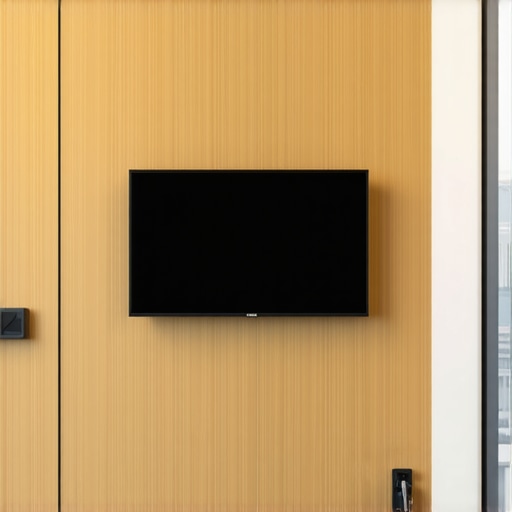
How do I keep my tech from becoming obsolete in six months?
The secret isn’t buying every new gadget that hits the market; it’s about modularity and flexibility. In our first year, I made the mistake of hard-wiring everything into the walls of a rented space. When we needed to upgrade our display, it turned into a minor demolition project. Now, I advocate for ‘Plug and Play’ infrastructure that can be swapped out in minutes. This is why flex space is the ultimate hedge against market volatility—you can leverage the building’s infrastructure upgrades without spending your own precious seed capital. You have to treat your meeting space like a product. It needs a roadmap and constant feedback loops. I recommend a monthly ‘friction audit’ where you ask your team exactly what slowed them down during their collaborative sessions. It might be the Wi-Fi latency, it might be a lack of whiteboards, or maybe how to maximize productivity in your startups conference rooms isn’t possible because the afternoon sun hits the screen at the exact moment you’re trying to demo your UI.
The Future is Smarter, Not Just Bigger
Looking ahead, I predict that the future of conference rooms in startup ecosystems will revolve around ‘Spatial Intelligence.’ We are moving toward rooms that automatically adjust lighting, acoustics, and even air quality based on the number of bodies in the room. We’re already seeing the shift toward the future of the office is closer to home than you think, but for those high-stakes moments of creative collision, the physical hub will remain the gold standard for high-bandwidth human communication. My advanced tip for you this week: Perform a ‘Latency Audit’ on your wireless screen-sharing setup before your next investor board meeting. If there is even a half-second lag between your mouse movement and the screen, switch to a wired connection immediately to maintain the ‘flow’ of your presentation.
What I Discovered After 100 Failed Pitches
I’ve learned that the most expensive room isn’t always the most effective. Here are a few ‘battlefield’ insights I wish someone had told me before I burned my first seed round on fancy leases. First, the ‘Vibe’ is a real ROI metric. If the space feels like a sterile hospital wing, your clients will treat your pitch like a chore. Look for energy and life, not just square footage. Second, privacy is non-negotiable. I once lost a competitive advantage because the walls were paper-thin; you must learn how to vet a meeting room for acoustic privacy before booking to protect your trade secrets. Finally, technology should be invisible. If you spend more than two minutes setting up a dongle, the momentum of your presentation is already dead. This is why your conference room needs better technology and fewer cables to keep the focus on your ideas rather than the hardware troubleshooting.
My Personal Startup Sanctuary Checklist
When I’m looking for a new hub for my team, I don’t just look at the glossy photos in the brochure. I look for specific features that foster real growth. I always use a day pass to test your next potential office before signing anything. You can’t feel the ‘culture’ or the actual Wi-Fi speed from a PDF. I also strictly follow the two-pizza rule for booking the right size meeting room. If a room is too large, the human connection dissipates into the corners. Finally, I prioritize ‘Collision Zones’ like communal kitchens where you’re likely to bump into your next advisor or developer—it is the best way to keep your finger on the pulse of the local startup ecosystem.
Building a Legacy Outside the Cubicle
The transition from a home desk to a professional environment is a massive milestone. But remember, the space is just the canvas for your company’s story. Your vision, your team’s chemistry, and those unscripted moments in the hallway are what actually build a brand. Don’t be afraid to ditch the mahogany table for a high-energy lounge if that’s where the creative sparks are flying. By mastering how to maximize productivity in your startups conference rooms, you’re not just renting furniture; you’re investing in the future of your collaboration. The future of work isn’t about where you sit, but how effectively you can connect with the person across from you. Have you ever landed a major deal or met a key partner in a totally unexpected place, like a shared kitchen or a coworking hallway? Let me know in the comments below!