

I remember the exact moment I realized my ‘casual’ approach was tanking my startup’s future. I was leaning across a tiny, wobbly marble table in a crowded hotel lobby, shouting my heart out about our API’s scalability while a tour group checked in loudly right behind us. The investor wasn’t squinting because he was captivated; he was squinting because he literally could not hear a word I was saying. I felt small. I felt like I was playing at business rather than actually running one. That day, I learned a hard lesson: your environment is a silent partner in your pitch, and right now, that partner might be stabbing you in the back. [IMAGE_PLACEHOLDER]
Don’t Let a Blender Kill Your Series A
If you’ve ever wondered why your pitch failed in that noisy coffee shop, it usually comes down to one thing: cognitive load. When an investor has to filter out the clinking of porcelain and the hiss of a milk steamer, they aren’t focusing on your valuation or your growth margins. They’re just trying to survive the sensory overload. I made the mistake of thinking ‘hustle’ meant being able to work anywhere, but the reality is that high-stakes conversations require a controlled environment. Today, we are going to fix your surroundings so your message actually lands. We’ll dive into how you can transition from the chaos of public spaces to environments that command respect. Research from the Journal of the Acoustical Society of America suggests that even moderate background noise can significantly impair speech perception and complex decision-making—two things you absolutely need on your side during a funding round.
Is a private room really worth the extra fifty bucks?
You might be skeptical. You might think your deck is so good it can overcome a little background chatter. Trust me, I thought that too, until I saw the truth about shared office noise levels firsthand. When you book a dedicated space, you aren’t just buying four walls; you’re buying the investor’s undivided attention. There is a psychological shift that happens when you walk into a professional setting. It tells the person across from you that you value their time and your own company enough to invest in a real conversation. Have you ever felt the soul-crushing realization that your best points were lost to the sound of a nearby espresso machine? It’s a common hurdle, but it’s also an avoidable one. There are deep-seated reasons why investors prefer meeting in professional spaces, and it usually has more to do with their peace of mind than their ego. If you find yourself in a pinch, knowing how to find a quiet meeting room on short notice can be the difference between a ‘maybe later’ and a signed term sheet. We’re going to walk through exactly how to audit your meeting spots to ensure you never lose a deal to a noisy lobby again.To stop the bleeding, you need a repeatable system for vetting your environment. It isn’t enough to just ‘hope’ the room is quiet. I learned this the hard way three years ago during a follow-up with a lead angel investor. I’d booked a stunning glass-walled ‘fishbowl’ in a trendy downtown hub. It looked like a million dollars, but the moment I opened my mouth, the echo was so violent it felt like I was being mocked by my own voice. The investor spent half the time squinting and adjusting his hearing aid. It was an absolute disaster. Since then, I’ve developed a three-step audit that I perform every single time I book a professional space.
Stop Guessing and Start Auditing Your Meeting Space
First, you have to treat the room like a critical piece of your tech stack. If you wouldn’t launch code without testing it first, do not walk into a meeting without a baseline audit. Start by understanding that why your pitch deck won’t save you from a noisy meeting space is often rooted in basic physics. You need to look for soft surfaces—rugs, acoustic panels, or even heavy curtains. If the room is all glass and concrete, you’re essentially walking into an echo chamber that will distort your message. 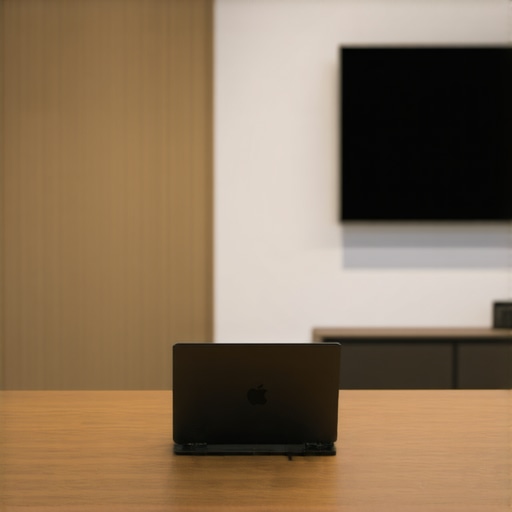
The 60-Second Sound Check That Saves Deals
Before the investor arrives, stand in the center of the room and clap your hands once, loudly. If you hear a sharp ‘ping’ or a long decay, you’re in trouble. I always carry a few adhesive foam tiles in my bag for emergencies, but ideally, you should use the acoustics test every conference room should pass before even putting down a deposit on the rental. If the room fails, ask the front desk for the acoustic fix for echoey conference rooms—sometimes they have portable dividers or better-suited rooms tucked away in a quieter corner of the building. If you’re really in a bind, knowing how to find a quiet meeting room on short notice is a superpower for any founder on the move.
Fiber Connections Are Non-Negotiable for Demos
Nothing kills a ‘wow’ moment faster than a spinning loading wheel during a live product demonstration. If you are showing off a live platform or SaaS tool, you cannot rely on a public guest Wi-Fi shared with fifty other people. You must learn how to vet a space for high-speed fiber before you sign the contract. I once lost a demo halfway through because someone in the next room started a large file upload. Now, I always ask for a hardwired ethernet connection or a dedicated VLAN. It sounds like overkill until you realize your Series A funding is on the line.
Why the 40-Inch Screen Commands the Room
Stop huddling around your 13-inch laptop. It makes you look like a student working on a thesis project, not a CEO. There is a deep psychological reason why your pitch deck looks better on a forty-inch screen than a laptop. It forces the investor to sit back, open their posture, and view your vision on a much grander scale. It also allows you to stand up and point, which physically projects authority in a way sitting down never can. Make sure why your conference room needs better technology and fewer cables is a priority when choosing your hub. If you’re worried about the cost, focus on how to host a product demo that looks professional on a budget by finding spaces that include AV equipment in the hourly rate. This is where the move from garage to office becomes tangible; it’s about shifting from ‘scrappy’ to ‘prepared.’
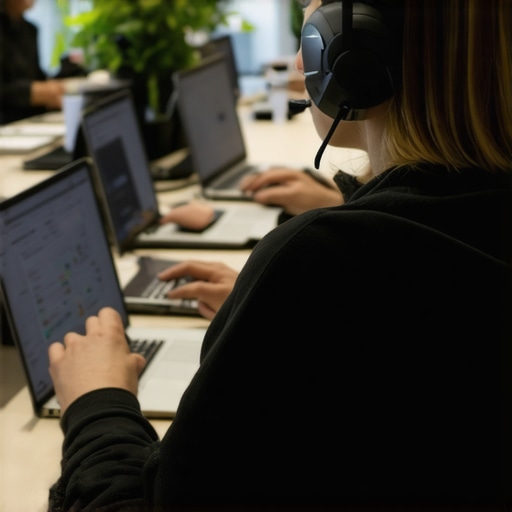
People often tell me they chose their coworking hub because of the ‘energy’ or the ‘creative buzz.’ I’m going to be the buzzkill here: most of that ‘energy’ is just distraction dressed up in a mid-century modern chair. The industry has sold us on the idea that open-plan layouts and communal tables are the keys to serendipity. But in my experience, the opposite is true. If you aren’t careful, you’re paying a premium for an environment that actively prevents your team from doing their best work. A landmark study by Harvard researchers Ethan Bernstein and Stephen Turban found that when companies switched to open-plan offices, face-to-face interaction actually dropped by roughly 70%. People don’t collaborate more; they just wear noise-canceling headphones and stare at their screens to signal ‘please leave me alone.’ This is exactly why developers need quiet zones to reach deep flow—without them, you’re just paying for a very expensive social club.
The Privacy Paradox You Can’t Afford to Ignore
The ‘Oops’ factor in many modern spaces is what I call the privacy paradox. You think you’re being transparent and accessible by choosing a glass-walled office, but you’re actually making it impossible to handle the messy, necessary parts of running a company. I’ve seen founders try to conduct a sensitive performance review or discuss a major pivot in a ‘phone booth’ where everyone walking by can see the frantic whiteboarding or the visible stress on a team member’s face. You need to know how to handle a sensitive HR meeting in a shared space before the situation arises, not while you’re scrambling for a room with an available calendar slot. Real expertise means recognizing that a ‘cool’ office isn’t always a functional one.
Can you actually keep a secret in a glass box?
It’s a sophisticated problem that most early-stage founders overlook until it’s too late. If you’re building something truly disruptive, your intellectual property is your lifeblood. Yet, many teams are shockingly lax about how to keep your startups trade secrets in an open office. I once saw a competitor’s entire product roadmap clearly reflected in a glass partition because the team hadn’t considered the sightlines of their monitors from the hallway. We’ve moved past the ‘garage’ phase, so it’s time to start acting like it. This is the logic of choosing a flex office over a 5-year lease; you get the professional infrastructure and the ability to scale without the rigid commitment, but only if you audit the privacy features as strictly as you audit the Wi-Fi speed or the coffee quality. Have you ever fallen into the trap of choosing ‘vibe’ over ‘value’ and regretted it? Let me know in the comments.
Building on those environmental audits, I’ve found that even the most acoustically perfect room fails if your hardware is a mess. I personally swear by a portable LED panel rather than relying on a room’s built-in fixtures. Why? Because most coworking spaces have terrible overhead lighting that creates ‘raccoon eyes’ on camera, making you look tired and unprepared. I followed the exact lighting setup for professional video pitches and it immediately changed my close rate. Even in a shared space, you can control your ‘frame.’ According to the IEEE Standards Association, flicker from low-quality LED drivers—a common issue in budget office spaces—actually causes measurable cognitive fatigue and eye strain. If you want to keep your team sharp, you need to understand why your conference room needs better technology and fewer cables. I’ve seen million-dollar momentum evaporate because a founder spent fifteen minutes hunting for a specific HDMI dongle.
Upgrade Your Hardware Before You Scale Your Team
To stay ahead, treat your physical tools with the same reverence as your software. I maintain a ‘tech go-bag’ for every senior lead that contains a high-speed ethernet cable, a portable USB-C hub, and a universal power adapter. We learned the importance of this when we saw why our private office suites stock extra Surface Pro chargers; it’s about removing every possible point of failure before the meeting starts. 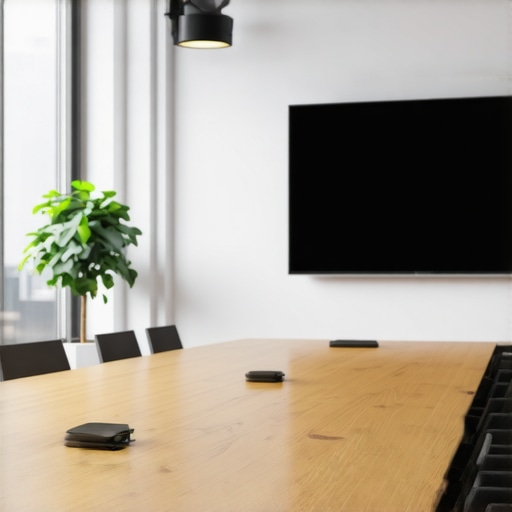
How do I maintain consistent professionalism over time?
The secret isn’t just booking bigger rooms as you hire more people; it’s about how to pick a membership tier that scales with your team. As we grew from a duo to a dozen, we stopped treating meeting rooms as a luxury and started viewing them as ‘war rooms.’ There is a massive difference between a standard meeting room and a real war room. A war room is where the strategy is built; a standard room is just a place to sit. By standardizing your team’s equipment and room vetting process, you ensure that the ‘startup’ feel doesn’t turn into ‘amateur’ hour as you grow.
Prepare for the Hyper-Specialized Future of Work
Looking ahead, I predict that the future of conference rooms in startup ecosystems will move away from ‘one size fits all’ layouts. We are already seeing spaces integrated with dedicated podcasting booths and VR-collaboration zones that allow for deeper immersion. If you are currently managing the logistics of scaling a hybrid team without a corporate HQ, these specialized physical anchors are what will keep your culture from thinning out. Don’t just settle for a table and chairs; look for environments that offer the specific high-end tools your niche requires. My challenge to you: spend one hour this week auditing your team’s most frequent ‘points of friction’ in your current workspace. If you can eliminate the small tech hurdles now, you’ll be ready for the high-stakes scaling that is coming next.Reflecting on my journey from that wobbly marble table to professional boardrooms, a few non-obvious truths stand out. First, if a space is ‘free,’ you are likely paying with your focus and reputation; the cost of a lost lead far outweighs a daily room rental. Second, you must distinguish between a social hub and a work hub; many founders get blinded by aesthetics and forget that the truth about shared office noise levels can cripple deep work. Third, always prioritize your team’s mental clarity over a ‘cool’ zip code. If they can’t think, they can’t build. [IMAGE_PLACEHOLDER]
Lessons Bought With Hard-Earned Capital
For years, I believed that a great pitch could overcome any environment, but I’ve since learned that your surroundings act as a multiplier for your message. Whether it is ensuring you have the right the logic of choosing a flex office over a 5-year lease or auditing the acoustics of a room before a board meeting, the environment signals your professionalism before you even speak. I’ve seen developers flourish simply by moving to spaces where they can finally find silence, which is exactly why developers need quiet zones to reach deep flow.
Tools That Actually Improve Your Close Rate
I’ve narrowed down my success to a few specific resources that I trust implicitly. I always use a dedicated hardware kit for presentations; relying on a room’s built-in tech is a gamble I’m no longer willing to take. I highly recommend reading ‘Deep Work’ by Cal Newport to understand the science of concentration. For physical tools, a high-quality external webcam and a portable LED panel are essential for those hybrid sessions. Finally, I rely on a rigorous checklist when I determine how to choose the perfect conference room for business success, ensuring every AV cable and Wi-Fi band is tested before the guest arrives.
Your Message Finally Deserves A Quiet Stage
Choosing your environment is about more than just finding a desk; it’s about signaling your readiness to scale. When you move from the chaos of a public cafe to a controlled, professional setting, you’re giving your startup the room to breathe and the professional polish it needs to land that next round of funding. Don’t let a bad acoustic environment or a flickering light be the reason your vision gets lost. You’ve done the hard work of building the product—now give it the stage it deserves. What’s the weirdest thing that’s ever interrupted one of your high-stakes meetings? Let me know below.