

I remember the cold sweat that hit me exactly three minutes after I walked out of a high-stakes strategy session. I had left our entire Q4 roadmap, complete with unannounced feature sets, scribbled in neon green marker on the whiteboard of a glass-walled conference room. By the time I sprinted back, a group of strangers was already unrolling their laptop chargers and eyeing my ‘secret sauce.’ It was a visceral, stomach-churning realization: in the rush to find a cool, collaborative environment, I had treated our most valuable intellectual property like a lost umbrella. Moving your team into a communal hub is brilliant for the soul, but it can be a nightmare for your trade secrets if you aren’t careful. Today, I am going to show you how to enjoy the perks of a shared community without handing your competitors a roadmap to your downfall. [image_placeholder]
Your next-door neighbor might be your biggest accidental threat
When you are focused on scaling, you tend to think of ‘theft’ as some hooded hacker in a basement. In reality, it is usually just a curious freelancer at the communal kitchen who happens to overhear your phone call. Early on, I made the mistake of assuming that everyone in a coworking space followed some unspoken code of silence. They don’t. According to the 2023 Verizon Data Breach Investigations Report, internal and social engineering vulnerabilities remain a top threat, and physical proximity only amplifies that risk. You have to learn how to keep your startups trade secrets safe in a public lounge before you even sign the membership agreement. It is about more than just your laptop screen; it is about the acoustics of your conversations and the visibility of your notes. Have you ever felt that creeping dread when you realized a stranger was listening a bit too closely to your pitch?
Is ‘open culture’ just a fancy way of saying ‘zero privacy’?
Many founders worry that moving into a shared space means sacrificing their competitive edge for the sake of a cheaper desk. I get it. I’ve been the person whispering in a corner, trying to discuss patent filings while someone else is playing ping-pong ten feet away. But the truth is, you can have both a vibrant network and a secure perimeter if you know how to vet a meeting room for acoustic privacy before booking. It starts with choosing the right environment, like finding startup success secrets-choosing the perfect conference room that actually offers soundproofing rather than just aesthetic glass walls. We are going to dive into the practical habits—from screen privacy filters to the ‘clean desk’ rule—that will keep your ideas under lock and key.
Stop treating your desk like a public park
The first thing I do every morning is slide a physical privacy filter over my laptop screen. It sounds paranoid until you realize that peripheral vision in a coworking hub is a weapon. I remember sitting next to a developer who was accidentally broadcasting his entire database schema to everyone walking to the coffee machine. He wasn’t being reckless; he just didn’t realize that in a bright, open environment, your monitor is a billboard. Since I started using a filter, I can review sensitive financial documents in the middle of a busy lounge without the ‘shoulder-surfing’ anxiety. If you haven’t mastered how to keep your startups trade secrets safe in a public lounge, you are essentially working in a glass house.
Black out your screen for anyone but you
Physical privacy filters are your first line of defense, but they are only half the battle. You need a ‘clean desk’ habit that borders on obsessive. At the end of every session, erase the whiteboard completely. I once stepped into a booked room and found a full cap table from a well-known local startup left on the board because the previous team was in a rush to grab lunch. It was a goldmine of data I shouldn’t have seen. If you are growing, you might find that the move to a dedicated desk is the extra cost worth it simply because it allows you to control your physical perimeter better than a hot desk ever could. 
Why your voice travels further than you think
Modern office design loves glass walls, but your ears should hate them. Glass is an acoustic mirror; it reflects sound rather than absorbing it. When I have a high-stakes investor call, I never trust the ‘aesthetic’ phone booths that feel like goldfish bowls. I’ve learned to use the acoustics hack for crystal clear client pitches, which involves choosing rooms with soft surfaces—rugs, curtains, or acoustic clouds—that soak up the sound. If you can hear the person in the next room complaining about their landlord, they can definitely hear your growth strategy. You must learn how to vet a meeting room for acoustic privacy before booking to ensure your ‘private’ conversation doesn’t become public gossip.
Manage your hardware like a pro
Most founders plug their laptops into shared HDMI cables or use communal tablets without a second thought. This is a massive vulnerability. I once witnessed a team accidentally sync their internal Slack notifications to a shared 70-inch monitor because they didn’t clear the ‘guest’ cache from the previous session. Be incredibly wary of the problem with bring your own device in shared meeting rooms. Always use your own dongles and adapters. When you are scouting for how to find a conference room that actually has working adapters, prioritize the ones that offer ‘clean’ hardware connections that don’t require software installations.Let’s dig deeper. Most founders are led to believe that a wide-open floor plan is the holy grail of innovation, but the reality is often the opposite. Everyone says that ‘open’ means ‘collaborative,’ but in my experience, the more open a floor plan is, the more people retreat into their noise-canceling headphones, creating a psychological wall that’s harder to break than a private office door. A landmark study by researchers at Harvard Business School, published by Ethan Bernstein and Stephen Turban, found that when firms switched to open-plan offices, face-to-face interaction actually decreased by roughly 70%. If you want real connection, you have to realize that why physical collaboration still beats video calls for startups lies in intentional meeting spaces, not just shared tables.
Don’t fall for the ‘collaboration’ trap
The biggest mistake I see is startups choosing a hub based on the quality of its craft beer or the aesthetics of its lounge. You’ve got to look past the surface because the truth about membership perks what you actually need is robust infrastructure, not just ‘fun’ extras. I’ve seen teams lose hours of productivity because they ignored the 7 non-obvious signs a coworking space is too loud for deep work. If the space sounds like a busy cafeteria at 10:00 AM, your team isn’t collaborating; they are struggling to survive. Have you ever fallen into this trap of prioritizing vibes over deep-work utility? Let me know in the comments.
Is your choice of a corner desk actually sabotaging your networking?
It’s an advanced paradox: founders often fight for the most isolated corner desk to ‘protect their privacy,’ only to realize they’ve completely disconnected from the community that could provide their next lead or hire. However, there is a dangerous middle ground. If you are sitting in the high-traffic zones, you are effectively leaving your digital front door unlocked. Beyond physical security, you must consider the the hidden drag of slow office wi-fi on your burn rate. It’s not just about speed—publicly shared networks can be a playground for packet sniffing if you aren’t using a dedicated VPN. 
The digital ghost left behind in your meeting room
Here is a nuance most people overlook: the ‘digital footprint’ left on communal hardware. When you plug into that sleek 4K monitor or the shared printer, your device often leaves behind cached data, document names, or even access tokens. I once found a sensitive payroll PDF sitting in a printer queue because the previous user didn’t realize the job hadn’t finished before they walked away. This is where you have to learn how to manage office politics in a space you dont own—it includes being the person who double-checks the hardware logs before and after a meeting. Always clear the ‘recent devices’ list on the room’s Apple TV or Chromecast. If you treat communal tech as if it’s your private home setup, you’re practically handing over your credentials on a silver platter. Focus on these advanced habits, and you’ll find that the benefits of a shared hub far outweigh the risks.
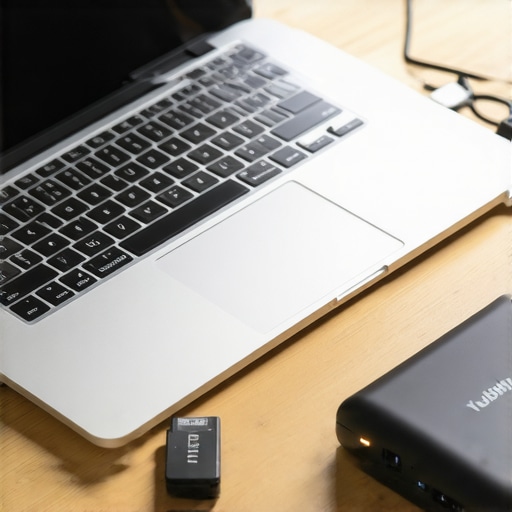
To keep this operational security from becoming a chore, I’ve automated my ‘exit strategy.’ I don’t just log out; I use a YubiKey for every single service. If a teammate leaves a session open on a shared terminal, the hardware-based 2FA ensures that session is useless the moment the physical key is pulled. For our internal network, we’ve moved past basic VPNs and onto Tailscale. It creates a private mesh network so our team can collaborate as if we’re on the same LAN, even if we’re scattered across different pods. This is vital because you’ll eventually realize that the hidden drag of slow office wi-fi on your burn rate is nothing compared to the cost of a localized data breach. We even started carrying our own travel routers to create a ‘clean’ signal when the house network feels congested.
Your hardware needs a digital bodyguard
I also swear by Krisp, an AI noise-canceling app that filters out the background clatter of a busy kitchen or a neighboring ping-pong game during my calls. It is part of the acoustics hack for crystal clear client pitches that makes us sound like we are in a high-rise executive suite when we are actually in a renovated warehouse. If you are serious about your long-term setup, you should also look into why ergonomic furniture is the best investment for your seed round. I’ve seen too many brilliant developers burn out not because of the workload, but because of the cheap chairs in a low-rent hub. We now bring our own lumbar supports to every session.
How do I maintain my team’s privacy as we grow from two people to twenty?
This is the pivot point where many startups stumble. You start in the lounge, but you eventually need a permanent base of operations. I always tell founders that the move to a dedicated desk is the extra cost worth it because it establishes a physical and psychological boundary. You can leave your secure monitors and your ‘clean desk’ protocols in place overnight. According to the NIST (National Institute of Standards and Technology) Special Publication 800-46, the security of flex-work environments depends heavily on the ‘endpoint security’ of the devices being used. As you scale, you must transition from ‘trusting the space’ to ‘trusting your stack.’ This means running a regular 10-minute audit to see if your office space is wasting money on underused rooms or insecure shared hardware.
The next era of coworking is whispered, not shouted
Looking ahead, I predict we’re going to see a massive shift toward ‘Active Acoustic Masking’ integrated into the architecture of every high-end hub. We are talking about AI-driven white noise that adapts in real-time to the frequency of human voices in the room, making it physically impossible for the person three feet away to decipher your words. It will be the end of the ‘eavesdropping’ era. Until that becomes standard, you have to be your own gatekeeper. It pays to understand scaling from 2 to 20 when to stop hot desking so you can secure a private suite before your team’s growth outpaces your security measures. Try this tomorrow: conduct a ‘ghost audit’ by walking through your meeting room after a session to see if you left a single digital or physical trace. If you did, your system needs a tune-up.
Hard Truths About Guarding Your IP in the Wild
Building in public is a popular philosophy, but leaking your internal roadmap is a business disaster. After years of bouncing between urban hubs, I’ve realized that security is a social habit, not just a software setting. It is about the discipline of not being the person who leaves a printed pitch deck in the communal printer tray and recognizing that proximity never equals trust. I once lost a week of sleep because I thought a competitor was shadowing my team; it turned out to be a harmless freelancer, but that paranoia taught me to run a 10-minute audit to see if your office space is wasting money on unsecured physical habits. You must learn how to manage office politics in a space you dont own without becoming the office recluse.
- Your company culture is defined by what you do when no one is looking—including how you wipe down whiteboards before leaving.
- A ‘free beer’ perk is never worth a localized data breach; focus on the truth about membership perks what you actually need like encrypted VLANs and acoustic privacy.
- If you constantly feel like you are whispering, it is a clear signal to stop hot-desking and move into a secure, private suite.
#IMAGE_PLACEHOLDER_E#
The Essential Toolkit for Stealthy Founders
I never enter a shared lounge without my ‘security go-bag.’ This isn’t about being a spy; it’s about being a professional guardian of your team’s hard work. I personally trust Tailscale for creating a zero-config mesh VPN that keeps our internal traffic invisible on public Wi-Fi. For the physical layer, Kensington privacy filters are non-negotiable—they turn your screen into a black void for anyone sitting at a 30-degree angle. I also recommend hardware-based MFA like YubiKeys; they are the only way to ensure a stolen password doesn’t lead to a stolen company. Finally, remember that why ergonomic furniture is the best investment for your seed round extends to your hardware setup—don’t let a ‘flex’ lifestyle compromise your team’s physical health or digital integrity.
The Future of Your Startup is Private
The magic of a shared community is the serendipity of meeting a potential partner at the coffee machine, but the longevity of your business depends on the invisible walls you build around your ideas. As you transition and start scaling from 2 to 20 when to stop hot desking, your security needs will shift from ‘don’t leave the laptop open’ to ‘how do we secure an entire satellite office?’ Don’t let the fear of a breach stop you from enjoying the high-octane energy of a coworking, conference room, startup, meeting rooms environment. Just be the founder who knows exactly where the ‘off’ switch is located. Protect your focus, protect your data, and the growth will follow.
Have you ever had a ‘close call’ where you realized a stranger was listening a bit too closely to your client pitch? Let me know in the comments below!