

I was sitting in a beanbag chair, trying to look like a successful founder, while my laptop battery died because the nearest outlet was twelve feet away across a path of networking freelancers. I’d signed up for this specific coworking space because they promised unlimited craft beer and community yoga, yet there I was, frantically searching for a place to charge my phone before a high-stakes investor call. That was the day I realized I had fallen for the perk trap. I was paying for a lifestyle I did not have time to live, and ignoring the actual infrastructure my startup needed to survive. It was a visceral lesson in professional priorities. One hour later, I was literally hiding in a hallway to get enough signal for my call, feeling the weight of every dollar I had wasted on a premium tier that offered me everything but a quiet place to work.
Stop Paying for the Kombucha Tap and Start Buying Back Your Time
We’ve all been there. You walk into a sleek, glass-fronted office and the vibe is infectious. You see the ping-pong tables and the neon signs, and you think, this is where the magic happens. But three months later, you’re still ditching the basement only to realize that free avocado toast on Tuesdays doesn’t make up for the hidden drag of slow office wi-fi on your team’s productivity. I spent a full year overpaying for a global membership just because I liked the image it projected, only to realize I never actually left my local neighborhood. My biggest mistake was prioritizing the wow factor for hypothetical clients instead of the daily grind of my actual team. I ignored the truth about free perks you never actually use and ended up with a membership that felt like a country club but functioned like a noisy airport terminal. Interestingly, a study by the Harvard Business Review found that people who belong to coworking spaces report levels of thriving that are nearly six points higher than those who work in traditional offices, but that success hinges entirely on the space actually supporting the work being done, not just the social atmosphere.
Is that all-inclusive membership really just a clever tax on your startup’s budget?
You might be wondering if you’re being cynical by questioning the value of a free gym membership or an onsite barista. You aren’t. In fact, knowing how to tell if a coworking membership is worth the price often comes down to a boring checklist of utilities, not a flashy list of amenities. If you cannot find a quiet meeting room on short notice or if your pitch deck looks better on a forty-inch screen that actually works than on your lap in a crowded lounge, the free coffee is just a very expensive distraction. Have you ever felt like you were paying for a party you weren’t invited to? I would love to hear which perk turned out to be your biggest letdown. Today, we are going to strip away the marketing fluff and look at the functional basics that actually keep your business running.
Audit your daily routine to cut the fat
The first step to escaping the lifestyle trap is to conduct a ruthless usage audit. Most founders look at a brochure and see possibilities, but you need to look at your calendar and see requirements. I remember thinking I needed a 24/7 access pass for my first dev team because I wanted us to have that late-night hacker energy. We spent an extra $1,200 a month for anytime entry, then I looked at the keycard logs three months later: nobody ever stayed past 7 PM because we all lived forty minutes away. We were essentially paying for a very expensive, empty room at night. Now, I tell everyone to learn how to save money on office amenities your team doesn’t use before they even look at the floor plan. If you aren’t using the community kitchen for networking mixers, stop paying for the tier that funds them. Focus on the square footage that actually generates revenue.
Verify the tech specs before they verify your credit card
Reliable infrastructure is the only amenity that isn’t optional. You can survive bad coffee, but you cannot survive a dropped connection during a seed round presentation. I once lost a potential partner because my screen sharing lagged so hard it looked like I was presenting a slideshow from 1995. That experience taught me to always how to vet a space for high-speed fiber before you sign the contract. Don’t just take the community manager’s word for it; run a speed test during peak hours when everyone else is also on a video call. This is where the hidden drag of slow office wi-fi becomes a financial liability. If the building doesn’t have a backup generator or a redundant internet line, it isn’t a professional office—it’s a hobby shop with expensive wallpaper.
Turn your meeting rooms into tactical assets
Stop treating your booking credits like a luxury and start using them as a strategic tool. A standard table and chairs won’t cut it when you are trying to close a deal. You need to understand the difference between a standard meeting room and a real war room. A real war room has whiteboard walls, multiple charging points, and enough acoustic privacy that the startup next door doesn’t hear your burn rate. I’ve seen teams try to brainstorm in open lounges to save credits, only to spend three hours getting nothing done because of the noise. It is much more efficient to learn how to maximize productivity in your startups conference rooms by booking short, high-intensity sprints.
Check for silence before the big pitch
If you have a high-stakes call, you cannot afford to guess if the room is soundproof. I’ve had to literally hang a ‘Do Not Disturb’ sign written in Sharpie on a glass door because the ‘private’ room I booked was right next to the communal ping-pong table. It was embarrassing and unprofessional. Before you book, you must how to vet a meeting room for acoustic privacy by standing inside while someone talks loudly in the hallway. If you can hear their conversation, your investors will hear the espresso machine during your pitch. This level of detail is what separates a successful launch from a hardware disaster. Always ensure your conference room needs better technology and fewer cables to keep the focus on your ideas rather than your IT troubleshooting skills.
The most dangerous myth circulating in the startup world is that open-plan offices ‘increase collaboration’ by default. We have all been sold the dream: a sprawling, wall-less landscape where serendipitous encounters lead to the next billion-dollar idea. In my experience, the reality is far messier. A groundbreaking study by Harvard researchers Ethan Bernstein and Stephen Turban found that when a firm transitioned to an open-plan office, face-to-face interaction actually dropped by roughly 70% as employees retreated into ‘digital cocoons’ with noise-canceling headphones. If you aren’t careful, you’re paying for a social experiment that actually hinders your team’s output. Have you ever fallen into the trap of choosing a space for the vibe, only to find it impossible to actually work? Let me know in the comments.
The open-plan lie and the privacy paradox
When everyone can see everyone, nobody talks. This is the privacy paradox. Real innovation doesn’t happen in the middle of a bustling lounge; it happens in the trenches. You need to know how to spot a toxic coworking vibe in under five minutes by looking for how many people are wearing headphones. If it looks like a silent library, your ‘collaborative’ space is failing its primary mission. The fix isn’t to force more ‘happy hours’—it is to provide more walls. Successful founders treat the role of flex space in a modern business scaling strategy as a toolkit for focus, not just a place to park a laptop. You need zones for high-intensity work and entirely separate zones for interaction.
The ‘Acoustic Trap’ that sinks million-dollar deals
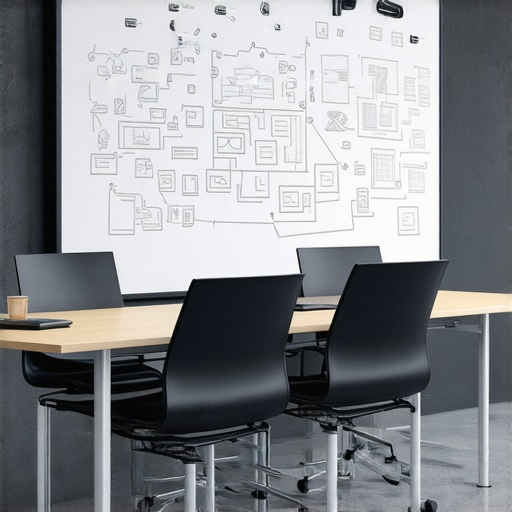
One of the most expensive mistakes you can make is assuming that all meeting rooms are created equal. I have seen founders lose momentum during a closing call because the ‘private’ room they booked had glass walls that acted like a megaphone for the kitchen noise next door. You must perform the acoustics test every conference room should pass before you trust it with your board of directors. If you can hear the muffled bass of a nearby speaker or the clinking of ceramic mugs, your room isn’t professional—it’s a liability. Learn how to manage noise complaints in a shared workspace before they impact your reputation. If the management doesn’t take soundproofing seriously, they don’t take your business seriously.
How do you measure the actual ROI of your conference room credits?
Stop looking at meeting room credits as a finite resource to be hoarded and start looking at them as a conversion tool. A room isn’t just a place to sit; it is a controlled environment for persuasion. If you use your startup success secrets choosing the perfect conference room wisely, you are booking spaces based on the psychological outcome you want. Need to dominate a negotiation? Choose the high-back chairs and the heavy wooden table. Need a creative breakthrough? Find the room with the floor-to-ceiling whiteboards. I’ve learned that the ‘free’ lounge is often the most expensive place to work because of the time lost to distractions. The nuance of how to maximize productivity in your startups conference rooms lies in matching the physical environment to the cognitive task at hand. If the room doesn’t have the tech or the silence to match your ambition, you are just renting an expensive chair.
Stop carrying a tangled nest of cables
After my battery-death disaster, I stopped relying on the ‘goodwill’ of coworking spaces and started building my own professional fail-safe kit. I learned the hard way that a startup’s momentum is only as strong as its weakest dongle. Now, I never enter a building without a dedicated travel kit that includes a high-wattage GaN charger and a redundant HDMI adapter. It sounds trivial until you’re the one person who can actually how to host a product demo that looks professional on a budget because you weren’t hunting for a cord. In fact, we realized this was such a common pain point that we looked for spaces where the infrastructure was built-in; that is why our private office suites stock extra surface pro chargers for members to eliminate those last-minute panics. If you aren’t bringing your own ‘infrastructure insurance,’ you’re leaving your professional reputation to chance.
When to finally stop hot-desking and get a real door
Scaling a team is a game of shifting priorities. What works for two founders in a lounge becomes a logistical nightmare when you hit six or seven employees. I’ve watched dozens of startups hit a productivity ceiling because they stayed in the ‘open-plan’ phase too long to save a few hundred bucks. You need to recognize the tipping point of scaling from 2 to 20 when to stop hot desking. For my team, that moment came when we realized we were spending four hours a week just coordinating where to sit so we could hear each other. That’s when we shifted to a model that prioritized the logistics of scaling a hybrid team without a corporate hq, using a dedicated suite for deep work and flex credits for our remote hires. It’s about knowing how to pick a membership tier that scales with your team without over-committing to square footage you won’t use for another six months.
How do I maintain team focus when we’re scaling like crazy?
Maintenance isn’t just about cleaning the whiteboard; it’s about preserving the mental bandwidth of your team. This requires a technical standard for your environment. According to the Cisco Wireless High Density Design Guide, hardware interference in crowded spaces can degrade signal by up to 50% if the AP placement isn’t optimized for high-capacity ‘war rooms.’ This is the technical reality behind the hidden drag of slow office wi-fi. I maintain focus by running a monthly ‘friction audit’ where we identify every small annoyance—from a squeaky chair to a flickering light. It’s also why I insist on the acoustics test every conference room should pass before we renew our booking contract for the quarter.
The future is biometric and boringly efficient
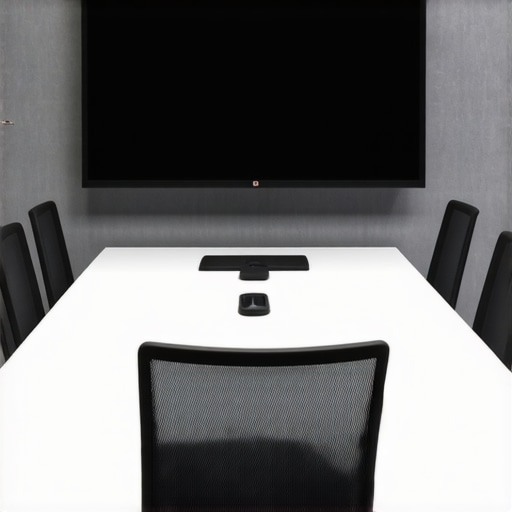
Looking ahead, the ‘cool’ factor of coworking is being replaced by invisible efficiency. I predict that by 2026, the most successful hubs will move away from community managers and toward AI-driven environmental controls that automatically adjust lighting and sound masking based on the number of people in a room. We are moving toward a ‘frictionless’ office where your biometric ID unlocks your desk, sets the monitor to your preferred height, and pre-loads your video call. This shift will make the future of conference rooms in startup ecosystems look less like a coffee shop and more like a high-performance lab. My advice? Stop looking for the neon signs and start looking for the building that invests in its backbone. **Your task for this week:** Take your next three ‘important’ internal meetings and move them from the lounge to a booked room with a door. Measure the difference in actual output; you’ll never go back to the beanbags.
Hard-won truths from a founder who overpaid for neon signs
After four startups and a dozen different office configurations, I have realized that the ‘vibe’ is often a mask for poor utility. I spent years thinking a trendy address would attract talent, but high performers actually care more about whether they can find a quiet place to think. First, the true cost of free coffee is usually paid in the time you lose standing in line when you should be prepping for a demo. Second, your team will never tell you they are distracted; they will just produce less. If you do not provide a sanctuary for deep focus, you are effectively taxing their intelligence. Finally, I learned that why membership flexibility is more important than square footage because your needs will likely change every six months. Never lock yourself into a configuration that cannot grow at the pace of your revenue.
My go-to assets for a distraction-free workday
Building a professional presence on a budget requires a few key tools that I never leave home without. 1. The GaN Fast-Charger: This is non-negotiable for avoiding the ‘dead battery’ panic I experienced early in my career. 2. Cal Newport’s ‘Deep Work’: This book is the ultimate manual for surviving the noise of a startup environment and reclaiming your schedule. 3. A high-quality digital speed test: I always check the latency before I even unpack my laptop to avoid a video call disaster. 4. A curated room checklist: Before any major pitch, I run through the checklist for a boardroom that doesnt feel like a hospital to ensure the environment matches the prestige of my brand. Using these simple assets has saved me more money than any membership discount ever could.
Trade the trendy aesthetic for actual business velocity
Your business is too important to be treated like a social club. When you stop chasing the lifestyle and start prioritizing the functional infrastructure, your team’s output will skyrocket. Whether you are searching for the how to choose the perfect conference room or just a quiet corner to write code, choose the space that respects your time. Don’t be afraid to how to manage office politics in a space you dont own by setting clear boundaries with the community staff. Professional coworking should be a tool for your success, not a distraction from it. Success isn’t about where you sit; it’s about the quality of the work you produce while you are there. Have you ever realized halfway through a membership that you were paying for perks you never actually used? Let me know your biggest ‘perk trap’ in the comments below.