
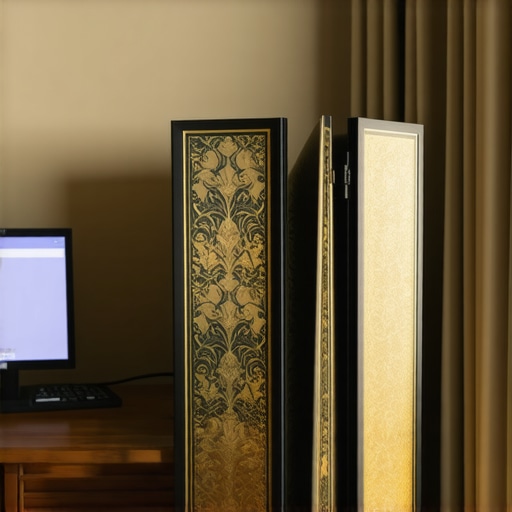
I remember the day I finally landed a meeting with a potential seed investor. I was sitting in my cramped studio apartment, the only place with decent Wi-Fi. Five minutes before the call, I toggled on a ‘chic office’ virtual filter. Halfway through my pitch, I leaned forward to show a prototype, and the software glitched. For three agonizing seconds, the investor didn’t see my slide; they saw a leaning tower of pizza boxes and a drying rack full of socks. It was the ultimate ‘garage startup’ cliché, but not the cool kind. I learned the hard way that the cost of a bad first impression is real. My pitch felt amateur, and I spent the rest of the call sweating, wondering if they were still thinking about my laundry. 
Stop Relying on Shimmering Software Edges
We’ve all seen it: that weird halo effect where someone’s ear disappears into a fake Parisian cafe. It’s distracting. More importantly, it signals that you’re hiding something. When I first started scaling my business, I thought I could fake a professional environment forever. I even bought a cheap green screen that eventually collapsed mid-call, nearly knocking over my monitor. It was a mess. That’s when I realized that the real reason your team is suffering from zoom fatigue might actually be the mental energy spent maintaining these digital facades. I decided to pivot toward physical solutions that actually looked intentional instead of just covering up the chaos.
Is a physical backdrop really worth the extra effort?
You might be thinking, “I don’t have space for a studio.” I felt the same way until I saw how much it changed my confidence. Research suggests that a cluttered environment can actually decrease your focus and increase stress levels. According to a study by the Princeton University Neuroscience Institute, multiple visual stimuli in the field of view compete for neural representation, which means your messy background is literally stealing your brain power. If your background is a mess, you aren’t just distracting your client; you’re distracting yourself. I started by looking for a perfect conference room for business success, but quickly learned how to replicate that clean look at home. Have you ever had your virtual background glitch and reveal a secret mess? Share your most embarrassing story in the comments! Today, I’m going to show you exactly how to curate a space that looks like a million bucks without clicking a single blur button.
Kill the shadows and light your face like a pro
The biggest mistake people make is thinking a high-resolution camera will fix a dark room. It won’t. In fact, a 4K camera in low light just creates more digital ‘noise.’ You need light hitting your face from the front, not behind you. If you sit with a window at your back, you’re just a silhouette in a witness protection program. I learned the lighting trick that makes your product demo look expensive by simply positioning two soft lamps at 45-degree angles in front of my desk. It eliminates the harsh shadows under your eyes that make you look like you haven’t slept since your seed round. 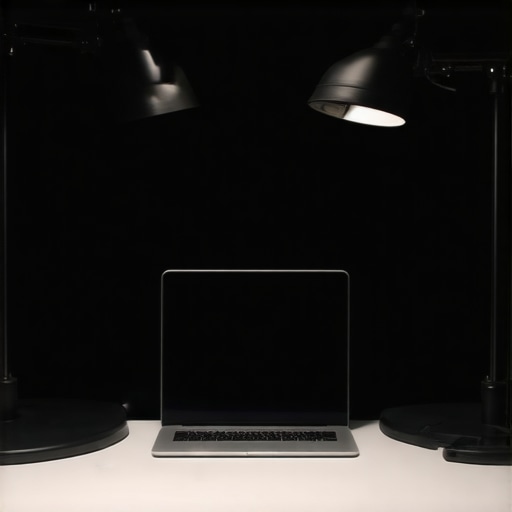
Why front-loading light beats any software filter
Software filters try to artificially brighten your skin, but they often lead to a ‘plastic’ look. Real light provides natural shadows that give your face dimension. When I finally stopped relying on my overhead ceiling light and invested in a basic key light, my engagement on calls skyrocketed. People could actually see my expressions, which is vital for building trust. If you’re struggling to make an impact, check out why your pitch deck won’t save you from a noisy meeting space—lighting and sound are the invisible pillars of your authority.
Stop sounding like you are in a tiled bathroom
I once had a breakthrough call with a potential CTO while I was working out of my new apartment. The room was empty, save for a desk. Every time I spoke, my voice bounced off the walls like a racquetball. The candidate actually asked if I was calling from a hallway. It was embarrassing and made my ‘growing startup’ look like a hollow shell. Audio is 50% of the video experience. If it’s bad, people tune out. I realized that the acoustics hack for crystal clear client pitches isn’t about expensive mics; it’s about breaking up flat surfaces. Throw down a rug, hang some curtains, or even just lean some cushions against the wall behind your monitor.
The soft-surface rule for better audio
Hard surfaces are the enemy of clear communication. If you’re in a room with glass walls or hardwood floors, your voice will sound thin and distant. This is why many founders find that ditching the basement for a space with proper acoustic treatment is the only way to sound like a leader. You want your voice to sound ‘dry’—meaning no echo—so that every word of your pitch carries weight.
Ditch the flat wall for actual depth
Sitting directly against a white wall makes you look like a mugshot. You need ‘negative space’ behind you to create a professional field of vision. When I moved into my first real office, I made sure to pull my desk three feet away from the wall. This allowed me to place a plant and a bookshelf in the background, which provided depth and personality. It’s a small change, but it stops you from looking like a cardboard cutout. If your current environment feels stale, consider why boring office furniture is draining your teams creative energy and how a few tactical pieces can change the entire vibe. Eventually, you might find that the move from a garage to a flex office is the ultimate shortcut to getting that polished, multi-dimensional look without the DIY headache.
I used to think that the ultimate sign of ‘making it’ was a silent, mahogany-row office. But I’ve learned that why investors prefer meeting in a high-energy hub over a quiet cafe comes down to the psychological transfer of momentum. If your space feels dead, your company feels dead. Most people get this wrong—they think ‘professional’ means ‘clinical.’ In reality, the truth about productivity in a room full of total strangers is that the low-level hum of other people working actually creates a ‘social facilitation’ effect. A famous study published in the Journal of Consumer Research found that a moderate level of ambient noise (around 70 decibels) enhances performance on creative tasks compared to a low-noise environment. If it’s too quiet, your brain fixates on every tiny distraction, from a clicking pen to your own heartbeat. This is why I now look for spaces with life in them, as long as that life doesn’t turn into a chaotic circus during my quarterly reviews. But here is the trap: the ‘vibe’ can’t replace the ‘bones.’ I’ve seen founders fall for beautiful spaces that are functional nightmares. Before you sign anything, you have to know how to pick a meeting room that doesn’t smell like old carpet or, more importantly, one that doesn’t leak sound like a sieve. I once hosted a sensitive strategy session in a ‘private’ suite only to realize the ventilation duct was shared with the kitchen; we could hear every word of the janitor’s lunch conversation. It’s why how to vet a meeting room for acoustic privacy before booking is a skill every CEO needs. You have to physically step into the room and test the echoes before the client arrives. 
How do you protect trade secrets when the walls have ears?
The most advanced mistake you can make is assuming that a door equals security. In a shared environment, your biggest risk isn’t a hacker—it’s the person at the next desk with a good pair of ears. You need to learn how to keep your startups trade secrets safe in a public lounge by using directional speakers or simply being aware of your surroundings during your most sensitive calls. Another nuance involves physical space: why your team is more creative in a room with high ceilings isn’t just about ‘feeling’ good; it’s about the Cathedral Effect—a psychological phenomenon where vertical space promotes abstract thinking. If you’re grinding on spreadsheets, a low ceiling is fine. If you’re brainstorming your next pivot, get some vertical room. Also, watch out for ‘free’ bait. the hidden cost of free coworking trials you should watch for often includes aggressive data harvesting or locking you into an inflexible contract before you’ve even tested the Wi-Fi. Finally, always verify the tech. How to find a conference room that actually has working adapters should be your first priority, not your last. If you can’t present your deck because of a missing HDMI-to-USB-C dongle, the fancy espresso machine won’t save your reputation. Have you ever fallen into this trap where the aesthetic looked great but the infrastructure failed you? Let me know in the comments!Experience has taught me that a great setup is a depreciating asset if you don’t maintain it. I used to think that once the lights were up and the camera was focused, I was set for life. Then, a firmware update on my mirrorless camera bricked my feed five minutes before a quarterly review. I realized then that why a basic warranty wont save your startup from a hardware disaster is a lesson best learned before the screen goes black. Now, I run a ‘Tech Sunday’ audit every week. I check cable tension, update my audio interface drivers, and wipe the dust off my lens. If you are scaling, you need a system that doesn’t rely on luck. I eventually moved to a Sony ZV-1 mounted on a permanent desk arm because I tired of the ‘potato’ quality of built-in webcams. It’s a dedicated tool for a dedicated professional.
The software stack that acts as my invisible producer
Hardware is only half the battle; the logic layer is where the magic happens. I swear by an app called Krisp to kill background noise, especially when I’m working from a vibrant hub. It’s the only way to ensure how to maximize productivity in your startups conference rooms isn’t derailed by a nearby espresso machine. I also use a Stream Deck to toggle my ‘Mute’ and ‘Camera’ icons. Touching your mouse to find a tiny button during a high-stakes pitch makes you look frantic. Physical buttons make you look in control. I’ve seen founders lose the room because they were fumbling with settings, and I’ve seen the data recovery move that saved a members pitch deck at the last minute simply because they had a redundant backup drive plugged into their hub. Reliability is a feature, not an afterthought.
How do I keep this setup from falling apart over the long haul?
Maintenance is about more than just dusting. It’s about environment. If you’re in a shared space, you have to how to vet a workspaces internet speed before you pay a dime every time you move desks. Wi-fi congestion changes throughout the day. I carry a 10-foot Ethernet cable in my bag because a hardline is the only way to guarantee zero packet loss during a demo. According to the Shure technical documentation on ‘Microphone Techniques for Speaking,’ maintaining a consistent distance from the capsule—ideally 6 to 12 inches—is the only way to avoid the ‘proximity effect’ that muddies your professional tone and makes you sound muffled. I keep a small piece of tape on my desk to mark exactly where my chair should be for the best audio capture. 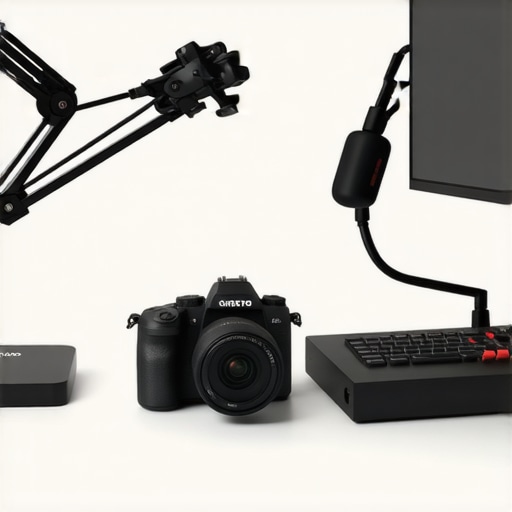
The future of the professional startup workspace
Looking ahead, the ‘Zoom-box’ look is going to feel like a relic of 2020. I predict we are moving toward spatial audio and ‘eye-contact’ AI as the new standards. We are already seeing tools that use neural networks to redrawing your pupils so it looks like you’re looking at the camera even when you’re reading your notes. While it sounds creepy, it’s about reducing the cognitive load on the person listening to you. If you want to stay ahead, stop thinking about ‘video calls’ and start thinking about ‘presence.’ This is why why ergonomic furniture is the best investment for your seed round—if you aren’t comfortable, you can’t project presence. I challenge you to pick one piece of your current setup—your lighting, your mic, or your background—and upgrade the maintenance routine for it this week. Don’t wait for a glitch to tell you it’s broken.
Hard Truths I Learned While Building My Setup
Reflecting on those early days, I realized that faking a professional environment is twice as exhausting as simply building one. One of the most significant shifts in my mindset occurred when I stopped viewing my workspace as just a place to sit and started seeing it as a performance tool. I learned that consistency is the enemy of the ‘garage’ amateur; your background shouldn’t change every time you move your laptop. I also discovered that people respect authenticity over a perfect digital filter. If you have a shelf, let it be a real shelf with real books. Before you spend another dollar on gear, I recommend performing a quick office space audit to see where your environment is actually failing you. The goal isn’t to look like a news anchor; it’s to look like a founder who has their life—and their business—under control.
Tools That Keep My Presence Professional and Seamless
I’ve tested dozens of gadgets, but a few have become non-negotiable for my daily workflow. First, I never rely on the built-in microphone of any laptop; even a mid-range USB mic changes the authority of your voice instantly. Second, I always prioritize investing in ergonomic furniture because physical discomfort is the fastest way to lose focus during a negotiation. For software, I stick to tools that automate my lighting and noise suppression so I can focus on the person on the other side of the glass. When I need to step out of the home office, I look for innovative meeting rooms that spark ideas rather than just providing a desk. These are the spaces where the environment does the heavy lifting for you, allowing your creativity to take center stage.
Own the Space Where Your Big Ideas Live
Your workspace is a physical manifestation of your startup’s ambition. Whether you are still working from a corner of your bedroom or you are scaling your team into a dedicated suite, the intentionality you bring to your surroundings will be felt by every client and investor you meet. Don’t be afraid to start small—fix the lighting today, the audio next week, and the background the week after. Evolution is better than a botched ‘perfect’ launch. You deserve a space that supports your mission rather than one you have to constantly hide. What is the one thing in your current setup that consistently annoys you during important calls? Let me know in the comments and let’s find a fix together!