

I found myself staring at the little green light on my laptop for the seventh hour in a row, and I realized I couldn’t remember a single thing my lead developer had said since lunch. My brain felt like it had been scrubbed with sandpaper. I’d spent months telling my team that we were “crushing it” from our dining tables, but the truth was much uglier. We weren’t just tired; we were becoming ghosts of the collaborators we used to be. I made the mistake of thinking a faster internet connection or a better webcam would fix the drain. I even told everyone to stop letting bad lighting ruin their video calls, thinking aesthetics were the issue. I was dead wrong.
The hidden tax of the digital mirror
The real reason your team is hitting a wall isn’t the workload. It’s the unnatural cognitive load of processing non-verbal cues through a 13-inch window. When we’re in a room together, we don’t stare at each other’s faces from two feet away for eight hours. According to research from the Stanford Virtual Human Interaction Lab, the “constant self-view” during video calls acts as a significant stressor, forcing us to constantly monitor our own behavior in a way that never happens in person. It’s like walking around all day with someone holding a mirror in front of your face. You can’t help but critique your own expressions, which is mentally taxing. This is exactly why physical collaboration still beats video calls for most high-stakes projects. I’ve seen teams go from burnout to breakthrough just by changing the environment.
Is Zoom fatigue actually a real thing?
You might be thinking this is just a buzzword for people who want to slack off. I thought so too, until I noticed our turnover rate creeping up and our creative sparks disappearing entirely. We were technically “present,” but we weren’t connected. If your hybrid team is still failing at internal communication, it’s likely because you’re trying to force high-level brainstorming through a medium meant for quick status updates. Have you noticed your team’s energy plummeting the second the “Join Meeting” notification pops up? Today, I want to share how we can break this cycle. We’re going to look at why shifting to a dedicated environment—even just for the big stuff—can save your team’s sanity. We need to stop your team from hating hybrid meetings by focusing on the physical space rather than just the software settings.
Build a physical anchor for your sanity
To fix a fragmented culture, you have to move beyond the screen. The first step is acknowledging that your startup needs a physical anchor to ground your remote operations. Without a home base, your company culture is just a series of Slack notifications. I realized this during a particularly brutal week when my team couldn’t agree on a single UI change. We were all looking at different screens, literally and metaphorically. We needed a space where the whiteboard was the focal point, not a cursor on a shared screen.
Stop paying for empty desks
One of the biggest hurdles for small teams is the cost of space, but the old way of thinking—signing a five-year lease—is dead. We survived by pivoting our strategy. We stopped paying for square footage we never used and started investing in targeted, high-impact rentals. Instead of an empty office that gathered dust while everyone worked from home, we booked intense sessions in professional hubs only when we needed the collective brainpower. This shift from ‘space as an overhead’ to ‘space as a tool’ saved our budget and our focus.
Turn a standard room into a war room
When you book a space, don’t just look for a place to sit. You need tools that enable fast decisions. There is a massive difference between a standard meeting room and a real war room. A war room has the tech to support your flow, not hinder it. Last month, I took my lead developer to a local hub because we were stuck on a complex database migration. In a room with floor-to-ceiling whiteboards and a high-resolution display, we solved in two hours what had eluded us for two weeks on Zoom. This is why we swapped Slack for physical brainstorming sessions for anything that requires high-level logic. 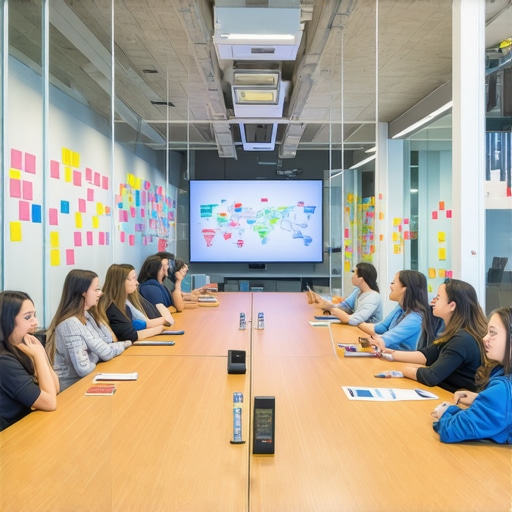
Maximize the four-hour window
Energy is a finite resource. When you bring the team together, you have to maximize productivity in your startup’s conference rooms immediately. We found that the sweet spot is a four-hour block. Anything longer, and the mental fatigue starts to creep back in. You can actually get more done in four hours than a full home day if the environment is curated for focus. I remember our first session after the pivot; I once booked a room that turned out to be little more than a converted closet. We were literally shoulder-to-shoulder, and the Wi-Fi kept dropping. But you know what? We still got more done in those cramped three hours than we had in the previous three weeks. The proximity forced us to stop hiding behind our ‘professional’ avatars and actually deal with the technical debt we’d been avoiding.
Audit your calendar before you book
Before you rush to find a space, look at your weekly schedule. Most of what we do can stay remote, but high-stakes decisions shouldn’t. If you’re trying to handle high-stakes board meetings in a shared building, you need to ensure the environment is secure and quiet. We once tried to host a delicate investor pitch in a room with paper-thin walls; I spent more time worrying about the neighbors hearing our burn rate than I did on the pitch itself. It’s vital to ensure the space can pass the acoustics test before you commit your time and reputation to the session.
The shiny object trap that kills startup productivity
Everyone tells you that to attract Gen Z talent or keep a ‘startup culture’ alive, you need a space with a craft beer tap and a rooftop terrace. I call BS. In fact, after touring dozens of hubs, I’ve found that the more time a space spends marketing its social calendar, the less work actually gets done inside its walls. We often fall for the truth about free perks you never actually use because they look great on Instagram, but they do nothing for your bottom line. The ‘oops’ factor here is simple: founders often tour the lobby and the kitchen but forget to sit in a workstation for an hour during peak time. If you can hear a sales guy ringing a gong every time he closes a lead while you’re trying to debug code, you’ve picked the wrong room. I’ve realized that understanding how to pick an office that fits your startup’s growth pace isn’t about the square footage; it’s about the environmental flexibility to shut the world out.
Can you really keep your trade secrets safe in an open-plan office?
This is the advanced question most founders ignore until a competitor mentions their ‘secret’ roadmap at a networking event. It is a massive risk. You need to know how to keep your startup’s trade secrets in an open office, which often involves more than just a privacy screen. It’s about the culture of the building itself. According to a study by Oxford Economics, noise and a lack of privacy are the biggest obstacles to employee productivity, with over 53% of workers reporting that being able to focus without interruptions is their top priority. If your team is constantly looking over their shoulders or whispering because they’re afraid of being overheard, they aren’t innovating; they’re defensive. This shift in mindset is central to the logic of choosing a flex office over a 5-year lease; you aren’t just saving money, you’re buying the ability to adapt your environment to the specific sensitivity of the task at hand. 
Why your developers actually hate the ‘fun’ office vibe
We’ve all seen the developers who wear noise-canceling headphones like armor. That isn’t a stylistic choice; it’s a survival mechanism. This is why developers need quiet zones to reach deep flow—a state that takes roughly 23 minutes to enter but only seconds to shatter. When you choose a space based on the ‘vibe’ rather than the acoustic engineering, you are effectively taxing your team’s cognitive energy. I’ve learned the hard way that you should learn how to spot a toxic coworking vibe in under five minutes by looking at the density of those headphones. If everyone is plugged in and looking stressed, the ‘community’ the sales rep promised you is actually a distraction factory. You aren’t paying for a desk; you are paying for the absence of interruptions. If the community is too loud, it’s not an asset—it’s a liability to your engineering velocity. Have you ever fallen into this trap of choosing aesthetics over actual work-flow? Let me know in the comments.
Forget the gadgets and fix the friction
It’s easy to get sucked into buying the latest five-hundred-dollar noise-canceling headphones for everyone, but the hardware is just a band-aid. If your core problem is a lack of focus, you need to look at the physical friction in your workflow. I stopped looking for ‘cool’ spaces and started looking for utility. For instance, why your conference room needs better technology and fewer cables is about more than just aesthetics; it’s about reducing the ‘activation energy’ required to start a deep-work session. Every minute spent toggling an HDMI adapter is a minute of cognitive momentum lost. I now swear by rooms that use dedicated ‘one-touch’ join systems like Logitech Tap or Zoom Rooms. It sounds like a minor detail until you realize it saves your lead dev from a rage-induced migraine every Tuesday morning.
How do I keep this hybrid momentum from fizzling out?
The secret to long-term success isn’t just booking a desk; it’s about how to turn a 1-hour room rental into a long-term partnership. You need a space that grows with you. I recommend doing a quarterly ‘environment audit.’ If your team has grown by three people, that four-person glass box you love is now a greenhouse. You have to understand how to choose an office that supports your scaling speed without getting locked into a bad deal. We maintain our sanity by using a ‘flex-first’ approach, treating the role of flex space in a modern business scaling strategy as a variable expense rather than a fixed burden. This allows us to pivot from a two-person war room to a twenty-person strategy suite in a single afternoon. 
The suburban pivot is closer than you think
Looking ahead, the ‘downtown or bust’ mentality is dying. I’m seeing a massive shift where why suburban flex spaces are the new downtown office becomes the dominant narrative for 2026. Founders are realizing that talent doesn’t want to commute ninety minutes to sit in a glass tower. They want professional hubs five minutes from their house. According to the International WELL Building Institute (IWBI), the impact of localized, high-quality lighting and air filtration can improve cognitive performance by up to 26%. That’s a bigger ROI than any software subscription you’ll ever buy. To maximize productivity in your startup’s conference rooms, you need to meet people where they are, not where the 1990s told us they should be. If you want to scale without losing your soul, stop thinking about real estate and start thinking about human optimization. Here is my tip: next time you book a room, ask for the ‘average decibel level’ during peak hours. If they can’t tell you, they aren’t managing the space; they’re just renting floor.
Hard Lessons from the Front Lines of Hybrid Work
After years of navigating the digital-first landscape, I’ve realized that the real cost of working from your dining table is often measured in lost momentum rather than just saved rent. One thing that became clear is that silence isn’t just a preference—it’s a high-value asset that requires protection. You simply cannot expect deep technical breakthroughs while household chores are humming in the background. I also discovered that culture isn’t built through scheduled virtual happy hours; it’s a byproduct of shared experiences and immediate feedback. To maintain that creative spark, I now prioritize the art of the perfect office tour for your latest new hires because if the physical environment doesn’t reflect your company’s values on day one, the team culture will eventually start to fray at the edges.
#IMAGE_PLACEHOLDER_E#
The Resources That Grounded My Growing Startup
I don’t believe in filling an office with gadgets, but I do believe in intentional utility. To keep our team sharp, I rely on a few specific resources that bridge the gap between remote flexibility and physical focus. First, Cal Newport’s Deep Work is essential reading; it perfectly explains why finding coworking spaces that offer dedicated quiet zones is non-negotiable for engineering velocity. For logistics, we use a strict vetting process to understand how to choose the perfect conference room for business success. This prevents the “activation friction” of rentals that lack the right infrastructure. These tools have become our anchors whenever the digital world feels too fragmented.
Your Next Breakthrough Needs a Proper Room
It is time to stop letting your team’s creative energy drift away in a sea of mute buttons and pixelated screens. Reclaiming your focus and your culture starts with a single decision to step out of the domestic routine. By providing a dedicated, professional environment, you are signaling to your team that their mental energy is worth the investment. If you are ready to make the jump but aren’t sure which path to take, you can always contact us to chat more about what works for scaling teams. The future of your startup isn’t just in the cloud; it’s in the rooms where you come together to solve the hard problems face-to-face. Have you ever felt your best ideas were being suffocated by a video call? Let me know in the comments below.