

I was leaning into my laptop, sweat beading on my forehead, trying to explain a complex quarterly projection to a client while a group of ‘disruptors’ at the next table argued over the best roast of coffee at roughly the volume of a jet engine. That was the day I realized that the vibrant energy of a downtown hub is a double-edged sword. I had tried to host a high-stakes call in the open lounge—a massive mistake I still cringe about today—and the background clatter made me look like an amateur. If you have ever felt that rising panic as the communal blender starts up just as you start your pitch, you know exactly what I am talking about. Today, I am going to share my personal map for finding those elusive pockets of peace so you can actually get work done without losing your mind.
Stop Fighting the Noise and Start Hunting for Silence
We often buy into the idea that we can just ‘power through’ the distractions, but the reality is much harsher. A famous study by the University of California, Irvine, found that it takes an average of over 23 minutes to fully regain focus after a single interruption. That is a lot of wasted time. My biggest early mistake was thinking that a pair of noise-canceling headphones could solve everything. It does not. You need physical barriers. When I finally stopped trying to force the open-plan layout to work for me, I discovered that most hubs have ‘dead zones’ that nobody uses. Whether it is a back-corner nook or knowing how to book a meeting room at the perfect low-traffic hour, there is an art to this. Understanding the truth about shared office noise levels is the first step toward reclaiming your productivity.
Is a quiet space even possible in a hub built for networking?
Many people worry that if they hide away for some peace, they are missing out on the very reason they joined a coworking space. I used to fear that too. But I have found that why developers need quiet zones to reach deep flow applies to all of us—you cannot network effectively if your brain is fried from sensory overload. Sometimes why your sales calls need a private phone booth becomes obvious only after you have lost a lead due to poor acoustics. Have you ever had a moment where you felt like the loudest person in the room just for breathing too heavy on a Zoom call? It is a terrible feeling. We are going to look at how to vet these spaces before you sit down, ensuring you never have to deal with managing noise complaints or awkward shushing ever again. Setting the stage for deep work starts with the right environment, and I am here to help you find it.
Scout the Layout Before You Open Your Laptop
Think of a coworking space like a campsite; you do not just pitch your tent in the first flat spot you see. You look for high ground and protection from the wind. In a hub, the ‘wind’ is the foot traffic near the coffee machine and the main entrance. I have learned that the secret to getting the best seat in a shared space often involves arriving twenty minutes early to identify the ‘shadow zones.’ These are areas where the acoustics of the building naturally dampen sound—usually behind large pillars or in mezzanine levels. When you find one of these, you can often how to get more done in four hours than a full home day because the visual and auditory triggers that break your focus are physically blocked. I once spent three hours tucked behind a vertical garden wall, and it was the most productive session I had all month because nobody could see me to strike up a ‘quick’ conversation.
Turn a Standard Meeting Room Into Your Personal War Room
When the open floor becomes too much, you need a sanctuary. The mistake most startups make is using a conference space for everything from casual chats to board meetings without changing the setup. You need to understand the difference between a standard meeting room and a real war room. A war room is configured for high-intensity execution, not just sitting and talking. If you are prepping for a launch, clear the table of everything except the essentials. I remember a messy product launch where we tried to coordinate from a lounge area; we lost three hours just trying to hear each other. Now, I use a specific protocol: I master how to book a meeting room the night before so we can hit the ground running at 8:00 AM sharp.
Pass the Acoustics Test Every Single Time
Before you commit to a room for a high-stakes call, perform a quick clap test. If you hear a sharp, metallic echo, your client will hear it too, and it will make you sound like you are calling from a bathroom. The acoustics test every conference room should pass is simple: record a ten-second voice memo on your phone and play it back. If it sounds hollow, move. I once ignored this during a pitch, and the investor spent half the time asking me to repeat myself because of the room’s reverb. It was a disaster. 
Why Your Meeting Room Needs to be More Than Just a Table
Modern work requires more than four walls and a slab of wood. You need to ensure why your conference room needs better technology and fewer cables. If you spend fifteen minutes fiddling with a Dongle, you have already lost the momentum. I always check the tech stack before I invite a guest. This is essential because why your meeting room needs to be more than just a table becomes clear when you need to brainstorm on a digital whiteboard or run a seamless hybrid demo. For my last big project, I followed the checklist for a glitch-free product launch event, and having a dedicated, tech-ready space was the only reason we didn’t crash during the live stream. Stop settling for whatever room is empty and start choosing the room that actually supports the task at hand.There is a pervasive myth in the startup world that ‘bigger is better’ when it comes to booking conference space. You want to look like a unicorn, so you book the twelve-person boardroom for a three-person strategy session. In my experience, this is a massive tactical error. When you have too much empty space, the psychological impact is profound—it creates a sense of distance and formality that stifles the raw, messy energy needed for a pivot. It is actually one of the main reasons why your meeting room layout is killing participation. A study published in the Journal of Environmental Psychology suggests that physical proximity directly influences social cohesion; too much space literally leads to ‘social loafing’ where participants disengage and let others do the heavy lifting. The ‘oops’ factor I see most often is the obsession with ‘cool’ over functional. Founders will pick a room because it has a vintage arcade machine in the corner, but they forget to check if there is a window. I have written before about why a windowless office is killing your teams creative output. Natural light isn’t just a perk; it is a cognitive fuel. If you are locked in a fluorescent-lit box for six hours, your team’s decision-making quality will plummet by mid-afternoon. Have you ever fallen into this trap? Let me know in the comments.
Professionalism is More Than Just a Clean Desk
Another nuance people miss is the ‘investor optics’ of the space. While you might think a casual lounge shows off your ‘disruptor’ culture, most investors prefer meeting in professional settings where they know their confidential feedback won’t be overheard by a stranger. You need to know how to choose the perfect conference room for business success based on the specific personality of your guest. If they are old-school finance, a glass-walled box in a noisy hub might feel chaotic rather than ‘vibrant.’
Does Your Room Layout Stifle Team Participation?
The arrangement of chairs is more than just furniture; it’s a communication hierarchy. A long rectangular table naturally puts one person at the ‘head,’ which is great for a lecture but terrible for a brainstorm. For true innovation, I always look for innovative meeting rooms that boost startup creativity by utilizing circular setups or standing-only zones. If you’re managing a remote-heavy crew, you also need to address how to stop your team from hating hybrid meetings by ensuring the camera angle doesn’t make the remote folks feel like they are just ‘spying’ on a room they aren’t actually in.  Finally, don’t overlook the boring stuff. I have seen million-dollar deals stumble because of a faulty HDMI cable or a membership that didn’t allow for an extra hour of buffer time. Make sure you know how to pick a membership that scales with your teams size so you aren’t hit with overage fees or kicked out of a room just as the negotiation gets interesting. Success in a shared space is about mastering these invisible layers of friction.I have learned the hard way that you can have the most expensive membership in the city and still fail your clients if your personal ‘tech stack’ is flimsy. When I walk into a hub, I treat the provided hardware as a bonus, not a guarantee. My secret weapon is a portable omnidirectional speakerphone—specifically the Jabra Speak 710. I use it because its spatial audio mimics a real person’s presence in the room, which is crucial when you are trying to stop your team from hating hybrid meetings. It bypasses the often-clunky built-in mics found in standard rooms and ensures your voice doesn’t sound like it is coming from a tin can. According to the technical guidelines from the USB-IF (USB Implementers Forum), utilizing certified USB-C 3.2 cables for your display connections is non-negotiable if you want to avoid the ‘flicker of death’ during a screen share; I always carry my own gold-plated cables because why your pitch deck looks better on a forty-inch screen than a laptop only matters if the screen actually stays on.
How do I maintain a high-performance meeting culture as we scale?
Maintaining quality as you grow from a duo to a team of ten requires a shift from ‘winging it’ to a defined protocol. I suggest a 5-minute ‘pre-flight check’ before every booking. We check the Wi-Fi speed, verify the camera angle, and ensure the lighting doesn’t make the CEO look like a silhouette. This discipline is essential for how to maximize productivity in your startups conference rooms. Over time, these habits become second nature, preventing the slow slide into mediocrity that kills many remote-first cultures. If you are struggling with consistency, it might be time to look at the logistics of scaling a hybrid team without a corporate HQ to see how other founders manage the friction of shifting spaces. 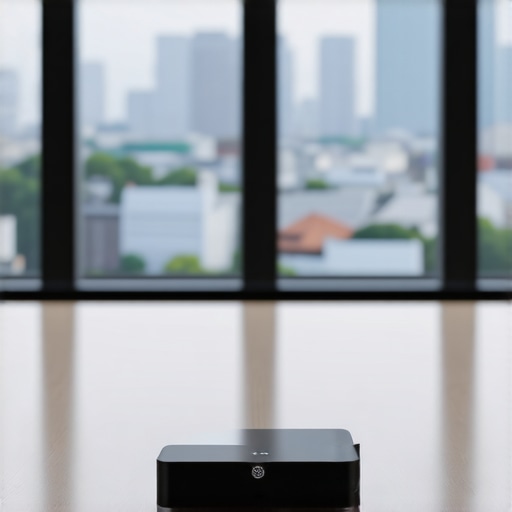
The Rooms of 2030 Won’t Just Be Spaces; They Will Be Teammates
Looking ahead, I predict a massive shift toward ‘active’ meeting environments. We are moving away from passive boxes and toward spaces equipped with AI-driven acoustic dampening and automated lighting that adjusts based on your heart rate or the tone of the conversation. The future of conference rooms in startup ecosystems is bright, but it will require founders to be more tech-literate than ever. We are already seeing innovative meeting rooms that boost startup creativity by using haptic feedback and immersive projections. To stay ahead, start by implementing a ‘zero-cable’ policy in your current sessions—if it can be done wirelessly and reliably, do it. My challenge to you this week: Perform the ‘clap test’ and the ‘voice memo playback’ in the next three rooms you book. You will be shocked at which ones actually support your professional image and which ones are just pretty boxes. Knowing how to choose an office that supports your scaling speed starts with these small, technical audits.
Lessons the Noise Taught Me About Deep Work
Reflecting on my years in the trenches of shared offices, the biggest revelation wasn’t about the furniture; it was about the boundaries. I stopped equating ‘being seen’ with ‘being productive.’ The lounge is fantastic for networking, but it is the enemy of deep execution. I also learned that how to tell if a coworking membership is worth the price often comes down to the quality of the ‘quiet zones’ rather than the craft beer on tap. Finally, I realized that professionalism is a choice you make every morning by vetting your environment before you even unzip your laptop bag. It’s about creating a fortress around your focus so that your best work can actually surface.
My Personal Arsenal for Professional Presence
I don’t leave my professional image to chance anymore. I rely on a few specific resources to keep my standards high. First, I always keep the exact checklist for vetting a high-stakes board room saved on my phone; it has saved me from embarrassing tech failures more times than I can count. For strategic planning, I follow the principles in how to choose the perfect conference room for business success to ensure the physical space matches the gravity of the meeting. These tools aren’t just ‘nice to have’—they are the infrastructure of a modern startup founder who refuses to look like an amateur.
Transform Your Next Session into a Victory
You have the map and the technical tactics to navigate even the loudest hub. Now, it is your turn to take command of your professional presence. Don’t let the background noise of others’ dreams drown out the execution of your own. By mastering these invisible layers of friction and knowing how to maximize productivity in your startups conference rooms, you set yourself apart from the crowd. Go out there, find your pocket of peace, and make it happen. Have you ever had a high-stakes deal fall through because of a technical glitch or noise issue in a shared space? Let me know in the comments below.