

I’ll never forget the sound of my pen hitting the desk in Meeting Room B. It was early last year, and the silence was heavy. Just three months prior, we were a bustling crew of fifteen, high on seed funding and dreams of disruption. Then the market shifted. Suddenly, it was just me and my co-founder, sitting in a private suite designed for twenty. Every morning, I’d walk past those empty desks, and all I could see were dollar signs draining from our remaining runway. I felt like a failure, not just because of the layoffs, but because I’d locked us into a premium contract that didn’t care about our pivot. I made the classic rookie mistake: I prioritized status over flexibility, and now the walls were closing in. Have you ever felt that empty desk dread while looking at your monthly invoice?
The Day I Realized My Office Lease Was Eating My Startup Alive
We’ve all been there. You sign a deal when things are booming, convinced that scaling from 2 to 20 is an inevitability. But when the team shrinks, that collaborative environment starts to feel like an expensive museum. Negotiating a coworking contract while you’re feeling vulnerable is terrifying. I spent weeks avoiding the community manager because I thought my only options were to keep paying or break the lease and lose my deposit. I was wrong. Today, we’re going to fix that. I’m going to show you how to turn those empty desks back into leverage. You see, why flex space is the ultimate hedge against market volatility is only true if you actually use the flexibility part. I learned the hard way that a contract is just a starting point for a conversation, not a prison sentence.
Wait, won’t they just kick me out if I ask for a price drop?
This is the biggest fear I hear from founders. You think that by admitting your team is smaller, you’re signaling weakness and the coworking provider will want to replace you with a healthier company. In reality, the vacancy rate in commercial real estate is hitting record highs—according to data from CBRE, office vacancy in major tech hubs reached nearly 19.6% in 2024. Your provider would much rather have a smaller, paying tenant than an empty suite that generates zero revenue. When I finally sat down with our manager, I realized they were just as worried about losing us as I was about staying. We eventually learned how to pick a membership tier that scales with your team, which saved our burn rate and allowed us to survive the winter. Here is exactly how you can start that conversation without sounding desperate.
Audit your actual footprint like a server bill
Before you walk into the community manager’s office, you need hard data. For two weeks, I tracked every single desk in our suite at thirty-minute intervals. I found that three desks were basically expensive coat racks, and two others were only occupied for ninety minutes a day. Treat your office space like your AWS bill; if a ‘server’ isn’t being used, you kill it. I realized we were overspending on ‘just-in-case’ capacity. By showing the manager that we were only using 40% of our footprint, I didn’t look like I was failing; I looked like a disciplined CFO ready for a lean growth phase. We used how to save money on office amenities your team doesnt use as our guide to trim the fat before talking numbers.
The two-pizza rule for your next suite
Jeff Bezos has the two-pizza rule for meeting productivity, and you should apply it to your real estate strategy. If your team can fit around two pizzas, you shouldn’t be in a suite designed for a banquet. I moved us from a 20-person ‘ego suite’ that felt like a cavern to a tight, high-energy 8-person hub. It felt crowded for the first hour, then it felt like a real startup again. The two-pizza rule for booking the right size meeting room applies to your long-term lease too. When the space fits the team, the culture tightens up naturally. 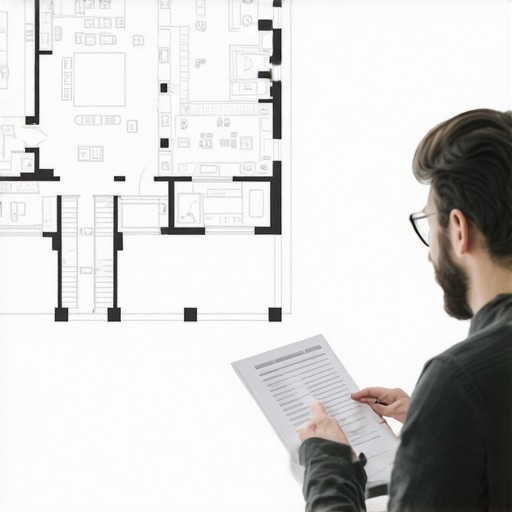
Trade square footage for high-value access
My most successful negotiation happened when I realized the coworking space had three premium boardrooms that were notoriously hard to book but often sat empty on Tuesday mornings. I told the manager: ‘I’ll give up my private suite for a smaller one if you give me 10 guaranteed free hours in the executive wing every month.’ They jumped at it because it cost them nothing—it was unbooked inventory. This is how you maintain a big-company feel for investors while keeping a lean budget. You can choose the perfect conference room for business success without actually paying for the square footage 24/7.
Upgrade your tech while you downgrade your rent
While we were shrinking our footprint, I negotiated for better hardware in the rooms we retained. I insisted that why your conference room needs better technology and fewer cables was a non-negotiable requirement for our new, smaller setup. It’s much easier for a provider to swap a 4K monitor or add extra Surface Pro chargers than it is for them to find a new tenant in a volatile market. I even convinced them to let us keep our premium business address as part of our membership while we shifted to a more hybrid model. This pivot saved us $4,000 a month—enough to keep our lead developer for another three months during the crunch.
But saving money on the lease is only half the battle. If you downsize but keep the same bad habits, you’re just failing in a smaller square footage. Most founders think that any room with a table and a whiteboard qualifies as a collaborative space, but that’s the first major myth we need to bust. In my experience, a standard meeting space is for updates, while a real war room is for survival. Knowing the difference between a standard meeting room and a real war room is what separates teams that iterate from teams that just sit in circles. Everyone says glass walls and open layouts foster transparency, but they usually just create a culture of performance. You stop having the hard conversations because you can see the community manager walking by with a tour group and don’t want to look like you’re struggling.
Stop treating your boardroom like a fishbowl
This is the Glass Box Paradox. A landmark study by Harvard researchers Ethan Bernstein and Stephen Turban found that when companies move to open-plan offices with high visibility, face-to-face interaction actually decreases by about 70%. People don’t collaborate more; they retreat into their headphones and Slack to avoid being watched. If you’re trying to keep your startups trade secrets safe in a public lounge or a glass-walled suite, you are performing transparency at the expense of actual work. I learned this when our most productive ‘strategy sessions’ started happening in the windowless storage closet because it was the only place the team felt they could actually disagree with me.

Is your acoustic privacy actually a myth?
I once sat through a high-stakes pitch where we could hear the neighboring team arguing about their lunch order through the ‘soundproof’ partition. It is an embarrassing, amateur move that signals you haven’t done your due diligence. You must learn how to vet a meeting room for acoustic privacy before booking. If you can hear the espresso machine through the wall, your investors can hear your internal panic. This is the acoustics test every conference room should pass before you sign any long-term commitment. Don’t assume that because a space looks modern, it was engineered for sound.
The hidden drag of tech friction
The biggest hidden nuance in flex space isn’t the rent—it’s the ‘startup tax’ of bad hardware. Spending twenty minutes of a sixty-minute board meeting hunting for a HDMI-to-USB-C adapter is a burn rate killer. This is why I argue why your conference room needs better technology and fewer cables as a non-negotiable part of your membership. You aren’t paying for the chairs; you’re paying for the elimination of friction. When you handle high-stakes board meetings in a shared building, the tech reliability is your only insurance policy. Have you ever fallen into this trap of prioritizing a ‘cool’ vibe over the actual utility of the space? Let me know in the comments.
I spent years searching for the ‘perfect’ setup until I realized the best tools are the ones that disappear into the background. If you’re still using a paper sign-up sheet for your boardroom or, heaven forbid, a shared Google Sheet that everyone ignores, you’re hemorrhaging focus. We rely on a mix of digital booking and physical hardware that enforces discipline. I personally use Robin for room scheduling because its Slack integration is aggressive in the best way possible. If a team member doesn’t check into their ‘War Room’ within ten minutes, the system releases the booking. This is how you maximize productivity in your startups conference rooms without needing a full-time office manager to play referee.
Hardware is the only insurance policy that actually pays out
I’m obsessed with the Logitech Rally Bar for our primary meeting space. It’s an all-in-one appliance that eliminates the ‘can you hear me now’ dance. According to technical standards from the Acoustical Society of America, the Signal-to-Noise Ratio (SNR) in a workspace needs to be at least 15dB for clear speech communication. If your room fails this technical threshold, no amount of expensive software will save your pitch. This is why I insist that the acoustics test every conference room should pass is the first thing we do when touring a new flex space. We don’t tolerate lag because the hidden drag of slow office wi-fi on your burn rate is real—it literally costs you thousands in lost engineering hours every quarter.
How do I keep the workspace from falling apart after six months?
Maintenance in a coworking environment is a shared responsibility, but you have to own your ‘pod.’ We implement a ‘Monday Reset’ where the junior-most person on the team (or me, if I’m being a servant leader that day) checks every single connection. I make it a habit to find a conference room that actually has working adapters and replace any frayed USB-C cables before the first client arrives. If you treat the space like a hotel, it will start to feel like a temporary encampment. If you treat it like a laboratory, your team will perform like scientists. You can get more done in four hours than a full home day if you aren’t fighting with a legacy HDMI cable or a wobbly desk chair.
Why your next office might know you better than your HR lead
I genuinely believe the future of conference rooms in startup ecosystems lies in hyper-personalized environments. I’m currently testing spatial sensors that track CO2 levels in our meeting rooms; when the air gets stale, people get stupid. It’s that simple. In the next few years, I expect flex spaces to offer AI-driven lighting and climate controls that adjust based on the intensity of the meeting. For now, your best move is to audit your hardware. Grab a decibel meter app today and check your ‘private’ suite during the 2:00 PM rush. If it’s over 60dB, your focus is at risk. Run the ‘adapter audit’ this Monday and stop letting $20 cables kill your $20,000 meetings.
Hard Truths I Learned While Staring at Empty Desks
Looking back at the pivot that saved my company, I realized that my biggest hurdle wasn’t the market—it was my own pride. I had attached our startup’s worth to the size of our floor plan. Here are the lightbulb moments that changed everything for me:
- Status is a silent burn. A massive suite looks great on Instagram, but a lean, high-energy hub looks better on your balance sheet. I learned that why your first office shouldnt be a 5-year commitment is the most important lesson for any seed-stage founder.
- Transparency requires privacy. If your team feels like they are in a fishbowl, they will never have the hard, ‘bet-the-company’ conversations needed to survive. A real war room beats a glass box every single time.
- The contract is a living document. Most providers are terrified of churn. If you approach them with a plan to stay smaller rather than a threat to leave entirely, they will almost always meet you halfway.
The Gear and Logic That Actually Keeps Us Lean
I stopped buying ‘stuff’ and started investing in ‘flow.’ We traded four unused desks for a premium hardware credit, ensuring every room had crystal-clear audio. I highly recommend looking at the checklist for moving your startup into its first real office before you sign anything, as it helps you prioritize utility over fluff. We also became obsessed with how to save money on office amenities your team doesnt use, cutting out the expensive snacks and redirecting those funds into high-speed, redundant Wi-Fi that never drops a pitch call. My personal toolkit now focuses on zero-friction scheduling tools and hardware that just works, because the ‘startup tax’ of bad tech is a cost you can’t afford to pay twice.
Stop Paying for Ego and Start Investing in Velocity
The transition from a 20-person suite to a focused 8-person hub didn’t just save us money—it saved our culture. We stopped acting like a ‘big company’ and started acting like a hungry startup again. Don’t wait for your runway to hit zero before you have the awkward conversation with your community manager. Reclaim your space, audit your tech, and remember that the future of conference rooms in startup ecosystems is about performance, not just square footage. Your office should be an engine, not a weight. Have you ever felt like your office space was more of a status symbol than a tool for growth? Let me know your experience in the comments below.