

I remember the clink of a single silver spoon against a porcelain cup. It felt like a gunshot in that hushed, upscale hotel lobby. I was pitching my first SaaS product to a guy who could have funded our entire first year, but every time I spoke about our aggressive growth, the lady at the next table glared at me. It was a total disaster. My energy felt stifled, and my pitch felt small. I realized right then that why your pitch fails in a noisy lobby isn’t just about the volume; it is about the wrong kind of noise. I thought I was being professional by picking a ‘quiet’ spot, but I was actually killing the momentum before I even opened my laptop. Today, I’m going to show you why that ‘library vibe’ is your worst enemy and how to pick a space that makes your startup feel like the next big thing.
Your Pitch Needs More Than a Quiet Corner
I used to be a firm believer that silence equaled focus. I spent my first year as a founder tucked away in a corner of a local library, thinking I was being disciplined. The truth? I was just lonely and stagnant. When it came time to meet investors, I brought that same ‘quiet’ mentality to the table. I learned the hard way that the cost of a bad first impression is often tied to the environment you choose. Investors aren’t looking for a library; they are looking for a rocket ship. They want to see that you are part of an ecosystem that is actually moving. This is exactly why coworking spaces unlock innovation in ways a sterile cafe never could. You want the hum of other people working, the clatter of keyboards, and the palpable sense of ‘hustle’ in the air. Have you ever felt the ‘library shush’ during a high-stakes call? Tell me I’m not the only one who has felt that secondary embarrassment in the comments below.
Does Ambient Noise Kill the Concentration?
The biggest fear I hear from my fellow founders is that a busy hub will be too distracting for a serious talk. They worry the investor won’t hear their ‘big vision’ over the espresso machine. But here is the thing: according to a study published in the Journal of Consumer Research, a moderate level of ambient noise—around 70 decibels—actually enhances creativity and abstract processing compared to a low-noise environment. It’s called the ‘Coffee Shop Effect.’ In a high-energy hub, that noise isn’t a distraction; it’s a backdrop of productivity that makes your business feel like it’s already in the middle of the action.
The Psychology of Environmental Momentum
When you walk into a space that is vibrating with energy, your brain switches gears. I made the mistake early on of thinking I could save money by just using my living room or a free park bench, but startup success secrets often involve spending a little to get the right atmosphere. When you invite an investor to a dedicated startup hub, you are signaling that you belong in that world. You are surrounded by other builders, which subconsciously validates your position as a founder. It’s much easier to sell a vision of a 10x company when the person across from you can see other 10x companies being built three tables over. Choosing the right spot is a skill, and learning how to choose the perfect conference room for these high-stakes moments is the first step in moving from a ‘project’ to a ‘partnership.’
Vet the Room Like Your Funding Depends on It
Picking a space based on a few shiny photos on a website is like buying a car because you like the color of the paint; you need to look under the hood. When I was prepping for a crucial demo with a Fintech partner, I spent three hours scouting locations across the city. It felt like overkill until I realized one of the ‘premium’ rooms smelled like a wet basement. You have to learn how to pick a meeting room that doesn’t smell like old carpet if you want your guests to focus on your numbers instead of the ventilation. A space that hasn’t been aired out or properly cleaned signals a lack of operational oversight that an investor will subconsciously project onto your business.
Check the Sound Seal Before You Sign
Privacy isn’t a luxury; it’s a requirement for high-stakes negotiation. If you can hear the person in the next room talking about their lunch plans, the person you are pitching can hear them too. This shatters the ‘war room’ atmosphere you are trying to build. You need to how to vet a meeting room for acoustic privacy before booking by doing the ‘clap test.’ Stand in the center of the room, clap once, and listen. If it echoes like a canyon or if you hear the muffled thumping of a nearby treadmill, walk away. You want a space that absorbs sound, making every word you say feel weighty and deliberate rather than hollow.
Kill the Technical Friction Early
There is nothing that kills a founder’s confidence faster than fumbling with an HDMI cable that has a frayed end. I’ve been there. I once spent the first ten minutes of a Board meeting crawling under a table because the previous occupant had stripped the wires. It was humiliating. Now, I follow a strict rule: I learn how to find a conference room that actually has working adapters and I test them an hour before the meeting starts. 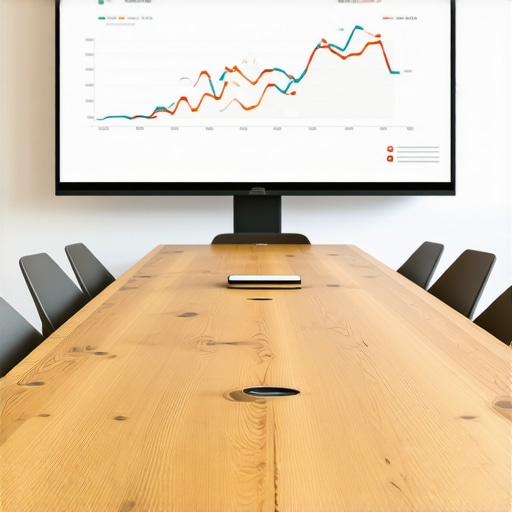 Your pitch deck is your weapon, and the reason why your pitch deck looks better on a forty-inch screen than a laptop is simple—it commands the room’s attention and forces everyone to look at the same data simultaneously, preventing them from drifting off into their own phones.
Use Your Space to Command the Table
The physical layout of the room dictates the power dynamic of the entire session. If you’re in a room that feels like a surgical suite, everyone will be on edge. You need to use the checklist for a boardroom that doesn’t feel like a hospital to ensure the vibe is collaborative yet professional. I prefer rooms with high ceilings because of the psychological impact; why your team is more creative in a room with high ceilings is rooted in the idea that physical space encourages expansive thinking. When you sit down, don’t just take the nearest chair. Position yourself so you’re facing the door or have the strongest visual backdrop. This isn’t just about ego; it’s about startup success secrets that involve controlling the environment so you can lead the conversation without distraction.
Most people think the most expensive room is the ‘best’ room. I’ve seen founders drop $500 on a four-hour rental just to sit in a room that felt like a sterile laboratory. They thought the marble table and the leather chairs would close the deal. In reality, that environment often creates a psychological barrier. I call it the ‘Hospital Effect.’ When a room is too clean and too quiet, it suppresses the messy, raw energy required for genuine innovation. You should be looking for the difference between a standard meeting room and a real war room. A war room is built for friction, for debates, and for physical movement. According to research from the Harvard Business Review, environments that feel too formal can actually trigger a defensive posture in negotiators, making them less likely to reach a creative ‘win-win’ solution. I’ve found that the checklist for a boardroom that doesn’t feel like a hospital usually involves more whiteboards and fewer mahogany accents.
How Do You Protect Your IP Without Being a Hermit?
This is the question I get most from late-stage founders. They love the energy of a hub, but they’re terrified of eavesdropping. If you are discussing sensitive proprietary data, you need to know how to keep your startups trade secrets safe in a public lounge. It’s not just about lowering your voice; it’s about the physical orientation of your screens. I’ve seen multi-million dollar pitch decks accidentally mirrored to a public TV because someone didn’t understand the Wi-Fi settings. The biggest ‘Oops’ I see? It’s the ‘Grand Canyon’ mistake. Founders book a 20-person boardroom for a 3-person brainstorming session because they think it looks ‘impressive.’ It doesn’t. It looks lonely. It kills the momentum. Always follow the two pizza rule for booking the right size meeting room. If you can’t feed everyone in the room with two pizzas, the room is probably too big for a focused decision-making session.  This is where you learn to how to maximize productivity in your startups conference rooms by matching the physical footprint to the actual team size. Have you ever booked a room that totally killed the vibe of your meeting? Let me know in the comments—I’m curious if I’m the only one who has ever felt like a tiny ant in a massive, cold boardroom. We’re all learning how to choose the perfect conference room for business success through trial and error, but the key is to stop treating the room as a backdrop and start treating it as a tool.
Once you move past the ‘one-off pitch’ phase, the logistics of your business environment change completely. You are no longer just looking for a cool vibe to impress a single seed investor; you are looking for a baseline of operational excellence that doesn’t break under the pressure of a growing team. This is where the role of flex space in a modern business scaling strategy becomes your secret weapon. When we hit twelve employees, I realized our ‘scrappy’ coffee shop lifestyle was actually costing us thousands in lost time. We were suffering from the hidden drag of slow office wi-fi on your burn rate, and it was killing our sprint velocity.
The Moment Your Team Outgrows the Hourly Booking App
Scaling requires a shift from ‘renting a room’ to ‘curating an environment.’ You need a setup that works every single time without you having to play the role of the IT guy. I’ve started carrying a ‘founder’s kit’—a hard-shell case with every imaginable dongle—but the highest-tier spaces already anticipate these needs. It is exactly why our private office suites stock extra surface pro chargers for members; they know that a missing cable can stall a product launch. According to the Steelcase Global Report on workplace engagement, 88% of highly engaged employees say they have more control over their work experience, including the ability to choose where they work based on the task at hand. If you don’t provide that variety, your best talent will find a company that does.
Don’t Let Your Hardware Become the Bottleneck
As you scale, your conference room needs to evolve into a high-fidelity broadcast studio. We stopped thinking about rooms as just tables and chairs and started viewing them as communication nodes. If you’re still relying on a single laptop mic for a hybrid team meeting, you’re alienating your remote workers. I personally recommend investing in dedicated 360-degree cameras and spatial audio arrays. You need to know how to maximize productivity in your startups conference rooms by ensuring the ‘digital twin’ of your meeting—the Zoom or Teams feed—is just as crisp as the physical one. 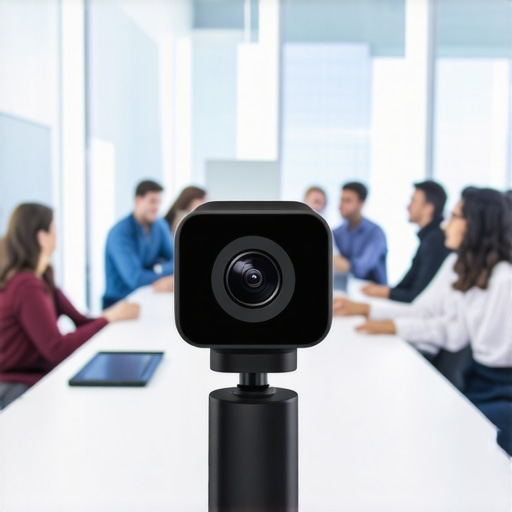 I predict that within the next three years, we will see ‘AI-augmented acoustics’ becoming standard, where the room itself filters out background noise in real-time, making the future of conference rooms in startup ecosystems look more like recording booths than traditional offices.
How do I keep the culture from diluting as we add more desks?
This is the hardest part of scaling. When you move from three people in a garage to twenty people in a suite, you risk losing that raw energy. The key is to avoid the ‘cubicle farm’ trap. Keep using common areas for the ‘serendipity’ factor. I still believe why communal kitchens are the best place to find your next cto is because that’s where the unscripted ideas happen. Even as we moved into a private suite, I mandated that the team spends at least one afternoon a week in the open-plan lounge to keep our ears to the ground. To keep things running smoothly, implement a ’30-second tech audit’ rule: the last person to leave a meeting room must ensure all adapters are plugged back in and the whiteboards are wiped. It sounds small, but it’s the difference between a professional operation and a chaotic one. Try this for one week and see how much friction it removes from your Monday mornings.
What My Most Expensive Failures Taught Me About Space
After years of bouncing between sterile boardrooms and noisy cafes, I’ve realized that the physical environment is an extension of your brand’s voice. First, never underestimate the power of a first impression; the cost of a bad first impression can be the difference between a signed term sheet and a polite ‘no thanks.’ I’ve also learned that total silence is overrated—aim for that productive hum instead. Finally, always do a tech run-through. I can’t tell you how many times I’ve seen startup success secrets undermined by a simple missing dongle or a flicker on the monitor.
- The ‘Two-Pizza Rule’ isn’t just for team sizes; it applies to your room choice too. The two pizza rule for booking the right size meeting room ensures you maintain a high-energy, intimate atmosphere without the awkward echoes of an oversized hall.
- Always prioritize acoustic integrity. If you want your pitch to land, you need to know the acoustics hack for crystal clear client pitches before you sit down.
- Don’t be afraid to leave the home office behind. Why startups fail when they isolate in home offices usually comes down to a lack of serendipity and professional polish.
The Toolkit Every Founder Needs Before Heading Into a Hub
I never walk into a new space without my ‘Founder’s Survival Kit.’ This includes a dedicated set of high-speed adapters because you can never guarantee how to find a conference room that actually has working adapters in the wild. I also recommend a portable LED ring light for those hybrid demos; the lighting trick that makes your product demo look expensive is easier to pull off than you think. Lastly, if you’re moving into a more permanent setup, read up on the role of flex space in a modern business scaling strategy to keep your overhead low while your impact stays high.
Take the Leap and Claim Your Seat
Choosing your environment is about more than just finding a chair; it’s about signaling to yourself, your team, and your investors that you are ready for the big leagues. Whether you are hunting for innovative meeting rooms that boost startup creativity or trying to understand the future of conference rooms in startup ecosystems, the goal is always the same: remove the friction so your ideas can shine. It’s time to stop settling for ‘good enough’ and start how to choose the perfect conference room for business success with confidence. Have you ever walked into a meeting room and immediately known the deal was doomed because of the vibe? Let me know your workspace horror stories below!