

I remember sitting in a glass fishbowl of a conference room in downtown Austin, sweating through my shirt. There were twenty people right outside that glass, total strangers, all clacking away on their MacBooks. I was trying to rehearse a pitch that literally meant life or death for my startup, but every time someone walked by to grab a kombucha, my focus shattered. It felt impossible. How are you supposed to tap into deep work when you are hyper-aware of the guy three feet away chewing his bagel? I used to think that being around other hustlers would magically rub off on me. It did not. In fact, early on, I made the massive mistake of thinking a vibrant, open-plan lobby was the same thing as a productive office. It was not until I stopped trying to vibe and started treating my environment like a tactical asset that things changed. Today, I am going to show you how to stop the bleed and actually get things done in a room full of people you do not know. [IMAGE_PLACEHOLDER]
Stop Treating Your Membership Like a Social Club
I spent my first three months in a coworking space basically staring at the back of other people’s heads. I thought I was being productive because I was ditching the basement and getting out of the house. In reality, I was just busy, not effective. The hard truth is that the social energy of a shared space is a double-edged sword. You get the networking, sure, but you also get the distraction. I once spent an entire afternoon chatting about crypto at the printer instead of finishing my quarterly reports. It is a common trap. We tell ourselves that small talk at the printer is high-value networking, but if your core tasks are lagging, it is just a distraction. To win, you have to know how to maximize productivity in your startup’s conference rooms and when to put the blinders on. Have you ever felt like you are paying for a desk just to watch other people work? Tell me I am not the only one.
Can You Actually Focus with All That Background Noise?
It is a fair question. Most people assume coworking is just a glorified coffee shop with better chairs. However, research from the University of California, Irvine, suggests that it takes an average of 23 minutes and 15 seconds to get back to a task after being interrupted. In a shared room, those interruptions are not just pings on Slack; they are physical movements, smells, and loud phone talkers. I realized the truth about hot desking early on when I failed to meet a developer deadline because I was too distracted by a nearby brainstorming session. You cannot just hope for quiet; you have to engineer it. We are going to look at the exact strategies I used to go from being a professional people-watcher to a high-output founder, all while sitting in a room full of strangers.
Get Strategic with Your Seating Chart
Treat the floor plan like a tactical map. If you sit near the coffee machine, you are essentially inviting every ‘quick catch-up’ and ‘how is it going’ into your workflow. I learned this the hard way during a sprint to finish a beta launch. I chose the ‘cool’ table by the window, which happened to be the main thoroughfare to the bathroom. By noon, I had spoken to half the building and written zero lines of code. Now, I obsess over the exact desk location that boosted my productivity by 40 percent. I look for what I call ‘The Sniper’s Nest’—a corner with my back to a wall and a clear view of the exits. This eliminates the ‘startle reflex’ every time someone walks behind you, a subconscious drain on your energy that most people ignore.
Signal Your Status Without Saying a Word
In a shared room, silence is a social contract you have to sign every day. If you do not have a door to close, you need visual cues. Huge, over-the-ear noise-canceling headphones are the international sign for ‘Do Not Disturb.’ I once tried working with just earbuds, and people kept tapping me on the shoulder to ask if I had a spare charger. Switch to the big cans, and suddenly you are invisible. If you are really in the weeds, the etiquette of taking private calls in a public coworking zone suggests you should find a phone booth, but for deep work at your desk, the visual signal is your only shield.
Stop the Visual Noise from Killing Your Flow
It is not just the sound; it is the movement. Our brains are wired to track motion in our peripheral vision—an old survival mechanism that serves no purpose when you are trying to build a financial model. I have found that 7 non-obvious signs a coworking space is too loud for deep work often start with high-traffic walkways. If you can see people moving constantly, you are losing focus points every few seconds. 
Test the Room Yourself Before You Book
When it is time to move from the open floor to a dedicated room for a high-stakes meeting, do not trust the glossy photos on the app. I once booked a room for a VIP investor demo without checking it first. The room looked like a tech dream online, but in person, it had a massive echo and the sun hit the TV screen at such an angle that my slides were unreadable. I had to spend the first ten minutes taping notebook paper to the window to block the glare. It was amateur hour. Now, I always perform a vet of a meeting room for acoustic privacy before booking.
Apply the Two-Pizza Rule to Your Room Choice
Do not book a 12-person boardroom for a 3-person brainstorming session. It feels cold and the acoustics are usually terrible in large, empty spaces. I follow the two-pizza rule for booking the right size meeting room to ensure the energy stays high and the sound stays crisp. For a recent client pitch, I chose a smaller, ‘huddle’ style room. Because the space was tighter, the conversation felt more intimate and the acoustics hack for crystal clear client pitches—simply having enough soft surfaces to absorb sound—worked perfectly. We closed the deal because they could actually hear my voice, not the echo of the air conditioning. If you are dealing with high-stakes moments, hosting a VIP demo without a corporate headquarters requires you to be a scout first and a founder second.Most founders think booking the most expensive, tech-heavy suite is a power move. It isn’t. In my experience, high-tech rooms often create a ‘friction barrier’ that kills the natural flow of a pitch. If you spend the first five minutes hunting for a dongle or wrestling with a proprietary tablet, you have already lost the room. This is why your pitch deck won’t save you from a noisy meeting space or a technical glitch. I have seen million-dollar deals evaporate because the ‘smart’ TV would not sync. It is a classic ‘Oops’ factor: the more complex the tech, the more points of failure you are introducing. I have learned that how to find a conference room that actually has working adapters is far more valuable than having a VR-ready boardroom. Everyone tells you to focus on the table and chairs, but they ignore the ceiling height and lighting. Research from the World Green Building Council suggests that better indoor air quality and natural lighting can lead to an 8-11% increase in productivity. I once hosted a sprint in a room that felt like a bunker; by hour three, the team was mentally checked out. Now, I know that the lighting trick that makes your product demo look expensive is actually just leveraging natural light and warm bulbs rather than harsh fluorescent strips. 
Do You Actually Need a Boardroom to Close the Deal?
Most founders think they need the mahogany table to look legitimate. The truth is, why the best business deals happen in the hallway, not the boardroom is because the formal setting often creates a defensive psychological state. For high-stakes moments, how to handle high-stakes board meetings in a shared building often involves choosing a space that feels like a workshop, not a courtroom. Have you ever felt like a room was actively working against you during a presentation? Have you ever fallen into this trap? Let me know in the comments. Another trap is the ‘all-dayer’ without an exit strategy. If you are booking a room for more than four hours, you need to think about physical fatigue. How to survive a 4-hour board meeting without losing your mind comes down to the ergonomics and the ‘breakout’ potential of the space. Don’t just settle for a room; vet the building for why your team needs a breakroom that isn’t just a kitchen table so people can actually decompress. Success in a coworking environment isn’t about having the best office; it is about startup success secrets for choosing the perfect conference room that matches the intensity of your work.
Don’t Rely on the Building’s IT Guy
I have a rule: never walk into a booked room without my ‘black box’ kit. I’ve learned the hard way that the problem with bring your own device in shared meeting rooms is that everyone assumes the HDMI cable will just work. It won’t. My kit contains three different USB-C adapters, a 10-foot ethernet cable, and a high-gain directional microphone. Why the cable? Because the hidden drag of slow office wi-fi on your burn rate is a silent killer. If I’m doing an investor call, I don’t trust the air; I plug directly into the wall. According to the Cisco Annual Internet Report, consistent packet delivery is more vital for video than raw download speed, and you only get that stability with a physical wire. I also keep a spare power supply in my locker because why a basic warranty won’t save your startup from a hardware disaster is a lesson you only want to learn once. 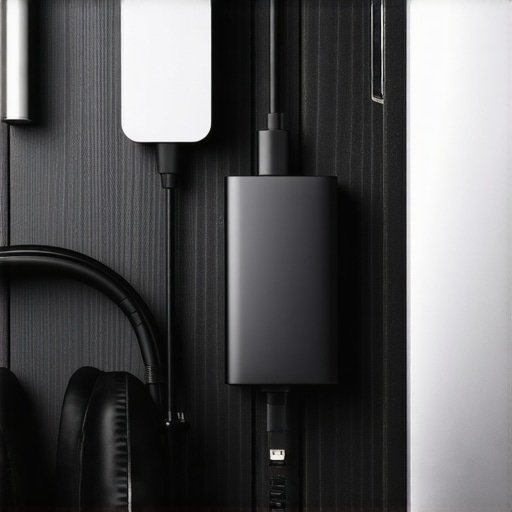
How do I keep my workflow sharp over the long haul?
Maintenance isn’t just about the gear; it’s about auditing your environment with clinical detachment. Every three months, I perform the 10-minute audit to see if your office space is wasting money. I look at my desk usage logs versus my meeting room invoices. If I’m spending more on hourly bookings than a monthly private suite would cost, it’s a clear signal to level up. Knowing the move from a hot desk to a private suite when to jump is what separates a hobbyist from a founder. You also have to learn how to manage office politics in a space you dont own. This means being friendly with the community manager, not just because it’s nice, but because they are the gatekeepers to the best unlisted huddle rooms when the main ones are booked.
Privacy is the New High-End Perk
Looking ahead, the wide-open ‘vibe-heavy’ floor plan is cooling off. I predict the future of these spaces will focus on ‘Acoustic Isolation as a Service.’ We are already seeing the future of conference rooms in startup ecosystems shifting toward hyper-private, sound-proofed pods rather than glass boardrooms. If you want to unlock networking opportunities in top coworking environments, you do it at the communal coffee bar, but you protect your intellectual property behind soundproof walls. As you look at scaling from 2 to 20 when to stop hot desking, start prioritizing acoustic privacy over square footage. Grab your laptop right now and run a speed test in three different corners of your building—you might find your current ‘favorite’ window seat is actually killing your output.
What Nobody Tells You About Winning in a Shared Space
After years of bouncing between different tech hubs, I’ve realized that success isn’t about having the plushest leather chair—it’s about how you manage your cognitive boundaries. One of the biggest shifts for me was realizing that the move to a dedicated desk is the extra cost worth it for the mental peace of a consistent routine. I also discovered that how to manage office politics in a space you dont own is a critical survival skill; being the person who helps the community manager troubleshoot a printer can get you priority access when you need a last-minute favor. Lastly, remember that creative coworking transforming meeting rooms into collaboration hubs only happens when you intentionally design the session; don’t just walk in and hope for the best.
Tools and Tactics I Swear By
To stay lean while staying professional, you need a specific toolkit that travels with you. I personally rely on Toggl for auditing my focus hours, ensuring that my time spent in the perfect conference room for business success is actually moving the needle and not just inflating my ego. I also suggest reading ‘Deep Work’ by Cal Newport; it is the ultimate manual for anyone trying to build a company in a room full of strangers. For the physical side, I never go anywhere without my Roost Laptop Stand to save my neck during those 12-hour sprints. If you’re feeling the squeeze of high overhead, run the 10-minute audit to see if your office space is wasting money before you sign your next membership renewal.
Your Environment Dictates Your Output
At the end of the day, your startup is far too important to let a bad floor plan or a noisy neighbor slow your momentum. Whether you are currently scaling from 2 to 20 when to stop hot desking or you are just trying to get through your first beta launch, the space you choose acts as the silent partner in your business. Don’t be afraid to pivot your workspace just as quickly as you would pivot your product. Find the right conference room, set your visual signals, and get back to the deep work that actually changes the world. What is the one distraction in your current coworking space that drives you absolutely crazy? Let me know in the comments below!