

I remember the exact moment I realized I’d made a massive mistake. I was sitting in a $600-a-month “premium” workspace, staring at a sleek marble countertop, and feeling utterly alone. The website promised a “vibrant ecosystem for disruptors,” but the reality was a silent tomb where people glared at you for clicking your pen too loudly. It wasn’t just a quiet day; it was a culture of isolation. I had spent thousands of dollars to escape my lonely home office, only to end up in a place that felt even colder.
Don’t Let a Pretty Lobby Blind You to a Ghost Town Community
When you’re scaling a business, the pressure to look professional is real. I fell for the tech-prison aesthetic—all glass walls and mid-century modern chairs—without checking if the heart of the place was actually beating. I learned the hard way that a beautiful conference room doesn’t mean anything if the people inside it never collaborate. Early in my journey, I signed a contract based purely on the speed of the Wi-Fi and the brand of the espresso machine. I ignored the fact that the community manager didn’t know anyone’s name. That was my first big error. If the leadership is disengaged, the members will be too. According to a study published in the Harvard Business Review, people who belong to coworking spaces report levels of thriving that are significantly higher than those in traditional offices—but only when the community provides a sense of social support and autonomy. I’ve seen founders waste months in spaces that drained their energy. Before you sign anything, you need to know how to spot a bad coworking community before it’s too late. We’re going to look past the free beer and dive into the social dynamics that actually determine whether you’ll grow or grind to a halt.
Is a premium membership actually worth the hype?
It’s easy to get distracted by the bells and whistles. You see a pool table and think “culture,” but usually, it’s just a dust collector. The real value isn’t in the furniture; it’s in the networking opportunities that happen organically. If you’re worried that you’re just paying for a glorified library, you’re probably right to be skeptical. I once stayed at a place where the “community events” were just awkward pizza parties where no one talked. It was soul-crushing. Have you ever walked into a workspace and immediately felt like an intruder rather than a member? Drop a comment or reach out—I’d love to hear your horror stories.
Watch the Common Areas Instead of the Sales Pitch
You can usually tell if a space is toxic or just dead within twenty minutes of a tour, but you have to know where to look. I used to focus on the meeting rooms, but now I watch the kitchen. Are people actually talking? Is there a community manager actually facilitating introductions, or are they hiding in an office? The truth about those ultra-cheap office memberships is that they often attract people who aren’t there to build anything; they’re just looking for a cheap desk. That’s fine for some, but for a startup, it’s a networking dead end. You want to find a place where people are actively solving problems, not just hiding behind their screens. [image placeholder]
Stop Guessing and Start Testing with a Day Pass
I once spent an entire week’s worth of coffee money on day passes at four different locations across the city before I settled on my current spot. It felt like a waste of time initially, but on day three at a “top-tier” hub, I discovered that the walls were so thin I could hear the guy next door eating his salad. If I had signed a year-long lease, I would have been stuck in a noise-induced nightmare. You have to scale your team using day passes first to see the cracks in the foundation before committing to long-term overhead. During these trial days, don’t just work—observe. Is the “all-inclusive” coffee actually drinkable, or is it a bitter mess that forces you to spend more at the shop down the street? Watch how many people are wearing noise-canceling headphones; if it’s 90% of the room, you are in a library, not a community.
Audit the Tech Before Your Big Pitch
The biggest mistake I see founders make is assuming the Wi-Fi is fast because the building is new. I once had a server crash during a client demo because the space’s “high-speed” internet couldn’t handle three simultaneous Zoom calls. Now, I always test the Wi-Fi speed before I even think about booking a room. I remember one specific Tuesday at a trendy spot in East London where the “innovative” lighting was so dim in the boardrooms that I looked like a silhouette on my webcam. I had to prop my laptop on a stack of pizza boxes just to get a decent angle for a board meeting. It was embarrassing. Now, I always vet a conference room for real-world usability, not just “vibes.” When you’re looking at the top meeting rooms of 2025, don’t just admire the furniture. Look for hardwired ethernet ports and check if they actually work. If you are preparing for a VC call, you need to check the lighting setup in the room to ensure you don’t look like you’re broadcasting from a basement. #IMAGE_PLACE_HOLDER_B#
The Secret Sauce is the Person at the Front Desk
A great space lives and dies by its staff. If the person at the desk is just there to check IDs and hand out mail, the community will be stagnant. I remember a space in Chicago where the manager, Sarah, knew every member’s current project. She didn’t just host generic happy hours; she made active introductions. She once connected me with a developer while we were both waiting for the microwave, and that connection led to our first successful beta launch. That is the true role of community managers in a workspace that actually grows your business. If they aren’t facilitating networking opportunities, you’re just paying for a desk. This human element is what prevents a space from feeling like a sterile prison and turns it into a platform for growth.
Protect Your Flow State in Busy Hubs
Open offices are great for serendipity, but they are the enemy of deep work. If your team is full of coders, you need to ensure there are dedicated quiet areas. I’ve watched brilliant developers quit because they couldn’t handle the constant chatter of the sales team nearby. You have to verify why developers need quiet zones before you move your technical team in. Without a way to keep your focus when the hub is packed, your productivity will plummet the moment the space hits peak capacity. Look for the quiet corners and test them out during the busiest part of the day, usually between 2 PM and 4 PM when the energy is high but the distractions are at their absolute peak.Most founders obsess over having the newest AV equipment, but they completely ignore the psychological impact of the room itself. There’s a common belief that ‘the bigger the table, the more important the meeting.’ In my experience, that’s absolute nonsense. A massive rectangular table creates a physical and psychological barrier that stifles honest feedback. I’ve seen better breakthroughs happen in a space with four armchairs than in a $50,000 boardroom. You should be looking for why your meeting room layout is killing participation before you blame your team for being quiet. Research from the MIT Human Dynamics Lab suggests that the ‘energy’ of a team—their frequency and style of communication—is the single best predictor of productivity. If your space doesn’t facilitate these high-energy bursts, it’s just a high-rent locker room. 
Get Rid of the Massive Boardroom Table
When I was pitching my second startup, I thought a mahogany table showed authority. I was wrong. It showed distance. I eventually learned why your investor pitch needs a neutral meeting room that invites conversation rather than a confrontation across a desk. If you’re still using a layout that feels like a court hearing, you’re missing out on the organic flow that early-stage growth requires. You need to prioritize transforming meeting rooms into collaboration hubs where people feel safe to fail and iterate. Have you ever fallen into the trap of choosing ‘vibes’ over actual functionality? Let me know in the comments—I’m curious if I’m the only one who has sat through a three-hour meeting in a room with no windows just because the lobby looked cool.
Why is your team’s productivity dropping after two PM?
It’s usually not the lack of caffeine. Often, it’s the lack of ‘biophilic’ design or poor air quality in a windowless ‘premium’ suite. If you’re struggling to stay awake, it might be worth finding a meeting room with decent natural light to reset your internal clock. I’ve seen founders blame their developers’ work ethic when your team’s productivity drops after two PM simply because the CO2 levels in a small, unventilated meeting room have skyrocketed. This is a classic advanced mistake: prioritizing the ‘look’ of a private office over the actual biology of the people working in it.
Spot the Hidden Costs in Your Flexible Lease
Here is the ‘oops’ factor many skip: The ‘All-Inclusive’ Mirage. You see a flat monthly fee and assume your overhead is locked. Then you try to stop your team from hating hybrid meetings only to realize the ‘free’ Wi-Fi can’t handle the bandwidth, forcing you to pay for a private VLAN. Or worse, you find yourself stuck in a bad deal because you didn’t know how to spot a predatory lease before the ink was dry. I once signed a ‘flexible’ agreement that required a six-month notice period. That’s not a flex office; that’s a ball and chain. If you want to scale, you have to look for the art of the short-term lease that actually stays short-term. Always check if ’24/7 access’ means the HVAC stays on, or if you’ll be sweating through your shirt during a Sunday night sprint.
Keep your hardware from failing when it matters most
Scaling isn’t just about adding desks; it’s about ensuring the infrastructure doesn’t buckle under the weight of a growing team. I’ve seen enough ‘perfect’ setups fall apart because nobody thought about the long-term wear and tear on the tech. If you’re moving fast, you need to know how to handle a server crash from a temporary desk without losing a day of dev time. For me, that meant moving all our local assets to a redundant cloud setup and obsessing over security. People often ignore that why endpoint protection services matter more when your team is hybrid, but the moment you share a Wi-Fi network with fifty other startups, your local firewall becomes your most valuable employee. Don’t wait for a breach to realize your ‘open’ culture is a security nightmare. 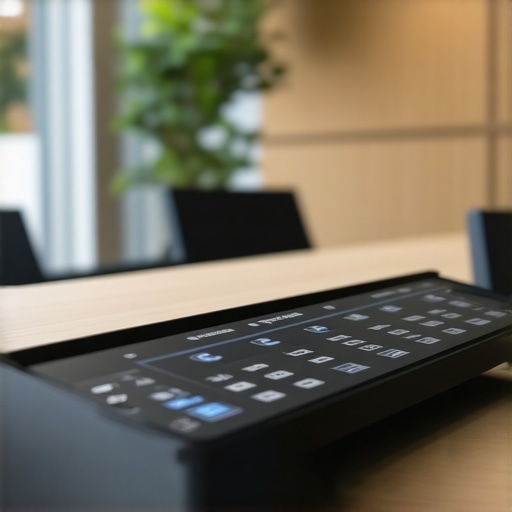
How do I maintain a high-performance workspace over time?
The secret is a relentless 30-day audit cycle. Every month, I physically walk through our collaboration hubs and test every cable, every dongle, and every chair. We use a simple checklist—similar to the checklist for a glitch-free product launch event—to ensure that our physical space supports our digital speed. According to the ASHRAE Standard 62.1, proper ventilation and air exchange rates are critical in high-density office environments to maintain cognitive function. If the CO2 levels in your favorite boardroom are too high, your team is literally getting slower by the hour. I carry a portable CO2 monitor now; if the levels cross 1,000 ppm, we open the door or move the meeting. It’s a small technical detail that has a massive impact on how to maximize productivity in your startups conference rooms.
The tech stack that actually keeps us moving
I’m often asked what tools I actually use to manage a team across multiple coworking sites. I don’t use generic project management software for the physical side of things. I use NetSpot for mapping out Wi-Fi dead zones before we commit to a floor. You need to test the Wi-Fi speed before you book that venue, but you also need to know if that speed drops when the kitchen microwave is running. I also swear by Krisp for noise cancellation during those inevitable moments when you have to take a call in the lounge. It’s much more effective than just hoping everyone stays quiet. As you scale, you have to be intentional about how to choose an office that supports your scaling speed without sacrificing the culture you’ve built.
Look ahead to the autonomous office
I predict that by 2026, we won’t be ‘booking’ rooms anymore. We’ll be using occupancy sensors and AI-driven scheduling that moves meetings based on the ‘vibe’ and technical requirements of the group automatically. We are already seeing the beginnings of this in the future of conference rooms in startup ecosystems, where environments adapt to the users rather than the other way around. If your current space feels like it’s stuck in 2015, you’re already falling behind. My challenge to you: perform a ‘tech audit’ this Friday afternoon. Check every connection, run a speed test, and verify your encryption. It’s the only way to ensure your growth doesn’t lead to a total system failure.
Hard Truths Learned from Three Failed Office Moves
I used to think a corner office with a view was the ultimate marker of success. I was wrong. The real win for a growing company is a lease that doesn’t choke your cash flow when you suddenly need to pivot or double your headcount. It took me three painful moves to realize that choosing a flex office over a 5-year lease is the only way to maintain the agility a startup requires. I also stopped judging spaces by their marble lobbies and started looking at the person behind the desk. Experience has taught me that your startup needs a community manager more than a lobby because they are the ones facilitating the high-value introductions you won’t find on a floor plan. Lastly, never underestimate the breakroom; high-quality coffee is more than just a perk—it’s a diagnostic tool that reveals how much the space truly cares about its members’ daily experience.
The Scaling Toolkit for Savvy Founders
To keep your sanity while moving between hubs, I recommend a few specific tools that have saved my team more than once. First, NetSpot is my go-to for mapping out connectivity before we commit to a desk; never trust a sales pitch about Wi-Fi without verifying it yourself. Second, I constantly refer back to MIT Human Dynamics Lab research on team energy to ensure our physical environment isn’t stifling our communication. Third, I always keep a checklist handy to maximize productivity in your startups conference rooms, ensuring we never waste the first ten minutes of a meeting wrestling with a dongle or a dead remote. These resources act as a buffer between you and the inevitable technical glitches of a shared environment.
Your Future Office is More Than Just a Layout
Choosing your base of operations is a major milestone in your journey, but don’t let the search for the ‘perfect’ aesthetic distract you from the work that actually builds your company. Whether you are searching for a specialized conference room for an investor pitch or a long-term home for your technical team, focus on the people and the performance infrastructure. If you prioritize the human element and the technical reliability of a space, the growth you’re chasing will follow naturally. Have you ever signed a lease only to realize the vibe was completely wrong for your team? Let’s swap stories in the comments.