

The candidate sat across from me, eyeing the peeling wallpaper and a flickering fluorescent light that hummed like a trapped bee. I was pitching him the future of fintech—radical, world-changing stuff—but his eyes were glued to the plastic bucket catching a slow leak in the corner. He didn’t take the job. In fact, he didn’t even finish the interview. He gave me a polite ‘I’ll think about it’ and was out the door before the coffee I’d offered even stopped steaming. That was the moment I realized my ‘scrappy startup’ vibe was actually just a ‘poorly managed’ vibe. I’d focused so much on the code that I forgot that humans, especially the talented ones, actually care about where they spend forty hours a week.
Your Office Speaks Before You Do
I used to think that talent only cared about the equity and the tech stack. I was dead wrong. Your office location isn’t just a line on a Google Map; it is a physical manifestation of your company’s health and your respect for your team’s time. Early on, I made the mistake of thinking a cheap, windowless basement was a badge of honor. I quickly learned that why a windowless office is killing your teams creative output wasn’t just a catchy headline—it was my reality. My team was sluggish, and recruiters from bigger firms were poaching my best people by simply showing them a window with a view of a tree.
Today, we are going to break down why top-tier talent is judging your zip code and how you can level up your workspace without burning through your seed round. We will look at how to pivot from a ‘garage’ mindset to a ‘professional hub’ that makes people actually want to show up on Monday morning. Have you ever felt that awkward sting when a high-level recruit asks for a tour and you find yourself making excuses for the neighborhood?
Does my location really matter in a remote-first world?
You might be skeptical. We live in the era of Zoom and Slack, right? But even for hybrid teams, the ‘anchor’ location defines the culture. According to a study by the Harvard Business Review, employees often view the physical workplace as a symbol of how much an employer values them. If you’re asking someone to leave their comfortable home office, the destination better be worth the commute. Often, why the right neighborhood matters more than the desk itself becomes the deciding factor for a parent who needs a safe area or a developer who wants a decent lunch spot nearby.
I’ve seen founders lose incredible hires because they refused to move out of their ‘lucky’ garage. But there is a middle ground. You don’t need a ten-year lease in a glass skyscraper. Sometimes, it’s about finding a workspace that doesnt feel like a tech prison and instead offers a sense of community. When I finally stopped being stubborn and moved our core team into a vibrant area, our ‘yes’ rate for job offers jumped by 40%. People want to feel like they are part of something that is moving forward, not something stuck in a basement.
Stop Renting Square Feet and Start Buying Trust
You cannot build a skyscraper on a swamp, and you certainly cannot build a unicorn in a space that fails your operational reality. The transition from a scrappy founding team to a scaling company requires a shift in how you view real estate. It’s no longer about where you can afford to sit; it is about where your team can actually perform. The truth is, the logic of choosing a flex office over a 5-year lease isn’t just about saving capital—it is about maintaining the agility to double your headcount in six months without paying a massive penalty to a landlord. I once signed a three-year lease for a beautiful brick-and-mortar space in an up-and-coming neighborhood, only to realize by month nine that we had outgrown the bathrooms and the electrical grid. We spent more time troubleshooting the fuse box than we did shipping features.
Trade Your Five Year Lease for Scaling Speed
When you are moving out of the basement, the first instinct is to find your own ‘forever home.’ Resist that urge. Traditional leases are designed to trap you, not help you grow. Instead, focus on spaces that allow you to stop overpaying for square footage you never use during the quiet months. Look for environments where you can scale your desk count up or down monthly. This flexibility is your greatest asset in a volatile market. If you pivot your product, you shouldn’t be anchored by an office that no longer fits your needs.
Don’t Let Poor Infrastructure Kill Your Professional Demo
I learned this the hard way during a Series A pitch. I was three minutes into the most important presentation of my life when the local coffee shop’s Wi-Fi decided to restart. The screen froze on my face mid-sentence, making me look like a buffering statue. That’s why your pitch failed in that noisy coffee shop—it wasn’t the deck; it was the lack of controlled environment. Now, I never sign even a short-term membership without a literal stress test. I bring my laptop, run a heavy data load, and make sure I know how to vet a space for high speed fiber before you sign the contract. If the speed drops below 100Mbps during the afternoon rush, walk away. Your team’s productivity is directly tied to the stability of their connection.

Keep Your Sensitive Conversations Behind Real Doors
As you scale, the nature of your conversations changes. You aren’t just talking about code anymore; you’re talking about salaries, hiring strategies, and board expectations. In an open-plan ‘scrappy’ space, these conversations become public property. I remember a messy week where a potential new hire overheard a heated debate about our burn rate while he was in the lobby. He didn’t sign. You need to ensure your new hub offers privacy. This is why your sales calls need a private phone booth and your executive team needs a secure room. Before you move, investigate the truth about shared office noise levels by visiting the space at 2:00 PM on a Tuesday. If it sounds like a high school cafeteria, your developers will never find the deep work flow they need to succeed.
Your Dining Table Is Scaring Away Real Capital
Investors aren’t just betting on your idea; they are betting on your ability to execute professionally. When I started inviting VCs to a dedicated workspace rather than my kitchen table, the energy changed. They saw a team in motion, not just a founder with a laptop. Why your investor pitch needs a neutral meeting room is simple: it removes the distractions of your personal life and replaces them with the signals of a functioning business. It shows that you have invested in the infrastructure necessary to handle their millions. It’s about moving from a hobbyist mindset to a CEO mindset.
Let’s dig deeper into the most persistent myth in the startup world: the idea that open space equals collaboration. We’ve all seen the flashy marketing photos of teams huddled over a single desk in a vast, sun-drenched loft. It looks energetic, right? But here is the nuance most founders miss. A landmark study by Harvard researchers Ethan Bernstein and Stephen Turban found that when companies moved to open-plan offices, face-to-face interaction actually decreased by roughly 70%. People didn’t talk more; they wore headphones to survive the noise. If you want your team to actually build something, you need to realize that why your startup needs a real door not just a glass wall is about cognitive load, not just privacy.
Your Team Needs Deep Flow More Than Free Beer
The trap many scaling founders fall into is the lifestyle workspace. You get seduced by the nitro cold brew and the networking happy hours, only to realize your developers are miserable because they can’t find a quiet corner. This is why the all-inclusive membership is usually a trap—you’re often paying for a social club when you need a factory for output. I once spent a fortune extra a month for premium amenities, only to find my team was leaving at 2:00 PM to work from a library because the echo in our glass-walled conference room was unbearable. We didn’t know about the acoustic fix for echoey conference rooms back then; we just knew we couldn’t hear the client over the ambient feedback. 
Why does your hybrid team still feel disconnected on Mondays?
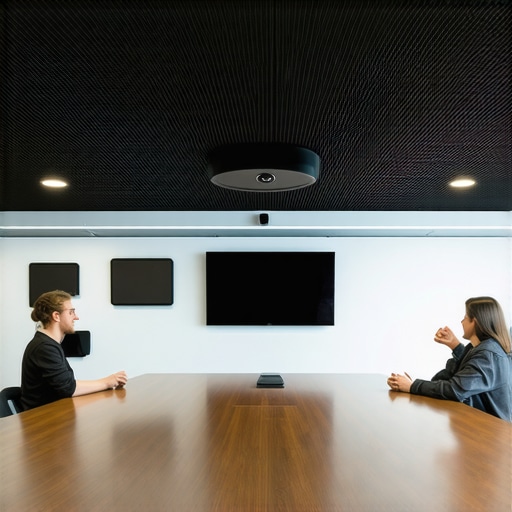
It’s not because they aren’t working; it’s because your space isn’t facilitating the right kind of interaction. If you’re forcing people back to an office just to sit on Zoom calls, you’re burning social capital. You need to focus on intentionality. Often, why your meeting room layout is killing participation comes down to the subtle psychology of the room. A long, rectangular table screams hierarchy, while a circular setup or a casual lounge area invites contribution. If you want to fix the culture, how to stop your team from hating hybrid meetings starts with creating an environment that feels fundamentally different—and better—than their home office. Have you ever fallen into this trap? Let me know in the comments.
Avoid the All-Inclusive Membership Sinkhole
The mistake I see most often with second-time founders is over-committing to the wrong kind of flexibility. They sign up for a plan that looks great on paper but charges three times the market rate for actual conference room usage. Before you commit, you must how to vet a conference room for client-facing speed and ensure the booking system isn’t a bottleneck for your sales team. A workspace should be an engine for your business, not a monthly line item that causes friction. If your team is fighting over the one private booth, your workspace is failing its primary mission. Invest in the infrastructure that supports the actual work, not just the aesthetic of the work.
Scaling doesn’t just mean adding more chairs; it means hardening the systems that let those chairs stay productive. I’ve seen too many founders buy fancy espresso machines but ignore the fact that their team is struggling to manage office politics when you share a floor with other startups. You need a technical toolkit that moves with you. For hardware, I swear by the Jabra Speak 710 series for its portability. I use it because it allows me to turn any quiet corner into a boardroom in five seconds, providing omni-directional sound that doesn’t sound like a tin can. If you’re pitching to VCs from a flex space, you need the exact lighting setup for professional video pitches—I personally use a portable three-point LED system that prevents me from looking like a silhouette during high-stakes negotiations. When things go south, and they inevitably will, knowing how to deal with technical glitches during a remote board call is the difference between a closed round and a failed impression.
On the digital security front, the reason why endpoint protection services matter more when your team is hybrid cannot be overstated. I use Tailscale to create a secure mesh network for my team, ensuring that even if we are working from a public lounge, our data remains on a private, encrypted island. This is especially vital when you are hunting for the secret to finding quiet corners for high stakes sales calls in a busy building; your connection should be as private as your conversation.
How do I maintain professional standards as we scale?
Consistency is your only defense against the chaos of growth. I recommend a monthly ‘infrastructure audit.’ Test the Wi-Fi speeds at different times of day, refresh the batteries in your meeting room peripherals, and ensure every new hire knows how to get the most out of a 24-7 access membership. As teams grow, they often forget the perks and tools they actually have access to, leading to wasted spend. Looking ahead, the future of conference rooms in startup ecosystems will likely involve AI-driven spatial audio that automatically levels the volume of the loudest and quietest person in the room. According to Cisco’s technical documentation on Acoustic Echo Cancellation (AEC), maintaining low latency is critical; any delay over 10ms starts to disrupt the human conversational rhythm. My advanced tip: If you are in a shared space, set up a dedicated VLAN for your company. It keeps your internal traffic secure and prevents accidental airplay of your pitch deck to the neighbor’s TV. Try auditing your current audio lag today—if it’s over 100ms, your hybrid meetings are failing before they start.
Lessons From the Trenches of Office Hunting
I’ve learned that neighborhood energy is a force multiplier for recruitment. When you’re in a vibrant area, your job offer isn’t just about the salary; it’s about the lifestyle. Also, never underestimate the power of a community manager. They often know which startups are about to fold, which can be a goldmine for talent or specialized equipment. Finally, if you can’t see the Wi-Fi router, you should probably ask more questions about the backbone of the building. Transitioning through the move from a garage to a professional hub taught me that your environment is the first thing people see before they even hear your pitch.
The Tech Stack That Travels With Me
As you grow, you need tools that don’t tether you to one desk. I personally rely on Tailscale because it handles the security headaches of a hybrid team without requiring a dedicated IT department. For making an impression in innovative meeting rooms that boost startup creativity, the Jabra Speak 710 remains my go-to for ensuring everyone on the Zoom call feels like they are in the room. I also highly recommend keeping a ‘venue checklist’ using startup success secrets choosing the perfect conference room as a guide to ensure you never walk into a technical dead zone again.
Stop Playing Small and Claim Your Space
Your business deserves a home that reflects its ambition. Moving out of the basement isn’t an indulgence; it’s a strategic move that signals to the world—and to yourself—that you are here to stay. It’s about creating a place where your team can find their flow and your vision can finally breathe. Finding the right conference room or coworking hub is the first step toward the next chapter of your company’s story. What was the one moment that made you realize your current workspace wasn’t cutting it anymore? Let me know in the comments below.