
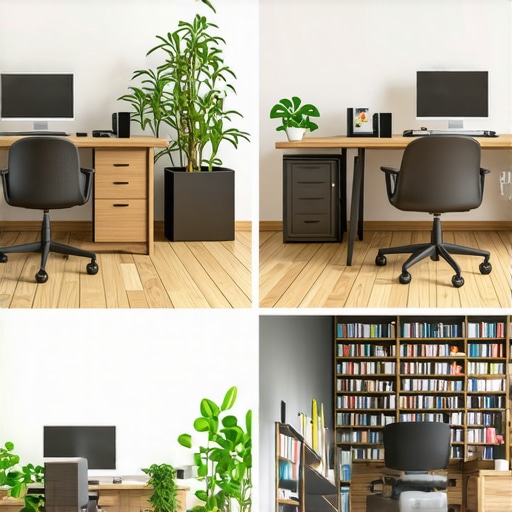
I remember sitting in a bright, neon-lit startup hub last year, trying to finalize a high-stakes proposal while a pitch competition roared just ten feet away. I was miserable. I had fallen for the flashy marketing that says every founder needs a high-energy environment to succeed. It was a massive mistake that cost me weeks of productivity and a fair bit of my sanity. I realized then that my personality—heavy on introversion and a need for deep focus—was at war with my desk choice. Your workspace isn’t a one-size-fits-all uniform; it is more like a tailored suit that needs to fit your mental dimensions. Today, I am going to help you stop fighting your own brain and finally find a spot that actually helps you get things done instead of just looking busy.
The Real Cost of Ignoring Your Inner Introvert or Extrovert
I used to think that the more ‘hustle’ I saw around me, the harder I would work. I signed up for the loudest, most social membership available, but my output plummeted. I was essentially the guy who gets distracted by everything because I hadn’t accounted for my need for silence. According to a study published by the University of Arizona, the physical environment of an office can significantly impact physiological stress levels, where high-density, open-plan spaces often lead to lower employee well-being for those sensitive to noise. If you are a deep-thinker or a coder, you need to understand why developers need quiet zones to reach deep flow before you commit to a long-term contract.
Does your personality type really matter for productivity?
You might be skeptical, thinking you just need a stable chair and fast Wi-Fi to be a professional. But think back to your last three ‘big wins.’ Were you in a bustling shared lounge or tucked away in a private corner? If you thrive on the energy of others, you might find that transforming meeting rooms into collaboration hubs is the spark you need. However, if you are like me, you need to learn how to spot a bad coworking community that prioritizes social hours over actual work before you waste your budget. Have you ever felt like the odd one out because everyone else seemed to love the office noise while you just wanted to hide in a phone booth?
Moving from a chaotic environment to a high-performance one isn’t about luck; it is about a systematic audit of your specific workflow requirements. If you are tired of paying for a desk that you eventually abandon for a quiet corner in a library, you need a strategy that moves beyond the aesthetic of the lobby. Finding the right spot is like tuning an instrument—small adjustments in lighting, sound, and technology can make the difference between a wasted afternoon and a record-breaking week of output.
Find Your Flow State Without Losing Your Mind
The first thing you have to accept is that most office tours are designed to show you the ‘fun’ parts—the beer taps and the fancy espresso machines—not the parts that actually help you scale a company. You need to look past the surface. When I was hunting for a new home base for my startup, I started bringing my loudest mechanical keyboard and a pair of open-back headphones to every tour. I wanted to see how the space reacted to me, and how I reacted to the space, before I even looked at the contract.
Run the Acoustic Gauntlet First
Sound is the silent killer of productivity. You can’t just ask if it is ‘quiet’; you have to know the truth about shared office noise levels during peak hours. I always suggest doing a ‘clap test’ in the center of the room. If the sound rings back at you with a sharp echo, your brain is going to work twice as hard to process every conversation around you. This is why the acoustics test every conference room should pass is non-negotiable if you plan on doing more than just sending emails. If the space sounds like a cavern, you will struggle to find a quiet meeting room on short notice when a client suddenly calls.
Torture-Test the Technology Before Your Big Pitch
Don’t trust a salesperson who tells you the Wi-Fi is ‘blazing fast.’ I learned this the hard way during a Series A pitch. I had booked a ‘luxury’ board room that looked like a million bucks, but the connection was so spotty that my pitch deck kept lagging on the screen. It was embarrassing. I realized too late that why your conference room needs better technology and fewer cables isn’t just about looking modern—it is about reliability. Now, I always run a speed test in the exact spot I’ll be sitting. If you are an entrepreneur, why your investor pitch needs a neutral meeting room that actually works becomes very clear when you are staring at a spinning loading icon in front of a potential backer.
Trial the Vibe with a One-Day Commitment
The biggest mistake is signing a six-month lease after a fifteen-minute tour. You need to live in the space for at least eight hours to see the ‘daily rhythm.’ Look at how we scaled our team using day passes only to test multiple locations before committing. A day pass allows you to see the afternoon slump—does the noise get unbearable at 3 PM? Is there a guy who talks too loud in the common area every single day? Use this time to see if the community actually fosters networking opportunities in top coworking environments or if it is just a room full of people wearing noise-canceling headphones trying to ignore each other.
It is easy to get seduced by a rooftop terrace and a bottomless supply of cold brew. But let’s be honest: you are not paying for a lifestyle brand; you are paying for a productivity engine. The biggest mistake I see founders make is prioritizing ‘perks’ over performance. I have seen teams spend thousands on a premium membership only to realize later that the true cost of free coffee in popular coworking hubs is a culture of constant interruption. If your team is constantly wearing headphones to hide from the ‘community,’ you have failed the layout test. Research published in the Philosophical Transactions of the Royal Society B found that moving to an open-office layout actually reduced face-to-face interaction by approximately 70%. It turns out, when we lose our physical walls, we build psychological ones instead. Have you ever fallen into this trap? Let me know in the comments.
The Amenities Trap No One Talks About
Everyone says that a great workspace needs a pool table and a gym, but in my experience, these are often just expensive distractions that mask poor core infrastructure. I once worked in a space with a stunning lounge but no soundproofing in the ‘private’ offices. I could hear every word of my neighbor’s HR dispute while I was trying to close a sale. This is why you must learn how to manage noise complaints in a shared workspace before you even move in. If the management doesn’t have a strict policy on volume, the most beautiful desk in the world won’t save your focus. We eventually realized why we stopped paying for square footage we never used and started looking for satellite locations that prioritized silence over socializing.
Does the layout of your conference room actually matter?
Most people think a meeting room is just a table and some chairs, but that is a dangerous oversimplification. I have sat in enough sterile, rectangular rooms to know that why your meeting room layout is killing participation usually comes down to hierarchy. A long, thin table creates a ‘head of the table’ dynamic that silences junior voices. If you want true collaboration, you need to look for innovative meeting rooms that boost startup creativity by using circular or modular furniture. You also need to realize the difference between a standard meeting room and a real war room; one is for status updates, while the other is for active problem-solving with writable walls and multiple screens.
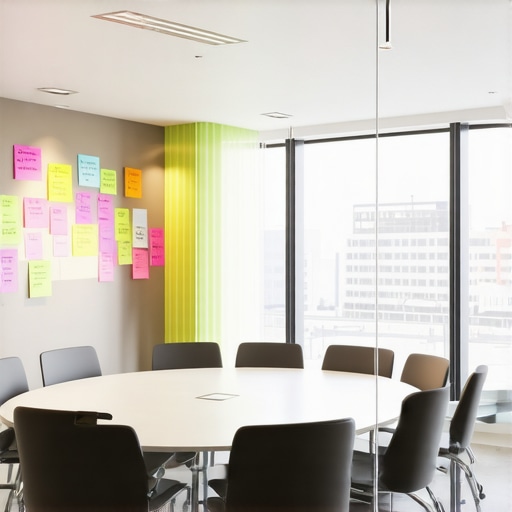
The ‘Oops’ factor often happens during the final stages of the lease. We get excited about the prestige of a zip code and forget the daily reality of the commute. I have seen countless founders choose the real cost of a desk in the heart of downtown only to find their team is too burnt out from traffic to actually innovate. Lately, I have noticed that why suburban flex spaces are the new downtown office is becoming the standard for high-performance teams who value sleep over a trendy address. Before you commit, make sure you are not just buying a vanity project. Ask yourself: does this space actually make the hard parts of my job easier, or does it just look good on my Instagram story?
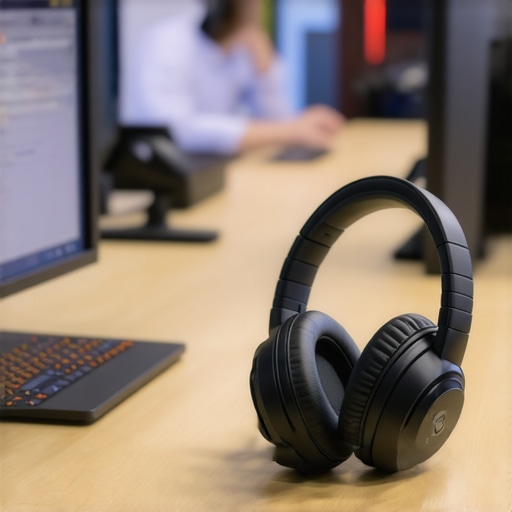
Once you have moved past the initial excitement of a new office, the real challenge begins: maintaining that peak performance day after day. I’ve found that the difference between a founder who burns out and one who scales is often found in their gear bag. I don’t just show up with a laptop and a prayer. I bring a curated kit that effectively turns any hot desk into a private fortress. My go-to is a pair of high-fidelity noise-canceling headphones—specifically the Sony WH-1000XM5 series—because they handle the erratic frequencies of human speech much better than cheaper alternatives. If you find yourself in a space that hasn’t yet implemented the acoustic fix for echoey conference rooms, having your own high-end audio barrier is a non-negotiable requirement for deep work.
Gear that turns a noisy desk into a deep-work sanctuary
Beyond sound, I focus heavily on screen real estate. I’ve started carrying a 15-inch portable 4K monitor that clips onto my laptop. It sounds like overkill until you are trying to cross-reference three different spreadsheets while on a video call. It’s a game-changer for those moments when you realize why your pitch deck looks better on a forty-inch screen than a laptop during formal presentations. I also carry a dedicated Thunderbolt dock to minimize the ‘cable spaghetti’ that plagues shared desks. I’m a firm believer in the idea that physical clutter creates mental clutter; keeping your setup streamlined is how you avoid managing noise complaints in an open-plan office by simply being too focused to notice the chaos around you.
Technical standards actually back up this need for environmental control. According to the ISO 3382-3 standard, which measures the acoustic quality of open-plan offices, the ‘distraction distance’—the distance at which speech becomes unintelligible—is the most critical factor for worker productivity. In many poorly designed hubs, this distance is far too large. This is why I always check why your conference room needs better technology and fewer cables before I book a high-stakes meeting; if the room can’t handle basic connectivity and sound dampening, it won’t matter how good your ideas are.
How do I maintain my focus as the team grows?
Scaling a startup in a shared environment requires a shift from individual habits to team-wide protocols. You can’t just wing it once you have five or ten employees. We had to sit down and figure out the logistics of scaling a hybrid team without a corporate hq, which meant creating strict ‘no-talk’ zones and ‘collaboration’ hours. It also meant being honest about our space requirements. I’ve seen teams stay in a small suite for too long because they were afraid of the move, but you have to know how to pick a membership that scales with your team’s size before you hit that productivity ceiling. If your team is constantly bumping chairs, your creative output is already suffering because why your meeting room needs to be more than just a table becomes very apparent when you have eight people trying to brainstorm in a closet.
Looking ahead, I predict we will see a massive surge in ‘biometric workspaces’—offices that use AI to adjust lighting and white noise levels based on the heart rate and focus patterns of the occupants. We are moving away from static desks toward environments that breathe with the worker. For now, my best advice is to perform a ‘Quarterly Space Audit.’ Every three months, ask yourself: Is this desk still serving my current goals? If not, move. I challenge you to try a portable monitor for one week; the extra screen real estate will change your relationship with ‘working on the go’ forever.
Three Hard Lessons From My Year of Office Hopping
After bouncing between three different cities and five different office setups, I’ve realized that the ‘cool’ factor is the ultimate productivity killer. The first thing I learned is that the community manager isn’t your babysitter; you have to protect your own schedule, or they will fill it with networking events that don’t help your bottom line. Second, I realized that the logic of choosing a flex office over a 5-year lease is the only way to stay agile during a growth spurt. Finally, I discovered that the most expensive room isn’t always the most effective. Sometimes a quiet corner near a window beats a high-tech boardroom every single time because natural light reduces the mental fatigue of a ten-hour grind.
#IMAGE_PLACEHOLDER_E#
The Startup Gear I Use to Stay Productive Anywhere
I don’t leave home without a few specific tools that keep me grounded in a chaotic shared environment. I always carry a ‘power kit’ with a multi-plug adapter because the best seat in the house is almost never near the only available outlet. I also swear by a physical ‘Do Not Disturb’ sign for my desk; it’s a low-tech way to signal to others that I’m in deep work mode without having to be rude. For those looking for more structural advice, I highly recommend reviewing how to choose the perfect conference room for business success to ensure your big investor meetings match your professional ambitions. I also suggest reading Atomic Habits by James Clear to understand how tiny environmental cues can either trigger your best work or lead you straight into a distraction trap.
Your Next Big Win Starts with the Right Environment
Finding the right space isn’t about finding luxury—it’s about removing the friction between your ideas and your execution. Whether you need the vibrant energy of a common lounge to spark a new marketing campaign or the sterile focus of a private suite to finalize your code, the choice is ultimately a reflection of your current goals. Don’t be afraid to pivot if your current setup is draining your battery instead of charging it. Learning how to pick an office that fits your startup’s growth pace is a vital skill that will serve you from your first hire all the way to your exit. Go out there, run your acoustic tests, and build the headquarters your vision deserves.
What was the one deal-breaker that made you quit your last coworking space or office setup? Let me know in the comments below!