
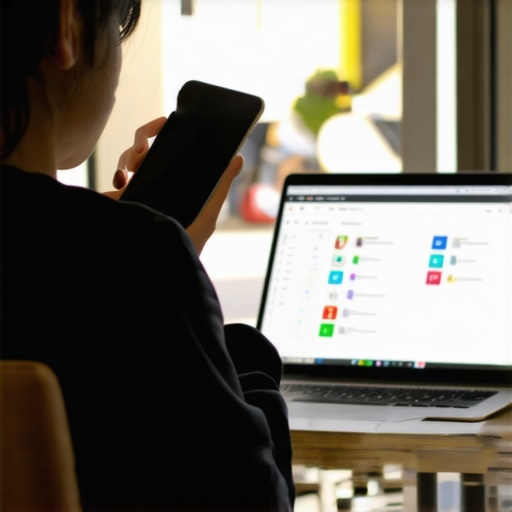
I sat there, staring at the blinking cursor, while the barista shouted ‘Grande Soy Latte’ for the third time. My brain felt like a browser with fifty tabs open, and every single one of them was playing a different song. I used to think the local cafe was my secret weapon for productivity, but that day, it became my greatest enemy. I was in the middle of preparing a deck for a seed round, and I realized I had spent the last hour subconsciously tracking three different conversations. That’s the exact coffee shop habit that kills your daily focus: attempting deep, cognitive work in an environment built for high-entropy socializing. We’ve all been there, haven’t we? You pay for a latte and think you’ve rented a focused workspace, but you’ve actually just signed up for a mental marathon against infinite distractions. Today, I’m going to show you exactly why your brain can’t handle the ‘cafe vibe’ for your most important tasks and how you can reclaim those lost hours by choosing the right environment.
That Third Shot of Espresso Won’t Save Your Focus
Early in my career, I made the mistake of thinking environment didn’t matter as much as ‘grit.’ I tried to build my first startup from a corner booth at a busy bakery. I felt like I was working hard because I was out of the house, but my output was abysmal. I was suffering from what researchers call the ‘stochastic noise effect.’ Unlike white noise, the unpredictable clatter of a cafe forces your brain to constantly switch its attention, even if you don’t realize it. I learned the hard way that your pitch fails in a noisy lobby or a crowded cafe because your mental energy is being siphoned off by the room’s acoustics. It wasn’t until I started ditching the basement-the psychology of a professional workspace for a dedicated setup that I finally saw my business take off.
Is the Coffee Shop Actually Helping Your Productivity?
You might be thinking, ‘But I love the energy of a busy shop!’ I get it. I really do. There is a certain romance to being a digital nomad with a laptop and a dream. However, ask yourself this: are you actually finishing the hard stuff, or are you just doing the easy admin tasks that make you feel busy? An authoritative study published in the Journal of Consumer Research (2012) noted that while moderate noise levels can occasionally spark abstract creativity, they are a disaster for ‘convergent thinking’—the kind you need to solve real problems or write code. When you are in a space with no privacy, your brain remains in a state of high alert, which is the literal opposite of the flow state we all crave.
Why Your Brain Hates the Ambient Buzz You Think You Love
The problem isn’t just the noise; it’s the lack of control. When you are in a professional environment, you can predict the flow of the room. In a cafe, you are at the mercy of the espresso machine, the squeaky door hinges, and the person who decides to take a Zoom call on speakerphone right next to you. This is one major reason why investors prefer meeting in a high-energy hub over a quiet cafe or a chaotic local spot; it’s about a shared commitment to focus. If you really want to get things done, you have to learn how to find quiet spaces in a busy downtown coworking hub instead of hoping for a quiet corner at the local beanery. Have you ever spent a whole afternoon in a cafe only to realize you didn’t actually check anything major off your list? It’s time to stop the cycle and find a space that respects your cognitive bandwidth.
Audit Your Deep Work Cycles First
Before you pack your laptop bag, you need to identify which tasks are non-negotiable for ‘deep work.’ I use a simple triage system: anything requiring more than 20 minutes of uninterrupted logic—like financial modeling or technical writing—is strictly banned from public spaces. I learned this after trying to host an advisory board meeting at a ‘quiet’ artisan bakery. Halfway through our revenue projections, a bread oven alarm started blaring, and a group of toddlers began a shouting match two tables away. I could see my lead investor’s patience thinning. That afternoon taught me that the secret to running a board meeting that stays on schedule isn’t the agenda; it’s the physical wall between you and the world. If you aren’t sure where your time is going, run a 10-minute audit of your previous week. You’ll likely find that the truth about hot desking is it actually a productivity killer when you’re constantly scanning the room for an outlet or dodging a barista.
Test Your Space for Acoustic Integrity
Once you move into a professional environment, don’t assume every four-walled room is equal. You need to know how to vet a meeting room for acoustic privacy before booking. I always do a ‘clap test’—if the sound bounces off the walls like a squash court, your client on the other end of the Zoom call is going to have a headache within ten minutes. High-quality hubs use sound-absorbing panels and heavy-duty glass to ensure your trade secrets don’t become common knowledge in the hallway. 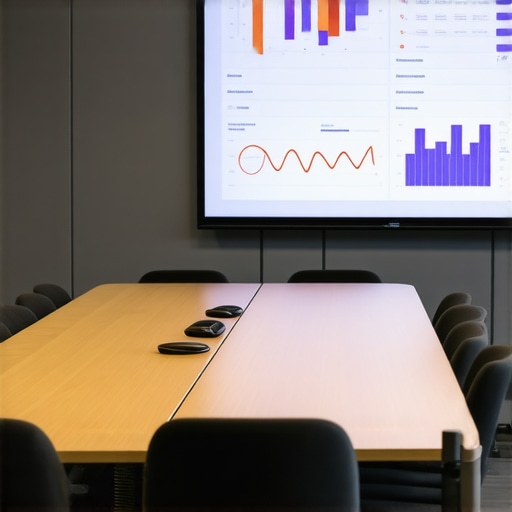
Switch to Zones That Actually Close Deals
The transition from a cafe to a dedicated startup hub isn’t just about peace and quiet; it’s about the infrastructure that supports high-stakes moments. You can’t expect a $50k seed check when your background noise includes a milk frother. I’ve seen firsthand how why your pitch deck wont save you from a noisy meeting space—it makes you look like a hobbyist rather than a founder. When I finally moved my team into a space with innovative meeting rooms that boost startup creativity, our output didn’t just improve; our professional confidence did.
Master the 02:45 PM Productivity Sprint
The afternoon slump is real, and the cafe response is usually another latte. In a professional workspace, the response is a change of scenery. Move from your desk to a high-energy collaboration zone. Learning how to maximize productivity in your startups conference rooms by 0245 pm involves using the standing desks or the whiteboard walls to physically re-engage your brain. By treating your workspace like a toolkit rather than just a place to sit, you stop being a victim of your environment and start becoming its master.
The One Huge Lie About Executive Privacy
Most founders think that booking any conference room is a massive step up from a cafe. But here is the contrarian truth: a poorly chosen meeting room can actually do more damage to your brand than a noisy latte machine. I’ve seen teams lose momentum because they booked a massive, echoing boardroom for a two-person strategy session. It creates a psychological distance that kills intimacy and speed. You need to follow the two-pizza rule for booking the right size meeting room to keep the energy tight. If the room is too big, the ideas feel small. If it’s too small, you’re just suffocating your creativity. It is a nuanced balance that most people ignore until the room feels cold and the deal stalls.
Don’t Let the ‘Working Adapter’ Myth Derail Your Pitch
The biggest ‘oops’ factor I see with startups moving into flex spaces is the blind assumption that technology just works. I once watched a founder fumble for 15 minutes with a dongle while a Tier-1 VC sat there checking his watch. It was painful. You must learn how to find a conference room that actually has working adapters and test them before the guest arrives. This is also where the acoustics test every conference room should pass becomes your best friend. If the person on the other end of the screen hears an echo of their own voice, they aren’t listening to your revenue projections—they’re just annoyed by the feedback loop. High-quality hubs solve this, but you have to vet them first.
Does That Fishbowl Office Actually Help Your Team Culture?
The trend of glass-walled offices is meant to signal transparency, but it often creates a ‘surveillance culture’ that stifles real talk. Expert research from the Harvard Business School (Bernstein, 2012) found that increased visibility can actually decrease productivity because employees start ‘performing’ work rather than actually doing it. When you are discussing a pivot or a layoff, you don’t want the whole hub watching your facial expressions. This is exactly what happens to your culture when you move to a private suite; you regain the psychological safety to fail and iterate in private without the prying eyes of other tenants.

Why a War Room Beats a Boardroom Every Time
If you are in high-growth mode, stop looking for the most ‘prestigious’ mahogany table. You need a space where you can leave post-it notes on the glass and wireframes on the walls for days at a time. There is a massive difference between a standard meeting room and a real war room. One is for status; the other is for execution. If your meeting space feels like a hospital, your ideas will go there to die. Instead, look for innovative meeting rooms that boost startup creativity by allowing for movement, physical collaboration, and long-term residency. Remember, the cost of a bad first impression isn’t just about looking ‘rich’—it’s about looking like you have the tools to win. Have you ever fallen into the trap of picking a ‘fancy’ room that actually hindered your work? Let me know in the comments.
Stop Buying Dongles and Start Demanding Better Hubs
I spent three years thinking I could hack my way through bad tech with a bag full of adapters. I was wrong. The moment you scale beyond a team of three, your ‘MacGyver’ approach to technology becomes a massive bottleneck. You need a space where the hardware is as professional as your pitch. This is exactly why your conference room needs better technology and fewer cables; it is about reducing the ‘friction to start.’ I have personally found that having a dedicated docking station with a single USB-C tether is the difference between a meeting starting at 09:00 AM or 09:12 AM. In the world of venture-backed startups, those twelve minutes are the difference between finishing your deck and being shown the door. In fact, why our private office suites stock extra surface pro chargers for members is not just a courtesy—it is a redundancy strategy for high-stakes days. According to the Building Industry Consulting Service International (BICSI) standards, a high-performing conference room requires an ambient noise level below 35 dBA to ensure cognitive load remains low during decision-making. If your space does not meet these technical specs, you are not just working hard; you are working against the laws of physics. 
How do I maintain team velocity as we scale our floor plan?
The biggest trap founders fall into is the ‘fixed lease’ mindset. You think you need a five-year plan, but you actually need a six-month pivot strategy. As you grow, you will realize that the move to a dedicated desk is the extra cost worth it because it provides a consistent home base for your culture while you utilize flex spaces for the heavy lifting. Managing the logistics of scaling a hybrid team without a corporate hq requires a platform, not just a room. Looking ahead, the future of conference rooms in startup ecosystems will likely involve AI-integrated acoustic dampening and real-time transcription, but for now, you just need a room that works every single time you plug in. If you want to see if your current setup is actually scaling with you, I recommend evaluating the role of flex space in a modern business scaling strategy as your primary blueprint. Try this today: Walk into your most-used meeting room and try to connect your laptop to the screen in total darkness. If you cannot do it in 30 seconds, your tech setup is actively costing you money and momentum.
The Day My Laptop Battery and a Crowded Cafe Almost Cost Me a Lead Investor
I used to think that as long as I had Wi-Fi, I could build an empire anywhere. I was wrong. The moment I transitioned into a professional setting, I realized I had been operating at half-capacity. One of the biggest shifts was moving from a survival mindset to an execution mindset. You stop worrying about where the nearest outlet is and start worrying about your churn rate. The move from a garage to a flex office taught me that your surroundings act as a silent partner in every deal you close. My lightbulb moment happened when I realized that being busy is not the same as being effective. In a cafe, you are busy fighting for a seat; in a professional hub, you are effective because the seat is waiting for you.
- Support beats aesthetics: Those plush cafe chairs are great for reading, but they are terrible for long-haul development sessions. The exact chair you need for a 12-hour coding sprint is an investment in your physical longevity and mental stamina.
- Proximity is your best marketing: In a cafe, you are a stranger. In a hub, you are a peer. The networking move that landed us our first seed round didn’t happen over a scheduled Zoom call; it happened in a shared kitchen because I was physically present in a high-growth environment.
- Tech reliability is non-negotiable: You cannot build a billion-dollar company on a public network. Professionalism is earned when you have the infrastructure to support your ambition.
The Gear That Keeps My Startup Running When the Hub is Buzzing
Over the years, I’ve curated a small but mighty list of tools that turn a good coworking day into a legendary one. First, I never go anywhere without a dedicated high-speed USB-C hub. Most people overlook this until they are fumbling during a pitch. Why your conference room needs better technology and fewer cables isn’t just an aesthetic choice; it’s a productivity one that saves you from embarrassing technical delays. Second, I highly recommend the book Deep Work by Cal Newport—it provides the framework for why these spaces matter. Finally, use a digital booking tool to secure your spot in advance. How to book a meeting room on a friday afternoon without the stress is a skill every founder needs to master before their team grows. Knowing your space is waiting for you eliminates the morning anxiety that kills creativity.
Build Something That Lasts Beyond the Next Latte
Your startup deserves more than a corner booth and a patchy internet connection. It’s okay to start small, but it’s not okay to stay small because your environment is holding you back. By investing in a professional workspace, you are signaling to yourself—and the world—that your mission is serious. Don’t be afraid to leave the comfort of the local cafe behind. When you apply startup success secrets choosing the perfect conference room at 0817 am, you aren’t just renting a desk; you’re buying back your focus and your future. The elite level of execution you want requires an elite environment to sustain it. #IMAGE_PLACE_HOLDER_E#
Have you ever had a near-miss moment because of a loud environment or a tech failure in a public space? Let me know below!