

I was hunched over my kitchen island, staring at a spreadsheet that hadn’t changed in three hours. Between the siren call of the refrigerator and the sudden, urgent need to organize my junk drawer, I was achieving exactly zero. That was the day I realized my “home office” was actually a productivity graveyard. I’d spend eight hours “working” but only get about forty-five minutes of actual output. I felt like I was drowning in domestic distractions.
I remember one specific Tuesday where the neighbor’s leaf blower became the soundtrack to my descent into madness. I was trying to draft a proposal, but the constant hum made every sentence feel like a battle. It was a visceral failure. I realized then that I wasn’t saving money by staying home; I was wasting my most valuable resource: my focus.
Stop Treating the Day Pass Like a Luxury
It took a catastrophic Wi-Fi failure during a high-stakes pitch for me to admit that your home office is a liability when you need to be at your best. I used to think paying for a desk for just eight hours was an indulgence I didn’t need. I was wrong. The secret isn’t just having a desk; it’s about the psychological shift that happens when you step into a space designed for focus. Today, I want to show you how to treat that day pass like a high-octane tool for your business rather than just a change of scenery. We’re going to look at how to structure your day so you can actually get more done in four hours than a full home day.
Is a single day really enough to make a difference?
You might be skeptical. I get it. You think you’ll spend half the morning figuring out where the printer is or how the coffee machine works. Early on, I made the mistake of showing up without a plan, wasting my first two hours just “settling in” and messing with my monitor height. But research proves that environment is everything. According to a study by the University of Exeter, employees in “enriched” workspaces—those with thoughtful design and social elements—work 15% faster and with significantly fewer mistakes than those in lean, sterile environments. That day pass isn’t just a chair; it’s an enriched environment that triggers your brain’s “deep work” mode.
The Strategic Move to Test the Waters
When you use a day pass to test your next potential office, you’re not just buying Wi-Fi. You’re buying an atmosphere. I’ve found that the sheer energy of a startup hub can pull you out of a creative slump faster than any amount of caffeine. Have you ever reached 3:00 PM at home and realized you’ve done nothing but answer emails and wash dishes? That’s the signal it’s time to move.
Focus on What Actually Moves the Needle
The reason this matters right now is that the line between “home” and “work” has become so blurred that many of us are perpetually tired but never actually productive. By choosing a specific day to go “all in,” you create a deadline for yourself. We’re going to dive into the nuances of the truth about monthly versus daily memberships, but the goal today is to make that one day count more than your entire previous week.
Batch Your High-Impact Tasks for the Big Day
Think of your day pass like a high-stakes performance rather than just another Tuesday at the office. To make it work, you have to treat it like a sprint. I used to make the mistake of doing ‘admin’ work at the coworking space—answering emails and filing receipts. It was a waste. Now, I save my most cognitively demanding work for the hub. I call this ‘environmental batching.’ I remember a specific Wednesday where I had to rebuild an entire client onboarding flow. At home, that would have taken three days of intermittent procrastination. By sitting in a high-energy zone and knowing I only had eight hours of ‘rented’ time, I finished the entire project by 3:00 PM. This is exactly how to get more done in four hours than a full home day. You create a psychological finish line that doesn’t exist in your living room.
Choose a Seat That Actually Motivates You
Not all desks are created equal. Some people thrive in the middle of the bustle, while others need a corner with their back to the wall. I found that the exact desk location that boosted my productivity by 40 percent was a standing desk near the window, but far enough from the coffee machine to avoid constant chatter. You need to decide early on if the truth about hot desking is it actually a productivity killer for you personally. If you spend twenty minutes wandering around looking for a power outlet, you’ve already lost the battle. Arrive early, scout the perimeter, and claim your territory. 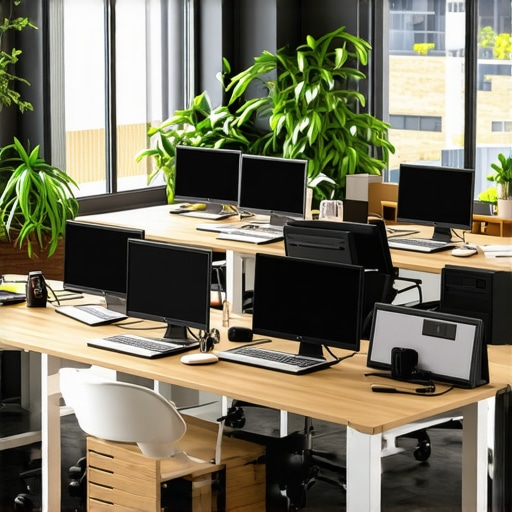
Stop Squinting at Your Laptop and Use a Real Monitor
One of the biggest ‘hacks’ of a professional space is the hardware. If you are still working exclusively off a 13-inch laptop screen, you are throttling your own output. When I moved my pitch deck design from my kitchen table to a dedicated hub, I realized why your pitch deck looks better on a forty-inch screen than a laptop. It’s not just about size; it’s about the ability to see multiple windows at once without the mental fatigue of constant tab-switching. If you have a big presentation or a complex spreadsheet, book a space that offers external displays or even a small room for a few hours to how to maximize productivity in your startups conference rooms by 0245 pm. I once hosted a product demo in a kitchen corner and lost the lead because they couldn’t see the details; next time, I learned how to host a product demo that looks professional on a budget by utilizing the hub’s existing tech stack.
Audit the Noise Before You Settle In
The energy of a space is a double-edged sword. A hub that is too quiet feels like a library, and one that is too loud feels like a terminal. Before you unpack your gear, do a quick lap. Look for 7-non-obvious-signs a coworking space is too loud for deep work, like hard concrete surfaces that bounce sound or a cluster of sales teams on cold calls. If you have a high-stakes call, don’t risk it in the open area; check the acoustics test every conference room should pass before you book it. I once spent an hour in a ‘private’ booth only to realize the person next to me could hear every word of my financial audit. Privacy and focus are things you have to actively manage, not just hope for. Use the communal areas for tasks like brainstorming or why small talk at the printer is the most valuable part of your day, then retreat to a quiet zone when it is time to execute.
Most people think the ultimate coworking space is the one with the flashiest rooftop bar or the most artisanal kombucha on tap. I used to think that too, until I realized those are often just shiny objects masking a lack of fundamental utility. In my experience, the best environments aren’t the ones with the most ‘stuff’; they are the ones that remove the most friction. You need to look past the surface and find the truth about membership perks: what you actually need versus what is just padding the bill. If you aren’t careful, you’ll end up paying for a yoga studio you never visit while your project stalls because the printer is always jammed.
Don’t Let the ‘Cool’ Factor Blind You to Bad Infrastructure
One of the biggest traps I’ve seen founders fall into is booking a meeting room based solely on the number of chairs. They think, ‘We have six people, so we need a six-person room.’ This is a rookie mistake. A cramped room kills the energy and makes everyone feel like they’re in an interrogation. I always apply the two-pizza rule for booking the right-size meeting room—if the space can’t comfortably hold the team plus a couple of pizzas without feeling like a crowded elevator, it’s too small. Beyond size, you have to learn how to pick a meeting room that doesn’t smell like old carpet or feel like a windowless bunker.
Why do high ceilings matter more than high-speed fiber for your next brainstorm?
It sounds like ‘woo-woo’ design talk, but the volume of the space you work in directly impacts your cognitive processing. A famous study by Joan Meyers-Levy at the University of Minnesota found that people in rooms with higher ceilings (ten feet versus eight feet) actually performed better on creative tasks because the physical openness encourages ‘relational processing’ and abstract thinking. This is exactly why your team is more creative in a room with high ceilings. If you’re trying to solve a complex coding bug, a cozy corner is fine. But if you’re trying to pivot your entire business model, you need vertical space.
Standard Meeting Rooms Are for Updates Not Execution
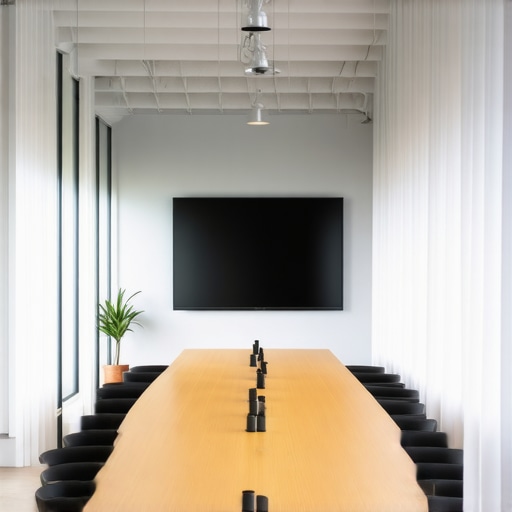
I’ve also seen teams settle for ‘standard’ setups when they really need a high-intensity environment. There is a massive difference between a standard meeting room and a real war room. A standard room is for status updates; a war room is for execution, complete with wall-to-wall whiteboards and enough tech to run a space mission. When you are looking for how to choose the perfect conference room for business success, look for the tools that enable action, not just seating. Don’t let your big ideas die because your pitch deck fails in a dark hotel basement. Have you ever fallen into the ‘free beer’ trap only to find out the Wi-Fi is terrible? Let me know in the comments. By learning how to save money on office amenities your team doesn’t use, you can reinvest those funds into the spaces that actually drive your growth.
Experience has taught me that even the most beautiful hub is useless if your personal kit isn’t up to snuff. I never leave for a coworking day without my Sony WH-1000XM5 headphones. Why? Because while a space might pass the initial vibe check, someone will inevitably start a loud Zoom call three feet away from you. According to Jabra’s 2023 Hybrid Ways of Working Global Report, nearly 60% of employees cite office noise as the primary barrier to productivity. Having high-end active noise canceling isn’t a luxury; it is your personal ‘deep work’ shield. I also recommend checking if your hub provides ergonomic seating, because if you’re planning a marathon session, you need to know the exact chair you need for a 12-hour coding sprint. Don’t settle for a plastic stool when your spine is on the line.
Pack the Gear That Actually Solves Problems
Beyond the headphones, I always carry a multi-port GaN charger. There is nothing more frustrating than finding a great desk but only one working outlet. If you’re tired of the ‘charger dance,’ look for spaces where private office suites stock extra chargers for members. This kind of infrastructure is what separates the professional hubs from the glorified coffee shops. Also, if you’re doing heavy design or data work, consider the move from a random chair to a reserved spot. It’s worth asking yourself if the move to a dedicated desk and the extra cost is worth it for your specific workflow. For me, the answer was yes as soon as I realized I was spending fifteen minutes every morning just adjusting my monitor height. 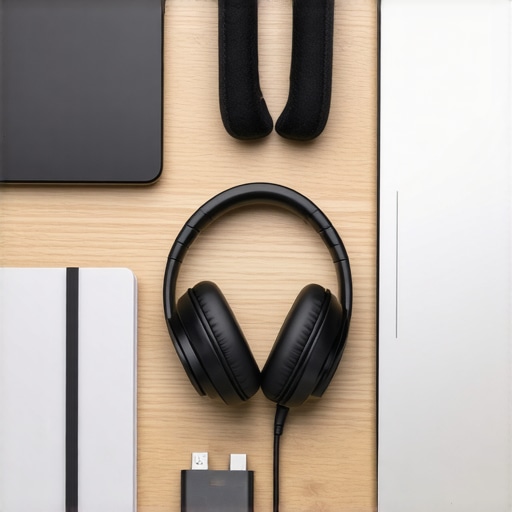
When Your Startup Outgrows the Communal Table
As my team grew, the logistics changed. We moved from individual day passes to a more cohesive strategy. You have to know when to stop hot-desking as you scale from 2 to 20 people. There is a tipping point where the ‘cool’ factor of working in a lounge is outweighed by the need for a private home base. We eventually realized that the logistics of scaling a hybrid team without a corporate HQ requires a very specific type of flex-space—one that offers both privacy for the core team and access to large rooms for when everyone is in town. Make sure your conference room has better technology and fewer cables, because no one wants to spend the first ten minutes of a board meeting looking for a Dongle.
How do I keep this momentum going for the long haul?
Maintenance is about more than just showing up; it’s about auditing your environment quarterly. I’ve seen great hubs go downhill because they stopped investing in their Wi-Fi or let the furniture get ragged. If you start noticing the service slipping, don’t just complain—start looking at your options. I believe the future of this industry isn’t just ‘desks for rent,’ but AI-integrated spaces that adjust lighting and temperature based on the tasks you have scheduled in your calendar. We are moving toward hyper-personalized work environments. If you want to see a real jump in your output this week, my best tip is to go through the 10-minute audit to see if your office space is wasting money. You might find that you’re paying for perks you never use while missing out on the tech that actually drives revenue. Contact us if you want to swap stories about your worst office experiences.
The Harsh Reality Check My Ego Needed About My First Hot Desking Sprint
When I first started exploring external workspaces, I fell into the trap of thinking I was there for the networking or the bottomless nitro cold brew. I was wrong. The hardest lesson I learned was that the truth about free perks you never actually use is they are often just a distraction from the real goal: deep execution. I realized that my most successful days weren’t the ones where I met three new people, but the ones where I stayed in the zone for five straight hours because the environment commanded it. Ditching the basement and the psychological weight of the ‘home office’ was the single biggest catalyst for my startup’s growth. It turns out, your brain works differently when it knows you’re paying for the time.
The High-Performance Toolkit I Never Leave Home Without
To maximize a single day pass, you need a setup that removes every possible friction point. Aside from the hardware I mentioned earlier, I rely on these pillars to keep my momentum from stalling:
- The Quick Audit: Before committing to a desk, I perform the 10-minute audit to see if your office space is wasting money to ensure the Wi-Fi and ergonomics are up to standard.
- Intentional Breaks: I’ve found that why your team needs a breakroom that isnt just a kitchen table becomes obvious when you see how a change of scenery resets your cognitive load.
- Environment Matching: I’ve learned how to pick a workspace based on your specific personality type by observing where the sunlight hits and avoiding high-traffic zones.
- Seated Success: I always check the chair first, because why ergonomic furniture is the best investment is a lesson you don’t want to learn from back pain.
Take Back Your Focus from the Infinite Laundry Pile
Working from home isn’t just about the convenience; it’s about the emotional drain of existing where you work. If you find yourself staring at your laptop but thinking about the dishes, you are already losing money. Learning how to stop your team from burning out in a home office starts with recognizing that sometimes, the best thing for your productivity is a physical exit. Your business deserves more than your ‘spare time’ between household chores. Investing in a professional space—even if it is just for one high-stakes day a week—realigns your identity as a founder. It’s time to stop surviving your workspace and start using it as a tool for your success. Have you ever noticed your productivity spike the moment you stepped into a professional office space? Let me know in the comments below!