
I was hunched over my laptop at a wobbly bistro table, nursing a stone-cold Americano and glaring at the guy next to me who was crunching ice like it was his job. It was 2:15 PM. I’d been “working” since 10 AM, shifting between three different cafes to avoid overstaying my welcome. By the time I calculated the cost of overpriced pastries and the mental tax of hunting for a power outlet, I realized my “saving money” strategy was actually a slow-motion car crash for my startup. I was exhausted, my neck ached, and I had accomplished exactly nothing of substance.
The Day I Realized My Coffee Shop Office Was Killing My Startup
When I first launched my venture, I was obsessed with lean operations. I figured that paying for a monthly membership was a luxury I couldn’t afford. I thought the truth about hot desking was simply that it was a way to keep things flexible. My biggest mistake was equating “flexibility” with a lack of commitment. I spent months jumping from one lobby to another, failing to see that the hidden cost of instability was draining my bank account faster than a fixed rent ever would. Today, I want to help you cut through the marketing noise and look at the hard numbers of monthly versus daily access.
Is the daily pass just an expensive band-aid for your business?
Many of my friends in the startup world still swear by the occasional day pass. I get it. It feels low-risk. You might even use a day pass to test your next potential office, which is actually a move I highly recommend. But the problem starts when that temporary fix becomes your permanent strategy. Research published by the Harvard Business Review suggests that the lack of a consistent “anchor” workspace can lead to a significant drop in cognitive focus and a weakened professional identity. You aren’t just paying for a chair; you are paying for the psychological permission to sit down and do deep work without worrying about when you’ll be kicked out.
Why You Should Stop Treating Your Office Like a Hotel Room
If you are constantly checking in and out, you never truly arrive. I remember trying to host a client call from a “quiet” corner of a public library, only to have a toddler meltdown happen three feet away. It was humiliating. That was the moment I realized I needed to perform a 10-minute audit to see if my office space was wasting money. The results were staggering. Between the lost productivity and the transactional costs of daily rates, I was spending nearly 30% more than a dedicated monthly membership would have cost. Have you ever felt like you’re working harder just to find a place to work than actually doing the work itself? If you’ve been stuck in that “daily rate” loop, you know exactly the kind of burnout I’m talking about. It’s time to look at how to pick a membership tier that scales with your team so you can stop playing musical chairs and start building your empire.To move from a nomad to a founder, you need a system, not just a seat. It’s like the difference between buying individual grocery items every meal or finally stocking your pantry; one is reactive, the other is strategic. When you are a solo founder, you are the CEO, the janitor, and the IT department. If you are also the “Real Estate Scout” every single morning, you are diluting your most precious resource: focus.
How to Stop Playing Office Roulette
The first step is acknowledging that “free” or “cheap” spaces have a massive hidden tax that doesn’t show up on a receipt. You need to calculate your real burn rate. I’m not just talking about the $5 lattes or the parking fees. I’m talking about the hidden drag of slow office wi-fi on your burn rate. If you spend 20 minutes a day reconnecting to a spotty public network or searching for a seat near a router, you’re losing over 80 hours of productivity a year. That’s two full work weeks gone because you didn’t want to commit to a professional infrastructure.
Calculate Your Real Burn Rate Beyond the Desk Fee
Sit down and log every minute you spend “preparing” to work. This includes hunting for outlets, waiting for a seat to open up, and the mental load of wondering if your laptop will be stolen if you go to the bathroom. When I performed my own audit, I found I was losing nearly 25% of my workday to pure logistics. By moving to a dedicated spot, I effectively bought back 10 hours a week. That is the equivalent of a part-time intern’s worth of output. It’s the difference between sprinting toward your goals and wading through knee-deep mud while trying to hold a Zoom call.
Master the High-Stakes Meeting Without the High-Stakes Stress
When you have a monthly membership, you usually get credits for private rooms. This is where the magic happens for closing deals. Stop trying to “make it work” in the lobby with a pair of noise-canceling headphones. I once lost a potential $50k seed investment because why your pitch deck wont save you from a noisy meeting space became painfully obvious when a nearby espresso machine started screaming during my financial breakdown. The investor literally couldn’t hear my valuation logic. Now, I follow a strict protocol: if the call is worth more than $500, it happens in a closed room. 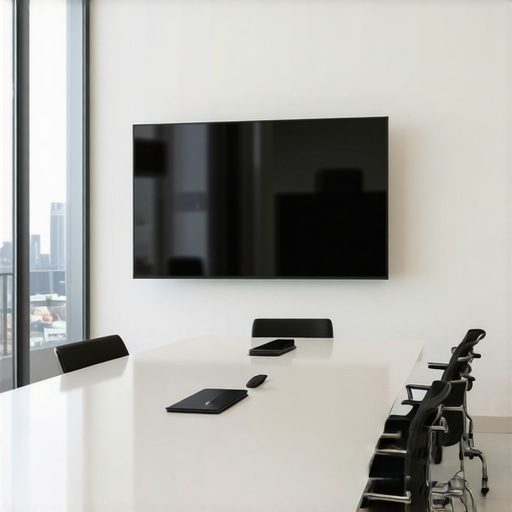 You need to learn how to choose the perfect conference room for business success, which means checking for more than just a table and chairs. You need to know how to find a conference room that actually has working adapters and a reliable screen.
Find the Sweet Spot Between a Couch and a Corner Office
If you aren’t ready for a private suite, look into the move to a dedicated desk is the extra cost worth it. Having a specific spot where your external monitor and your “good” chair live changes your brain’s chemistry. It signals that you are here to work, not just to hang out. It also lets you how to maximize productivity in your startups conference rooms by having a staging area for your physical materials. When you stop treating your office like a temporary layover, your team starts treating the business like a long-term career. It’s about creating an environment where you can how to host a product demo that looks professional on a budget without the constant fear of a barista shouting a name in the background. Always ensure that your prospective space passes the tech test by seeing why your conference room needs better technology and fewer cables.Most founders fall for the ‘aesthetic trap’ when picking their first real workspace. They see a glass-walled room with a neon sign and think they’ve finally made it. But after spending years in the trenches, I’ve learned that the ‘cool’ factor is often a smokescreen for poor functionality. If you are serious about scaling, you have to look past the decor and analyze the structural nuances that actually drive results.
The Glass Wall Myth That’s Leaking Your Secrets
We’ve all been there—sitting in a sleek, transparent cube feeling like a high-powered executive. But here is the contrarian truth: glass walls are often a disaster for focus and security. While they look great for ‘transparency,’ they are a constant source of visual distraction. Even worse, if you haven’t checked the glass thickness, you are likely broadcasting your private pitch to the entire lounge. I’ve seen founders lose their competitive edge because they didn’t know how to keep your startups trade secrets safe in a public lounge. It is not just about who can see your screen; it is about who can hear your valuation. Most spaces claim their rooms are soundproof, but they rarely pass the acoustics test every conference room should pass. I once sat in a common area and accidentally overheard a competitor’s entire Q3 strategy because their ‘private’ room had a gap in the drop-ceiling tiles. You must learn how to vet a meeting room for acoustic privacy before booking before you host any sensitive conversation. 
Can a ceiling height actually change your company’s valuation?
It sounds like a stretch, but environmental psychology says otherwise. A landmark study by Joan Meyers-Levy at the University of Minnesota found that ceiling height significantly impacts how humans process information. Rooms with high ceilings—often called the ‘Cathedral Effect’—encourage abstract thinking and creative connections. Conversely, lower ceilings are better for detail-oriented, concrete tasks. If you are in a ‘war room’ phase trying to fix a complex coding bug, a smaller, focused room is your best friend. But if you are trying to find innovative meeting rooms that boost startup creativity for a pivot or a new product launch, those high ceilings are a non-negotiable tool, not just a luxury. It is a nuance that separates founders who just want a desk from those who understand the difference between a standard meeting room and a real war room.
Don’t Book a Room Until You’ve Done This 30-Second Test
The biggest ‘oops’ factor I see is treating a board meeting like a casual catch-up. I’ve watched teams struggle with how to handle high-stakes board meetings in a shared building because they chose the ‘creative’ room with beanbags and no table. That environment does not command authority. When you are looking for transforming meeting rooms into collaboration hubs, you need to ensure the physical infrastructure—from the table height to the lighting—actually supports the objective of the meeting. Have you ever fallen into this trap of choosing ‘cool’ over ‘functional’? Let me know in the comments. It is time to stop playing startup and start engineering your environment for the outcome you want.I’ve learned the hard way that scaling isn’t just about hiring more people; it’s about upgrading your physical and digital toolset. If your team is still sharing one dongle like it’s the Holy Grail, you are failing your own mission. In our suite, we realized why our private office suites stock extra surface pro chargers for members—because small tech friction kills big momentum. I also invested early in why ergonomic furniture is the best investment for your seed round. If your back hurts by 3 PM, your code, your pitch, and your patience will suffer.
The Gear That Actually Matters for Scale
Beyond the chair, I focus on the ‘Presentation Stack.’ Stop squinting at 13-inch MacBooks when you are trying to close a six-figure deal. I found that why your pitch deck looks better on a forty-inch screen than a laptop is actually about buyer psychology; it makes your vision feel ‘big’ and established. If you are doing a demo, use the lighting trick that makes your product demo look expensive. I personally carry a portable LED panel to kill those weird shadows in standard conference rooms. According to the International WELL Building Institute (IWBI), optimizing light levels and air quality in a workspace isn’t just about comfort—it correlates to a 10-15% increase in cognitive performance and reduced eye strain. 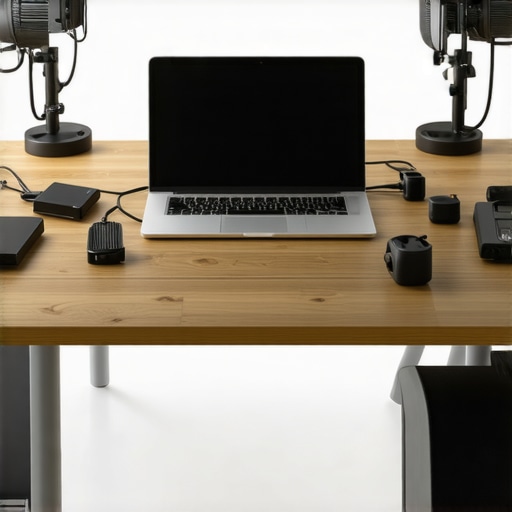
How do I keep the team focused in a busy hub?
As we moved from 2 to 10 people, we had to learn scaling from 2 to 20 when to stop hot desking. The secret is creating ‘Anchor Points.’ Every team member needs a home base, even in a flexible environment. We use a hybrid model where Tuesday and Thursday are ‘War Room’ days, often transforming meeting rooms into collaboration hubs for 6-hour sprints. We use tools like Notion for the async work, but for the hard stuff, we rely on why physical collaboration still beats video calls for startups.
The Future of Your Workspace is Probably Sentient
Looking ahead, I predict a massive shift toward ‘Bio-Responsive’ rooms. We are already seeing the future of conference rooms in startup ecosystems where AI adjusts the CO2 levels and acoustics in real-time based on the energy of the meeting. By late 2025, coworking spaces unlock innovation top meeting rooms of 2025 will likely include sensory-deprivation pods for deep focus sprints. My advice? Don’t wait for the tech to catch up. Go perform a 10-minute audit to see if your office space is wasting money right now. Take one day this week and track how many times ‘tech issues’ interrupt your flow. If it is more than twice, it is time to upgrade your environment.
The Brutal Realities I Discovered After 500 Hours in Shared Spaces
Reflecting on my transition from the coffee shop grind to a dedicated suite, I’ve realized that the ‘where’ of work is just as important as the ‘what.’ First, I learned that environment dictates behavior; if you are in a space that feels temporary, your decisions will be short-term. Second, your team’s morale is directly tied to their physical comfort. Investing in why ergonomic furniture is the best investment for your seed round wasn’t just about back health; it was about showing my developers that their focus was worth the premium. Third, I discovered that energy is contagious. This is exactly why investors prefer meeting in a high energy hub over a quiet cafe—they want to see that your company is part of a moving, breathing ecosystem, not an isolated island.
The Specific Gear and Mindset Shifts That Scaled My Vision
If you are looking to move beyond the survival phase, you need a curated set of tools that support high-level execution. I personally rely on these four pillars to keep my momentum high:
- The ‘Zero Friction’ Tech Kit: I stopped relying on the building’s infrastructure and started bringing my own high-speed mobile hotspot and a universal adapter kit. You should know how to find a conference room that actually has working adapters, but always carry a backup.
- Deep Work by Cal Newport: This book is the bible for anyone working in a bustling hub. It taught me how to protect my cognitive bandwidth when the lounge gets loud.
- The Lean Perks Audit: Every quarter, I look at the truth about membership perks what you actually need versus what is just fluff. If you aren’t using the ‘free’ beer but you are desperate for faster upload speeds, it’s time to renegotiate.
- Strategic Offsites: We regularly move our high-stakes planning away from our desks because why we moved our quarterly reviews to a neutral offsite allows for a complete mental reset.
#IMAGE_PLACEHOLDER_E#
Your Environment is the Foundation of Your Next Big Win
Making the jump from a laptop and a dream to a functional, professional office is the moment you stop playing ‘startup’ and start running a business. It’s an intimidating step, but it is the only way to protect your culture from the erosion of isolation. I’ve seen far too many peers fail because they didn’t realize why startups fail when they isolate in home offices. When you choose to step into a professional hub, you aren’t just buying a desk; you are buying into a higher standard of performance. Take the lessons I learned about startup success secrets choosing the perfect conference room and apply them to every corner of your professional life. Your future self—and your future investors—will thank you for the foresight. Which ‘hidden cost’ of your current setup is eating your profits or your focus the most right now? Let me know in the comments below.