

I remember standing over a clunky laser printer in a shared office back in 2018, sweating through my favorite blue shirt. I was five minutes late for a high-stakes board meeting, and the machine decided to swallow my last three slides. I was cursing the paper tray and the heat, convinced that this “interruption” was ruining my career. Then, a developer from a startup across the hall—someone I’d barely nodded to in months—stepped in. He didn’t just fix the jam; he asked what I was working on. In the three minutes it took to reprint, he offered a solution to a database bug that had been bleeding my runway dry for weeks. By the time I walked toward our innovative meeting rooms, I had a fresh deck and a new technical advisor. That three-minute delay saved my company more than any “focused” hour ever could. Today, I want to show you why those small, seemingly annoying moments in a startup-heavy conference room environment are actually the secret sauce to success. We’re going to dive into how to foster these connections without being “that guy” who talks too much.
My biggest mistake was ignoring the people right in front of me
Early on, I was a victim of my own “productivity” hacks. I thought every second not spent staring at a screen was a second wasted. I’d walk into the building with my noise-canceling headphones on, a physical shield against anyone who might dare to say hello. I was convinced that isolating yourself in a home office or a private bubble was the only way to get real work done. I was wrong. I was building a company in a vacuum, and it almost killed my growth. I didn’t realize that the “water cooler” isn’t just for gossip—it’s for cross-pollination. A study published in the Harvard Business Review by researchers at MIT found that informal talk is the single most important factor in team success, often more than all other factors combined. When you stop looking at the printer as a hurdle and start seeing it as a hub, everything changes.
Is a three-minute chat really better than a focused meeting?
I can already hear the skepticism. You’re busy. You have investors to answer to and code to ship. You might think that suffering through zoom fatigue is the price of admission for modern business. But here’s the reality: those scheduled meetings are where ideas go to die in a pile of bureaucracy. The spontaneous “Hey, did you see this?” moments are where innovation actually happens. I learned the hard way that missing out on the coworking vibe meant I was missing out on half the value of my membership. The truth is that the best business decisions aren’t always made behind a mahogany desk; they are made in the gaps between tasks. When you are rushing to find a quiet meeting room on short notice, you are moving through a field of potential collaborators. If you treat that journey as “lost time,” you are throwing money away. Have you ever had a “random” hallway chat that actually solved a massive business problem? Or am I the only one who’s found a CTO while waiting for the kettle to boil?
Stop treating your coworking space like a library
To truly leverage a shared environment, you have to stop hiding behind your laptop and start engineering ‘collisions.’ I used to think the goal was to be invisible, but I realized that visibility is the currency of the startup world. If you aren’t seen, you aren’t considered. I once spent three weeks struggling with a UI bug in a private booth, only to have a random designer glance at my screen while I was grabbing a refill and point out the missing semicolon. That interaction saved me forty-eight hours of frustration. This doesn’t mean you should be a nuisance; it means you need to unlock networking opportunities by simply being present in the right places at the right times.
Pick a room that does the heavy lifting for you
Not all rooms are created equal. When you book a space, you need to realize that your meeting room needs to be more than just a table. It is a stage. If you are hosting a high-stakes demo, your pitch deck looks better on a forty-inch screen than a laptop. I remember hosting an investor in a tiny, windowless closet because it was ‘cheap.’ He spent the whole time checking his watch because he felt claustrophobic. The next time, I used a collaboration hub with natural light and high-speed fiber, and the energy shifted instantly. We weren’t just two guys in a room; we were a company with a future. 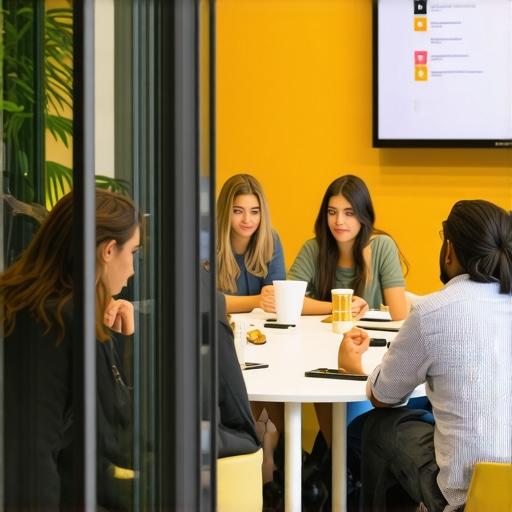
The two-pizza rule for real results
Stop over-booking massive boardrooms for three-person chats. It kills the intimacy and makes the room feel empty, which subconsciously signals a lack of momentum. Use the two-pizza rule for booking the right size meeting room: if you can’t feed everyone in the room with two pizzas, the meeting is too large and the room is likely inefficient. For a startup, speed is everything, and smaller, tighter spaces foster quicker decisions. When I transitioned my team to maximize productivity in conference rooms, we cut our meeting times by 30% just by changing the physical environment.
Turn the kitchen into your secret boardroom
You would be amazed at who you can meet while the coffee is brewing. I found our current lead developer because I bothered to ask the person next to me what they thought of a new framework. The communal kitchen is the best place to find your next CTO because the barriers are down. To do this effectively, you must master the best ways to network without being annoying. It’s about the ask. Don’t lead with a sales pitch; lead with a question about their day or a shared frustration with the Wi-Fi. This simple shift in mindset turns a chore into a lead-generation machine because proximity to other startups accelerates your growth faster than any digital marketing campaign ever could.I’ve seen it a hundred times: a startup gets its first round of funding and immediately looks for a massive, empty warehouse to call home. It’s a vanity metric that kills cash flow. In reality, your first office shouldn’t be a 5-year commitment. The nuance that most veterans understand—and rookies miss—is that flexibility is your greatest hedge against market volatility. We eventually realized we stopped paying for square footage we never used because a flexible membership allowed us to scale the room to the specific meeting, not the other way around. If you’re tied to a traditional lease, you’re essentially paying for the empty chairs during your midnight coding sprints.
Stop equating square footage with success
Most founders believe that owning the space is a sign of ‘making it.’ But in the startup world, ownership is often just a liability. I’ve found that flex space is the ultimate hedge because it lets you pivot without the anchor of a long-term contract.
The ‘Glass Box’ trap that ruins investor pitches
Here is a specific warning: don’t assume that ‘modern’ always equals ‘functional.’ I once booked a gorgeous, all-glass room for a high-stakes board meeting thinking it would make us look like a billion-dollar company. But ten minutes in, we realized the echo was so severe the investor couldn’t even decipher my CFO’s projections. It was a disaster. Your pitch deck won’t save you from a noisy meeting space, no matter how good the graphics are. The “Oops” factor here is neglecting the ‘Acoustic Test.’ Before you sign a deal or even book a half-day session, you must vet a meeting room for acoustic privacy. If the glass walls don’t reach the true slab above the drop ceiling, your ‘private’ strategy session is basically being broadcast to the whole floor. #IMAGE_PLACE_HOLDER_C#
How do you protect your trade secrets when the walls have ears?
This is the single most common question I get from founders moving out of their garage. They worry that being in a startup-heavy hub means their competitors are breathing down their necks. But a study on the ‘Cathedral Effect’ published in the *Journal of Consumer Research* suggests that environmental variety and even higher ceilings actually increase abstract, creative problem-solving. The trick isn’t hiding in a windowless room; it’s knowing how to keep your startups trade secrets safe through digital hygiene and smart scheduling. You don’t need a bunker; you need a professional environment that respects boundaries while facilitating growth. This is why finding a conference room with working adapters and integrated tech is actually more vital than a heavy oak door. It allows you to present securely and leave no digital footprint behind. Have you ever fallen into the trap of choosing style over substance in your workspace? Let me know in the comments.
Why physical collaboration still wins
Even in a world dominated by remote work, physical collaboration still beats video calls for one major reason: the loss of micro-expressions and peripheral awareness on camera. When you are in a room designed for creative coworking, you pick up on the ‘unsaid’ things—the hesitation in a co-founder’s voice or the excitement in an engineer’s eyes. If you are only using your conference rooms to host Zoom calls, you are wasting the majority of the value of the space. You should be using these environments to build the social capital that digital platforms just cannot replicate.If the ‘vibe’ gets people into the building, the tech is what keeps them from walking out in a fit of rage. I’ve lost count of the number of times a million-dollar pitch was derailed because someone couldn’t find a USB-C to HDMI converter. You absolutely have to prioritize finding a conference room that actually has working adapters before you even think about opening your pitch deck. I personally carry a ‘go-bag’ with a backup Surface Pro charger—and I’m glad I do, because while some private suites stock extra chargers for members, you can’t bet your company’s runway on the generosity of a front desk.
Stop fighting with dongles and start investing in your ears
Most founders obsess over the screen size, but the real killer is bad audio. I’ve switched my entire team to using dedicated speakerphones for our internal syncs. Why? Because your conference room needs better technology and fewer cables to keep the focus on the strategy, not the troubleshooting. If you can’t hear the subtle tone of a client’s hesitation during a remote call, you’ve already lost the negotiation. This is the hallmark of the difference between a standard meeting room and a real war room—it’s an environment that removes every layer of friction between an idea and its execution. 
How do I maintain consistent performance as my team scales into multiple rooms?
Maintenance isn’t just about cleaning the whiteboards; it’s about auditing your digital footprint and physical access. As you move from a two-person operation to scaling a hybrid team without a corporate HQ, you need a ‘Room Vetting’ protocol. I use the exact checklist for vetting a high-stakes board room every Sunday night before my Monday morning sprint. This prevents the ‘Monday Meltdown’ where the Wi-Fi credentials have changed or the projector is on the fritz. You also have to realize that a basic warranty won’t save your startup from a hardware disaster in the middle of a demo. You need redundant systems. Consistency is what separates the hobbyists from the scale-ups. According to the Steelcase Global Report on Engagement and the Global Workplace, employees with high control over their work environment are 88% more likely to be engaged; that control starts with ensuring the tools actually work.
Why the next five years will be defined by the ‘Smart Hub’ model
I predict we are moving away from ‘dumb’ rooms and toward spaces that recognize who is in them. Imagine walking into a booth and your calendar, notes, and preferred lighting levels automatically sync to the wall via NFC. This is the future of conference rooms in our ecosystem. We aren’t just renting square footage anymore; we are renting an operating system for our business. This is why membership flexibility is more important than square footage—you need the ability to upgrade your ‘hardware’ as fast as you upgrade your software. If you want to stay ahead, stop looking for the cheapest desk and start looking for the most integrated tech stack. My challenge to you: audit your favorite meeting space this week. If it takes you more than sixty seconds to get your screen shared and your audio live, you are losing money every single day. Go find a space that respects your time.
Small Nuances That Changed My Business Game
Reflecting on those early days of sweating over paper jams, I’ve realized that startup success isn’t just about the code; it’s about the environment you foster. First, proximity is an accelerator. When you are in the same building as other founders, you aren’t just sharing a roof; you’re sharing a brain trust. Second, never underestimate the power of the vibe. I’ve seen how to spot a toxic vibe, and it’s usually found in places where people don’t talk to each other. Third, your biggest asset is your ability to pivot, which is why flex space is the ultimate hedge against a changing market. Lastly, professional optics matter more than we like to admit; how to choose the perfect conference room is a skill every CEO should master early on.
The Kit I Never Leave Home Without
To make sure you don’t repeat my tech disasters, here are a few things I rely on. I always keep the exact checklist for vetting a boardroom in my digital notes—it prevents those 9:00 AM heart attacks. I also recommend looking into why founders are choosing memberships instead of traditional leases, as it frees up capital for hiring. Finally, I’m a huge advocate for ergonomic tools; you’d be surprised at how much office plants and better lighting actually boost your team’s stamina during a sprint.
Your Startup Deserves More Than a Garage
It’s time to stop thinking of your office as just a cost and start seeing it as a growth lever. Whether you are aiming to maximize productivity in conference rooms or just trying to find a quiet place to think, remember that you are building something that matters. Your environment should reflect that ambition. Transitioning into a professional conference room or a collaborative hub is a signal to your team and your investors that you are here to stay. Don’t be afraid to take that step; the network you’ll gain is worth more than the rent. What’s the most unexpected connection you’ve made in a shared workspace? Drop your story in the comments!