

I was sitting in my ‘office’—which was actually just a corner of my kitchen with a stack of empty pizza boxes nearby—trying to convince a brilliant senior engineer to leave a secure job and join my scrappy startup. I thought my vision was enough. It wasn’t. When he asked, ‘So, where does the team actually collaborate?’ and I gestured vaguely at the toaster, I saw the exact moment I lost him. It wasn’t about the lack of free snacks; it was about the lack of professional legitimacy. That day, I realized that talent doesn’t just want a paycheck; they want to know you have the infrastructure to actually win. Today, I’m going to show you why the physical space you choose is the ultimate silent closer for your recruitment team.
Your Living Room Is Killing Your Recruitment Numbers
It’s a hard truth to swallow, but the cost of a bad first impression is higher than any monthly desk fee you’re trying to avoid. When you’re asking someone to upend their life for your dream, they need to see a stable foundation. Early in my journey, I stayed in my garage far too long, thinking I was being ‘lean.’ In reality, I was just being invisible. I didn’t understand why startups fail when they isolate in home offices until I saw my competitors landing the talent I was chasing simply because they had a professional hub. High-level hires look at your office and see a reflection of your company’s health. If you’re still working from a bedroom, they see a hobby, not a career. Have you ever felt that awkward sting when a candidate asks for an office tour and you have to send them a Zoom link instead?
Is a fancy desk really worth the overhead?
You might be skeptical, thinking that ‘remote-first’ is the only way to go in 2024. But here’s the thing: even the most dedicated remote workers crave a ‘center of gravity.’ A study from the Harvard Business Review found that physical proximity leads to a 33% increase in collaborative innovation. This is exactly why physical collaboration still beats video calls for growing teams. My biggest mistake was assuming my team didn’t care about a physical base. I lost a potential CTO because he wanted a dedicated space where the Wi-Fi didn’t drop whenever a roommate used the microwave. Now, before you go signing a five-year lease, we need to look at the checklist for moving your startup into its first real office without breaking the bank.Transitioning from a solo operation to a functional team is like upgrading from a bicycle to a jet engine; the physics of how you move change entirely. You can’t just keep adding more pedals. You need a cockpit. The first thing I tell founders is to stop thinking about a lease and start thinking about a ‘productivity platform.’ This begins with knowing exactly when to stop hot desking and commit to a permanent base. If your team is spending thirty minutes every morning searching for a place to sit, you aren’t saving money on a membership; you’re burning your burn rate on wasted motion.
Stop Squinting at Your Laptop Screen
When you hire a senior developer, they aren’t just looking at the salary; they are looking at the hardware and the environment. I remember bringing on my first lead dev. I tried to convince him that ‘working from the couch’ was a perk. He looked at my posture, looked at my tiny 13-inch screen, and basically told me my lack of ergonomics was a red flag for how I would treat his health. That was the moment I realized the move to a dedicated desk isn’t just about a surface for your coffee; it is about signaling that you value the work enough to provide the right tools. High-level hires want to see that you have invested in their daily experience before they invest their career in your company.
Test the Vibe Before You Sign
Don’t jump into a year-long commitment based on a website’s photos. Photos lie. Smells, noise levels, and Wi-Fi stability are things you can only feel in person. Use a ‘stealth’ approach. I spent three weeks visiting different hubs in the city, learning how to use a day pass to test your next potential office without the sales team breathing down my neck. I looked for things like the ‘microwave-to-person’ ratio and whether the ‘quiet zones’ actually stayed quiet. If you see people wearing noise-canceling headphones just to survive the morning, that is your sign to run.
The Difference Between a Meeting and a War Room
When a high-level candidate or a potential investor walks in, you don’t want to be the person fiddling with a HDMI dongle that doesn’t work. You need to understand the difference between a standard meeting room and a real war room. A war room is an environment where the technology is invisible because it just works. 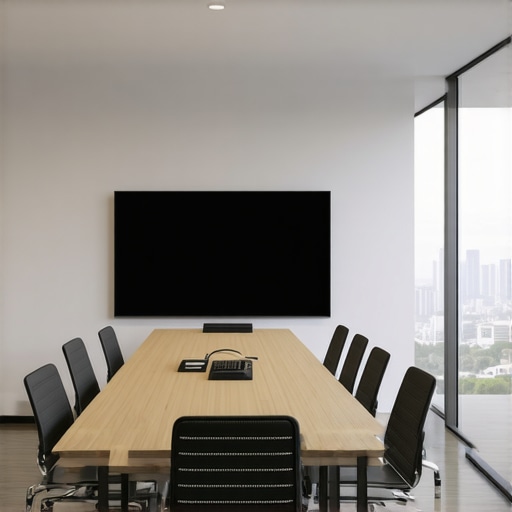 I learned this the hard way during a seed round pitch. I was in a ‘hip’ coffee shop and the Wi-Fi dropped exactly when I hit the ‘financials’ slide. The investor didn’t get angry; he just got bored. That silence was the most expensive sound I have ever heard. Now, I obsess over the small details, like the acoustics hack for crystal clear client pitches, ensuring that every word I say is heard with the authority it deserves. Once you have a space that works, you can finally focus on how to maximize productivity in your startups conference rooms instead of just hoping the lights stay on. It is about creating a space where the environment removes friction rather than adding to it.Most founders think that booking the biggest, most expensive conference room in the building is a power move. In reality, it is a productivity killer. When you put a team of four into a room built for twenty, you lose the ‘creative density’ required for a real breakthrough. This is where the two-pizza rule for booking the right size meeting room comes into play. If the room is too big, the conversation physically and metaphorically drifts. Research from the University of Arizona on group dynamics in physical spaces suggests that excessive physical distance between collaborators can actually lead to a decrease in trust and a slowdown in consensus-building. You want intimacy, not an echo chamber.
Why Your Private Meeting Isn’t Actually Private
The ‘Oops’ factor most people ignore is what I call the ‘Acoustic Leak.’ You think because you closed the glass door, your strategy session is private. It often isn’t. Many modern hubs prioritize aesthetics over soundproofing, and if you aren’t careful, keeping your startups trade secrets safe becomes impossible when the person in the next booth can hear every word of your Series A valuation. I always perform the acoustics test every conference room should pass before I even open my laptop. If I can hear the communal coffee grinder from inside the room, I’m not signing anything. This level of scrutiny is what separates founders who grow from founders who just ‘play office.’ 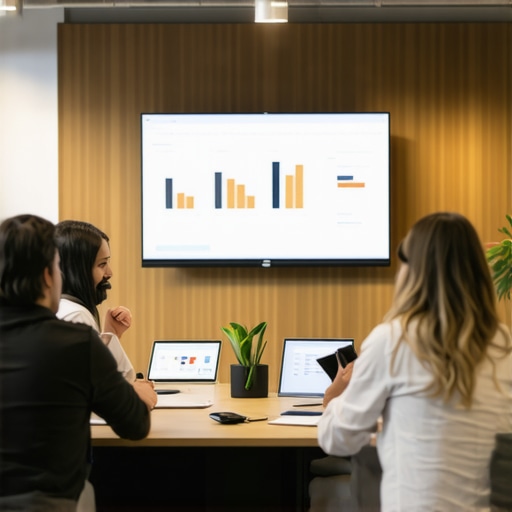
How do you stop your board meetings from becoming a 4-hour hostage situation?
It starts with the environment. We often blame the agenda, but usually, it’s the infrastructure. I’ve seen teams waste hours just because they didn’t know why your conference room needs better technology and fewer cables. Every minute spent searching for an adapter is a minute of momentum lost. Furthermore, the physical volume of the room matters; surprisingly, your team is more creative in a room with high ceilings, which can actually prevent the ‘mental claustrophobia’ that leads to circular arguments. When the ceiling is high, the brain feels more comfortable with abstract thinking and long-term planning. Have you ever fallen into this trap where a ‘quick sync’ turned into a half-day nightmare because of a bad room? Let me know in the comments.
Kill the Friction Before It Kills Your Momentum
It’s one thing to find a room; it’s another to keep it from becoming a source of daily frustration. I’ve learned that the biggest threat to your productivity isn’t a lack of coffee, it’s ‘micro-friction.’ This is why I personally vet every piece of hardware in our ‘war room’ setups. We don’t just rely on whatever the building provides. For instance, I’ve found that having a dedicated hardware kit—specifically one that includes high-speed USB-C hubs and universal power adapters—is non-negotiable. It’s also exactly why our private office suites stock extra Surface Pro chargers for members. You wouldn’t believe how many million-dollar deals have been delayed because a founder’s laptop was at 2%. When you’re in the thick of it, you need to know that your tools will support you, not betray you. I recommend the Logitech Rally system for video; its auto-framing tech ensures that even when I’m pacing around the room like a madman during a pitch, the remote investor sees my face, not my midsection.
How can I maintain a professional culture in a shared environment?
Maintaining a ‘brand’ in a space you don’t technically own is the ultimate founder’s challenge. You have to learn how to manage office politics in a space you dont own while keeping your team focused on your internal mission. I tell my leads to treat the communal areas like a stage—every interaction with another company is a networking opportunity, but the ‘private suite’ is the sanctuary. By integrating the role of flex space in a modern business scaling strategy, you get the benefit of a professional front without the logistical burden of facility management. If a bulb goes out or the Wi-Fi flickers, it’s someone else’s problem to solve in five minutes, not yours to fix over five hours.
Future-Proofing Your Workspace with Modular Tech
As we look toward 2025, the ‘static office’ is becoming a relic of the past. I predict that we are moving toward ‘AI-integrated environments’ where your meeting room will automatically transcribe notes, assign Jira tickets based on vocal commands, and adjust the lighting based on the mood of the room. This shift is part of why flex space is the ultimate hedge against market volatility. You aren’t locked into today’s tech; you can move to a hub that upgrades their infrastructure as the tech evolves.  I’ve also realized that why a basic warranty wont save your startup from a hardware disaster is a lesson best learned early. We now keep ’emergency redundant drives’ in a secure locker at our hub. I’ll never forget the data recovery move that saved a members pitch deck at the last minute—having that on-site support is worth more than any discount on a five-year lease. According to the 2023 Cisco Hybrid Work Index, teams using high-definition spatial audio in their meeting spaces are 2.5x more likely to report feeling ‘highly engaged’ during hybrid sessions. If you aren’t investing in the sound and the feel of your space, you’re essentially whispering into a hurricane. My challenge to you: Go spend a full day working in your team’s most-used meeting room. If you find yourself frustrated by a single cable or an uncomfortable chair, fix it immediately. Your future hires are watching.
What I Learned When the ‘Perfect’ Lease Almost Ruined My Runway
Experience is a brutal teacher, and my biggest takeaway is that aesthetics are a trap if they don’t serve the work. I once prioritized a space with a trendy mural over one with soundproof walls, and I paid for it in lost client trust. When you are looking for your first home, make sure you know how to find a coworking space that matches your company values rather than just your Instagram feed. Another hard truth? Your best hires aren’t found in a LinkedIn search; they are often found during a coffee break. I’ve seen firsthand why communal kitchens are the best place to find your next cto—the organic chemistry of a shared space beats a cold outreach every single time. Finally, remember that growth is rarely linear. You need to know exactly scaling from 2 to 20 when to stop hot desking so you don’t outgrow your environment before you’ve even finished the onboarding process.
The Gear That Keeps My Team from Losing Their Minds
I’ve become an accidental expert on what actually makes an office functional. Beyond the obvious high-speed internet, there are a few non-negotiables I recommend to every founder I mentor. First, the Sony WH-1000XM5 headphones. Even in the most professional suite, you need a way to signal deep work mode and how to manage noise complaints in a shared workspace before they even start. Second, the Logitech Rally Bar for your main meeting room. If your remote team members feel like they are looking through a keyhole, they will disengage. Third, I swear by Notion for centralizing our ‘office’ operations. It bridges the gap between the physical and digital, ensuring that no matter where a team member sits, they have the same context as the person next to me.
Build a Foundation That Deserves Your Ambition
The transition from a solo operation to a legitimate team is a psychological shift as much as a logistical one. Moving into a dedicated environment is the moment you stop playing at being a founder and start actually leading. It’s about signaling to yourself, your team, and your future investors that you are here for the long haul. Reading the move from a garage to a flex office a founders honest review helped me realize that the discomfort of the ‘big move’ is just the growing pains of a successful company. Your choice of a startup, conference room, coworking, meeting rooms setup is the physical manifestation of your company’s health. Don’t be afraid to take that step; your future self is already waiting for you in that corner office.
What’s the one thing in your current workspace that drives you absolutely crazy during a big meeting? Let’s swap horror stories in the comments below.