
I was sweating. Not because the air conditioning had failed—though in that particular startup loft, it often did—but because I was watching my biggest deal of the year slide right off the table. I was on a video call with a legacy partner, and just as I hit my stride, the collaborative energy in the room shifted into a full-blown birthday celebration for a junior dev. Cupcakes, cheers, and a very loud rendition of Happy Birthday blasted right into my microphone. I watched the partner’s face turn from interested to annoyed. He didn’t see a professional; he saw a guy working in a chaotic playground. I lost that deal. It was a brutal lesson: if you don’t have a place to shut out the world, you don’t have a workspace. You have a social club.
Silence is the real luxury in a modern office
We’ve spent the last decade obsessing over open plans and serendipitous collisions. Don’t get me wrong, I love a good chat by the printer as much as the next person. But the truth is, most of us are trying to do high-level, cognitively demanding work. When you’re trying to scale, knowing how to find quiet spaces in a busy downtown coworking hub becomes a survival skill. I used to think I could just power through the noise with a pair of expensive headphones. I was wrong. My work became shallow, my patience thin, and my first impression on calls suffered immensely. Today, I’m going to show you why protecting your acoustic environment isn’t just about comfort—it’s about protecting your bottom line and your sanity. [IMAGE PLACEHOLDER]
Won’t a quiet zone kill our creative vibe?
This is the biggest pushback I get from founders. They worry that if everyone is quiet, the magic of a startup will die. But let’s look at the actual cost of those distractions. A famous study from the University of California, Irvine, found that it takes an average of 23 minutes and 15 seconds to get back to a task after being interrupted. If your team is constantly being pulled away by nearby chatter, you aren’t being creative; you’re just being inefficient. I made the mistake of thinking innovative meeting rooms were just about whiteboards and colorful chairs. In reality, the most innovative thing you can give your team is the ability to think deeply for two hours without hearing someone’s lunch plans.
Spotting the red flags before you sign
You need to look for 7 non-obvious signs a coworking space is too loud for deep work before you sign that lease. I’ve learned to vet every potential office by the acoustics test. If I can hear the receptionist’s phone conversation from the back of the room, my pitch deck won’t save me from a perceived lack of professionalism. Have you ever been on a critical call and had to mute yourself every ten seconds because of background noise? It’s exhausting, right? Tell me your most embarrassing hot mic moment in the comments—let’s commiserate together. We’re about to dive into the specific tactics to reclaim your focus.Stop guessing and run a literal sound check. Before you commit to a membership, you need to visit during peak hours—usually Tuesday at 10:00 AM. Walk to the center of the ‘quiet zone’ and close your eyes. If you can hear the bass from someone’s AirPods three desks away, the acoustic treatment is non-existent. I learned how to vet a meeting room for acoustic privacy before booking the hard way after a sensitive negotiation was overheard by a competitor sitting just outside the glass. Look for ‘soft’ materials like rugs, acoustic panels, and heavy curtains. These aren’t just decor; they are sound-eating tools that prevent your voice from bouncing like a pinball.
Vetting the walls before you move in
Check the thickness of the partitions. In many low-end hubs, the ‘private offices’ are just glass panes that stop six inches before the actual ceiling. That gap is a highway for noise. You need to verify that the walls are slab-to-slab if you want the acoustics hack for crystal clear client pitches.
The corner desk is your secret weapon
I spent three months sitting right next to the communal kitchen because I wanted to be ‘in the mix.’ It was a productivity nightmare. Every time someone microwaved fish or ground coffee beans, my flow state shattered. I finally tracked my output and realized the exact desk location that boosted my productivity by 40 percent was the one tucked behind a structural pillar in the far North corner. #IMAGE_PLACE_HOLDER_B#
Grab the edges of the room
Social physics dictates that the middle of the room is the highest traffic area. People walk through the center to get everywhere else. By claiming a desk on the perimeter, you reduce the ‘visual noise’ of people walking past your monitor, which is just as distracting as a loud conversation.
Master the art of the tactical room booking
Don’t save the conference room just for group meetings. If you have a high-stakes call where you can’t afford a single distraction, book a small pod or room twenty minutes early. Use this time to set up your tech and ensure you know how to maximize productivity in your startups conference rooms by 0245 pm. I once lost a deal because I spent the first ten minutes of a call fumbling with a display dongle. Now, I always carry my own kit and prioritize rooms known for reliability.
Set boundaries so you don’t become the problem
Focus is a two-way street. If you want silence, you have to contribute to it. Check yourself against the 7 signs you are the loud person in the shared workspace hub. This means taking ‘quick’ calls in the dedicated phone booths, not at your desk. I once watched a founder lose the respect of his entire team because he shouted through a pivot strategy while everyone else was trying to code. Respect the library rules, and the library will respect your need to work.We’ve been sold a lie that the “vibrant community” is about the Friday afternoon beer tap. In my experience, that’s where the least productive networking happens. The real magic isn’t in a forced mixer; it’s in the liminal spaces. I’ve found that the networking move that landed us our first seed round didn’t happen over a ping-pong table; it happened while waiting for a heavy document to finish scanning. We’ve been conditioned to think we need structured events to meet people, but why small talk at the printer is the most valuable part of your day comes down to the organic nature of the interaction. When you’re forced into a “networking event,” everyone has their guard up. At the printer, you’re just two people trying to get work done.
Stop chasing perks and start auditing infrastructure
It is so easy to get blinded by the shiny things. I’ve seen founders choose a space because they had a nitro cold brew on tap, only to realize two weeks later that the Wi-Fi drops every time someone uses the microwave. This is the hidden cost of free coworking trials you should watch for. If the “perks” are the first thing they show you on the tour, they are likely overcompensating for a lack of actual utility. Real productivity comes from boring things: redundant internet lines, ergonomic chairs, and HVAC systems that don’t sound like a jet engine taking off. You need to look at the truth about membership perks—what you actually need versus what is just marketing fluff. #IMAGE_PLACE_HOLDER_C#
Can the wrong room size actually sabotage your negotiation?
The answer is a resounding yes. There is a psychological phenomenon called “social density” that most startup founders ignore. If you put three people in a room designed for twenty, the space feels cavernous, cold, and impersonal. It saps the intimacy required for a high-stakes deal. Conversely, cramming six people into a phone booth creates a sense of frantic desperation. I always stick to the two-pizza rule for booking the right size meeting room. A study published in the Journal of Environmental Psychology suggests that physical “enclosure” and room height significantly affect how we process information; high ceilings encourage abstract, creative thinking, while lower ceilings are better for detail-oriented tasks. If you are doing a deep-dive audit, don’t book the airy atrium. If you are brainstorming a new UI, get out of the basement.
The ‘professionalism trap’ of the home office
We all love our sweatpants, but there is a distinct “Oops” factor when you try to scale a professional services firm from a spare bedroom. It’s not just about the background on your Zoom call. It’s about the mental shift. When you’re in a shared professional environment, you’re playing a different game. I’ve realized that how to handle high-stakes board meetings in a shared building requires a level of logistical planning you simply don’t do at home. Have you ever fallen into the trap of thinking your “startup charm” would cover for a barking dog or a messy kitchen during a VC pitch? Let me know in the comments—I’ve been there, and the silence from the other end of the line was deafening. If you want to be taken seriously, you have to treat your surroundings with the same rigor as your code.Scaling up is where the real stress test happens. You aren’t just managing your own focus anymore; you’re managing the collective output of a team that is fighting for space and bandwidth. I’ve seen teams crumble during the move that helped us scale from 3 to 15 people in six months because they didn’t have a system for technical redundancy. If your lead developer’s charger dies, and you’re in a space that doesn’t understand your specific hardware needs, you’ve just lost a day of sprint time. This is exactly why our private office suites stock extra surface pro chargers for members—because technical downtime is the silent killer of seed-stage momentum.
Pack a go-bag that saves your skin
I don’t rely on the space to provide every single connector. My “survival kit” includes a 10-foot braided HDMI cable, a multi-port USB-C hub, and a portable ring light. It sounds like overkill until you realize the lighting trick that makes your product demo look expensive is simply having control over your own shadows during a call. I also carry my own adapters because I’ve spent too many frantic minutes learning how to find a conference room that actually has working adapters only to find they’ve been “borrowed” by the team in the next suite. You can avoid the problem with bring your own device in shared meeting rooms by simply being the person who brings the solution. 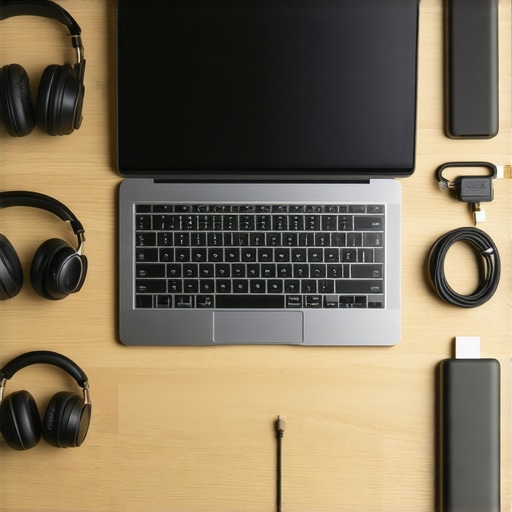
Your tech stack is only as strong as your Wi-Fi
We need to talk about the backbone of your business: the internet architecture. Most coworking spaces share a single pipe across dozens of companies. According to Cisco’s technical documentation on the 802.11ax (Wi-Fi 6) standard, the real-world performance of a network in a high-density environment depends heavily on how the router handles “Orthogonal Frequency Division Multiple Access” (OFDMA) to minimize latency. If your hub is still using old-school Wi-Fi 5 routers, your video calls will lag the moment the office hits 50% capacity. It’s the primary reason why we stopped offering free lunch and started paying for better wi-fi. You can’t eat a burrito during a 4K client presentation, but you definitely need that bandwidth to close the deal.
How do I keep the startup soul alive as we scale?
The transition from a single desk to a full suite is a cultural minefield. You have to decide on scaling from 2 to 20: when to stop hot desking and start building a permanent home base for your growing culture. I predict that the future of conference rooms in startup ecosystems will move away from “dumb” boxes toward AI-integrated pods that automatically handle transcription and acoustic leveling for hybrid teams. But for now, maintenance is about the human element. Keep a small stash of emergency tech in your locker and perform a weekly audit of your cables. If you want to stay ahead, try this today: take your most frequent meeting room and do a “dead zone” test. Check the Wi-Fi speed in every corner; if it drops by more than 30% near the window, that’s where you put the guest chairs—not your presenting laptop.
Hard Truths from the Shared Office Trenches
One of the biggest lessons I’ve learned is that the ‘energy’ of a space is a double-edged sword. You can’t build a unicorn in a library, but you also can’t build one in a nightclub. I realized that protecting your team’s focus is more important than being in the coolest building in town. If you aren’t careful, you’ll find yourself paying for a vibe that actually prevents you from getting work done. I always suggest performing the 10-minute audit to see if your office space is wasting money before signing any agreement.
- Proximity is not collaboration: Just because you’re sitting next to a VC doesn’t mean they’re looking at your deck. Real connections happen through utility, not just geography.
- Technical friction kills momentum: A 5-minute delay on every video call adds up to weeks of lost time over a year.
- Privacy is a choice: You have to proactively design your day for deep work, or the open plan will design it for you.
My Personal Shortlist for Better Work
To stay productive while scaling, I rely on a few key pillars of infrastructure. First, never underestimate the power of a good seat. I’ve found that why ergonomic furniture is the best investment for your seed round isn’t just marketing—it’s about physical longevity for your developers. If your team is in pain, they aren’t shipping code.
Second, I always use the checklist for moving your startup into its first real office to ensure I don’t miss the boring stuff like power outlet density and acoustic dampening. Finally, keep a personal go-bag of adapters to solve the problem with bring your own device in shared meeting rooms before it derails your next investor pitch.
Your Workspace is Your Competitive Edge
Ultimately, your environment is a physical manifestation of your company’s values. If you value deep work, your office should reflect that. As we look at the future of conference rooms in startup ecosystems, the trend is clear: flexibility is king, but professional standards are non-negotiable. Don’t let a poorly shielded glass wall or a spotty Wi-Fi connection slow down a billion-dollar idea. Your startup deserves a home that works as hard as you do. What’s the one thing that instantly ruins your focus in a coworking environment? Drop a comment below and let’s figure out a fix together!