
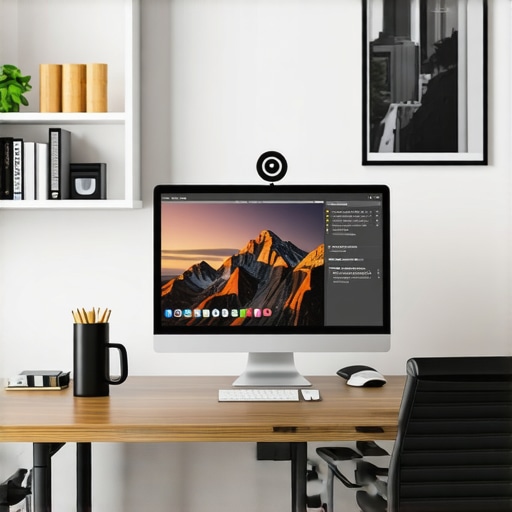
I’ll never forget the squint. I was three minutes into a pitch with a partner at a top-tier VC firm, and instead of nodding at my growth charts, he was leaning in, squinting at the pile of unfolded laundry and a half-eaten pizza box perched precariously on the bookshelf behind me. I realized then that my ‘home office’ looked like a college dorm room, and no amount of revenue growth could mask the fact that I looked like an amateur. It wasn’t just embarrassing; it was a deal-breaker. I learned the hard way that the cost of a bad first impression is often a lost contract before you even finish your intro. Today, I am going to show you exactly how to build a background that screams ‘industry leader’ rather than ‘basement dweller,’ even if you are working from a tiny corner of your bedroom. We are going to solve the lighting, the clutter, and the framing once and for all. Have you ever caught a glimpse of your own video feed mid-call and felt a sudden wave of panic about what the person on the other end is seeing? [image placeholder]
Stop Letting Your Spare Bedroom Kill Your Credibility
If you are serious about your startup, you need to realize that your physical environment is an extension of your brand. When I first started out, I thought I could just use a digital blur to hide the mess, but that was a massive mistake. The ‘halo’ effect where your ears disappear every time you move looks cheap and distracting. I eventually understood how to hide a messy background without using a virtual filter by actually curating what people see. According to research from Princeton University, it takes only a tenth of a second for someone to form a judgment of you based on your appearance, and in a digital world, your environment is 80% of that appearance. If you look like you are calling from a cave, people will assume your business is just as dark and disorganized. You need to master the lighting trick that makes your product demo look expensive if you want to compete with the big players.
Do people really judge me by my wallpaper?
The short answer is yes. It is not necessarily about being ‘rich’ or having a luxury office; it is about showing that you care about the details. Early on, I made the mistake of sitting directly in front of a window, which turned me into a witness-protection-style silhouette. I looked like a shadow, not a CEO. If your current setup feels unprofessional, you might even consider the psychology of a professional workspace and how a dedicated desk or a curated nook can shift your own mindset as much as your client’s. We are going to look at the practical, low-cost steps to turn your current mess into a power-player backdrop.First, stop fighting the sun. If your desk faces a window, you are golden until mid-afternoon, but the moment that light shifts, you become a dark silhouette. I once tried to fix this by taping a powerful desk lamp directly to my monitor during a seed round presentation. The result? A massive, blinding glare on my glasses that made me look like a character in a low-budget sci-fi movie. I learned that you need a dedicated key light placed 45 degrees to your left or right to define your features. This is the lighting trick that makes your product demo look expensive because it creates professional shadows rather than washing you out into a flat, ghostly image. 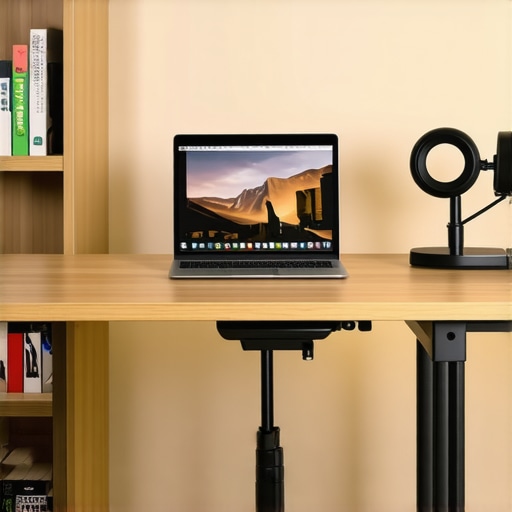
Frame Yourself Like a Professional Director
Most founders make the mistake of setting their laptop flat on a desk and looking down into the lens. This gives your audience a clear view of your chin and your ceiling fan, which is never a power move. I realized I looked like a kid in a high chair during my first big partner meeting until I stacked four thick textbooks under my laptop to bring the lens to eye level. This simple height adjustment creates a psychological peer-to-peer connection rather than a submissive or awkward angle. If you are serious about your digital presence, you must also master the acoustics hack for crystal-clear client pitches because grainless video cannot save you if you sound like you are underwater.
Get Away from the Flat Wall
Never sit with your back directly against a white wall. It makes you look like you are being booked at a police station and eliminates all sense of professionalism. Pull your desk out at least three feet from the background. This physical gap creates a natural depth of field that signals you are in a real, curated environment. I have seen founders try to fake this in tiny studio apartments, but eventually, you realize that why a high-ceiling office actually changes how you think is more about the mental breathing room than just the aesthetic.
When Your Bedroom Desk Becomes a Professional Liability
There came a point in my journey where no amount of cable management or clever framing could hide the fact that my environment was working against me. I had to admit that the move from a garage to a flex office was the only way to protect my brand. If you cannot control the ambient noise or the visual chaos of a shared living space, you need to learn how to vet a meeting room for acoustic privacy before booking your next high-stakes investor call. Sometimes, the most important step in building a professional background is knowing when to move the call to a space specifically designed for business success.Everyone tells you to find the quietest, most secluded corner for a high-stakes call, but in my experience, silence can sometimes work against you. If you are pitching a high-growth, high-energy product, calling from a room that feels like a library can drain the life out of your presentation. This is exactly why investors prefer meeting in a high-energy hub over a quiet cafe or a sterile executive suite. The background hum of innovation signals that you are where the action is. Have you ever fallen into this trap? Let me know in the comments.
Can a glass wall actually compromise your seed round?
The biggest mistake I see is the ‘Fishbowl Effect.’ You book a stunning, glass-walled conference room thinking it looks ‘modern,’ only to realize mid-meeting that your competitor is sitting three feet away in the lounge. You have to learn how to keep your startups trade secrets safe in a public lounge or shared space. I have seen founders leave their pitch decks on the screen during a bathroom break, visible to anyone walking by. Always check the line of sight before you open your financials. #IMAGE_PLACE_HOLDER_C#
Don’t Let Your Boardroom Feel Like a Hospital Ward
We often overcompensate for the ‘bedroom office’ look by choosing the most clinical space available. Avoid rooms with harsh fluorescent lighting and gray walls. You need a space that inspires, and science backs this up. Research from the University of British Columbia, specifically a study by Dr. Juliet Zhu, found that why a high ceiling office actually changes how you think is linked to ‘relational’ processing and creativity. If you are brainstorming your next pivot, a basement with seven-foot ceilings is your worst enemy. Finally, stop over-booking. I used to think a 20-person boardroom made my three-person team look ‘established.’ It did not; it made us look tiny and out of place. Use the two-pizza rule for booking the right size meeting room to ensure the energy stays focused. Before you sign that next membership, make sure you go through the checklist for a boardroom that doesnt feel like a hospital to ensure your environment matches the ambition of your brand. You aren’t just buying a desk; you are buying a psychological edge.Once you have moved past the pothole phase of startup life, you realize the hardest part is not finding a desk—it is maintaining the flow. I spent three months swapping between a Mac for design and a PC for legacy banking software until I realized how parallels desktop saved our dev team from the two laptop shuffle. It was not just about convenience; it was about the fact that fumbling with hardware mid-pitch makes you look like you do not have your own house in order.
Keep Your Digital Infrastructure from Glitching
If you want to keep that momentum, you have to learn how to maximize productivity in your startups conference rooms by making the technology invisible. This means high-speed adapters that actually stay in the room and a no-dongle policy that we enforced religiously. We started a habit where every Friday afternoon, we did a tech sweep to ensure no one had walked off with the 4K HDMI cables. It sounds paranoid, but how to find a conference room that actually has working adapters usually starts with bringing your own high-quality spares. We even went as far as labeling our gear with bright neon tape—not just for security, but to signal that this equipment is part of a high-functioning ecosystem. According to technical specifications in Shure Microphone white papers regarding Acoustic Echo Cancellation (AEC) standards, the latency in your digital signal chain can subconsciously frustrate a listener within sixty seconds. It is why I moved to a dedicated XLR setup, even in a shared space.
How do I maintain my professional edge as my team grows?
Keeping it professional when it was just me and my co-founder was easy. But as you transition and start scaling from 2 to 20 when to stop hot desking becomes a critical question. You cannot have twenty people all curating their backgrounds individually; you need a system. We implemented a kit approach where every new hire got the same light, the same laptop riser, and the same high-quality webcam. This created a unified brand presence that made us look like a 100-person company when we were still working out of three flex-suites. 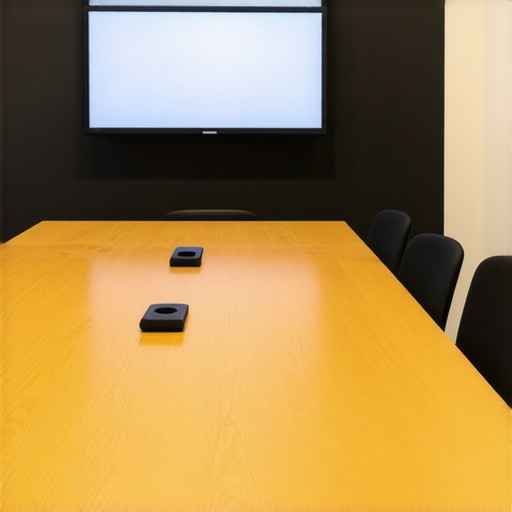
Look Toward the Hybrid Future of Collaboration
Looking ahead, the physical and digital are going to merge even further. I predict the future of conference rooms in startup ecosystems will involve spatial audio and persistent digital whiteboards that bridge the gap for those who are not physically in the building. You will not just be booking a room; you will be booking an environment that syncs with your teams digital brain. To prepare, stop buying the cheapest furniture you can find. I learned that the exact chair you need for a 12 hour coding sprint is an investment in your teams longevity, not an expense to be minimized. If your team is in pain, their output will suffer regardless of how good the lighting looks on a video call. Go spend 15 minutes this weekend mapping out your signal chain and testing your audio from a listeners perspective—your future growth depends on the details you are currently ignoring.
Hard Lessons My Video Feed Taught Me
After years of tweaking my setup, I realized that looking professional is less about expensive gear and more about intentionality. Here is the unvarnished truth about your digital presence: First, a high-quality webcam is useless if your background is cluttered; the human brain will always focus on the mess rather than your pitch. Second, lighting is your most effective sales tool because it directs the eye and creates an aura of authority. I learned that the move that helped us scale from a garage to 20 desks was as much about the environment as it was about the revenue growth. Finally, silence is golden, but energy is platinum; do not be afraid to show that you are in a vibrant, working space rather than a sterile vacuum. [image placeholder]
Your Minimalist Toolkit for Digital Authority
If you are looking to upgrade your digital footprint today, I recommend focusing on three specific pillars. For hardware, I swear by a dedicated XLR microphone setup to avoid that tinny laptop sound that screams amateur hour. For your physical location, remember that why your first office shouldnt be a 5 year commitment is often due to the need for rapid flexibility as your teams aesthetic needs evolve. Before you book any external space for a high-stakes call, make sure you know how to vet a workspaces internet speed before you pay a dime to ensure your stream stays crisp. These tools are the foundation of a brand that clients can trust instinctively.
Ditch the Squint and Start Scaling Today
Your physical environment is the silent partner in every deal you close. It tells the story of where you are going, even if you are not quite there yet. By investing in a professional workspace and mastering the technical details of your background, you remove the friction that prevents investors from seeing your true potential. It is time to step out of the shadows and into the light of a curated, high-impact environment. Learning how to choose the perfect conference room for business success is the final step in transitioning from a solo founder to a true industry leader. Have you ever had an embarrassing background moment that cost you a meeting? Let me know in the comments below!